
5 Of The Cleanest Lakes In Oregon With Clear, Pristine Waters
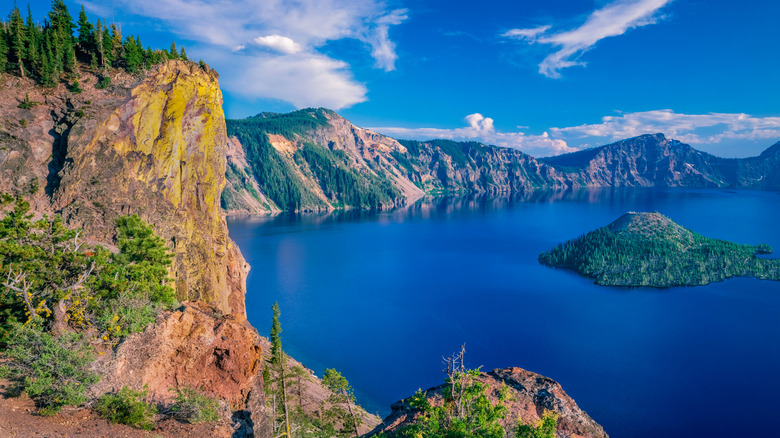
With nine major eco regions to explore, Oregon offers some of the most underrated vacation destinations and incredible outdoor recreation options. The state's mountainous and volcanic areas have formed some unbelievably gorgeous lakes (often in the base of calderas) that will have you pinching yourself to make sure they're real. These waters can be found primarily in regions like the Cascade Mountain Range, but Oregon also has a number of alpine lakes where you can find sublime views, peaceful hikes, and incredible stargazing. These natural wonders also make great bases for kayaking, canoeing, and even scuba trips. Discover some of the best spots for these activities by diving into this list of five lakes with ultra-clear and clean water.
It should be noted that pollution levels and visibility statistics are not available for every lake in Oregon, so this roundup is based on notable standouts that have this data available. We referenced many Oregon outdoor guides and blogs to find the best, clearest lakes, and prioritized the ones with the most activities available, including diving, swimming, camping, and kayaking. Due to the high altitudes of many of these destinations, these lakes are best visited in the summer months, when temperatures are warmer. Just be sure to bring bug spray, as many areas are known to have large mosquito populations that are particularly active in June and July. Without further ado, and in no particular order, here are five of the cleanest and clearest lakes in Oregon.
Waldo Lake
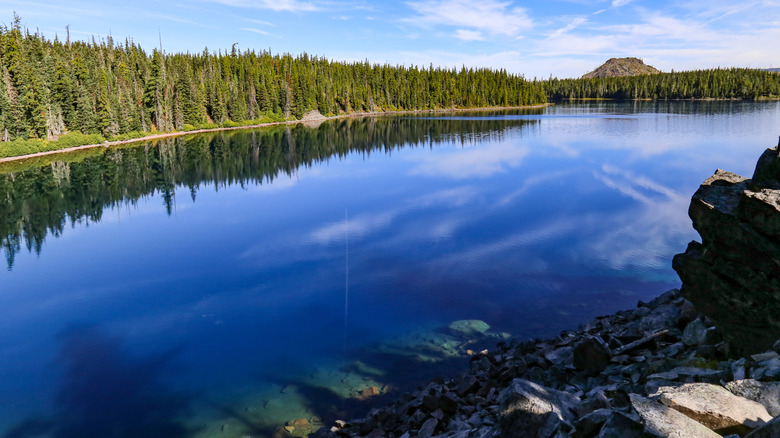
Considered one of the world's clearest lakes, Waldo Lake is surrounded by scenic trails for hiking and mountain biking. The 6,700-acre lake reaches a depth of 420 feet and is fed entirely by rain and snow. The lake is exceptionally clear because it lacks an inlet to bring nutrients in. Without those nutrients, less plant life can grow and muddy the waters. The U.S. Forest Service calls Waldo Lake "one of the purest lakes in the world." Regulations allow only boats with slow-going electric engines (no gas vessels permitted) on Waldo Lake. These conditions result in waters so clean that they're practically distilled. Under the right circumstances, visitors can sometimes see 120 feet deep into the water.
Exceptional hikes also draw people to the lake. In particular, the 20.5-mile Jim Weaver Loop Trail #3590 makes for a fantastic overnight backpacking trek. The trail has unbelievable lake views, crosses creeks and ponds, and is popular for mountain biking during the summer. Additionally, the area hosts over 200 developed campsites scattered across three different campgrounds. Complete with potable water and other amenities, these spots can be reserved in advance online.
Find Waldo Lake located in the Cascade Mountain Range, about a 90-minute drive from Eugene via Oregon Route 58. If you're traveling into the area from up north, consider following the West Cascades Scenic Byway for views of emerald forests, rivers, and mountains
Sparks Lake

The next ultra-clear lake on this list is Sparks Lake. Located about 25 miles west of Bend, this destination makes for a great stop during an epic road trip. In fact, it's one of the glittering alpine lakes along Cascade Lakes Scenic Byway, a 66-mile route through Deschutes National Forest. The 370-acre Sparks Lake is a perennial favorite due to its surreal backdrop of three towering mountains and the mirror-like surface of its waterway.
Formed by a lava flow 10,000 years ago, the lake is fed by rainwater and snowmelt from neighboring mountains. Motorized boats are permitted here as long as you keep your boat under 10 mph, and kayaking, canoeing, and paddleboarding are allowed too. The waters are also stocked with fish and offer some excellent trout fishing (mostly for cutthroat trout and some brook trout). In contrast with the region's stunning wetlands and green meadows, the three mountains (South Sister, Broken Top, and Mt. Bachelor) looming above the lake create an unbelievable photo opportunity and serve as a testament to the power of nature.
Sparks Lake is located in Deschutes National Forest, home to one of America's most enchanting waterfalls. Although the area offers no traditional campground with facilities, visitors are permitted to camp at designated boat-in primitive sites. Those who stay overnight can discover some unbelievable stargazing opportunities, as the lake offers views of the Milky Way on clear nights.
Clear Lake

Scuba divers from all over flock to the appropriately named Clear Lake, which is located about 73 miles from Eugene, Oregon. A spring-fed jewel in the heart of the Willamette National Forest, this natural wonder is said to have formed about 3,000 years ago as a result of lava flow that halted when it reached the McKenzie River's cold waters. Thanks to a visibility of nearly 100 feet, divers can easily explore the lake bottom, where they can find a sunken forest. Due to the cold waters of the lake, divers can only spend up to 45 minutes submerged before they risk hypothermia, according to Scuba Scibbles.
Above the surface, the Clear Lake region boasts an array of activities. Try hiking and biking past waterfalls and streams on the intersecting McKenzie River and Clear Lake Loop Trails, which run 25 and 5.3 miles, respectively. Fishing, kayaking, and canoeing are also popular on the lake, but motorized boats are prohibited to maintain the water's clarity. For campers, the Cold Water Cove Campground has 34 primitive sites (with fire rings and picnic tables) that can be reserved in advance.
Crater Lake
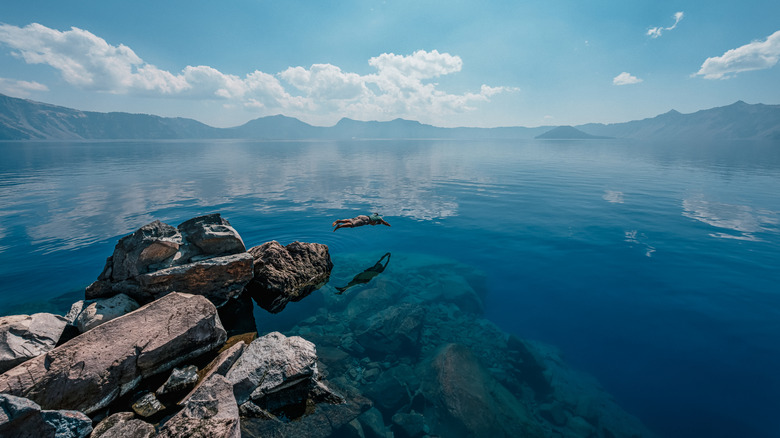
In the Cascade Mountain Range rests the mother of all fairy-tale lakes — Crater Lake. A deep pool in a volcanic basin, this destination is next-level gorgeous. At 1,943 feet, it's the deepest lake in the U.S., and you can find it in Crater Lake National Park. Visitors can soak in the views from the canyon rim, which is often awash with wildflowers during the warmer months (like spring and summer). While ongoing improvements mean boat tours will not be available in 2026 and 2027, there's still plenty to explore at Crater Lake National Park, including wheelchair-accessible Crater Lake Trolley tours in the summer. Local offerings include birdwatching, ranger programs, and an array of trails for hikers of all experience levels.
Crater Lake itself formed when Mount Mazama erupted and collapsed some 7,700 years ago. Now resting in a caldera, the lake is entirely fed by rain and melted snow. Thanks to this, fewer particles enter the waterway, allowing Crater Lake to maintain its heavenly blue color. One of the deepest clarity readings here showed visibility of up to 134 feet underwater back in August 1994.
Camping is available at the Mazama Village Campground in the summer months only (June through September), but reservations must be made way in advance due to high demand. However, backcountry camping is allowed with permits. Meanwhile, the Crater Lake Lodge (which rests along the shore) and The Cabins at Mazama Village (about 7 miles away from the Rim Village) accept reservations for a few more weeks throughout the year (from May through September to early October).
Paulina Lake

Rounding out this list of Oregon's clearest lakes is Paulina Lake. Though lesser-known than Crater Lake, it is an absolute gem. Resting in the caldera of an active volcano, this 1,531-acre attraction reaches a depth of 250 feet. The crystal-clear waters are fed by rain, snow, and hot springs. Boats are limited to speeds of 10 miles per hour here, and gas-powered crafts are permitted.
Paulina Lake is located within Newberry National Volcanic Monument in Deschutes National Forest, which is full of geothermal activity and great hiking opportunities. Hiking trails around the caldera will bring visitors past several natural hot springs ideal for a soothing soak, and the Big Obsidian Flow Trail offers otherworldly geography that should not be missed. Paulina Lake is located about an hour drive by car from Bend, and about a two-hour drive from Crater Lake. In addition to the campground, visitors can rent a log cabin at the Paulina Lake Lodge & Resort overlooking the lake.