
5 Best National Parks In America For A Warm-Weathered December Getaway, According To Climate Data
December is not normally prime vacation season for most major travel destinations, but this is especially true for many U.S. national parks. Heavy snow can transform many prominent national parks into magical winter wonderlands, with tranquil snow cover falling across epic mountain vistas and vast forests. But below-freezing temperatures, impassable roads, and dangerous winter conditions can put many national parks out of reach for all but the hardiest travelers come the holiday season. Yet snow and ice aren't the norm in every national park. Thanks to America's diverse range of climates, several national parks stay warm and pleasant even in the depths of December.
The U.S. National Park System has numerous assets sitting in one of the nation's many distinctive desert ecoregions, subtropical coastal regions, or other areas that stay warm year-round. This includes the arid dry heat of Arizona's Saguaro National Park and the humid wetland warmth of Florida's mighty Everglades.
While any national park in America's subtropical or desert regions makes an excellent December trip, a few parks stand out for their particularly favorable winter climate and their range of winter activities. According to aggregated climate data courtesy of the National Park Service and weather trackers, these five American national parks offer the best warm-weather getaways in December.
Biscayne National Park

Florida is arguably the East Coast's go-to winter destination for warm weather. As luck would have it, the Sunshine State is also home to three amazing national parks with year-round sunshine. The famous Everglades and the underrated (but remote) Dry Tortugas National Parks are excellent stops for a Florida December, but if you can only visit one national park on your Florida trip, Biscayne National Park may offer the most bang for your buck.
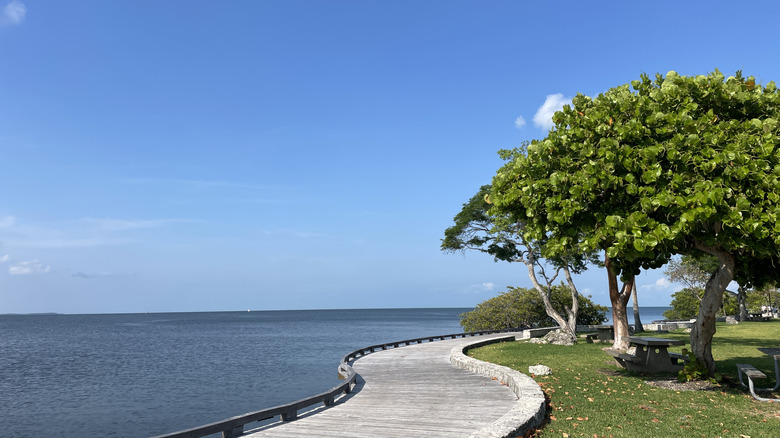
One of this park's key advantages is its location. Despite its incredible range of marine and coastal ecosystems, Biscayne National Park is just south of Miami. Biscayne's ecological diversity includes coastal mangrove forests, Florida Keys ecosystems, and part of the world's third-largest coral reef. These interconnected subtropical ecosystems support a rich diversity of plant and animal life.
The subtropical climate provides Biscayne National Park with warm and sunny weather throughout the year. The average December high in Biscayne hovers in the upper 70s degrees Fahrenheit, warm enough to be pleasant without the mugginess of Florida's summers. Even better, December falls within Biscayne's dry season, meaning visitors are much less likely to encounter the storms or precipitation that usually afflict the area in the wetter summer months. Biscayne's marine resources offer a multitude of fun activities. With much of the park underwater, snorkeling and scuba diving are popular — you can even dive authentic shipwrecks on the Maritime Heritage Trail. Canoeing, kayaking, boating, and fishing are also on the menu in Biscayne during December.
Big Bend National Park

Many travelers might assume that the hot and rugged landscapes of West Texas were a bit too desolate or remote to make a good December destination. However, the region is home to the amazing Big Bend National Park, one of the country's most underrated parks, which offers a spectacular display of beauty in an unlikely place. The park's name refers to the bend of the Rio Grande as it straddles the Texas-Mexico border and passes through a geological wonderland of canyons, mountains, and epic views.
Big Bend National Park is part of the larger Chihuahuan Desert and its surprisingly rich ecosystem. Big Bend in particular displays a stunning diversity of ecosystems, including open desert plains, river systems, and even mountainous environments courtesy of the towering Chisos Mountains. More relevant to December travelers is the park's climate. Being in a large desert, Big Bend National Park stays warm even in the depths of December, with average December highs of 74 degrees Fahrenheit and average monthly precipitation of less than half an inch.
Though heat-related illness can be a risk year-round in a hot desert, the park's Decembers generally have manageable weather conditions for enjoying the park's many magnificent day hikes, like Big Bend's underrated Blue Creek Trail through the Chisos Mountains. You can also take advantage of the weather with an unforgettable river trip along the Rio Grande, or through the monumental Santa Elena Canyon.
Death Valley National Park
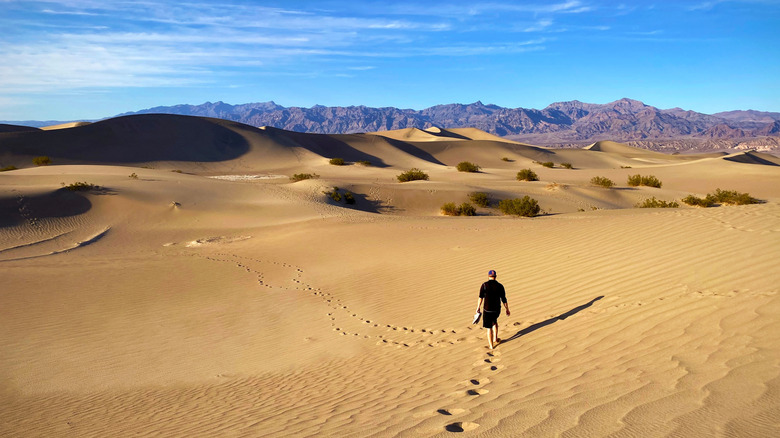
California's formidable Death Valley National Park has a reputation for being the hottest place in North America (and maybe the world), so it shouldn't be a surprise that winter may be the best time to visit. During the blistering summer months, Death Valley daytime temperatures regularly ascend into the triple digits, often above 110 degrees Fahrenheit. These temperatures go beyond merely uncomfortable and become dangerous, with heat-related illnesses and dehydration being major concerns for summer visitors. December, however, brings more reasonable highs (think 60s to 70 degrees Fahrenheit). While extreme heat is still a possibility, the holiday season is generally a much safer time to explore the park's remarkable resources.
Both the park's extreme temperatures and its otherworldly terrain are the result of the surrounding Mojave Desert ecosystem. Without brutal summer heat to distract you, the landscape is surprisingly picturesque, with spectacular examples of badlands, canyons, sand dunes, and even snow-capped peaks across the horizon. Notable destinations in the park include the surreal Badwater Basin (the lowest elevation point in North America) and the mysterious Racetrack Playa (where rocks seem to move on their own).
December's respite from dangerous temperatures also means that you can enjoy a much fuller itinerary of outdoor activities. The reasonable temperatures open up Death Valley's scenic network of hiking trails, backpacking routes, mountain biking adventures, and even opportunities for cross-country running. December temperatures also make it much easier to enjoy an overnight stay at one of Death Valley's many excellent campsites. It should be noted, however, that the desert gets quite cold at night: The average low temperature in December is 38 degrees Fahrenheit, with a record low of 19.
Hawaii Volcanoes National Park
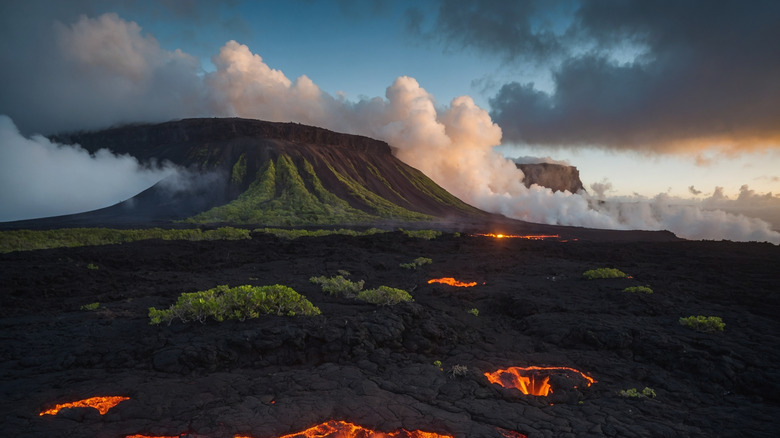
The well-known paradise of Hawaii sits closer to the equator than any other U.S. state, which means it has warm temperatures and mild conditions throughout the year. And when you add a possible volcanic eruption to the mix, you get the potential for a truly warm December! The entire Hawaiian island chain owes its existence to relatively recent volcanic activity, and many of the state's volcanoes are still extremely active today. Hawaii Volcanoes National Park protects two of the most prominent of these, plus a whole world of breathtaking natural wonders, all basking in Hawaii's warm climate.
Hawaii Volcanoes National Park is located on the Big Island of Hawaii. As the most geologically active of the Hawaiian Islands, the Big Island is home to two of the world's most notable volcanoes. Mauna Loa is the largest active volcano on Earth by total volume, while the explosive Kilauea is one of the planet's most active. These remarkable volcanoes form the core of Hawaii Volcanoes National Park, while an extremely biodiverse ecosystem, featuring plants found nowhere else in the world, and unique lava formations, surrounds them.
The Big Island's overall climate features consistent mild temperatures and both a wet and dry season. However, the climate in Hawaii Volcanoes National Park does include different climate zones at various elevations. At 4,000 feet, the Kilauea summit can be much chillier than lower-elevation areas. In general, though, winter temperatures are quite pleasant, with average December highs in the low- to mid-70s degrees Fahrenheit. This provides the perfect backdrop for one of the park's many unforgettable hikes, including the spectacular Āinapō Trail to the summit of the mighty Mauna Loa.
Virgin Islands National Park

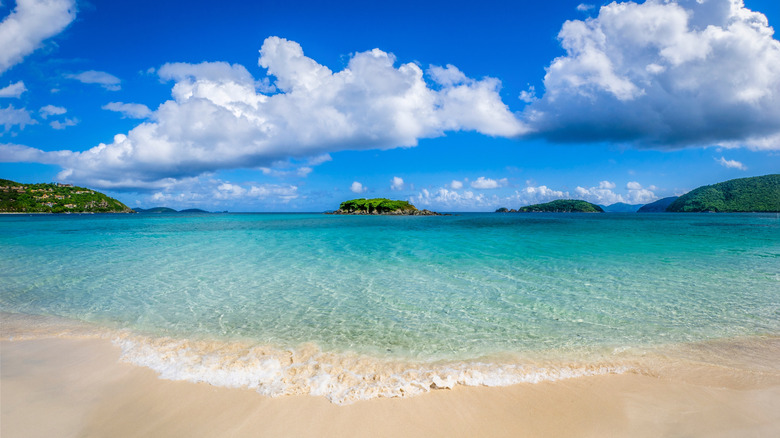
The Caribbean needs no additional hype as perhaps the premier warm-weather destination for North American winter travelers, and U.S. territories like Puerto Rico and the U.S. Virgin Islands are prime December vacation spots for exactly this reason. However, some may not realize that there's an actual national park in the Caribbean. Virgin Islands National Park is just as rich in climate and scenery as you'd expect from its name. Located along the southern bays of St. John, one of the three main islands that make up the U.S. territory, this park offers a lush blend of alluring natural beauty — think white sandy beaches, coastal mangrove forests, mountains, and remarkable historical sites.
The climate here means exceptionally warm and sunny weather even in the winter months. Winters here also tend to be less rainy than the summer months (although they do tend to be windier). December regularly sees summer-like temperatures across the park's beaches and trails, with an average monthly high of 84 degrees Fahrenheit.
Such ideal conditions are perfect for exploring the park's extensive collection of attractions. Virgin Island National Park's many beaches are frequently ranked among the best in the world, including the outstanding beauty of the idyllic Trunk Bay Beach. With crystal clear waters and extraordinary marine ecosystems (including vibrant coral reefs like those at Hawksnest Bay), it's perfect for snorkeling or boating adventures. If you'd prefer to stay dry, there are amazing scenic trails, rich forests, green mountains, and historical sites like the 18th-century Annaberg Sugar Plantation.
Methodology
Everyone has preferences when it comes to weather, and everyone handles hot and cold temperatures in their own ways. In compiling this list, however, we sought to keep focus on more objective climate data to determine which parks have the warmest weather in December. Fortunately, the National Park Service keeps track of average monthly temperatures for its parks. As a result, we were able to see average December temperatures for each park, which helped us determine the parks that are most likely to see warm and pleasant conditions.
At the same time, we also sought to keep a focus on how milder December temperatures opened up more recreational opportunities in each respective park. Many parks sit in tropical, subtropical, or desert climates, where Decembers tend to be warm. To narrow this list down to just five parks, we looked at parks where cooler temperatures could make December a better month to visit than the more popular summer season.
For example, summertime brings triple-digit heat to places like Death Valley and Big Bend National Parks. These conditions make summer visits potentially dangerous, with the risk of heat stroke, dehydration, and other heat-related illnesses. December, however, brings milder temperatures that are still warm enough to enjoy the parks.