
15 U.S. National Parks You Can See In One Day
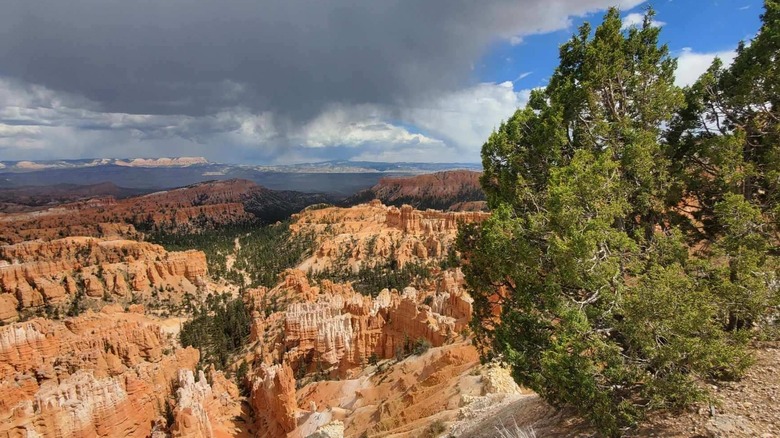
The great outdoors can be a pretty big time commitment. So when you think of a visit to a national park, you might think of camping out, flying in, or an RV trip months in the making — definitely not the kind of thing you can pull off in a single day. But luckily for road trippers, day trippers, and anyone who's ever felt a hankering for just a little bit of the outdoors, not every U.S. national park is so high-commitment. In fact, a surprisingly big number can easily be visited in a single day.
Convinced you have to be a hardcore hiker or allot a whole week of paid vacation to experience the best natural scenery America has to offer? Think again. Then consider a visit to one of these 15 day-trippable national parks for a quick outdoor fix. From coral reef to volcanic summit, each of these parks will take you to awe-inspiring places in just one day — including options this author visited herself.
Crater Lake National Park
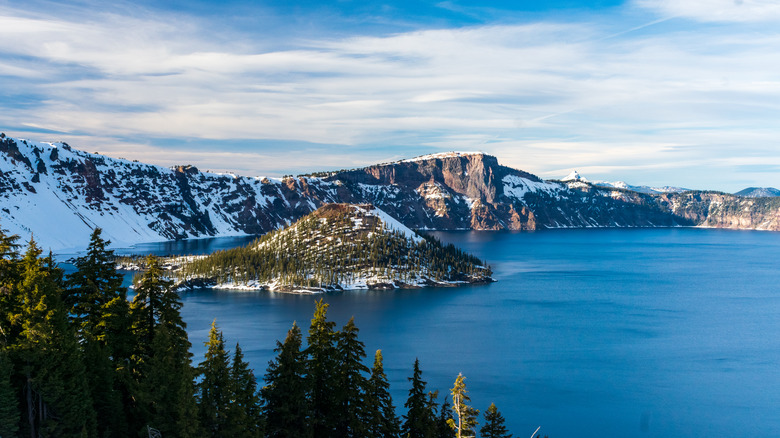
It's a measurable fact that Crater Lake is the deepest lake in the United States. It's a less measurable fact that it is also the bluest, but that's a metric we'll let you judge for yourself — one day at Oregon's only national park will be enough to form your opinion. Since the lake itself is the focal point of this park, you'll no doubt come away with dozens of pictures to show off — "look how blue it is!"
One of the things that makes Crater Lake such a great one-day park is its 33-mile Scenic Rim Drive, a spectacular road ringing the crater that was designed to complement the natural scenery rather than cut through it. You'll find plenty of great vantage points along the route from which to view and photograph the lake. And while the park's highly popular boat tours are unfortunately suspended through 2027 due to trail maintenance, those willing to schlep will be rewarded with even more epic lake vistas on trails ranging from the easy two-mile Discovery Trail to the more strenuous Mt. Scott Trail, which boasts the only view of the entire lake within park boundaries.
Bryce Canyon National Park
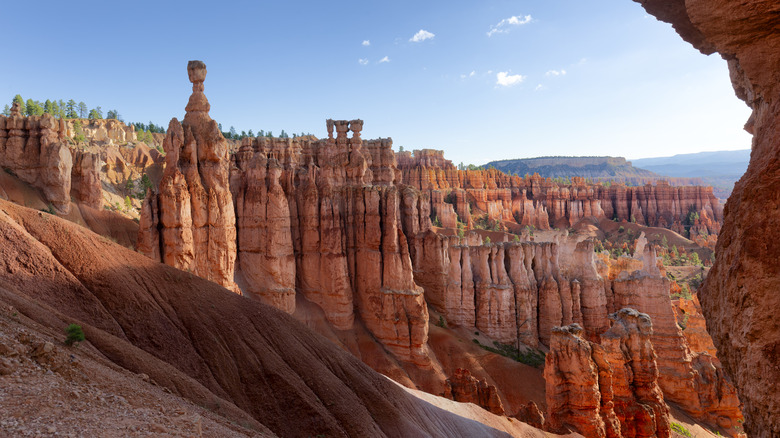
The smallest of Utah's five national parks, Bryce Canyon is no slouch. Famous for the abundance and beauty of its hoodoos, a rare but delightfully named geological feature caused by erosion and uplift, the scenery here is — in this national park enthusiast's highly biased opinion — some of the most striking that the National Park System has to offer. It's also one of the smallest parks, ranked fifty-second out of sixty-three, and it offers relatively few activities compared to some other parks. All of that makes Bryce Canyon a pretty perfect day-trip park.
The park's main road runs 18 miles through the canyon, with plenty of lookout points and trailheads along the way. Then, if you'd like to get out of your car and hike below the canyon rim for a different vantage point, check out the 2.9-mile Queen's Garden/Navajo Loop Trail — it's recommended by park staff and the easiest, most day-trip-friendly introduction to the canyon on foot.
Pinnacles National Park
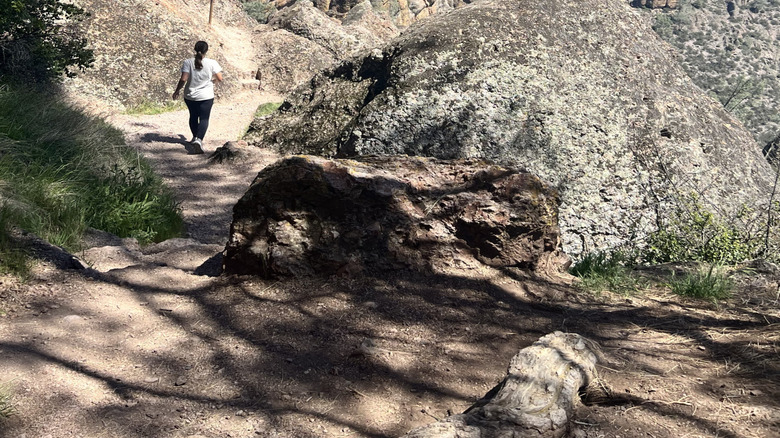
The second-least-visited park in California, the state with the most national parks, is a bit of a sleeper hit. Established in 2013, Pinnacles National Park is known for its unusual volcanic geology and for playing a key role in the dramatic resurgence of the California condor from its near-extinction in the 1980s (it's still a condor hotspot today). And if you're living or vacationing in the San Francisco Bay Area and looking for a little taste of the great outdoors, Pinnacles National Park is an ideal day-trip destination.
That said, this is decidedly a hiker's park. My recommendation after trying several trails: the 6.5-mile High Peaks Trail, which offers a pretty comprehensive overview of the park's offerings and a better-than-average chance of spotting condors. It'll eat most of your day in the park but leave you satisfied — and you'll have seen Bear Gulch Cave, one of the highly unusual "talus caves" that Pinnacles is known for. Bring your headlamps (for the caves) and maybe some condor-spotting binoculars, and you'll no doubt wonder where this surprisingly accessible and approachable California escape has been all your life.
Dry Tortugas National Park
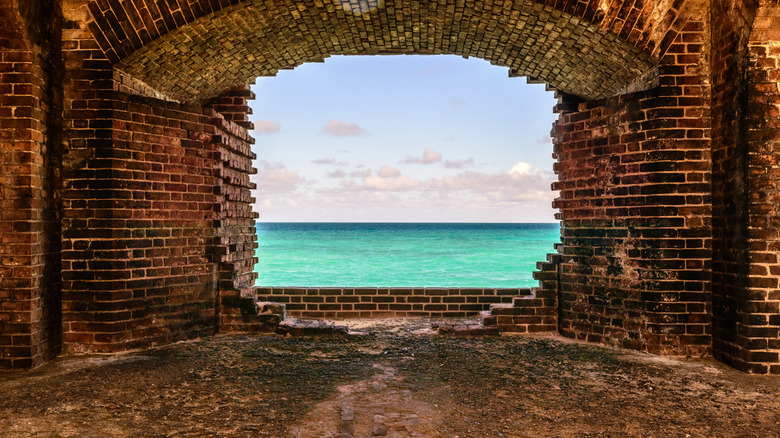
Dry Tortugas National Park, situated at the southern extreme of the Florida Keys, is a funky one. 99% of the park is underwater; you'll have to take a ferry or seaplane from Key West to reach it, and it's one of the few national parks whose landmass is made up entirely of islands. In only a single day, you can take a ferry, snorkel pristine coral reefs you never thought you'd find in the Lower 48, and tour the imposing and little-used 19th-century Fort Jefferson. When you're finished, hop on the ferry or plane to go back to Key West in time for its famous sunset. Because Dry Tortugas National Park has limited facilities and is challenging to access, it's most ideal for a day trip unless you plan to camp. It's a worthwhile one too. With its pristine coral reefs, it's a hugely underrated park for wildlife and a tropical adventure the likes of which you'll find very few in the continental U.S.
Indiana Dunes National Park
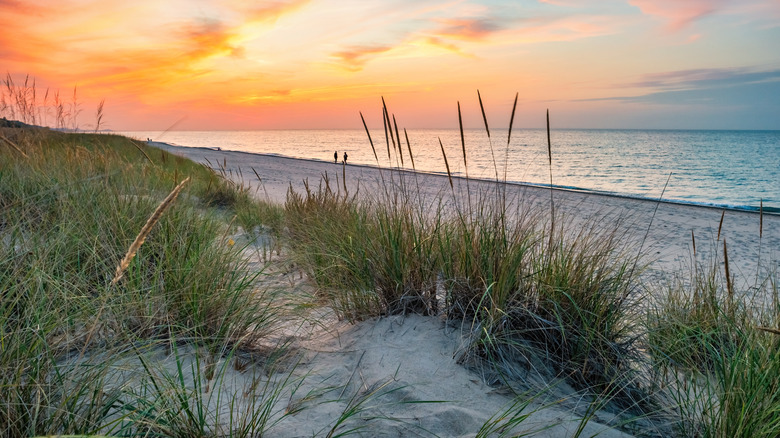
It feels a little surreal to watch the sun set over the Chicago skyline from a pristine lakeside beach, but that's part of the charm of this accessible, urban-adjacent national park. Indiana Dunes National Park is a popular destination on the shores of Lake Michigan, where visitors can trek through towering dunes, take a dip in the lake, explore the park's 50-plus miles of hiking trails, and enjoy the serenity of a slice of the Great Lakes as they once were. It's the fourth-smallest national park and only about an hour outside Chicago, making it an ideal day-trip destination for locals and visitors alike. What's more, every season has something to offer: the Lake Michigan shoreline here is a favorite escape from the summer heat for locals, spring brings abundant birdlife to the park, and autumn offers the opportunity to admire the changing colors.
Joshua Tree National Park
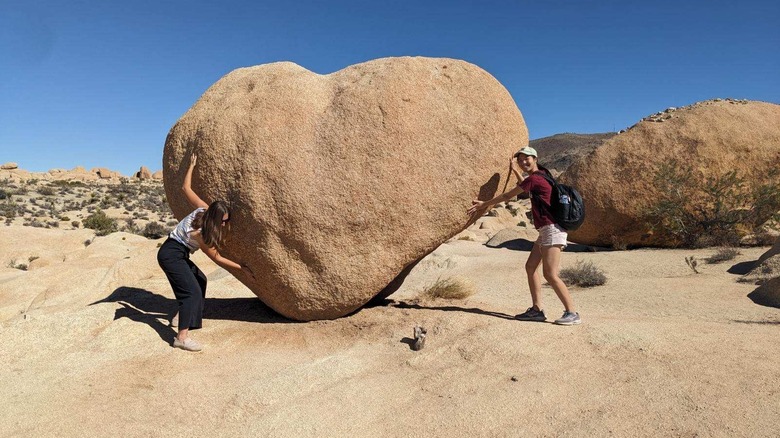
One thing I've learned as a Southern California local is that, around here, you'll meet people of two minds about Joshua Tree National Park. Half the people you ask will tell you it's a remote expanse of desert to which Los Angeles locals and college students flock when they're in the mood for some creative substance use. The other half will be glad to tell you that this almost alien landscape has some of the region's best hiking and bouldering opportunities. You should definitely listen to the latter group, who are absolutely right about this funky desert park's unconventional appeal. It's one of the best national parks for a stunning escape into nature.
Low-commitment, high-reward hiking trails are among the most day-trip-friendly features of this park; don't miss the Hidden Valley Nature Trail (pictured) or Arch Rock. Try out a new hobby with over 2,000 bouldering problems (that's what bouldering routes are called). And if you can manage, stay to stargaze: Joshua Tree is an International Dark Sky Park that proudly boasts that "half the park is after dark."
Mesa Verde National Park
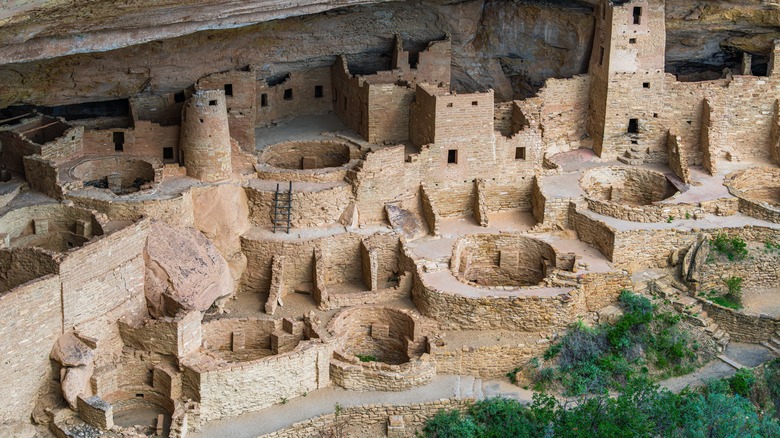
The UNESCO World Heritage site of Mesa Verde in southwestern Colorado is a bit of an outlier in the national park system. Rather than scenic beauty (though it's got plenty of that), it was established to protect human cultural achievements: the remarkable cliff dwellings of the Ancestral Puebloan people, progenitors of the Four Corners region's modern-day Indigenous people. Since it's not a rugged, outdoor activities park, you can easily see it in a single (albeit busy) day.
If you're visiting in the late spring or summer months, you should focus that day of exploration on cliff-dwelling tours. Though required to enter the ruins, the park runs several official tours; it's imperative to book in advance, since space is limited and slots are released 14 days ahead of the tour date. Not all tours are equally strenuous, so find a few that suit your interests and abilities, and combine them. (With tours running about 45 minutes, this is pretty straightforward to do.) By the end of your busy day, you'll have seen the best of what Mesa Verde National Park has to offer.
White Sands National Park
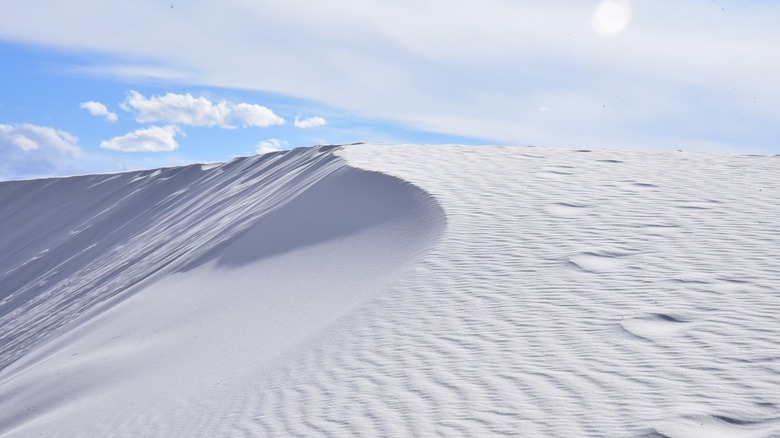
White Sands National Park in southern New Mexico is a bit of a one-trick pony. It's in the name: fields of white gypsum sand dunes are about all you'll see here. But that's a pretty incredible trick, one you won't find anywhere else in the national park system. And with relatively few activities to try, it's easy to get your fill of this park in a single day.
You could drive through the park and ogle the glistening white dunes from afar, of course. But to really grasp what makes this park so much fun, you'll need to do one of two things. The first of your options is hiking: the short Dune Life Trail or the much more involved (and, take it from someone who's done it, absolutely calf-busting) Alkali Flat Trail, which will take you up, down, over, and through the dunes for five miles.
Your other option is to bring or rent a sled. The unusual gypsum sand acts like snow beneath a sled, and with dunes up to 60 feet high, it's quite a way down from the top. Whether you're traveling with kids or just appreciate a good sledding hill, it's an essential addition to your whistle-stop tour of White Sands National Park.
Mammoth Cave National Park
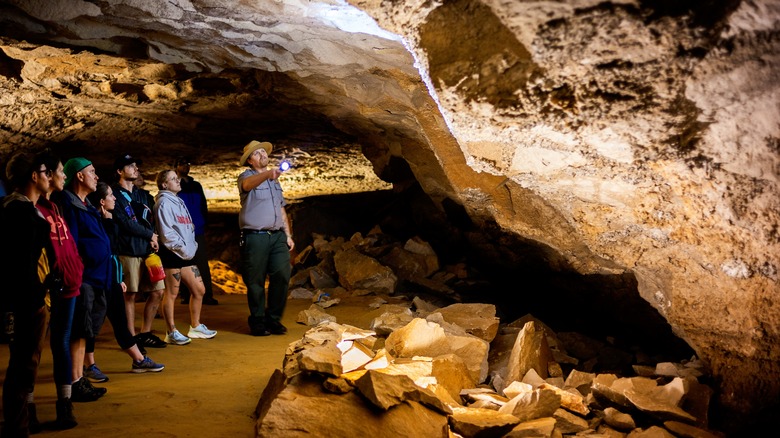
You can bet that a park with "cave" in its name is going to make a pretty good day trip. Caves are inherently self-contained, and they often require time slots or tours that necessarily restrict the length of your visit. So it's no surprise that Kentucky's Mammoth Cave National Park makes the cut. And although the ground above the world's longest known cave system is just as protected as the cave itself, it's the opportunity to descend into the expansive caverns below that draws visitors to this remote corner of Kentucky.
While you can do that on a self-guided tour, you'll get the best experience if you plan for one of the many unique guided tours on offer for context and access to parts of the cave you can't enter by yourself. Tours range from one to four hours in length and accommodate a wide variety of mobility and fitness levels, so you'll most likely be able to find one that strikes your fancy if you book well in advance. Self-contained and structured, Mammoth Cave is an ideal day-trip park for people who tend to stress about everything they're not seeing — it really is possible to get the best of this one in a single day.
Gateway Arch National Park
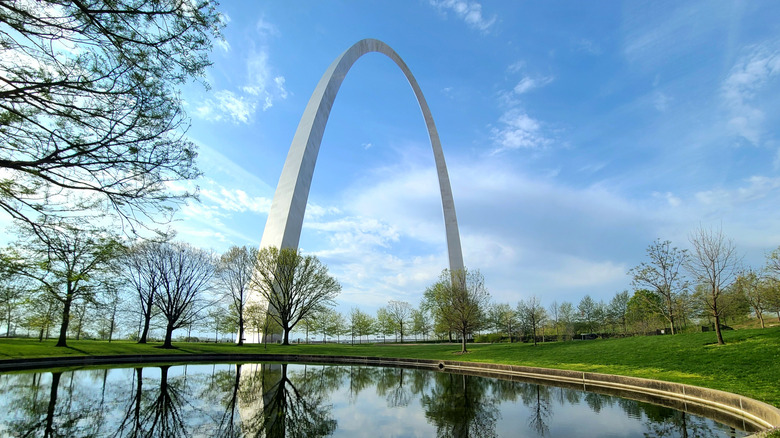
There is a lot of debate among national park enthusiasts over whether Gateway Arch National Park should be included in a list with some of the world's best natural wonders. Fair enough, most of us associate national parks with, you know, the outdoors. But whether you agree with its inclusion or not, this is a national park, an iconic landmark, and perhaps the easiest park to visit in the entire system. It's right in the middle of a major city, and since the Arch is kind of the whole point, it doesn't take long to see. Ride the tram to the top of the Arch, and you've pretty much seen it all. Stop by the visitor center as well — you'll learn a lot about the historical significance of the city and its inhabitants in broader U.S. history — and happily check another national park off your list. Gateway Arch National Park might not be the most visually impressive, but it doesn't get easier than this.
Cuyahoga Valley National Park

Cuyahoga Valley National Park is another low-key, city-adjacent park for those who need their nature fix but don't have time for roughing it. It's set aside to preserve a stretch of the Cuyahoga River, which is most famous for becoming so polluted in the 1960s that it caught fire in one of the inciting incidents of the modern environmental movement; it's now federally protected to preserve the ecological richness of a heavily industrialized region.
As such, it's not very remote, so you won't have to trek far — a 30-minute drive from Cleveland will get you there — to get your fill of Rust Belt nature. Activities like biking, hiking to waterfall viewpoints like the well-known Brandywine Falls (pictured above), and birdwatching are among the most popular. All in all, Cuyahoga Valley National Park's offerings could easily fill — but not overfill — a leisurely day out in the wild of a region that isn't really known for its natural splendor.
Congaree National Park
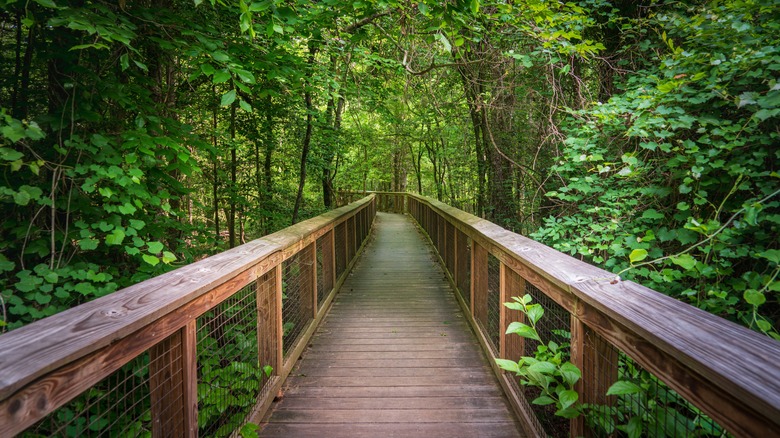
Swamp? Check. You don't have to head all the way down to South Florida to experience the wild, wonderful, and maybe a little eerie world of the swamp, because South Carolina's Congaree National Park has all of that in spades. It's also compact in scale and easy to visit on a day trip from the state capital of Columbia, half an hour away, or Charleston, about an hour and a half to the north.
Since most of this park is swampland, you'll likely be navigating either by waterway or elevated boardwalk. For the latter, the 2.6-mile Boardwalk Loop Trail is an easy but satisfying trek through the swamp on dry land. (Do note that some sections are under construction until 2026.) If it's the former you're after, kayaking the 15-mile Cedar Creek paddling trail — bring your own boat! — is the way to go. Either will give you a fascinating vantage point on one of the largest remaining stands of old-growth hardwood forest in the southeastern U.S.
Petrified Forest National Park
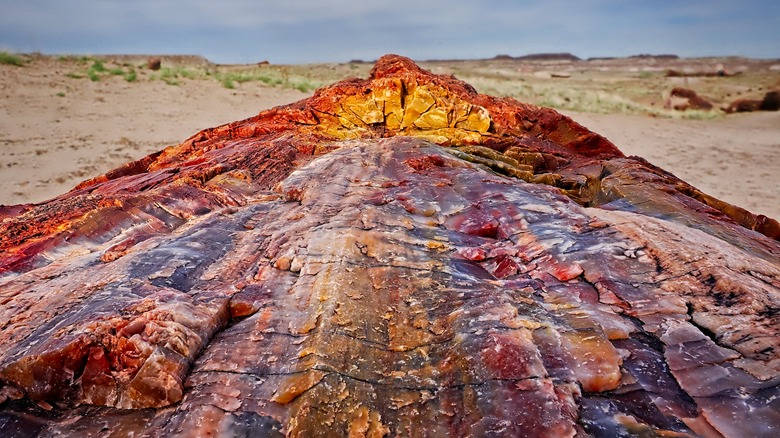
Arizona's Petrified Forest National Park is almost the ideal road trip stop — so much so that the park's own website advertises it as such, suggesting itineraries for visits ranging from an hour-long pit stop to a half-day visit. It's a common stop for road trippers driving Route 66, part of which is protected within the park. And why shouldn't it be? Colorful desert scenery, ancient ruins, and the titular fossilized wood are only a few of its surprises. As such, the park's interpretive side — its exhibits and visitor centers, explaining the unique geology that gave rise to the remarkable Triassic fossilized wood that gives the park its name — is as impressive as its scenery. Plus, a variety of short hiking trails offer the chance to view fossils, strikingly colorful desert landscapes, and ancient petroglyphs. All the better to appeal to driving-through visitors. That said, we recommend breaking the mold: there's plenty to see in a full-day visit if you're one of the few who choose to dig deeper at this remarkable park.
Saguaro National Park
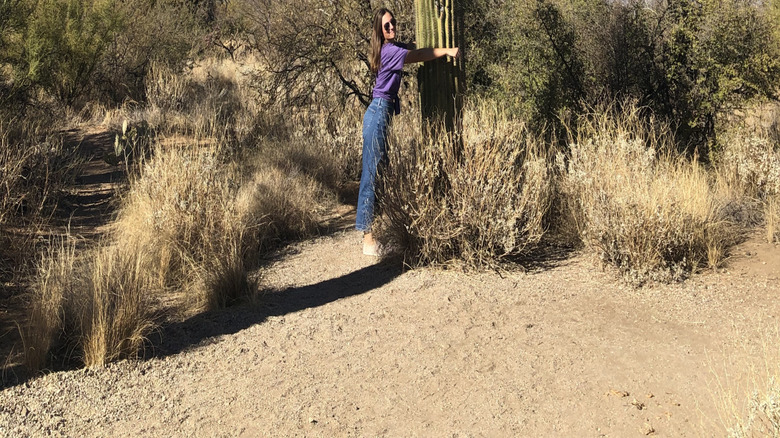
I'm not really hugging the cactus in this photo, don't worry — but it does encapsulate what makes Arizona's Saguaro National Park such a fun one for a day trip: there's pretty much one major thing to do, and that's ogle the cacti. Provided you're not an NBA star, the tallest cacti you'll come across are probably well over twice your height, and they're scattered throughout the rolling desert hills of this delightfully oddball landscape seemingly at random. Given the average temperature in Tucson, it will most likely be blazing hot when you visit, and you may not want to spend a ton of time outside your climate-controlled car. But even if all you do is drive through this park in either of its two districts (separated down the middle by the city of Tucson), you'll get plenty of goofy photo ops with the humorously awe-inspiring plant the park exists to protect. Could you take a hike? Sure. And if it's not too hot, go for it! But you don't need to be prepared for the wilderness to have a great day out in Saguaro National Park.
Carlsbad Caverns National Park
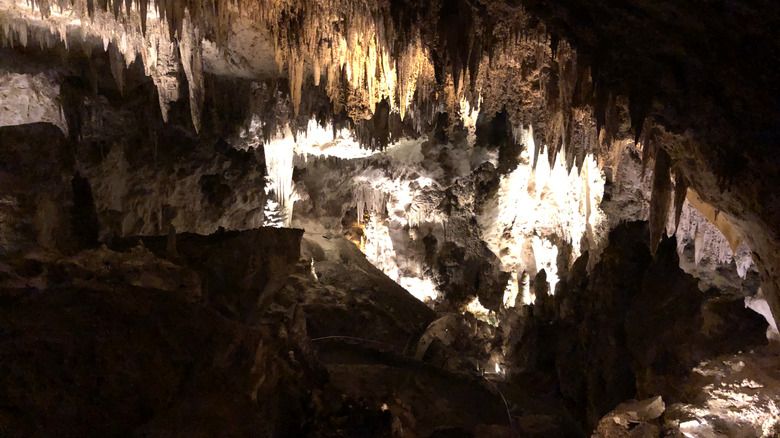
If you're trekking all the way down to the very bottom of New Mexico, there's a fairly good reason you're doing it for this park. Understandably, what was once an ancient tropical sea has now turned into a geologically unique cave system of awe-inspiring scale and beauty in this remote stretch of the Chihuahuan Desert. It's also one of the spookiest caves to visit in the U.S. A timed reservation is highly recommended to enter the cave complex's iconic Big Room, and a guided tour is necessary to see any of the more remote reaches of the caverns. If you want to view the iconic flight of thousands of Brazilian free-tailed bats from the caverns at sunset, you'll have to come between April and October. But if you time things well, Carlsbad Caverns is just the right size to fill a day of outdoor exploration — except, in this case, "the outdoors" has a natural roof.
Methodology
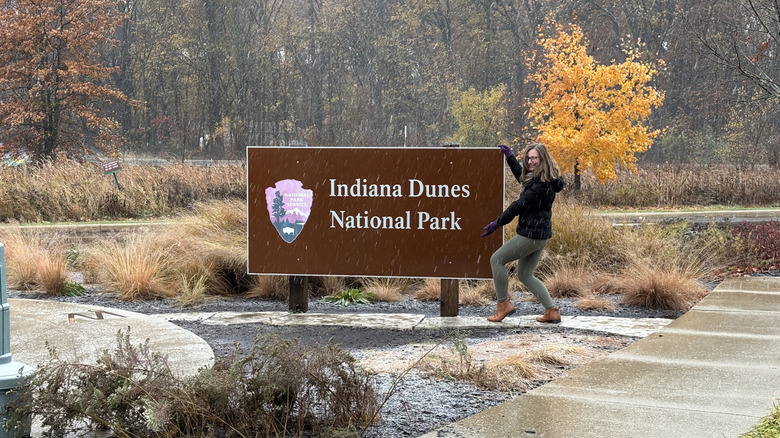
What makes a park day-trippable? For the purposes of this article, it's mostly a matter of size. Smaller parks with fewer activities are more suitable for single-day visits. Extra weight was given to parks I have personally visited on day trips, since I already know it's possible! And though some of these parks will be more of a trek to reach than others, they're all possible to reach from a big city without needing an overnight stay.
There's nearly always more to see and do in a national park than you can get done in a day. But at these parks, you'll at least be left feeling like you got a good idea of what the place is all about. And if you find yourself wishing you'd had a little more time, the beauty of the national park system is that they'll be here tomorrow, too — unchanged and ready for a second day-trip outing.