
The 5 Most Pristine Lakes In Colorado With Crystal-Clear Water
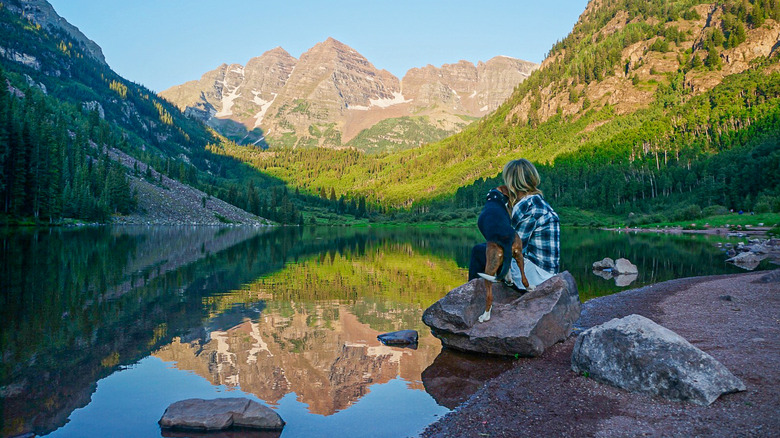
The rugged wilderness and towering peaks of Colorado have been a constant lure for travelers seeking outdoor thrills. Whether you're trekking through the Rockies or hitting the powdery slopes at Steamboat Springs, a bustling ski destination, there's new adventures in every corner of the Centennial State. But for nature enthusiasts who prefer to soak up moments of tranquility, Colorado is dotted with picturesque lakes boasting unparalleled mountain scenery. Swap high-adrenaline activity with high-altitude serenity on a trip to some of Colorado's crystal-clear glacial pools.
With the number of lakes across the state covering an area of over 270,000 acres together, pinpointing a Colorado lake to visit can be something of a challenge. Another important factor to consider is whether you're looking to take a dip in the water, or simply admire the view from the shore. Boulder Reservoir offers a big swim beach and ethereal mountain views, but if dazzlingly clean water is what you're looking for, then this man-made pond isn't going to make the cut. Some of Colorado's cleanest lakes are also among the most breathtaking, but that comes with the sacrifice of not being able to cannonball into the deep blue depths.
Imagine standing on the edge of a glassy mirror backed by scenic landscapes, where the only ripples in the surface are from gusts of mountain breezes rather than the splash of humans in the water. Alpine lakes fed by glacial melt will be some of the most pristine, and the waters are likely more clear due to the cooler temperatures, which limit plant growth and silt. If you're planning a lake-peeping vacation in Colorado, these five squeaky clean, crystal-clear lakes should be on your list. Scattered throughout the valleys of the Rocky Mountains, and curated based on traveler reviews and relevant scientific information, these five lakes will be unforgettable.
Maroon Lake
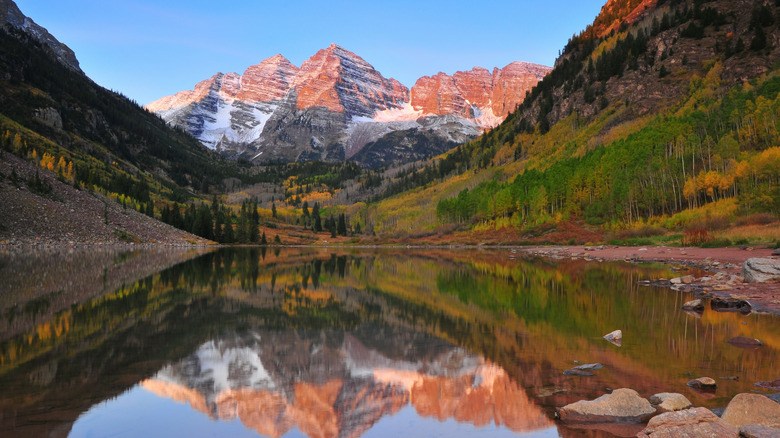
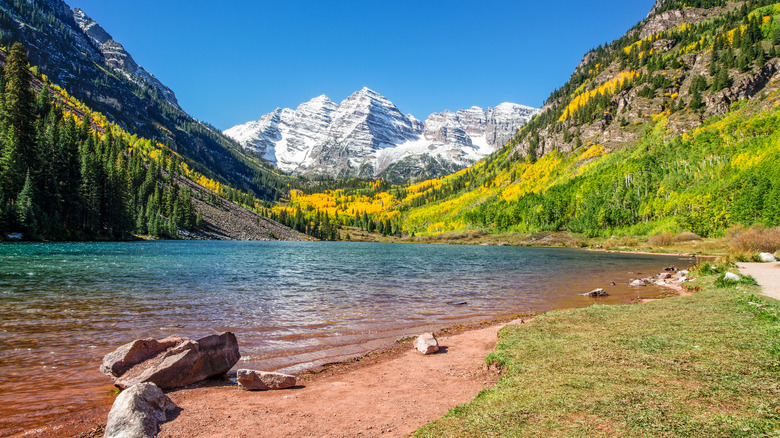
Glittering in the afternoon sunlight, the smooth surface of Maroon Lake shines like a mirror. Tucked within the Rocky Mountain valleys of the White River National Forest, this ethereal alpine lake sits at almost 10,000 feet above sea level. Rising behind the lakeshore are two jagged peaks tinged a distinct deep berry shade, particularly breathtaking at sunset. Known as the Maroon Bells, a mere gaze upon the mountains' shimmery reflection across Maroon Lake feels like a peek into paradise. Formed by prehistoric glaciers and boasting some of the clearest waters in Colorado, any swimming or paddling activities are prohibited in Maroon Lake, ensuring the cleanliness is maintained for the enjoyment of future visitors.
Don't let the lack of opportunities to dive in deter you from visiting though — the water temperatures are far too chilly for an enjoyable dip anyway, and just a glimpse of the spellbinding glacial scenery is enough to keep any traveler satisfied. Fishing, however, is perfectly acceptable. Anglers can bring their rods and hope a few trout nibble the line. Pack a hamper to enjoy a picnic by the lakeside as the wildflower meadows sway in the breeze, or take the Maroon Creek Trail for a leisurely hike through windswept alpine scenery.
Getting to Maroon Lake is roughly a four-hour meandering drive west of Denver. For a hassle-free trip, park your car in downtown Aspen and hop on the free shuttle bus to the trailhead at Maroon Lake. The sweeping alpine lakeshore is only a brief hike away from the shuttle drop-off point. Parking spots directly at Maroon Lake require a reservation during the summer months, so make sure to plan ahead. Whether you're there for alpine hikes or simply for memorable photos, this crystal-clear Colorado lake will leave you speechless.
Crater Lake
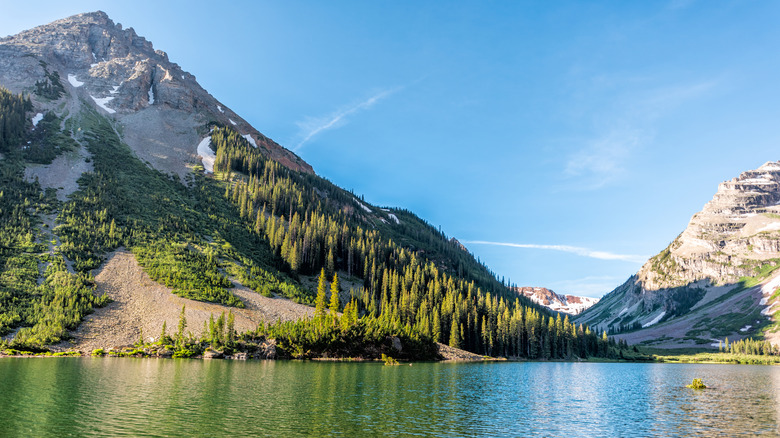
If you're already at Maroon Lake, you might as well hike up to Crater Lake while you're at it. Just like its stunning neighbor down the valley, minimal silt buildup and the generous helpings of glacial meltwater over many millennia have kept Crater Lake looking unbelievably clear. The water is so transparent that you could stand at the lakeshore and count the number of pebbles through the rippling surface. Views of the Maroon Bell peaks are just as picturesque from here, and the surrounding woodlands are crisscrossed with winding trails for backcountry hikes.
Crater Lake is joined to Maroon Lake by a relatively short point-to-point trail taking roughly one hour to hike each way. The path inclines steeply at certain sections and is littered with boulders, so make sure to bring appropriate footwear. Upon reaching the southwestern shore of Maroon Lake, the craggy trail veering off towards Crater Lake brings hikers through the Maroon-Snowmass Wilderness, where pine trees unfurl against the horizon and the spring thaws unleash tumbling cascades. Swimming is also prohibited in Crater Lake, but the high-altitude scenery more than makes up for it.
Late spring and summertime will be the best season to hike the trail to Crater Lake, when the slopes are a vibrant green and the mountain peaks are lightly dusted with snow. Wildlife may appear at any moment; moose roaming between the trees, and foxes dashing through the underbrush. The surrounding woodlands and grassy meadows are particularly mesmerizing during the soft golden tinge of autumn, but be aware that Crater Lake will most likely be completely dried up by October, with the waters slowly receding as the months grow colder. Spend the night camping at one of the lakeside campgrounds and wake up to the mountain scenery bathed in a serene morning glow.
Island Lake
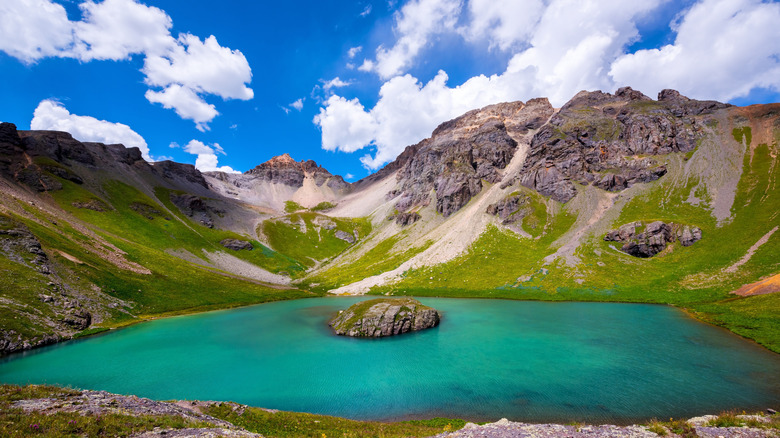
Named for a rounded boulder rising from the center of an ethereally glacial pond, Island Lake is a dazzling oasis amidst the jagged peaks encircling its shores. The slopes are tinged green with downy grass before swooping upwards to form bulbous, rocky mountainsides, perfectly framing the icy blue lake in a snapshot of alpine tranquility. Sitting at a staggering 12,000 feet above sea level within the San Juan Mountains, standing on the shores of Island Lake was described by a previous visitor on Google as "genuinely the most beautiful thing [they've] ever witnessed."
Formed by the trickle of melted glacial water, Island Lake glows a brilliant shade of aquamarine particularly in the morning sunshine, and even under overcast skies is still unbelievably luminous. Streaks of snow whiten the mountaintops all throughout the year, and the lake is sometimes still partially frozen even during the summertime. The sub-zero temperatures mean swimming is off-limits of course, and the low levels of algae and sediment in the water all contribute to Island Lake's crystalline consistency. A trail through the mountains joins Island Lake with Ice Lake, another crystal-clear alpine pond with picturesque views.
Hikers should be prepared for a difficult trek, which a previous visitor on Google described as "not for the faint of heart". The trail increases in elevation drastically throughout the ascent, and the high altitude might be jarring for more casual hikers. The trailhead begins at the South Mineral Campground just a short drive west of Silverton, a high-alpine town with gold rush saloons and scenic trains. Though certainly tough, the hike is by no means impossible, and with plenty of breaks along the way, you will be rewarded with a breathtaking vision atop one of Colorado's most crystal-clear lakes.
Hanging Lake
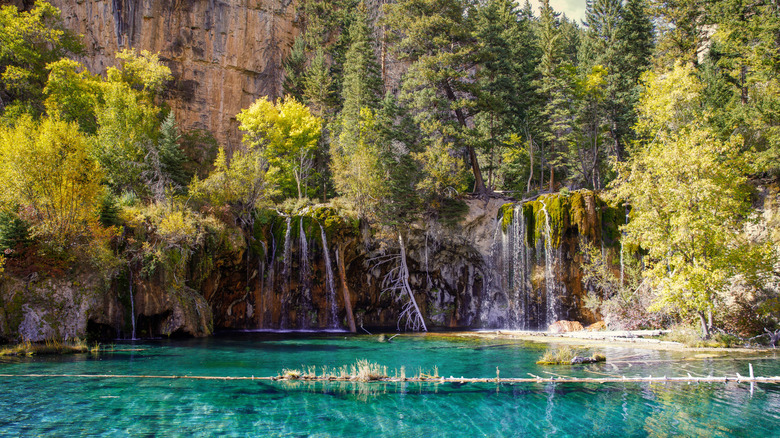
At the end of a tough but picturesque hike through Glenwood Canyon is Hanging Lake, an otherworldly gem with ethereal green waters. Wedged like a shiny jewel at the bottom of the canyon's travertine basin, this ethereal lake is now a National Natural Landmark for its impressive geological features. A glance into the shimmering emerald surface reveals the bumpy lakebed below, where trout dart between the fallen branches and smoothed boulders. Situated within the White River National Forest, Hanging Lake is only about an hour-and-a-half drive north of Maroon Lake.
A frothy cascade, known as Bridal Veil Falls, flows like a sheet down the rugged cliffs fringing the shores of the lake, and the glowing green hue comes from the rich minerals left behind by the tumbling water. Moss-covered logs bobbing just below the waterline feels like the fossils of prehistoric creatures. The chemical ecosystem within Hanging Lake is extremely fragile, and the oils from human skin coming into contact with the water could drastically change the luminous colors, which is why swimming is strictly forbidden. Due to significant crowds, a permit is required to hike the trail up to Hanging Lake, which can be reserved in advance through the official website.
Like the trek to Island Lake, the backcountry trail to Hanging Lake can be extremely challenging for those unaccustomed to vigorous exertion. "I didn't think I could make it", a visitor shared in a Google review. However, the short overall distance and benches scattered along the way make it manageable, with an incredible payoff at the end. Another trail just beyond Hanging Lake brings hikers to the Spouting Rock Waterfall, which plummets down from a jagged ledge towering above the lake. A boardwalk circles the shore, offering ample space to sit and soak up the scenery.
Emerald Lake
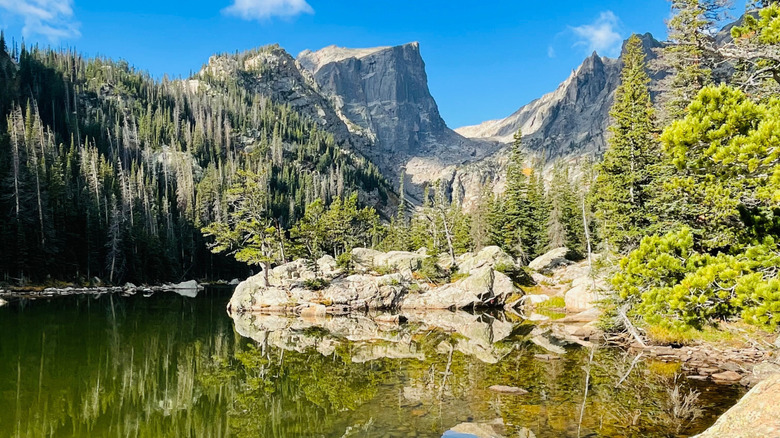
Amidst the spiny ridges and evergreen woodlands of the Rocky Mountain National Park, the glittering alpine shores of Emerald Lake await. Boasting a smooth, glassy surface, early morning sunshine often reflects the soaring crags of Flattop Mountain and Hallett Peak rising majestically in the distance. Standing at the shore, the water is as translucent as a thin sheet of cling film stretched across a deep blue basin. Snowmelt trickles down into Emerald Lake from the slopes of the imposing Tyndall Glacier, which straddles Flattop Mountain and Hallett Peak, and often attracts backcountry skiers.
The hike to reach Emerald Lake is much more manageable for all skill levels compared to Hanging Lake and Island Lake, but the altitude of more than 10,000 feet could still make the journey physically straining. Be prepared for elevation gain as the trail winds through the mountains, and take plenty of breaks. A previous hiker shared on Google that the journey "rewards you with views that look like a postcard." What's more, the trail passes three other lakes on the way up to Emerald Lake, offering ample opportunity for a picturesque rest stop.
Beginning at Bear Lake, a short walk brings you to Nymph Lake, then meanders uphill through pine groves to Dream Lake, where an overlook opens up to sweeping mountain scenery. The steepest portion of the trek is from Dream Lake up to Emerald Lake, where the trail ends. Pack a light lunch to enjoy by the lakeshore, where clusters of flat rocks offer a seat to admire the alpine view. While swimming in Emerald Lake isn't strictly prohibited, keeping out of the water ensures it stays crystal-clear for future visitors. The trailhead at Bear Lake is only a 30-minute drive from Estes Park, a storybook escape with roaming elk and majestic views.
Methodology
With such a vast number of lakes in the state of Colorado, narrowing this list down to just five of the most pristine was certainly a challenge. There are doubtless many more stunning Colorado lakes with equally as crystal-clear depths which weren't included in this ranking. These five particular lakes were selected primarily for their high elevation along with their source water originating from glaciers.
Based on data from the Washington Trails Association, lakes found in alpine environments are much clearer due to the cooler temperatures, which stunts the growth of algae or other plant life that could cloud the water. According to NASA, meltwater from glaciers, which are composed of densely compacted ice, reflects natural light in such a way that the water takes on a brilliant blue shade. This, combined with the restriction on human contact with the water, have ensured that these lakes rank among the clearest in Colorado.
Further criteria in selecting these lakes came from reputable travel sites, confirming that these five lakes are popular with visitors and therefore would not be so remote as to be unreachable, especially for more casual travelers. Online reviews from hikers who had visited these lakes also informed the ranking, confirming that the water is still indeed crystal-clear and worth visiting.