
The 5 Best Stops On A Scenic Road Trip Between Las Vegas And Zion National Park
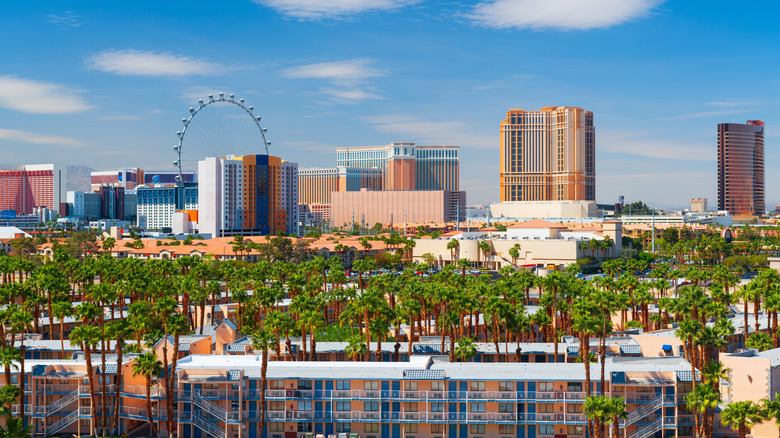
Road trips are an essential part of the American vacationing experience, and with so many states and regions available, it's hard to pick one route. Sin City is a great jumping-off point for many great adventures, with some of the best stops for a breathtaking road trip found between Las Vegas and the Grand Canyon. Another fantastic option for your next vacation is discovering the must-see attractions between Sin City and Zion National Park, which can make for a delightful road trip.
Overall, this particular route only takes a little over two hours if you head straight to your final destination — but what's the fun in that? Take some time to appreciate the journey. Not only do you pass through three states (Nevada, Arizona, and Utah), but you can also expect many incredible sights worth visiting along the way.
While there are some essential stops, note that the entire route is full of hidden gems and charming small towns that you might end up uncovering for yourself. In fact, if you were so inclined, you could probably take a whole week going from Vegas to Zion and not run out of things to do. Additionally, since visitors to Zion National Park are likely drawn by a love for the outdoors, these main stops often offer remarkable natural scenery that serves as a fitting prelude to the park's awe-inspiring landscapes.
Hoover Dam and Boulder City, Nevada
If you're exploring the area outside of Las Vegas, the Hoover Dam is one stop that must be on your bucket list. This incredible feat of engineering is as impressive today as it was when it was built, back in 1936 (although work started in 1931). The dam receives about seven million visitors per year, putting it on par with similar world-renowned monuments and destinations. It's one of those places that pictures can't capture accurately (much like the Grand Canyon). Instead, it's something you have to see for yourself to truly appreciate.
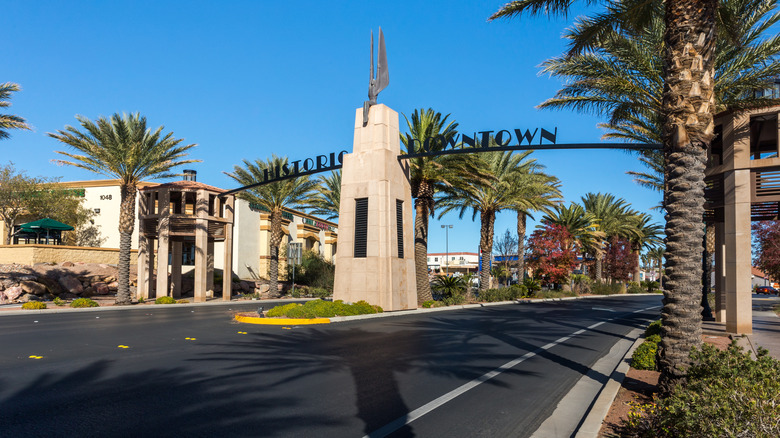
But the dam itself is only part of this leg of the trip. Nearby is Boulder City, a charming Nevada destination and historic artsy gem. The town was created for the workers of the Hoover Dam, and it still retains its 1930s elegance and vibe. Another reason it feels so different from other parts of Nevada is that it's one of the only cities in the state that has banned gambling. So, if you need a break from the hustle and glitz of the Strip, a day in Boulder City can help you reset.
While you're in town, you can learn more about its history and the construction of the dam at the Boulder City Hoover Dam Museum. The city also houses the Nevada State Railroad Museumand Tom Devlin's Monster Museum, so you can spend all day admiring historical and pop culture artifacts. Then, when you get hungry, check out local dining options like The Dillinger, a gangster-themed joint, Hawaiian Restaurant 1933, that takes you back to the days of the dam's construction, or Hangar 502, a chic bar and grill.
Valley of Fire State Park, Nevada
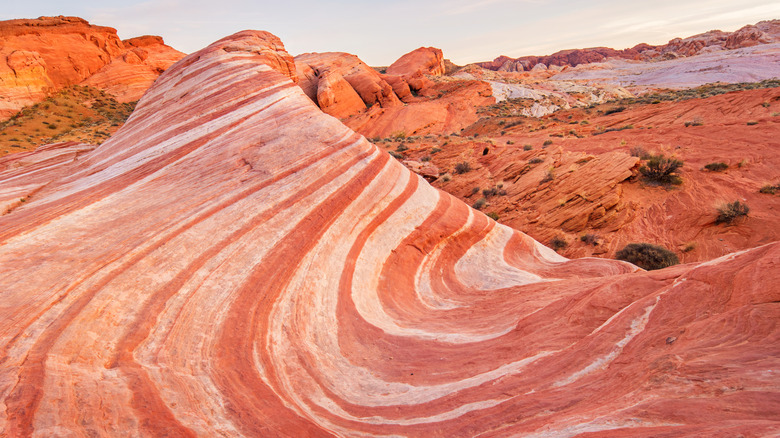
Once you've had your fill of Boulder City, you can follow the contours of Lake Mead and head about an hour north to the Valley of Fire State Park. If you've ever been to Red Rock Canyon in Las Vegas, you know how crowded it can get, but Valley of Fire offers similar fiery vistas (or better, depending on who you ask) with much fewer people. Here, you can stretch your legs and explore more of the terrain on your own terms, rather than waiting for groups to disperse.
Like the Hoover Dam, photos don't really do the park justice. Here you can stand amidst 40,000 acres of bright red Aztec sandstone, petrified forests, and 2,000-year-old petroglyphs for a truly unique experience. Just keep in mind when planning your trip that some of the most popular trails are closed between May 15th and September 30th due to heat, so it's best to visit outside of these dates.
If you're looking to extend your road trip and stay longer around the Valley of Fire State Park, you can spend the night at one of its 72 campsites. Or, if you're traveling with an RV, you can reserve a pad with power and water hookups. At the time of this writing, Valley of Fire State Park is open from sunrise to sunset every day of the year, and admission is $10 for Nevada plates and $15 for out-of-state plates.
Virgin River Canyon Recreation Area, Arizona
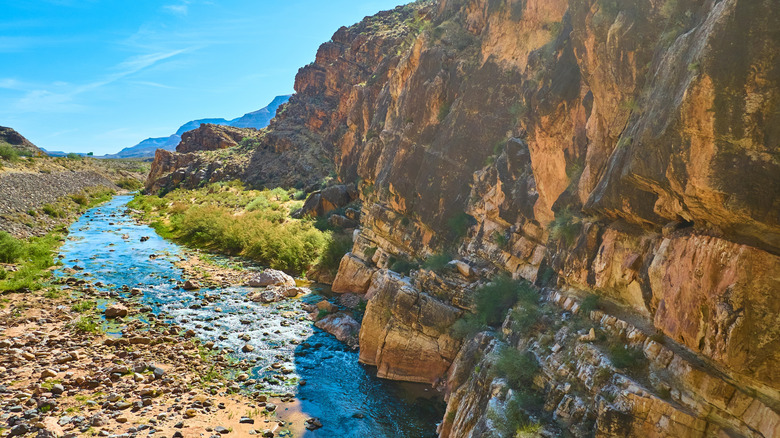
Whether you spend the night at Valley of Fire or just stay for the day, your next leg will be another hour north to the Virgin River Canyon Recreation Area. At this point, you're in the northwestern corner of Arizona, and while it's no Grand Canyon, the Virgin River has carved some impressive scenery of its own. Best of all, the entire recreation area, including the Virgin River Canyon and Gorge, is along I-15, so you can explore the entire site without getting off track.
The recreation area is managed by the Bureau of Land Management, and it only costs $2 to get in for the day at the time of this writing. If you want to spend the night at one of the campsites, it costs another $8. Virgin River's 25 best campsites are available to reserve through recreation.gov, but there are also another 83 sites that have a first-come, first-served policy. Also, while there are RV parking areas, there are no water or power hookups available, so plan accordingly.
To make the most of your time exploring the park, you can enjoy the river, the canyon, and the gorge by taking various hiking trails. Visitors are also allowed to climb the gorge, so if you're into rock climbing and have all the right gear, you can take on the destination's cliffs and get a unique view of the surrounding area. In fact, climbing the gorge is something of a pastime for seasoned enthusiasts since the 1990s, with many remarking that the site's natural limestone is perfect for climbing.
St. George, Utah
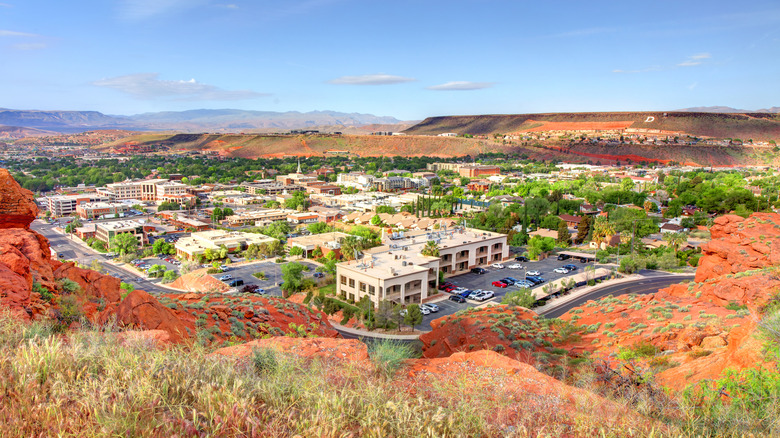
The next stop on your adventure towards Zion National Park is on the edge of Utah and Arizona. St. George is southern Utah's largest city, and it's an underrated paradise surrounded by striking red cliffs. It's also just about 20 minutes north of the Virgin River Recreation Area, so you'll be there in a heartbeat.
As you might expect from a wild Utah town, St. George is full of outdoor spaces and adventures. The city is packed with some incredible parks, allowing you to continue to stretch your legs and prepare yourself for the awe-inspiring sights of Zion. Some of the more notable parks in St. George include Fossil Falls Park, which features eight dinosaur fossils, Springs Park, which is next to the Virgin River and has its own pond with geese and ducks, and Thunder Junction All Abilities Park, which offers wheelchair-accessible equipment and a 1/4-scale train on a 2,700-foot track. Thunder Junction is also one of the best places for live entertainment and festivals, as it hosts seasonal events throughout the year.
If you're still looking for something a bit wilder and more untamed, St. George has you covered. On the northern edge of town, you can wander through the St. George Narrows, a natural cliff with red walls. Alternatively, on the opposite side of town, you can explore the White Dome Nature Preserve, home to the unique dwarf bear poppy, which only grows in this region. Or, if you want to experience more of Utah's native history, you can visit Petroglyph Park before heading up to either the Montezuma or New Bearclaw Poppy Navajo trailheads for some stunning hikes and biking opportunities.
Sand Hollow State Park, Utah
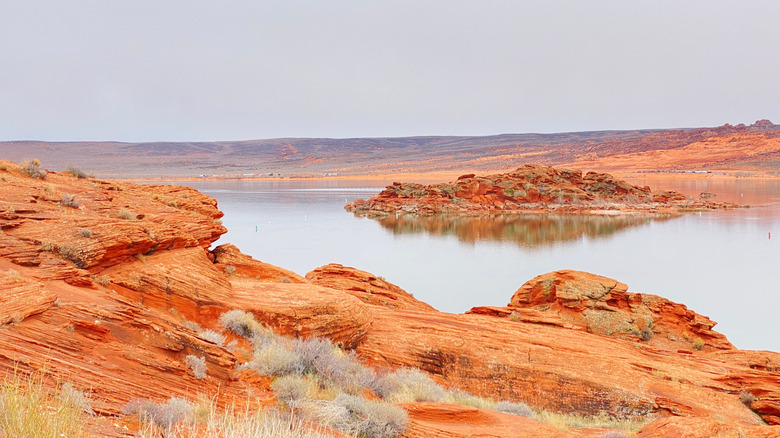
Since Zion National Park is practically outside of St. George, think of Sand Hollow as the final small bite before the main course. Sand Hollow State Park promises an otherworldly red-sand beach vacation, which makes it almost as enticing as Zion. It's a perfect stop for travelers seeking one last scenic adventure before entering Zion's towering canyons.
A big reason why Sand Hollow State Park is so inviting is that it wraps around the Sand Hollow Reservoir, so you're next to a large body of water in the middle of what is basically a desert landscape. It also means you can boat, fish, and swim here, which is harder to do in Zion because the park doesn't have many water features (the ones it does have are hard to reach). In fact, water activities are the main reason to add Sand Hollow to your road trip, especially with the red sands providing stunning backdrops for photos. It's also a fantastic locale for off-roading, so if you happen to be towing ATVs or dirt bikes, you can cut loose on multiple trails throughout the park.
The other reason to put Sand Hollow on your itinerary is to camp next to the water. There are several campsites scattered around the reservoir, and you must reserve your site on a four-month rolling basis. While this means it's relatively easy to book a last-minute stay, you can't plan too far in advance. Plus, there are RV hookups if you're road-tripping in a motorhome or camping trailer.
Methodology
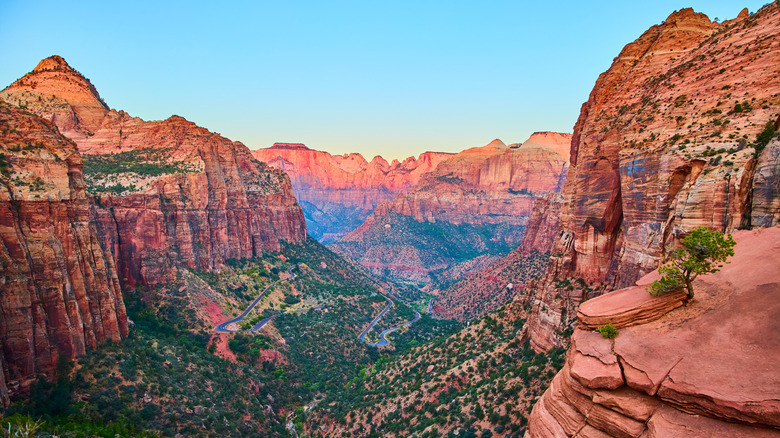
In this case, our methodology wasn't based on where you're coming from, but where you're going. Yes, Las Vegas is popular for its incredible restaurants, world-class attractions, and gambling opportunities, but Zion National Park is known for having some of the most stunning scenery in the entire country. So, these stops were chosen for travelers who want to experience as much of the natural landscapes of Nevada, Arizona, and Utah as possible, ideally while camping or RVing. These sites help you reconnect to nature on your way to one of the most spectacular national parks.
That said, we also somewhat eased into the "wild" elements, which is why the road trip starts with Boulder City and ends at a state park just outside of Zion, where off-roading and camping under the stars are par for the course. Ultimately, you can choose whatever kind of road trip you like, but if you follow this itinerary, you can really get in touch with the American Southwest in a way that can turn a "vacation" into a transcendent experience.