
Oregon's Wilderness Hot Springs Are Magical In The Snow, Here's How To Safely Plan A Visit
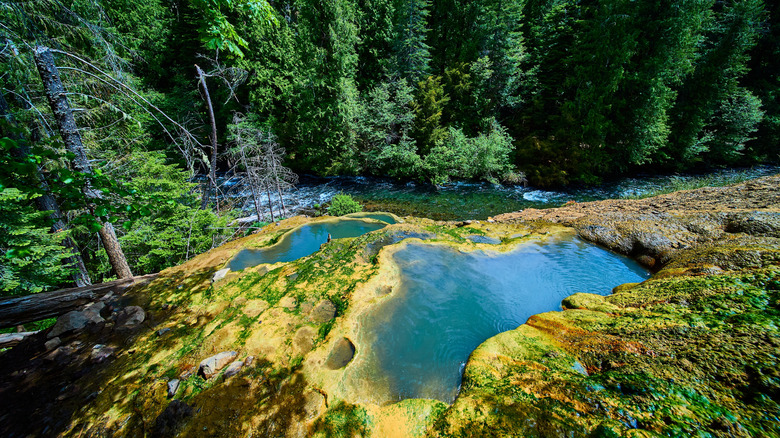
Oregon is home to plenty of geothermal hot spring pools, with many located inside its backcountry and wilderness areas. In the northern half of the Beaver State is Bagby Springs, an underrated outdoor experience in a national forest, while the southern half is home to the one of the most breathtaking natural hot springs in the Pacific Northwest — Umpqua Hot Springs. Both locales are considered among the state's most popular thermal waters, known for their scenic settings that only require a hike and a small soaking fee. You'll find Bagby Springs inside the Mount Hood National Forest, just 65 miles from Portland along the Clackamas River. The thermal waters at Bagby are fed by three major springs, and reach a temperature of 138 degrees Fahrenheit. Umpqua Hot Springs lies in the heart of the Umpqua National Forest, 63 miles from the city of Roseburg above the North Umpqua River. Here there are eight total soaking tubs, five upper tubs, including one with a wooden shelter, and three lower pools. The water at the top is the warmest, reaching 115 degrees Fahrenheit, according to Soak Oregon.
Both locales are open year-round for taking a dip, but the accessibility of reaching them during winter months can become challenging due to potentially adverse weather conditions and road closures. Although they are approximately 250 miles apart, the magical feel of snowy conditions around Bagby Hot Springs and Umpqua Hot Springs entice visitors to attempt a winter trip. Forest officials tend to err on the side of caution, but ultimately want to ensure that potential visitors make safety the top consideration before heading out. If you're tempted to make the trek during snowy weather, you'll need to be properly prepared for the most enjoyable and safe experience with warm clothing, proper footwear, and even microspikes.
Planning a winter trip to Bagby Springs
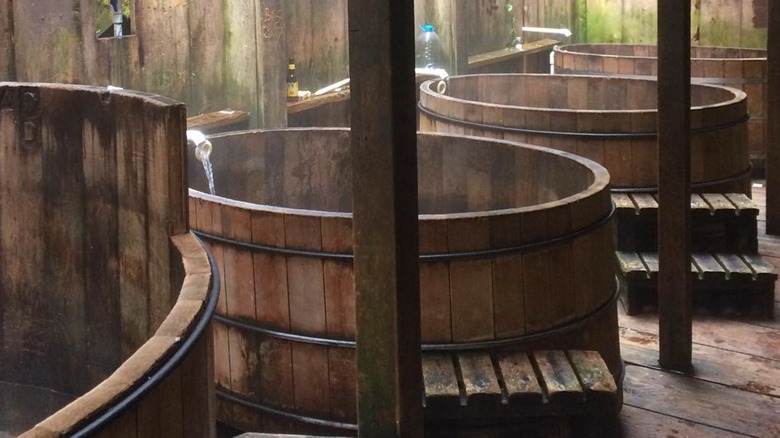
Bagby Hot Springs is 51 miles away from the equally appealing winter destination of Government Camp, a Bavarian-style village and gateway to year-round mountain lakes, trails, and skiing. The site offers five hot spring pools, with four group tubs at a lower bathhouse and a larger, more private tub at an upper bathhouse. During normal conditions, reaching Bagby means making a 1.4-mile hike from the Bagby trailhead, which is tucked six miles down Forest Road 70. Winter months mean harsher conditions and poor road maintenance, with Forest Road 70 closed, making the trek as far as 7 miles one way, or 14 miles round trip on foot, without cell coverage. Proper foot traction is key to making the trip, which means some have chosen to use snow shoes or skis, depending on conditions. Be sure you're properly equipped, in good physical condition, check road conditions, and have a map, such as the one provided by Soak Oregon. You can also contact a ranger at the Clackamas Ranger Station by calling 503-630-6861 for advice.
You might also seek guidance from adventurers who have previously made treks to Bagby during winter. In a nine-year-old Reddit thread, users discuss a winter trip to Bagby, noting that they didn't have to use snowshoes, but loved the privacy afforded by others not attempting the trip. They chose to head in from the town of Estacada, the century-old timber town, and birthplace of geocaching. Another, more recent, Reddit thread had dozens of reviewers claiming that you shouldn't attempt to visit the hot springs in winter, with one stating that, "I drove to Bagby once in winter and the snow was so deep between the tire tracks we got stuck in the middle of nowhere, late at night."
Visiting Umpqua Hot Springs in winter
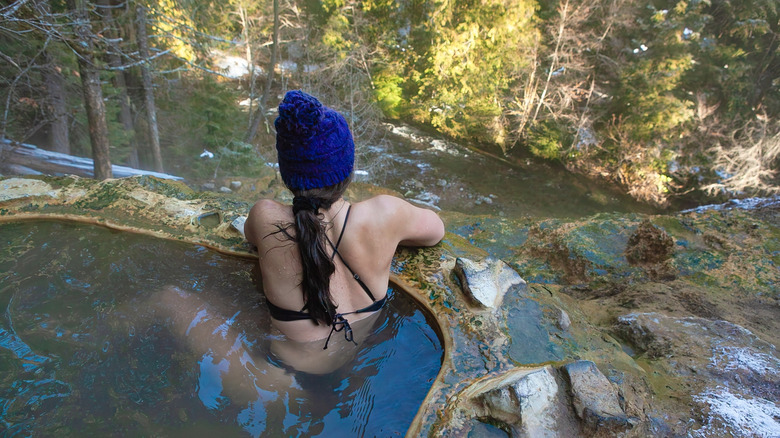
For Umpqua Hot Springs, visitors typically drive to Umpqua Springs Trailhead and then undertake a steep quarter-mile hike to reach the hot springs themselves. In winter, rangers typically close the vehicle access gate at Forest Roads 34 and 3401, adding a 2.5-mile trek to the trailhead, as noted by Soak Oregon. Like at Bagby, you'll want to check road conditions and not overlook conditions and personal abilities. Officials here advise contacting the Toketee Ranger Station at 542-496-3532 or the Forest Service supervisor's office at 541-440-4930.
Bloggers Gwy and Ami recommend bringing along proper winter gear for both you and your vehicle in their guide to visiting Umpqua Hot Springs in winter. They also reveal the exact location of the winter trailhead. If you do decide to head out in the snow, be sure to bring along plenty of drinking water, a waterproof bag, and a quick-dry towel. You're also advised to follow Leave No Trace principles, with a plan to carry out all trash and human waste from the site.
If you choose to heed official guidance or know you're not up for the challenge, consider visiting other Oregon hot springs. One option is McCredie Hot Springs, approximately 50 miles southeast of Eugene, Oregon, which has easy access during the winter months. It's an easy quarter-mile walk from the McCredie Day Use parking area inside the Willamette National Forest, off of the Willamette Pass Highway, per Soak Oregon. With Salt Creek as its water source, approximately two to four pools are formed, depending on seasonal conditions. There's currently a $5 per vehicle day-use fee to be paid. The site is primitive, aside from on-site restrooms, so leave no trace principles apply.