
The 5 Biggest Lakes In America (That Aren't The Great Lakes)
You might not realize just how full of lakes the United States is: 7% of its total surface area is water (which includes lakes and reservoirs), according to the U.S. Geological Survey. The area covered by water, if put all together, is more than twice the size of Italy. Barring the Great Lakes, which account for a big chunk of this surface area, other lakes have a major role in the communities they neighbor, too, powering cities, shaping local identities, and drawing in travelers for their recreation and views. These lakes are excellent spots for wildlife viewing as well, nourishing unique microclimates and sometimes accommodating species found nowhere else.
Lakes are a huge part of states' natural landscapes and travel appeal. While the Great Lakes are the most famed, it might come as a surprise to discover just how big some of the other lakes are across the country. To rank the five next biggest lakes, we used water surface area as the determining metric. Their size doesn't necessarily mean they're the cleanest or clearest lakes in America, but it does offer the appeal of getting to look out across the sweeping horizons, as if staring over a sea, without having to go to the coast. Plus, along their winding shorelines, you'll find there are many historic sites, recreational facilities, and sometimes, swimming beaches.
Lake of the Woods, Minnesota
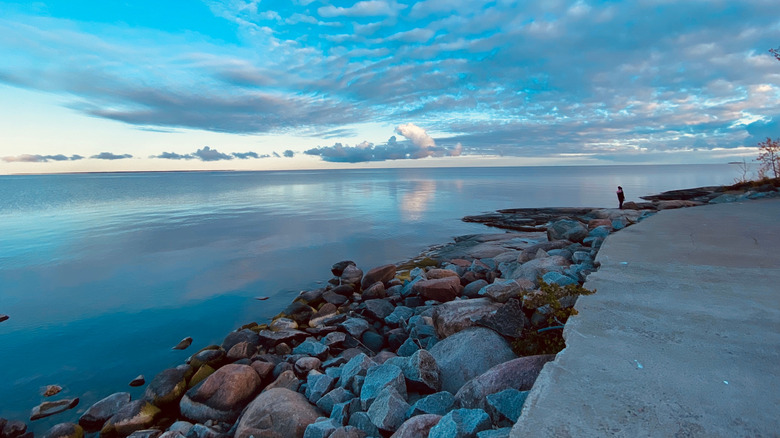
With a surface area of 1,727 square miles, Lake of the Woods is sometimes referred to as the sixth Great Lake. It occupies the northern tip of Minnesota, spread across the U.S.-Canada border. At its deepest point, the lake is 310 feet, and its zigzagging shoreline is in fact longer than Lake Superior's. The lake is sprinkled with nearly 15,000 forested islands, including the scenic Oak Island, with lakeside cabins and year-round activities.
For all its water activity potential, perhaps what Lake of the Woods has become most renowned for is its fishing. The Minnesota tourism board calls it the "Walleye Capital of the World," though sauger, northern pike, perch, crappie, and bass are also abundant catches in the lake. Its walleye reputation was solidified by the catch of a 40-foot walleye, which was named Willie Walleye. To commemorate the event, there's a statue of the giant fish in the nearby town of Baudette, Minnesota. Baudette could be a good place to make your homebase if you want to go fishing on the lake — from town, it's about a 15-minute drive to Wheelers Point, one of the lake's main fishing gateways.
For swimming and camping, head to Zippel Bay State Park along the Lake of the Woods' shore. There's a three-mile, sandy beach here, which gets surf comparable to ocean waves. The park is open year-round, though its temperatures are mostly comfortable for swimming in June, July, and August. In the winter, Lake of the Woods becomes a different kind of frozen attraction. The ice of the lake becomes thick enough that you can drive across it, on a maintained, 30-mile ice road.
Great Salt Lake, Utah
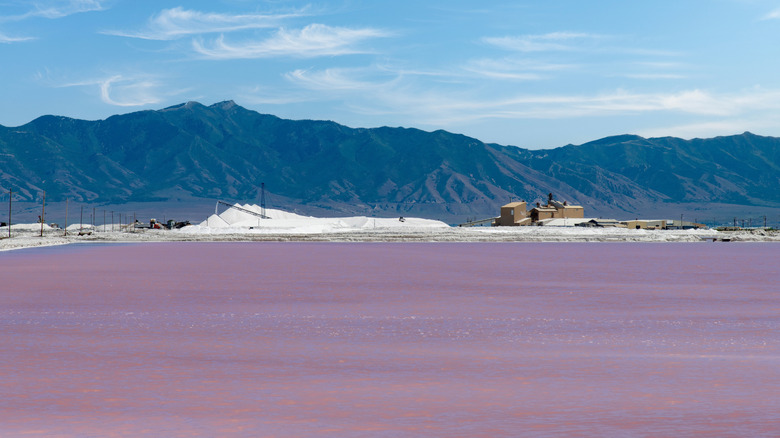
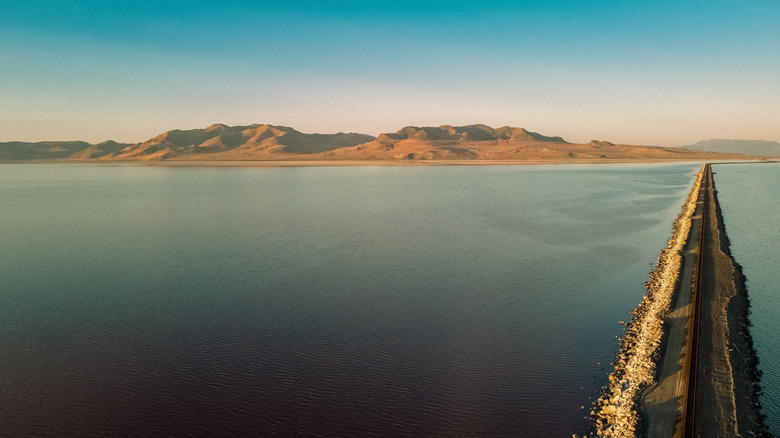
The Great Salt Lake is Utah's backbone, lending the namesake of the nearby Utah capital, Salt Lake City, and underpinning major Utah industries. According to the Northern Arizona University Review, the Great Salt Lake powers 9,000 jobs, related to mineral sourcing, recreation, and shrimp harvesting. The latter is contingent on the lake's unique saline quality: It's the largest saltwater lake in the country, with a surface area of 1,700 square miles. The lake has experienced some fluctuation in recent years, though, shrinking down to 888 square miles in 2022, when it reached a historic low water level.
Besides its critical role in local economies and as an even vaster resource for minerals and aquaculture, the Great Salt Lake is a major landmark for sightseers and photographers. The lake appears pink in areas, particularly in the northern leg and around Stansbury Island, one of the most mesmerizing in the Southwest, due to the presence of colored microorganisms that thrive in its high salinity. At the north shore of the lake, in Rozel Point, is the iconic land artwork called "Spiral Jetty" by Robert Smithson. Made up of dark basalt rock in a spiral formation, the artwork is a marvel to see when the lake levels fall to reveal it.
You can also swim at designated spots around the lake. The water is known to be super buoyant because of the salt-induced density, so people easily float on its surface. One of the most cherished recreational areas, with sandy swim beaches, is Antelope Island State Park. It's one of the more accessible locations on the lake's shores, too, about an hour drive from the Salt Lake City International Airport.
Iliamna Lake, Alaska
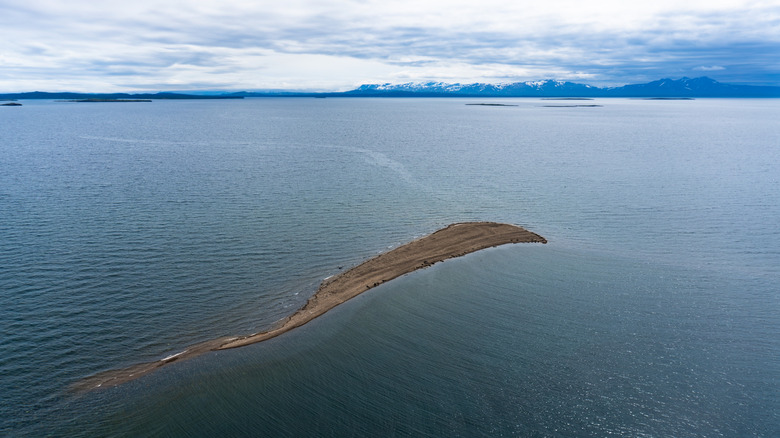
Iliamna Lake spans about 1,000 square miles across Southern Alaska. It's Alaska's largest lake and a mythical wilderness with rich wildlife. There are no main roads that connect to the lake, and for travelers, the only ways to reach the lake are by chartered flights or water taxi. Its remoteness, combined with its unsettling depth (reaching over 300 feet deep at points), have made Iliamna ripe for the emergence of legends about what might lurk in its immense, secluded waters. Alleged sightings of a lake monster in Iliamna began in the 1940s, and in the decades since, multiple pilots and locals have reported seeing a giant creature surfacing its fins out from the water. Some attribute the monster sightings to beluga whales, which can enter the lake from the Bering Sea.
Monsters aside, Iliamna Lake's less mythical but no less iconic inhabitants are its sockeye salmon. It hosts the largest sockeye salmon fishery in the world, in fact. Sometimes up to 30,000 salmon surge upstream per hour as they migrate along tributaries of the lake during peak migration season, usually in mid-summer. A couple of fishing lodges dot the villages around the lake for those who want to cash in on its fish runs. Rainbow King Lodge in Iliamna has 4.9 stars on Tripadvisor and flies guests in from Anchorage every week.
The appeal of visiting Iliamna Lake lies largely in going somewhere not many others go. Difficult to get to, largely undeveloped, and populated only by small towns on its shores, it takes a lot of planning to do an Iliamna trip, but you'll be rewarded with incredible wilderness. Seals, brown bears, and moose are known to roam around the lake.
Lake Okeechobee, Florida
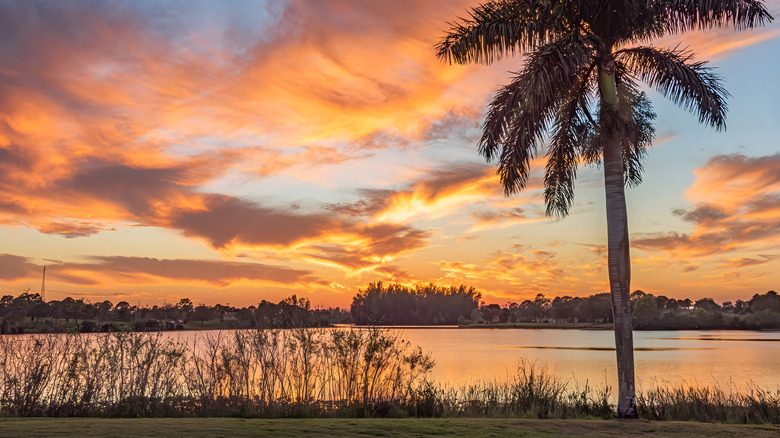
Florida's Lake Okeechobee is 730 square miles, making it the largest lake in the Southeastern U.S. While a vast aquatic expanse when seen across the horizon, the lake is quite shallow, averaging only 9 feet deep. It's a natural lake, feeding a watershed in the Everglades and supporting surrounding tribes well before Spanish explorers came to Florida in the 1500s. Today, it's completely encircled by an earthen dam, the Herbert Hoover Dike, to bar it from flooding. The dike doubles as the 110-mile Lake Okeechobee Scenic Trail, with access points dotted all around the perimeter. Its official trailhead in the town of Okeechobee is just over an hour drive from the Palm Beach International Airport.
The trail offers a great way to take in Okeechobee's beautiful sea-like vistas, though you might want to avoid going into the water. It's been named the dirtiest lake in America, and it's filled with snakes and alligators. Frequent toxic algae blooms in the lake have also incited swimming closures in the past.
Swimming aside, the lake offers plenty of other feasible recreational opportunities. It's particularly beloved by boaters, being a key link along the 152-mile Okeechobee Waterway, which connects the lake to canals and rivers across South Florida. The route, accessible to boats, allows you to sail all the way from the Atlantic Ocean to the Gulf of Mexico. Meanwhile, fishing boats can anchor in the lake itself to take advantage of its world-class bass and crappie fishing. Local fishing is celebrated at the annual Speckled Perch Festival in Okeechobee, marked by a parade and fish fry.
Lake Oahe, North and South Dakota
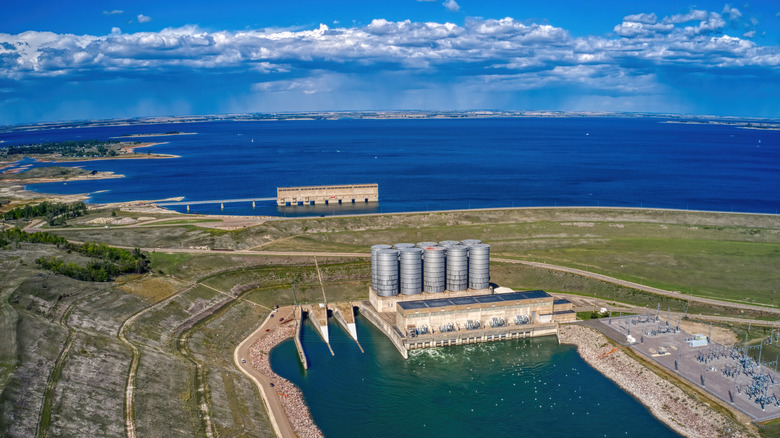
A snake-like reservoir formed by a dam on the Missouri River, Lake Oahe has a surface area of 310,000 acres, which converts to about 484 square miles. Even more notable, perhaps, is its length, stretching 231 miles from Pierre, South Dakota, to Bismarck, North Dakota. Although the banks of the Missouri River have existed long before the area was ever settled, Lake Oahe itself is relatively new, with the dam forming it completed around 1959. The Oahe Dam, located in Pierre, is an interesting site to stop by on a visit to the lake. A visitor center traces the history of the dam's construction and sometimes offers free tours of the dam's powerhouse.
The southern side of the lake close to Pierre has tons of designated recreational areas. One standout is the Cow Creek Recreation Area, about a 25-minute drive from Pierre. The site has boat ramps, picnic shelters, and toilets, plus a campground with both primitive camping and cabins available. Shoreline fishing is abundant, with a particularly noteworthy walleye population. The area is also a birding hotspot, with nearly 200 different indexed species on eBird.
On the North Dakota side of Lake Oahe, there's the Beaver Bay Recreation Area. It's a more remote site, but it's a great spot to set up camp away from crowds and commotion, with electric hookups, boat ramps, grills, and seasonal showers available. This park is about an hour's drive from Bismarck.
Methodology
The baseline metric used for our ranking of the biggest lakes in the U.S. (outside of the Great Lakes) is surface area, measured in square miles. This provides a consistent, comparable measure of a lake's size that's reflected in its scope when visited. Data for lakes' sizes was compiled from state and federal-level natural resource agencies or reputable, local organizations when government sources weren't readily available.