
Colorado's 5 Best Stargazing Spots That Deliver Breathtaking Views
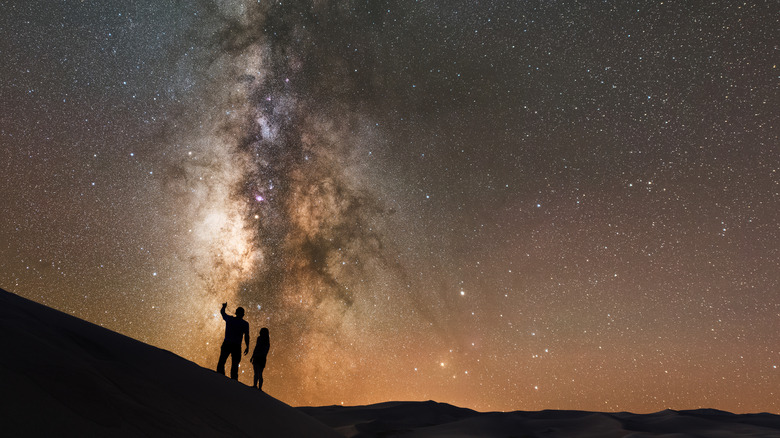
When you explore Colorado, you can see some of the most dramatic, wild landscapes of the American West, from towering mountain peaks to sweeping sand dunes. If you're willing to brave the darkest nights imaginable, the most truly breathtaking sights might just be the ones you see after the sun sets. Colorado has some of the absolute best spots for stargazing on the planet. In fact, Colorado has more Certified DarkSky Places than most other states in the union, per DarkSky Colorado. These places include parks, and entire communities dedicated to keeping the skies free of light pollution. Head to any of these incredible destinations overnight, look upwards, and you just might see an unparalleled tapestry of twinkling stars, and even the edge of the Milky Way Galaxy.
While you can absolutely go out driving late at night, and pull over near some great stargazing locations, the safest, most relaxing way to stargaze is probably to camp near your chosen stargazing site. Then, all you have to do is make your way back to your tent afterward. To ensure a great experience, though, make sure to keep your eyes on the weather conditions, and the phase of the moon. Arriving on a cloudy night, or having the stars outshone by the moon, will surely ruin your stargazing trip. Make sure that you aren't creating any light pollution yourself, either. Remember to keep your lights off once the sun goes down. If you need something to help you find your tent when you're done, choose a red headlamp or flashlight. It might look a little spooky, but your fellow stargazers will thank you for it.
Chasm View at Black Canyon of the Gunnison
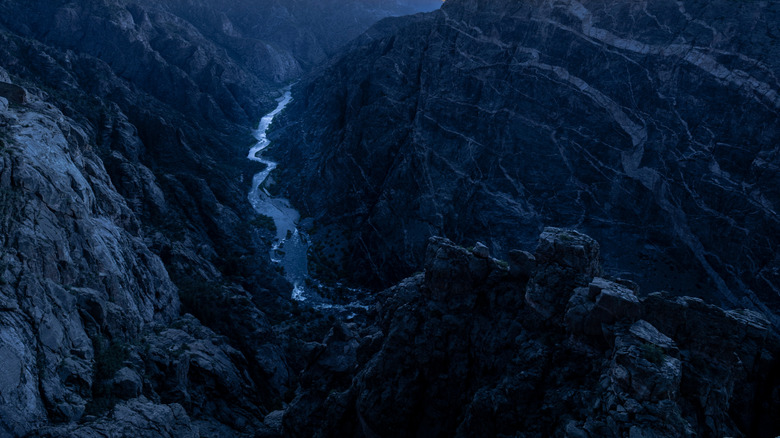
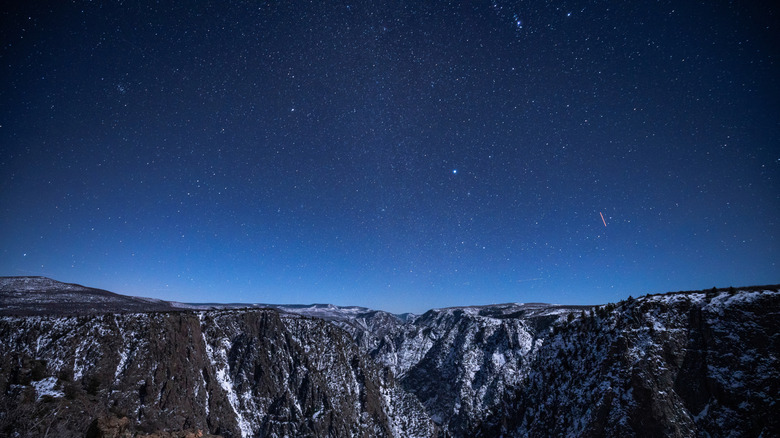
Black Canyon of the Gunnison is an underrated Colorado National Park whose dramatic cliff views will leave you breathless, and after night falls, the views above rival any on the ground. In this ancient place, a raging river has carved a narrow gorge into the mountains, causing steep cliffs to rise up almost vertically on either side. The resulting chasm is nearly black — and rivaling the blackness of the canyon is the darkness of the night sky. This remote place, far from the lights of civilization, gets seriously dark, allowing the stars to shine brighter than almost anywhere on the planet.
Black Canyon of the Gunnison is one of the best national parks in America for stargazing, and if you're looking for a good place to start, try its Chasm View Overlook. This is a spot the National Park Service suggests for hopeful stargazers, as it's perfect for seeing the wide open sky above the canyon. You'll have to hike a short part of the Chasm View Nature Trail to get there, but don't plan on doing the full loop after the sun sets. Black Canyon of the Gunnison National Park doesn't close overnight, so you can come and stargaze any time you want, but the easiest way might be to book yourself one of the 13 campsites at the North Rim Campground, about five minutes from the overlook. The campground is only open between May and mid-November, but that is probably the best time to plan a stargazing trip, anyway. The weather be warmer for overnight adventures, and the Milky Way shines brightest in the summer.
Split Mountain Campground at Dinosaur National Monument
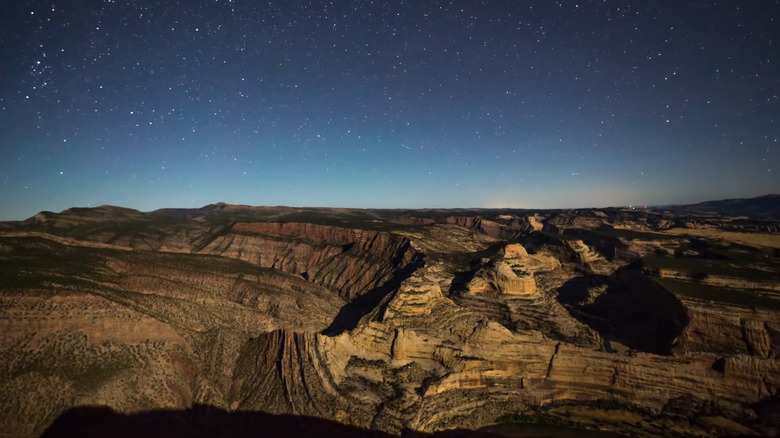
A hidden gem of the National Park System, Dinosaur National Monument is situated right on the border between Utah and Colorado. There, travelers can raft on the river, hike in the desert, look for dinosaur bones, and be astounded by the startlingly bright stars overhead. While you might not be able to see dinosaurs roam the landscape, you can look up at a night sky almost untouched by light pollution, and imagine what it would have been like to explore its canyons back when they were lush forests inhabited by ancient feathered beasts.
Anywhere in Dinosaur National Monument that has a clear view of the sky will showcase incredible webs of stars, but the best spot to start your stargazing trip is probably Split Mountain Campground, where the park holds its Night Sky Program, and even has benches for stargazers set up at the south end. Whether you go with a ranger or alone, you're in for a breathtaking show, with thousands of stars emerging from the darkness. Give your eyes time to adjust, and more and more will seem to bloom as you watch. There are only four campsites here, and they are group sites, but it's worth paying the $40 (or $12 in the off season at time of writing) to spend the whole night under the stars. Technically, this campground is open all year long, but while the The Denver Gazette says the best stargazing in Colorado happens in the winter, it can get extremely cold at this national monument. Before heading out, make sure you know how to camp in the winter.
Piñon Flats Campground at Great Sand Dunes National Park & Preserve
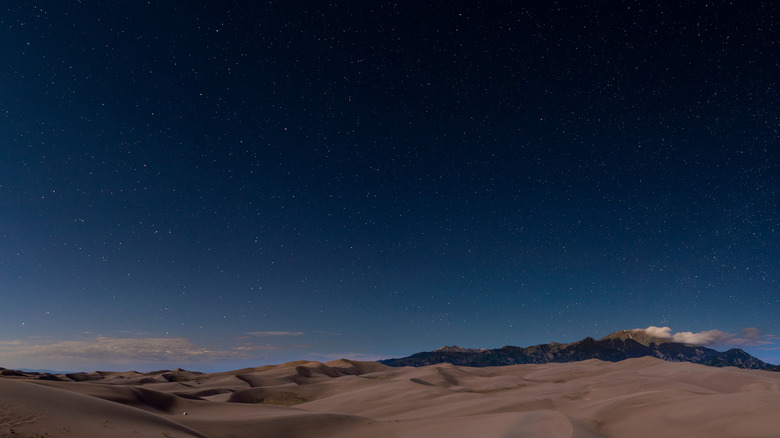
Great Sand Dunes National Park & Preserve is a wild place with towering sand dunes backed by snowy mountain peaks. Those peaks are partially what keep this park so dark, as the Sangre de Cristo mountains effectively block the light from nearby civilization, and keep the park in its shadow. Experiencing a sunset that bathes the sand in red light can feel otherworldly, but stay a little longer, and you'll truly get a glimpse of worlds far from our planet. After the sun goes down, you'll hear the calls of owls, and the singing of crickets across the sand — and on clear, moonless nights, a brilliant display of stars will emerge through the seemingly impenetrable darkness of the desert sky.
The National Park Service recommends visiting in August or September to see white wisps of the Milky Way Galaxy, and incredibly bright constellations gleaming up above. Consider booking a campsite at Piñon Flats Campground in advance to ensure a spot during these peak months, during the new moon. Note that a few of the campsites have trees, which you may want to avoid for the best view. If you're interested in exploring the dunes at night, you are allowed, just make sure to pack a red light so that you can find your way. Alternatively, though it is a very different experience than stargazing on a dark night, a walk through Great Sand Dunes National Park & Preserve with the light of the full moon reflecting off of the sand is an adventure unlike any other.
Elk Creek Campground at Curecanti National Recreation Area
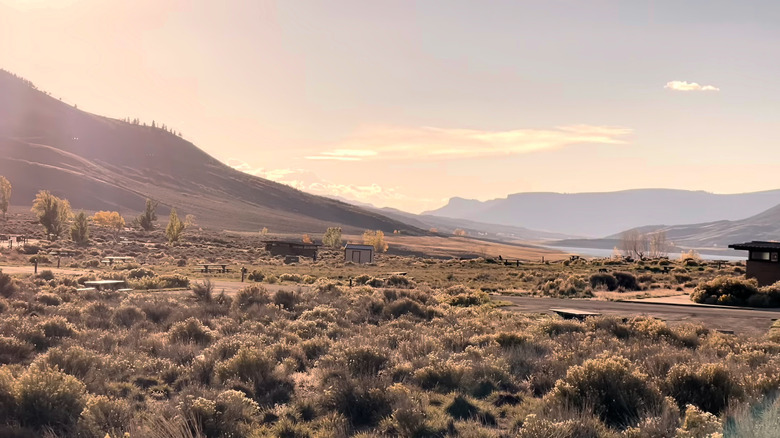
While it may not be as well known as landmarks like Rocky Mountain National Park, you won't want to miss a trip to Curecanti National Recreation Area, especially if you're hoping to see some gorgeous night skies. Curecanti National Recreation Area is a wildly underrated destination that offers adventure, scenic beauty, and unparalleled stargazing. It's also home to Colorado's largest body of water, with multiple large reservoirs, and the powerful Gunnison River. This water is part of what makes this the perfect spot for stargazing, as the large, open spaces have no trees or obstructions, making it easy to see the night sky above. If the water is calm enough, you might even see the stars mirrored on its surface.
The National Park Service's website lists nine campgrounds in the Curecanti National Recreation Area, but if you're spending the night to see the stars, you should choose the one right along the edge of the Blue Mesa Reservoir: Elk Creek Campground. It's open all year round, and it also happens to be the site of the amphitheater where National Park Service rangers have their astronomy programs. If you book during one of the programs, you'll benefit from the stargazing expertise of the rangers, and their partners from the Gunnison Valley Observatory. You may even get to use their powerful, high-quality telescopes for a closer look at the stars. Even if you're going out on your own, though, this is the perfect place to get a great view of the night sky.
The meadow at Top of the Pines
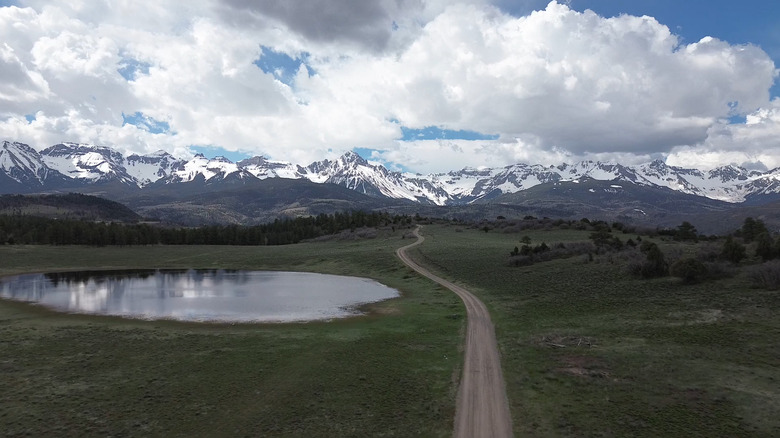
While many International Dark Sky Places are federally protected lands like national parks, anywhere that has little enough light pollution can qualify, and some make incredible stargazing destinations. One of those is Top of the Pines, owned by Ouray County, and maintained by a nonprofit. The little-known 175-acre section of protected wilderness is set up high in the snowy San Juan Mountains, and is a favorite among skiers, hikers, and campers. It has even become an aesthetic destination for weddings. After night falls, and the mighty mountain peaks melt into the dark skies beyond, an incredible, glimmering world of stars and planets appears up above.
True to its name, there are plenty of trees at Top of the Pines, so to see the stars, you're going to want to head somewhere with a clear view. Fortunately, the meadow is the perfect place for that. This open space — complete with a small pond, and a single road like a ribbon across the grassy field — is where Top of the Pines holds events. It is also the perfect place to lie out on the grass, and take in the night sky up above. Fortunately for stargazers, it also happens to be right next to the walk-in campground, so it's easy enough to reserve a site for the night, and head out to the meadow after sunset.
Methodology
To recommend the best stargazing spots in the entire state of Colorado, a state famed for its incredible starry night skies, we started with the state's International Dark Sky Places. Not only are these places where the darkness has been measured, and confirmed to be optimal for stargazing, but their standards are maintained. We feel confident recommending any certified Dark Sky Place to our readers, sure that it will provide excellent stargazing. We limited our search to spots where you can easily go camping, and don't have to travel too far from your campsite for an excellent view, to minimize stumbling around in the dark with a headlamp, and maximize time spent looking at the stars.
We try not to put too much stock in online review averages, as they can be swayed by one or two extremely positive or negative ratings that aren't necessarily relevant to our readers, but we did look over thousands of online reviews of potential stargazing spots. We took general trends into account, and prioritized spots that visitors generally had good experiences at, eliminating those where the common complaints could seriously impact the stargazing experience (like poor maintenance or annoying insects at the campgrounds). When possible, we prioritized spots that often have astronomy events, both because the ability to attend one could make for a more exciting and informative trip, and because it marks that spot as a particularly good one for stargazing.