
The 5 Best Places To Camp In Arizona's State And National Parks
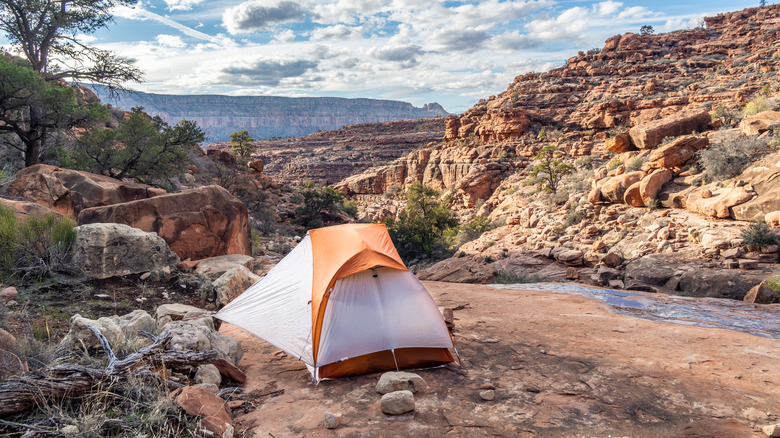
Despite its sometimes formidable heat and rugged desert conditions, Arizona is home to many of the nation's top spots for outdoor adventures. From the deep red chasms of the Grand Canyon to the surprisingly snowy San Francisco Peaks, Arizona offers a buffet of everything that makes the American Southwest so famous. If you're just planning on spending a day venturing into the Arizona outdoors, you can find plenty of superb day hikes throughout the state, such as the stunning red rock formations and panoramic desert views of Sedona's Margs Draw Trail. If you're feeling even more daring, or would simply like an immersive Arizona experience you can't find in major cities like Phoenix, Arizona's abundant parks and public lands are likewise rich in some of the country's best campgrounds.
While you can drive a few miles in any direction in Arizona and likely come across a great place to camp overnight, most of the state's premium camping destinations await in Arizona's exemplary national and state parks. Arizona is one of the crown jewels of the National Park Service (NPS), with 22 national park sites and several NPS-administered historic trails passing through. While not every Arizona NPS site features camping facilities, the ones that do usually rank high on most campers' bucket lists. In between its national parks, Arizona also has dozens of equally amazing state parks, many of which sport their own excellent campgrounds. Camping opportunities in Arizona's national and state parks range from luxurious glamping options to rugged backcountry camping. And while the "best" Arizona parks for camping will vary based on the preferences of individual campers, these national and state parks boast the state's best camping amenities, reviews, and spectacular scenery.
Dead Horse Ranch State Park Campground
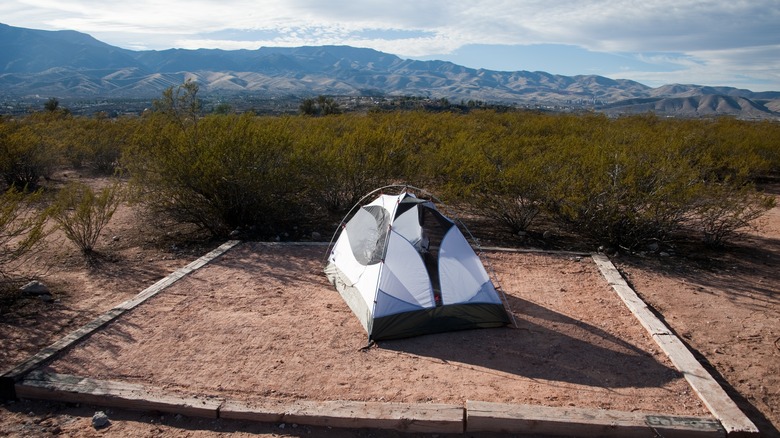
Upon a cursory glance, a park with the phrase "dead horse" in its name may not seem like the most inviting space to spend the night. If you can get past the macabre name, however, Dead Horse Ranch State Park offers one of Arizona's best Old West-style ranch experiences, with ravishing scenery and 10 miles of mesmerizing trails. The family-friendly Dead Horse Ranch is situated along Arizona's scenic Verde River Valley, near the town of Cottonwood and just 17 miles from Sedona. The Verde River offers a rare oasis of Arizona greenery, with lush canopies of cottonwood, ash, and cattail trees thriving along its shores. As a National Wild and Scenic River (and as one of Arizona's last remaining free-flowing rivers), the Verde River around Dead Horse Ranch also protects a diverse community of birds, reptiles, and mammals. Visitors can enjoy exceptional wildlife watching even as they experience the historic ranch that gives the park its name.
Dead Horse Ranch State Park sits at an elevation of around 3,300 feet, resulting in milder temperatures that are perfect for camping. And these ideal conditions are certainly not wasted, as Dead Horse Ranch has over 100 RV and tent campsites all within walking distance of the park's main features (including the scenic Verde River). Camping fees at Dead Horse Ranch range from $25 per night for non-electric sites to $50 per night for sites with electric hookups (at the time of writing). Campers also have access to amenities like showers, toilets, picnic areas, dump stations, drinking water, and even ADA-accessible areas. Reviewers on TheDyrt.com raved about Dead Horse Ranch Campground's "well-maintained" sites, "good hiking trails," and "extremely clean" bathrooms. Dead Horse Ranch also currently has eight one-room log cabins available for $70 per night.
Catalina State Park Campground
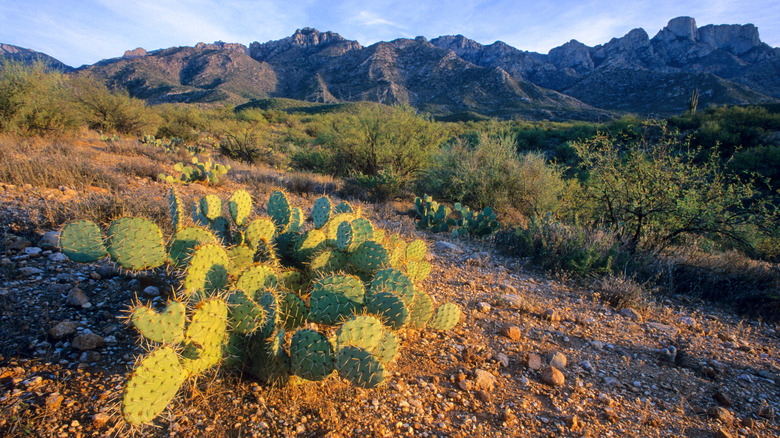
Just 12 miles from downtown Tucson, Arizona's extraordinary Catalina State Park seems about as far from city living as you can get. The park's 5,500 acres protect a vibrant, unsullied landscape at the intersection of the Sonoran Desert and southern Arizona's epic Santa Catalina Mountains. These mountains are part of Arizona's serene and dream-like Sky Islands region, where isolated mountain ranges preside over the desert landscapes like literal islands floating in the sky. Within this enchanting context, Catalina State Park features a marvelous assortment of canyons, foothills, and desert streams, all decorated with the distinctive flora of the Sonoran Desert (including the iconic saguaro cactus). Visitors can explore this outstanding terrain on Catalina's abundant trails for hiking, horseback riding, or mountain biking, many of which pass ancient rock art and (in the right conditions), gorgeous wildflowers.
At the time of this writing, day-use entry for Catalina State Park costs $10 per vehicle (or $20 for vehicles of two or more people). However, the park also has 120 excellent campsites that can accommodate both tent and RV camping. For $50 per night, you can appreciate splendid Catalina scenery while also enjoying convenient electric outlets and water hookups. If you want to save some money, the park also has non-electric campsites available from January 1 to March 31 for only $25 per night. And, if you're bringing an equine friend, Catalina State Park's Equestrian Center offers horse stalls and equestrian camping for $25 per night. The park's campsites have drawn rave reviews for their scenery and hiking access, with reviewers specifically praising Catalina's "perfect blend of natural beauty and convenience." If you're staying overnight at Catalina State Park, you can take advantage of the Catalina Nights guided hikes to see nocturnal desert wildlife and sublime Arizona night skies.
Lost Dutchman State Park Campground
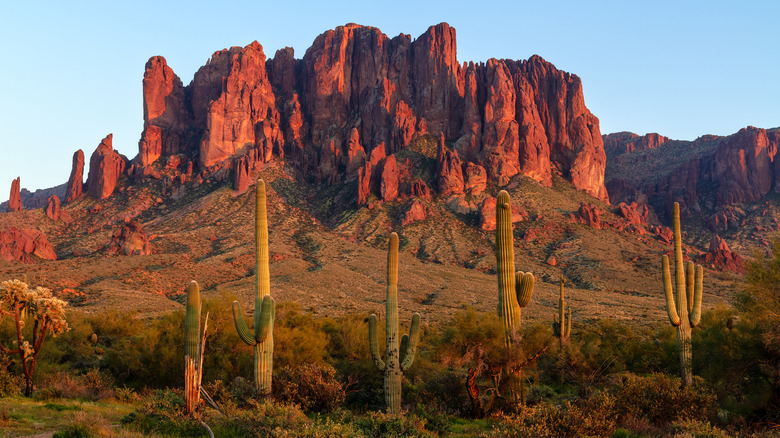
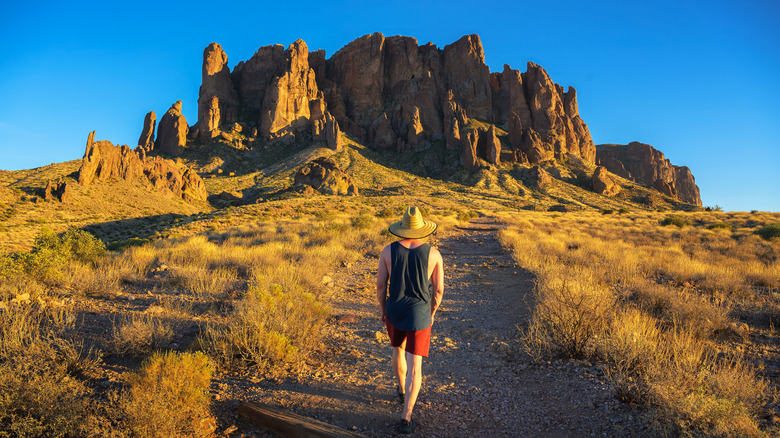
The otherworldly Lost Dutchman State Park protects one of the most distinctive landscapes in the entire Arizona state park system, complete with a distinctly "Old West" local legend. Though it's a mere 40 miles outside of Phoenix, Lost Dutchman State Park protects a jaw-dropping landscape that epitomizes Arizona's unique beauty, including towering red rock cliffs and plenty of saguaro cacti. The alien-like quality of the park's natural features comes courtesy of the uncanny Superstition Mountains, a complex of red rock skyscrapers towering 6,000 feet over the Sonoran Desert, with a name that accurately captures the range's seemingly magical qualities. The "superstitions" of the range's name come from the legends and folklore of the region's Native Americans, though Lost Dutchman State Park itself gets its name from a more recent story of an immigrant named Jacob Waltz (actually from Germany) who supposedly discovered a gold mine within the mountains. Waltz is said to have hidden gold there before he died in 1891, leaving behind only vague clues and the legend of the "Lost Dutchman's Mine."
While the prospect of stumbling across the secret hoard of gold may be enough to justify a camping trip, it's really Lost Dutchman State Park's excellent camping facilities, extraordinary scenery, and proximity to Phoenix that make it one of Arizona's top camping spots. The Lost Dutchman Campground includes 135 campsites (including 68 sites with electric hookups) starting at $35 per night (at the time writing). The park also has three group camping areas, plus five cozy, wheelchair-accessible (and air-conditioned) cabins available for $99 per night. Reviewers specifically praise Lost Dutchman State Park Campground's "[g]orgeous scenery," "clean and organized" sites, and "helpful" staff. And if you do find the legendary Lost Dutchman's gold on your camping trip, consider that a complimentary perk!
Twin Peaks Campground, Organ Pipe Cactus National Monument
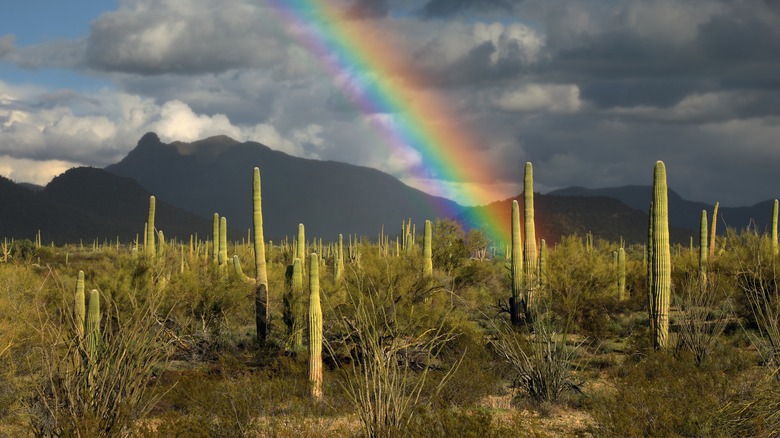
Transitioning from state parks to national parks, Organ Pipe Cactus National Monument is an underrated showcase of the unique beauty you can only find in southern Arizona's Sonoran Desert. When visiting this region, the NPS site you'll probably think of first is the equally beautiful Saguaro National Park just outside of Tucson. Saguaro, unfortunately, only offers primitive backcountry camping in the Saguaro Wilderness Area. If you're keen on spending the night amid Sonoran Desert splendor, consider traveling about two hours west to Organ Pipe Cactus' fabulous Twin Peaks Campground.
Like Saguaro National Park, Organ Pipe Cactus National Monument gets its name from a notable type of resident cactus. In this case, the organ pipe cactus is an even rarer feature than the noteworthy saguaro cactus. With its distinctive church organ shape and multi-column stems, the organ pipe cactus creates a singular profile against the rugged desert landscape. This slice of southwestern Arizona, just north of the Mexican border, is the only place in the U.S. where the organ pipe cactus grows naturally, and the park's status as an international biosphere region means campers can explore an unparalleled wilderness of desert plants, geologic formations, and abundant wildlife.
The park's Twin Peaks Campground includes 208 campsites (174 RV sites and 34 tent-only sites) that are available for $20 per night (plus the standard $15 to $25 entry fee). Reviewers rave about the campground's exceptional beauty and efficient design, drawing particular attention to the ample organ pipe cactus specimens surrounding the campsites, and the night sky "so full of stars." If the Twin Peaks Campground is booked, Organ Pipe Cactus National Monument also offers camping at the more primitive Alamo Canyon Campground, plus backcountry camping in the park's wilderness areas (with a $5 backcountry permit).
Grand Canyon Village, Grand Canyon National Park
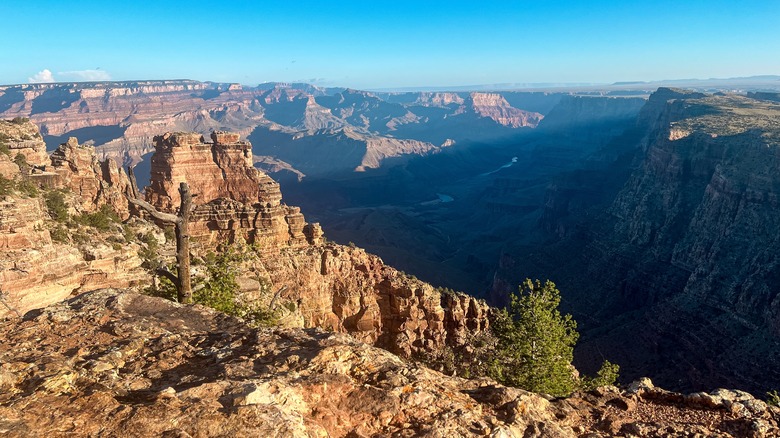
Grand Canyon National Park is not only the pride and joy of Arizona's sensational landscape. Of Arizona's three national parks, it's also the only one that offers frontcountry camping. Grand Canyon Village and its attached camping options rank among the more comprehensive camping experiences in the entire National Park System. The historic Grand Canyon Village itself is a remarkable preserve of Old West heritage right next to the Grand Canyon's popular South Rim. If you're looking to spend the night in the park with some modern comforts, Grand Canyon Village does include more modern lodging options, including the historic El Tovar Hotel. Still, if you're set on camping out at the Grand Canyon, Grand Canyon Village also features some of the park's best campsites.
The nearby Mather Campground is arguably the Grand Canyon's best developed campground, with 327 individual campsites (including sites for both RVs and tents only), flush toilets, drinking water, dump stations, fire pits, and picnic tables. Overnight rates for the Mather Campground are $30 for individual sites and $50 for group sites (at the time of writing). However, the campground does have additional camping options, like the $25-per-night horse camp and the $6-per-night communal hiker-biker sites. Mather Campground draws particularly positive reviews on forums like TheDyrt.com, where visitors often praise the campground's "spacious" campsites, "clean and well-maintained" facilities, and close access to "stunning viewpoints and trails." Grand Canyon Village also includes the Trailer Village RV Park, which features 123 RV-specific sites (complete with full RV hookups) right next to the South Rim. Both Grand Canyon Village campgrounds are close to major South Rim attractions, like the scenic Mather Point, the Yavapai Geology Museum, and the Grand Canyon Visitor Center.
Methodology
Arizona's iconic landscape is simultaneously beautiful and fearsome, with a picturesque desert landscape often burdened by extreme heat and harsh conditions. Hardened outdoor adventurers can find plenty of challenging camping options across Arizona. Still, in compiling this list, we focused more on campgrounds that are the best for everyone, not just experienced outdoor travelers. Therefore, we focused on campgrounds in national and state parks that combine splendid Arizona scenery with visitor-friendly amenities, excellent reviews, and proximity to civilization.
The three state parks on this list showcase extraordinary aspects of Arizona's natural beauty without straying too far from major urban areas. Dead Horse Ranch, Catalina, and Lost Dutchman State Parks are all within an hour's drive of Sedona, Tucson, and Phoenix, respectively. All three state parks have more than 100 campsites that can accommodate both tents and RVs, plus helpful amenities like showers, electric outlets, and potable water (a must in the hot Arizona temperatures).
Within NPS sites, neither Saguaro nor Petrified Forest National Parks has developed frontcountry campgrounds, leaving Grand Canyon National Park the only national park proper on this list. Other Arizona NPS sites like Glen Canyon and Lake Mead National Recreation Areas do have developed campsites, though both overlap with a neighboring state (Utah and Nevada, respectively). Plus, reviews for campgrounds at both parks tend to bring up issues with overcrowding and disappointing amenities. That left Organ Pipe Cactus National Monument, a beautiful but lesser-known camping destination, to round out the top five. The campground reviews we used for this list largely came from TheDyrt.com. As the nation's top camping review app and website, TheDyrt is useful for getting a large sample of camper reviews and seeing specific campground characteristics that draw particular praise (such as facility cleanliness, locational convenience, and surrounding scenery).