
5 Common West Coast Phrases That Will Make You Sound Less Like A Tourist
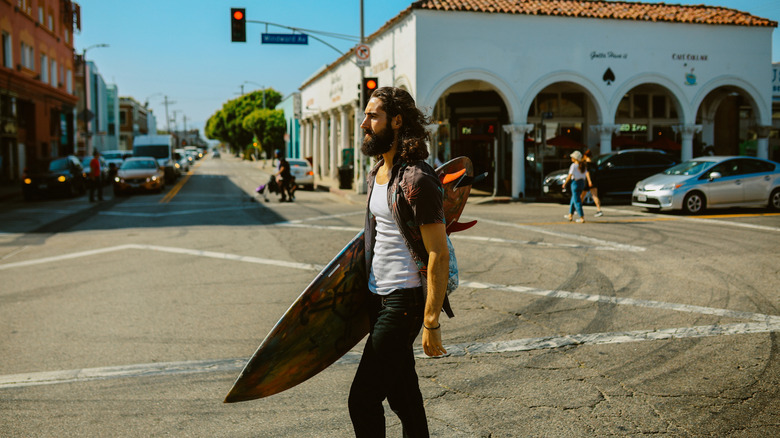
There are stacks of differences between the Atlantic-facing and Pacific-facing sides of the USA. One lies claim to America's foggiest destination, while the other has America's most forested state relative to its size. The East is far more populated, counting over 80% of the American people. Even an East Coast beach day will look and feel very different from a West Coast beach day, since the climate, the beach culture, and the animals you encounter will likely change. And that's not even getting into those age-old stereotypes — New Yorkers really do only eat pizza, right?
Another point of contrast is the way folks speak. According to one person writing on the r/AskAnAmerican subreddit: "People from the West Coast speak quietly, but intensely. People on the East Coast have a defined accent." Plus, there's a whole string of West Coast-only phrases and slang used by dwellers of Oregon, Washington, and California. According to a 2024 study by Preply, West Coast slang is no means the hardest to understand in the country (that honor goes to Maine), but it might be worth cramming if you're heading to the ocean and want to sound more like a local during your travels.
This guide is a great place to start with all that. It offers common West Coast phrases that'll help you blend in, whether you're on the hunt for the finest sourdough in the San Fran Bay Area or asking for directions to the trailheads around Mount Hood.
NorCal and SoCal
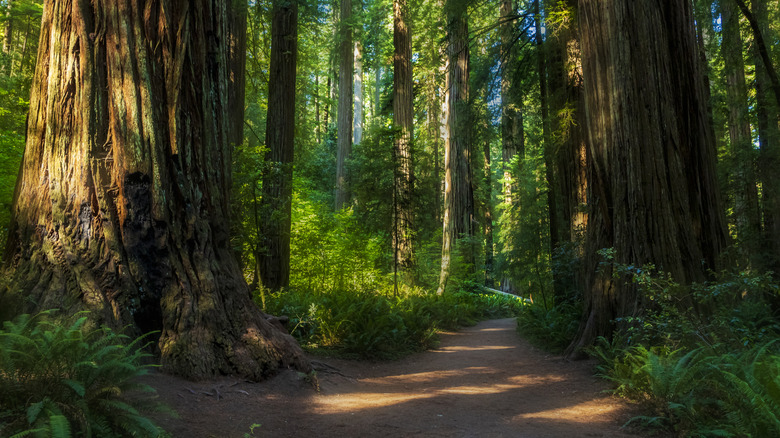
California is by far the most-visited part of the West Coast. Research carried out by the global accommodation reservation portal HotelsCombined (via Business Insider) reveals that the Golden State reigns as the number one destination for domestic travelers in the USA. Add to that a whopping 17.9 million international arrivals each year, and it becomes clear why the NorCal-SoCal lingo is worth starting with.
It's all about knowing the geography of California itself, you see. And it's important, because NorCal and SoCal are very different indeed — everything from the climate to the culture will change as you hop from one to the other. The two words are portmanteaus for Northern California and Southern California. So, if you're whizzing up to the eerie heights of Mount Shasta on the California-Oregon border, you're heading to NorCal. If you've got your heart set on the legendary surf breaks of San Diego, then SoCal's your pick.
What's less helpful is that there remains a pretty lively debate about where one begins and the other ends. Various locals claim the line lies as far south as the sunny Santa Barbara, but others put the border as far north as the Golden Gate Bridge in San Francisco. Many choose a happy medium, placing the dividing line somewhere in the middle, around Big Sur's rugged coastline.
Hella
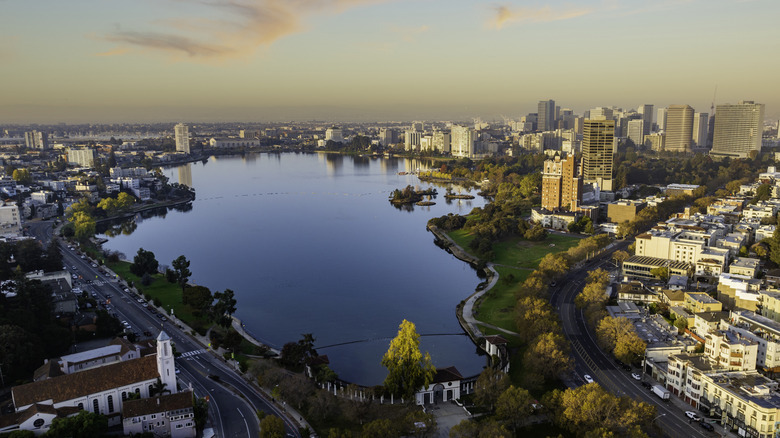
Wander into the San Francisco Bay Area, and you're likely to hear the phrase "hella" all over the place. One analysis by economics and pop culture blogger Golden Stats Warrior found that tweets made by San Francisco locals contained the word 13 times more often than tweets made by residents from elsewhere in the country. Perhaps more pointedly, one poster on a Reddit thread that asks whether people in San Fran still say "hella" replied, "Hella people say hella."
If you haven't been able to put your finger on it just yet, hella basically means "a lot." It's used as a way of accentuating a feeling, or even denoting a large quantity of something. So, you could say that the Muir Woods has some hella big trees, or that there are hella trees in the Muir Woods. Since that lush corner of San Francisco has both colossal redwoods over 250 feet tall and a sprawling area of a full nine square miles, both statements are factual.
You should bear in mind that hella is by no means a whole West Coast thing. One Redditor describes the regionality of the term like this: "I'm from SoCal, the word 'hella' is used ironically, and if we hear it, we know you're from NorCal." In fact, SFGate traced the origins of the term back to late-1980s Oakland, with one linguist even claiming that it originated from a magazine interview with Metallica frontman James Hetfield during the same decade.
The mountain is out
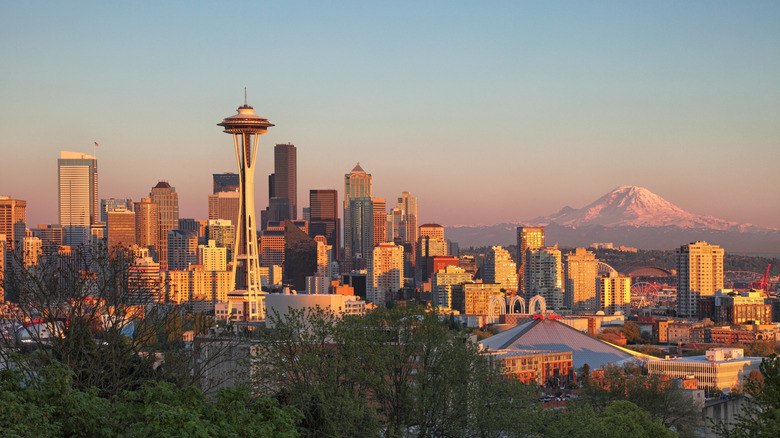
Here's a phrase you'll need to know if you're planning on hitting the snow-capped volcanoes of Washington State or Oregon. When folks proclaim that the "mountain is out", you're in for a clear day of highland viewing. The words are uttered across the Pacific Northwest region to herald those crystal-clear days when the great summits — Mount Rainier in Washington or Mount Hood in Oregon, for example — are visible from a great distance.
The saying is heavily associated with the peak of Mount Rainier, the so-called Crown of the Pacific Northwest, which lurches up from the land about 60 miles south of Seattle. On clear days, you can see its snow-mantled summit from all over town, though spots like Seward Park and the Magnolia Viewpoint offer some of the best panoramas when the mountain is out.
Two things: Seattleites debate how much the term is actually used in practice. On one Reddit thread, some locals say they use other terms to refer to their mighty mountain on the horizon, while another poster said they were "born in Seattle in 1957, said it all my life, still do, when I visit and the mountain is out." Secondly, you might not get to use it all that much. Seattle counts nearly 190 days of rain each year, so the odds of having that crisp mountain-out day are actually pretty low.
Dude, hodad, and kook
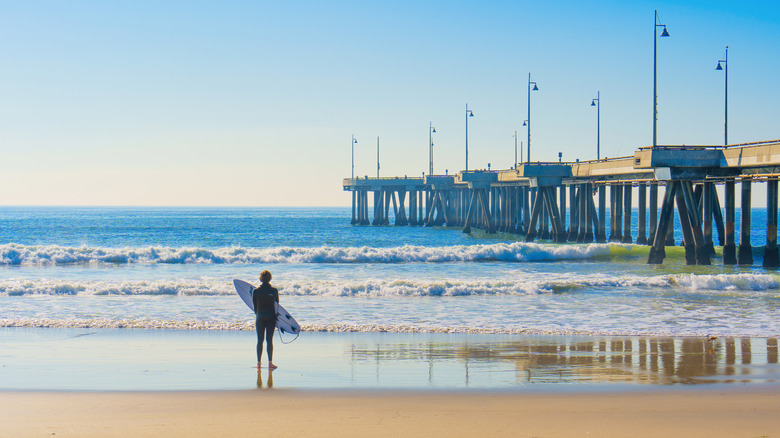
No list of local-only West Coast terms could possibly be complete without dipping its proverbial toes into the saltwater of surf culture. There's a huge lineup of phrases out there that fall under the remit of the region's wave-chasing, board-touting, surf veterans, but there are three that stand out from the crowd for their California usage.
Begin with the one everyone knows: dude. It was made most famous by the Coen brothers' 1998 comedy-cult masterwork "The Big Lebowski," in which the main character, an uber-laidback Los Angeles local, bears the epithet "The Dude." Today, the term is essentially a catch-all phrase for a friend or buddy, but can also be used as an exclamation of surprise. That's despite actually beginning life as a reference to stylish New York socialites in the late 19th century!
Then there's hodad. The Collins Dictionary defines it as "someone who pretends to be a surfer or cannot yet surf." However, these days, SoCal locals might just as well think you're referring to the popular chain of burger joints that pepper San Diego — they've been around 50 years, after all. Finally, the phrase kook means a surfer who's not so good at, well, surfing. To put that to use, why not head up to the surf-beach haven of Cardiff-by-the-Sea, 30 minutes' drive north of San Diego proper? A bronze statue they call the Cardiff Kook stands above the beach there, showcasing a surf stance that's pretty dang poor.
The 101, the 405, the 210, etc.
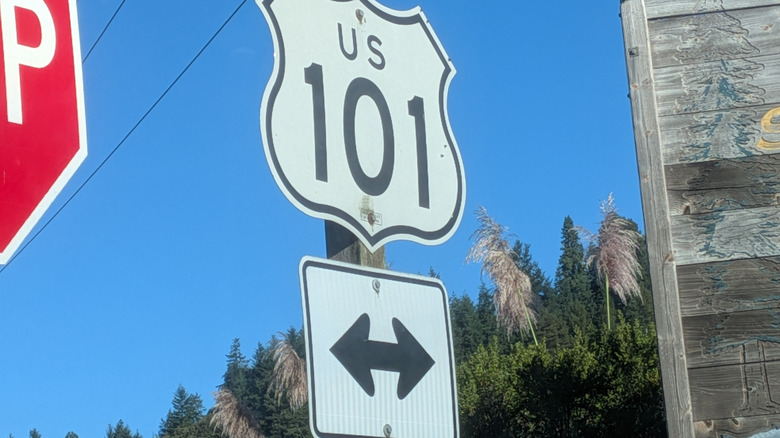
Last but not least is a nod to the local lingo of Los Angeles — you know, only the largest metropolis on the whole West Coast of the United States. The 3.8 million people who live there have a way of phrasing driving directions that, if copied, will get you sounding just like a bona fide Angeleno. The crux of it is this: Add a "the" before the number of the freeway, highway, or interstate you want to reference.
So, rather than saying "take 101 southbound," you'd say "take the 101 south." Simple as that. And, by the way, you most certainly will want to consider taking the 101, since it's a scenic route that stretches from San Diego to Sonoma, whizzing right by the famous aquarium in Monterey and the surf-washed city of Santa Cruz, to name just two of many big-name stops.
Just remember that prefixing your highways won't garner you local points all over the West Coast. Far from it — the phrase is very much a LA thing. As one Redditor describes it: "I grew up in Northern California, never saying 'the 101' until I was in college. Within 10 years of living in Southern California, saying it was automatic even when I was back home and talking about places I'd always called 'Highway 17' or '680' before, and I could see the looks of 'what a sell-out.'"