
The 5 Best Free Things To Do In Pittsburgh
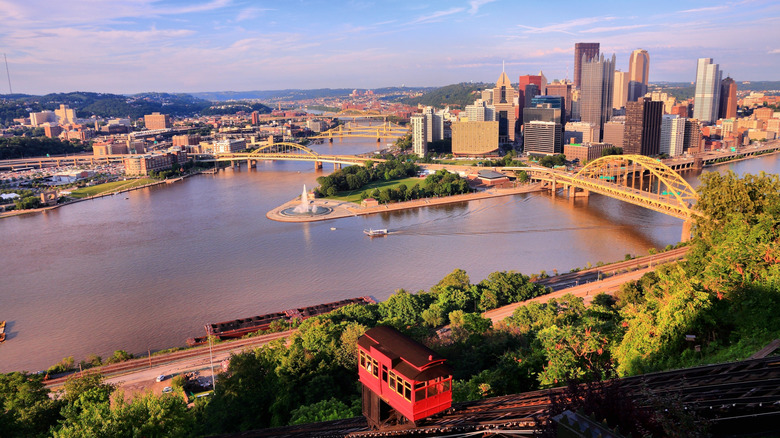
Pittsburgh is regularly named one of America's most livable cities. In 2025, it was included in Livability.com's list of the Top 100 Best Places to Live in the United States, and it was ranked No. 14 out of 149 metro areas in a list of the most livable cities for 2026 put out by RentCafe. Affordability is a big part of this. Pittsburgh's overall cost of living is 8.2% lower than the national average, and it's an especially affordable place to buy a home, with an average home sale price almost 40% below the U.S. average. And while the typical tourist might not care about the cost of real estate, it's an equally affordable destination for visitors, with a whole slew of activities you can enjoy without paying a dime.
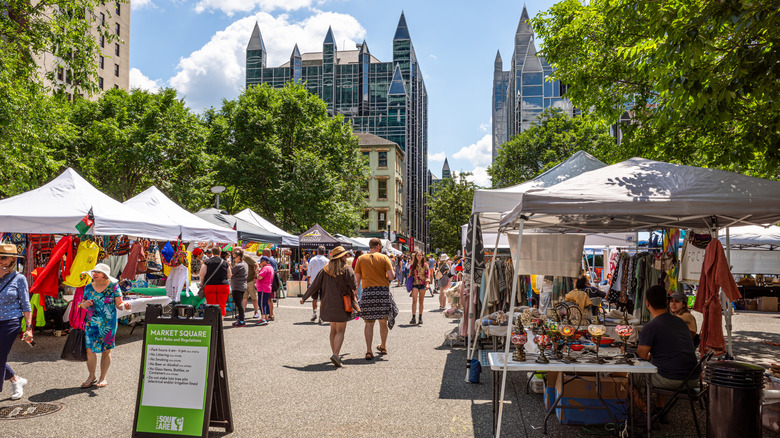
Summer is an especially great time to find free things to do in the criminally underrated one-time steel capital of Pittsburgh. This is when you can check out free festivals like downtown's Three Rivers Arts Festival (in June) and Picklesburgh (in July), or neighborhood festivals like August's Little Italy Days in Bloomfield, a historically Italian community that's become a vibrant cultural hub. There are also lots of free recurring activities in the summer, like Open Streets events, and free live music series like Music on the Lawn at Southside Works.
The truth is, though, you can find plenty of budget-friendly entertainment in Pittsburgh no matter when you visit. We rounded up some quintessential Pittsburgh sites and attractions, each showcasing the city's rich culture and history, and narrowed down five of the best free ways to enjoy the Steel City during any season.
Visit the Frick Museums & Gardens

Pittsburgh has several world-class museums, like the Heinz History Center (ranked America's best history museum in 2025) and the Carnegie Museum of Art, whose diverse collection makes it the "crown jewel" of Pittsburgh's museum scene. But the Frick Pittsburgh Museums & Gardens stands out as the most extensive museum complex in Pittsburgh that is free to visit.
The Frick Art Museum was built by industrialist Henry Clay Frick's daughter, Helen, on the grounds of Clayton, the Frick family's Pittsburgh estate. It first opened in 1970 to showcase Helen Frick's personal collection of art. The Frick grounds have since expanded to include two museums, a 10-acre garden with a greenhouse, and the restored Clayton mansion, along with a visitor center, cafe, and playhouse. The Frick Art Museum's collection includes early Italian Renaissance paintings, 18th-century French art and furniture, Baroque bronze statues, and Chinese porcelain. The Car and Carriage Museum contains historic vehicles from the turn of the 20th century, including the Frick family's personal collection of cars and carriages. The gardens are also open for visitors, or you can stop in at the Grable Visitor Center to learn more about the collections or peruse the Frick Museum Store.
The Frick is located in Pittsburgh's Point Breeze neighborhood, about 20 minutes from downtown. The museums and grounds of the Frick are open Tuesdays through Sundays, and admission to the gardens and permanent museum collections is always free. The Car and Carriage Museum also has free guided tours on Saturdays. Additionally, the Frick regularly hosts workshops, gallery talks, and other events. Some of these have an admission fee, but many are free. You can check the event calendar to see what's on the schedule during your visit.
Stroll the Three Rivers Heritage Trail
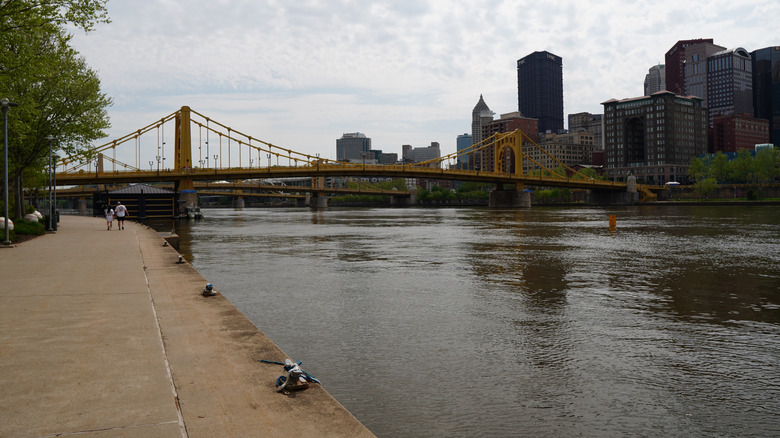
The topography of Pittsburgh is defined by its three rivers: the Monongahela River along its southern side and the Allegheny River to the north, which come together into the Ohio River at the Point downtown. One of the best ways to experience the three rivers is on the serene inner-city walking trail known as the Three Rivers Heritage Trail. This 35-mile system of trails runs along both banks of all three rivers, connecting to a variety of neighborhoods and attractions along the way. The portion along the southern bank of the Monongahela also connects to the larger Great Allegheny Passage, a 150-mile trail system that runs through southwestern Pennsylvania and Maryland, all the way to Washington, D.C.
About 90% of the Three Rivers Heritage Trail is paved, making it suitable for biking (and families with strollers), as well as walking and running. Interpretive signs posted along the trail provide insights into the region's history and information on landmarks like the Three Sisters Bridges, Herr's Island, and St. Nicholas Church. The North Side portion of the trail, along the northern shore of the Allegheny River, is a great place to start for visitors, running past noteworthy attractions like the Pirates' PNC Park, the Steelers' Acrisure Stadium, and the Kamin Science Center. The trail on the Allegheny's southern shore connects downtown with the Strip District, a neighborhood full of shops and restaurants including one of the most charming old-school diners in Appalachia. The stretch along the southern shore of the Monongahela runs past commercial areas like Station Square, which has access to the Duquesne Incline for spectacular views of downtown (note that there are fares to ride) and SouthSide Works, where you can stop for a meal or rest your legs while people-watching in the town square.
Take a walking tour of Pittsburgh's art and landmarks
You don't need to pay for a museum ticket to experience Pittsburgh's history and culture. Free Pittsburgh Walking Tours gives free (donations optional) two-hour tours of downtown led by knowledgeable guides who explain the history of the city and its landmarks, including spots like Fort Pitt, the Cultural District, and the world's first all-aluminum building (and you'll even learn the local lingo and how to talk like a Yinzer in the process).
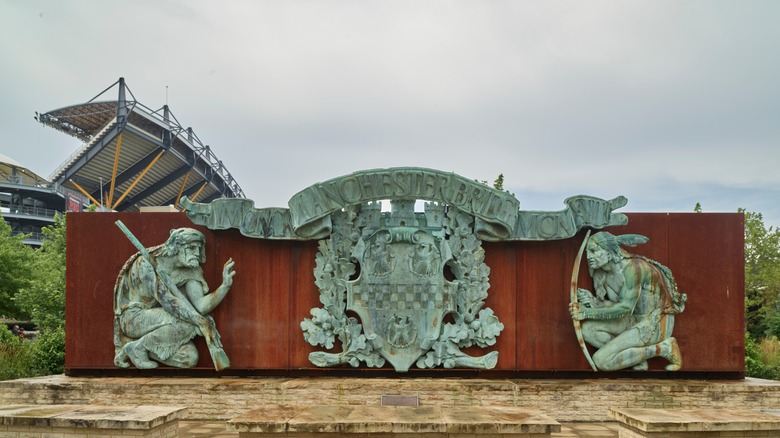
There are also several organizations that offer self-guided tour itineraries. Visit Pittsburgh developed a one- to two-hour Monuments, Memorials & Sculptures tour of the North Shore. Stops include art like the Manchester Bridge Sculpture, which is one of the oldest public art displays in Pittsburgh, first installed in 1917. This is also a great tour for sports lovers, with stops at the Immaculate Reception monument and statues of Roberto Clemente and Art Rooney. While you're in the North Shore, you can walk about 20 minutes north to take a stroll through the Mexican War Streets, a walkable area brimming with eclectic art and historic architecture.
The Pittsburgh Art in Public Places walking tours developed by the Greater Pittsburgh Arts Council are another excellent guide for an exploration of the city. The Cultural District tour covers downtown public art displays like Katz Plaza (referred to by locals as the "Eyeball Park") and the LED installation "Cell Phone Disco." There are also tours of the Grant Street Corridor, Retail District, North Shore, and Northside. If you want to explore beyond downtown, The Homewood Experience has a self-guided arts and culture tour of the Homewood neighborhood, with stops including about a dozen murals as well as historic buildings and cultural landmarks like Westinghouse Park and the Afro American Music Institute.
See the relics at Saint Anthony Chapel
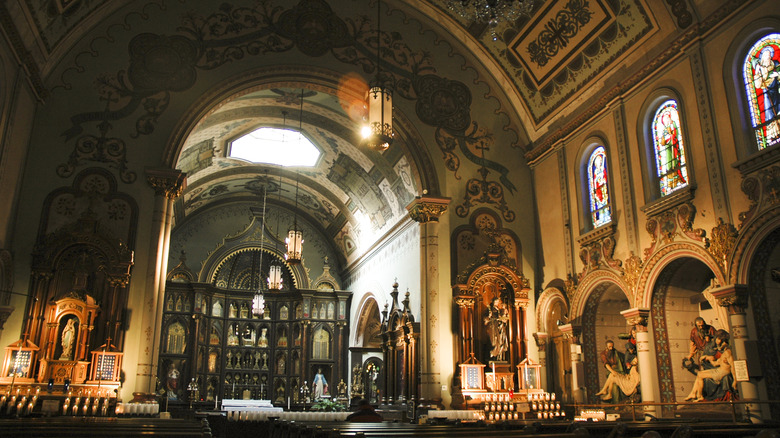
Tucked into the secluded Troy Hill neighborhood, about a 10-minute drive from downtown, Saint Anthony Chapel is a historic European-style church that was built in the 1880s. The chapel building is impressive to behold, featuring details like 14 stained glass windows imported from Europe and a set of life-sized wood Stations of the Cross carved by artists in Munich, Germany. But what really makes it worth a visit is the collection of over 5,000 relics housed inside, the largest collection of Catholic relics outside of Vatican City.
The thousands of relics at Saint Anthony Chapel are kept in more than 800 reliquaries on display throughout the church. Many of these relics have certificates attesting to their authenticity, some of which are historic documents in their own right, with some dating back to the early 18th century. Highlights of the collection include a portion of the True Cross, the entire skeleton of Saint Demetrius, and skulls of martyrs Saint Theodore, Saint Macharius, and Saint Stephana.
Saint Anthony Chapel is open for visitors from noon to 3 p.m. every day except Friday, and the small Fr. Mollinger Museum across the street is open most afternoons as well. It is also an active church that holds masses and sacraments like the Stations of the Cross. You can check the schedule online if you'd like to attend a service while you're in town. A bonus free activity for visitors interested in religious history is the Rodef Shalom Biblical Botanical Garden, which is about a 15-minute drive from Saint Anthony. It has more than 100 plants representative of ancient Near East flora and is open for visitors Mondays through Thursdays from mid-May to late September.
Explore the city's historic cemeteries
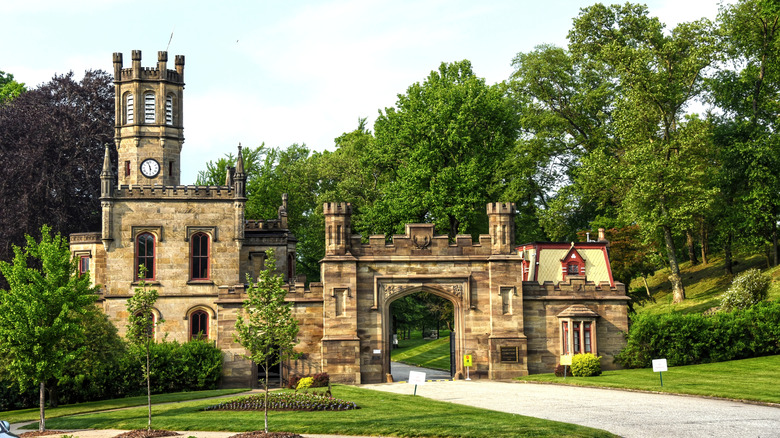
The East End area of Pittsburgh (between the rivers and east of downtown) is home to two historic, rural-style cemeteries that function as tranquil green spaces as well as homes for historic monuments and the graves of notable Pittsburghers. The older of the two is Allegheny Cemetery, which spans the neighborhoods of Lawrenceville and Bloomfield and is the oldest cemetery of this style west of the Allegheny Mountains, as well as only the sixth cemetery to be incorporated in the United States. Established in 1844, the cemetery's 300 acres are planted with thousands of trees and are recognized as an accredited arboretum. Notable individuals buried here include jazz saxophonist Stanley Turrentine, Civil War general Alexander Hays, composer Stephen Foster, and superstar baseball player Josh Gibson, nicknamed the "Black Babe Ruth." There are also monuments worth checking out, like the Soldiers Memorial built in 1937 to honor soldiers who died in the Civil War.
About 5 miles south of Allegheny Cemetery, in the northern area of Frick Park, is the Homewood Cemetery. It was founded in 1878 and, like Allegheny Cemetery, is an accredited arboretum. There are more than 40 tree species documented on the grounds, and you can grab a free tree map that points out notable specimens from the cemetery office. The Homewood Cemetery also has its share of notable permanent residents, including Henry Clay Frick and his family, as well as musicians Erroll Garner and Walter Harper, photographer "Teenie" Harris, and sports figures like Pirates pitcher Earl Francis and basketball star Charles Cooper, who was the first Black player drafted into the NBA.
Methodology
This list of the top free things to do in Pittsburgh was written by a 15-year resident of the city who frequently seeks out ways to explore Pittsburgh without spending money. The aim of this list was to highlight activities that can be enjoyed completely free during any season (provided folks don't mind being a bit chilly if they visit in the winter).
Aside from having no required payment, the other main factor that was considered in picking these five activities was that they are all distinctively Pittsburgh. This means they focus on things that are unique to the city, like the relic collection at Saint Anthony, or center on the city's defining traits, like the three rivers or its industrial past. While you can also find trails, public art, cemeteries, and museums in a lot of cities, these five specific attractions allow visitors to learn about Pittsburgh, its culture, and its history, while being entertained — and all without opening their wallet.