
The World's Most Unique Skiing Locations
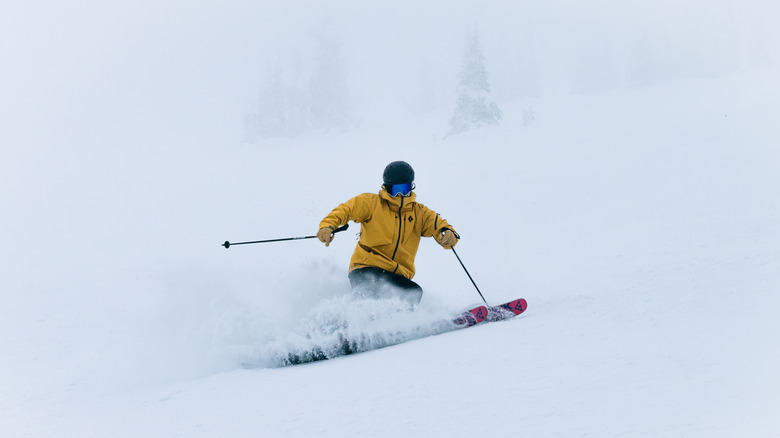
A dream ski trip doesn't have to mean the Swiss Alps or the Colorado Rockies. While these legendary destinations certainly deserve their reputations for world-class skiing, some of the world's most unique skiing experiences happen in places you'd never expect. Picture yourself carving turns on an active volcano or on sun-drenched islands in the Mediterranean, or heading to the beach after a long day on the slopes. These are totally possible at unique skiing locations around the world.
From sunny African slopes and Hawaii's volcanoes to ancient mountain ranges in Central Asia, there are ski resorts all over the world in places you probably haven't heard about. These places may not be as world renowned and sometimes pose some tricky conditions, but they also offer incredible memories and bucket-list experiences any adventurous skier would be interested in.
Whether you're a ski enthusiast looking to check off unusual destinations, an adventure traveler seeking experiences beyond the ordinary, or simply love the ideas of skiing in different places where not many others do, these locations offer experiences for every level and unforgettable stories in the world's most unique skiing destinations.
Oukaïmeden, Morocco
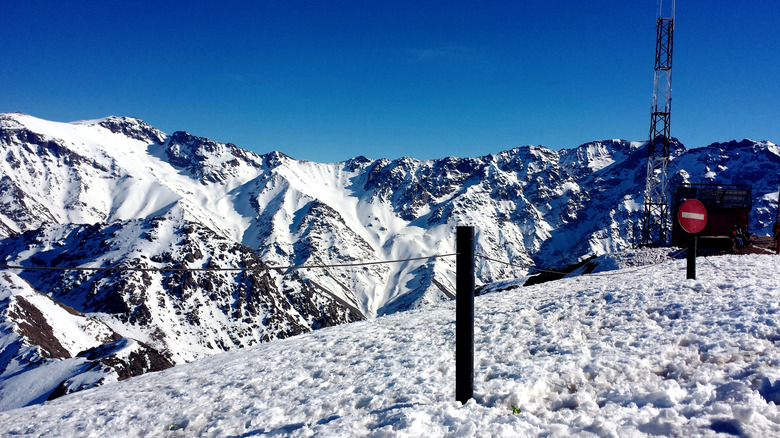
Morocco, known for its gorgeous desert landscapes and colorful culture, is not often thought of as a ski location. However, it is possible to ski there, and it's even home to the first ski resort in Africa. Located just outside of Marrakech, Oukaïmeden has just over 6 miles (10 kilometers) of slopes to explore. The mountain is part of the Atlas Mountains, and gets reliable snow for a ski season lasting December to late March, sometimes even into April.
The best way to get to Oukaïmeden is via rental car or shared taxi from Marrakech. The resort's seven lifts service both beginner and advanced-level slopes. Six of the lifts are drag lifts and one is a traditional chairlift. Or, for the most adventurous, you can ride on the back of a donkey up the slopes. The longest run is just over 2 miles long for more advanced skiers. Ski rentals are available for those who don't own their own gear.
The ski resort is small enough to explore in a day, but there is still plenty to do in the surrounding area before you head back to Marrakech for the night. The area is in the Ourika Valley, home to many restaurants, hotels, hiking trails, rock climbing routes, and fishing. You can enjoy a traditional Berber meal, take a scenic drive through the valley, or continue your outdoor adventures by hiking or rock climbing.
Mount Etna, Italy
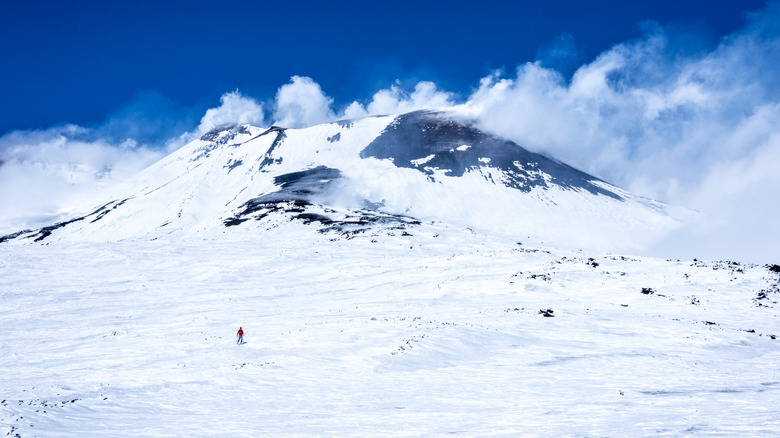
Mount Etna is an active volcano — seemingly an oxymoron for a place where you could go skiing. Located on the island of Sicily, Mount Etna is the most active and the highest volcano in all of Europe, known for its bucket list hike that's a thrill-seeker's paradise. There are two ski areas on the over 10,900-foot (3,327-meter) mountain where you can ski on snow-topped trails right next to lava and volcanic rock overlooking sweeping Mediterranean views. And although this volcano is still highly active and eruptions can occur in one of its hundreds of craters at any moment, the ski resorts are located in safe zones. This ski location is also incredibly unique because of its proximity to the sea.
Skiing on Mount Etna dates back to the 1930s, and it rose drastically in popularity in the 1960s and 1970s when two ski resorts opened up: Etna Sud and Etna Nord. These ski resorts are smaller than other European ski resorts in the Alps, but local ski resident and Airbnb owner Giuseppe Cobo said to the BBC that people "don't come because we have the most ski runs in Europe, they are more attracted by the prospect of skiing on our magnificent volcano and the Mediterranean atmosphere."
Etna Sud hasn't operated since 2017 but Etna Nord is still up and running. With four ski lifts, there are red and blue slopes available. Ski passes cost on average about $41 USD for adults per day and about $30 USD for children. The ski resort is easily accessible by car, about an hour and a half (with traffic) from Sicily's city of Catania.
Gulmarg, India
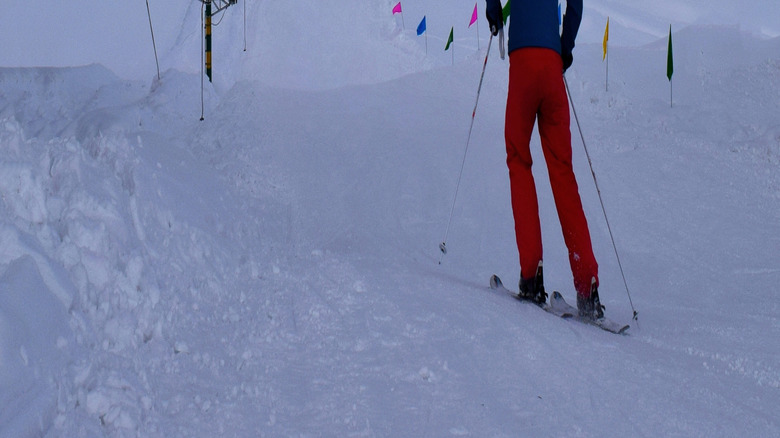
Gulmarg Ski Resort is the world's highest ski resort, and the perfect place for daredevil backcountry skiers. Located in the Pir Panjal range of the Western Himalayas, the base town's elevation is already at 8,690 feet, and the ski area ascends to a maximum of 4,200 meters, or over 13,779 feet. But for those just learning (or not quite ready for backcountry slopes), there are plenty of well-maintained routes, ski lifts, and instructors that provide private lessons.
The Himalayan backcountry experience is what truly makes Gulmarg unique. Though there are official trails, much of Gulmarg is not controlled, which is why many hire professional ski guides. Lift tickets are sold in single rides, day passes, and weekly passes to the various levels of the mountain — the base, mid-station, and top. The prices vary from about $3 to $5 USD for a single ride to around $112 USD for a week-long pass. A season pass is around $447 USD. For backcountry skiers, ride the gondola all the way to the top of the mountain and explore the rugged terrain from there. Some routes offer more than 1,330 meters (a little less than 1 mile) of vertical drop. There is also heli-skiing available for skiers who want the extreme adventure of dropping into the Himalayas from a helicopter.
Gulmarg is accessible by air, train, and car. The closest airport is Srinagar, which is 35 miles away, and there are taxis and shared car options at the airport. If you take a train, the nearest railway station to Jammu, which is 188 miles away and then you'd need to hire a car. At the base town, there are over 50 options for accommodations, ranging from luxury lodges to budget-friendly rentals.
Shymbulak, Kazakhstan
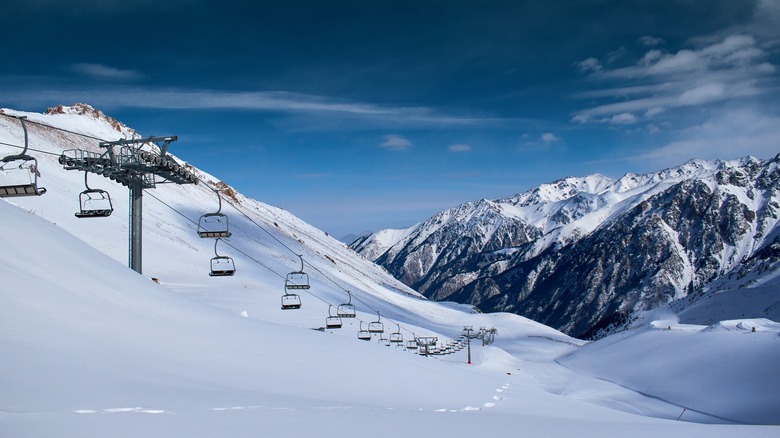
Central Asia may not be on your list of bucket-list ski destinations, but it should be. Kazakhstan is one of the most tourist-friendly countries in the world, according to travelers, and has incredible skiing just a 45- to 50-minute drive outside of Almaty at Shymbulak Mountain Resort. Shymbulak is located in the Zailiyskiy Alatau mountain range, a northern section of the Tian Shan mountains. At about 10,500 feet above sea level at its highest point, this resort has the longest ski season in the country, and also the largest resort in all of Central Asia — even Prince Harry visited and reserved the entire mountain all to himself and his group.
Though the resort is smaller than the average American or European one, it still packs a punch: You can enjoy sweeping views of the Kazakh steppe and Zailiyskiy Alatau mountains, avoid large crowds and lift lines, and enjoy lower prices than Western resorts. The resort is suitable for all levels. There is a ski school with English-speaking instructors for absolute beginners, plenty of slopes to explore for intermediate skiers, and backcountry opportunities for experts. There are even heli-skiing options available.
Many visitors stay either at Shymbulak Resort or a nearby hotel, or stay in Almaty for more options. There are public buses between Almaty to Shymbulak, making the mountain very accessible to tourists. They have a ton of ski pass options, ranging in half-day passes, full-day passes, and season passes. Prices vary depending on the time of day but half-day passes are either about $6 or $8 USD and a full-day pass is about $12 USD. A season pass is about $485 USD.
Ruapehu, New Zealand
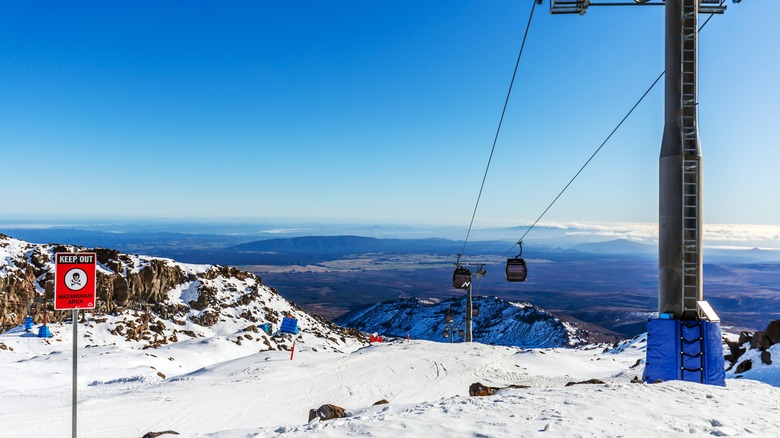
New Zealand is known for its epic outdoor adventures, but not many think of skiing as one of them, especially on an active volcano. However, it's totally possible on North Island's Mount Ruapehu in Tongariro National Park, an iconic New Zealand national park that's as mesmerizing as it is dangerous. It's an UNESCO World Heritage site with two ski areas called Whakapapa and Tūroa. Both offer spectacular views, world-class skiing, and thousands of acres of snow-topped volcanic rock.
Whakapapa is an all-levels resort with a gondola, 4 chairlifts, 4 cafes, 2 rental shops, and 690 meters of vertical descent across 1,359 acres of ski area. The resort's slopes break down to 30% beginner, 45% intermediate, and 25% advanced ski areas. Tūroa has the longest vertical descent in New Zealand and the highest lifted point in the country via the High Noon Express chairlift. Though there are beginner and intermediate slopes here, this resort is known for its expert-level skiing, which include 25 black diamond and double-black diamond runs, and two lift-accessed backcountry areas across about 1,236 acres.
These resorts are about an hour's drive from one another, so there are plenty of options for accommodation. If you want to visit only one of the resorts, you can easily stay at that resort, or in the closest village. For those who want to visit both resorts, National Park Village and Ohakune are great options with a vibrant apres-ski culture with restaurants and bars. Each resort has shuttles to the villages.
Mauna Kea, Hawaii
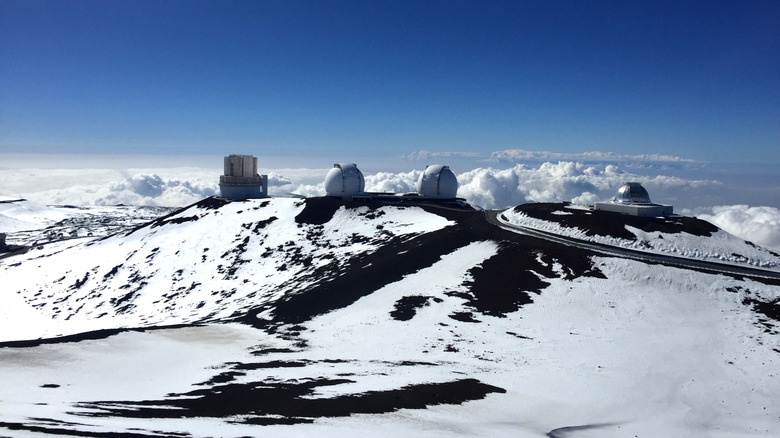
Skiing in Hawaii sounds like a joke,but it's actually possible on Hawaii's Big Island on Mauna Kea — which means "White Mountain" in Hawaiian. Mauna Kea is an extinct, 13,500-foot tall volcano that attracts expert skiers when snow falls in February and March, and is the perfect place to turn your beach vacation into an unexpected skiing adventure. There are no lifts or any ski infrastructure. Instead, skiers drive to the top of the mountain and carve their own path down. This experience is for the most daring, advanced skiers seeking uncovered adventures and an unusual bucket list experience.
The weather on Mauna Kea can be unpredictable, with strong winds that can sometimes close the Mouna Kea Access Road, so always check conditions before heading out. But, if the weather cooperates and the skies are clear, you can enjoy beautiful panoramic views of Hawaii and even see Mauna Loa Volcano and Haleakalā Volcano.
Because there is no infrastructure for this daring adventure, you must bring all your own equipment, from proper clothing to skis and boots. In addition to renting a 4x4 to reach the top, you will need a second one to leave at the bottom to drive you back to the top of the mountain too. Because one would be ascending from sea level to over 13,000 feet in about a two-hour drive, many people experience altitude sickness, so it's important to prepare and monitor symptoms.
Afriski Mountain Resort, Lesotho
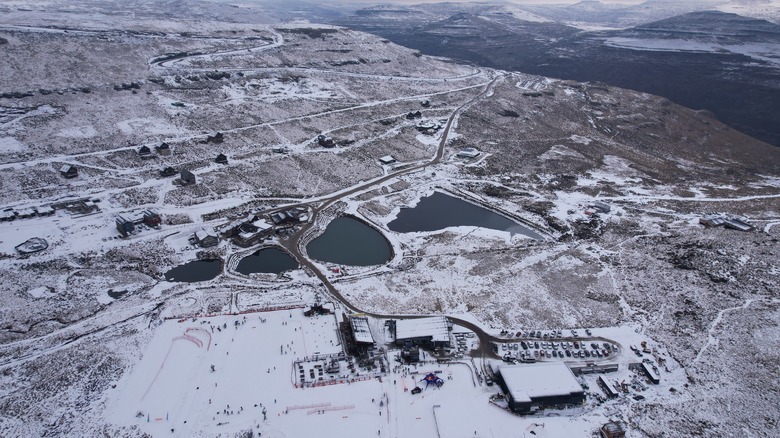
Sub-Saharan Africa doesn't come to mind usually as a place with ski resorts, but you'd be wrong to assume there's none. In fact, the country Lesotho is known as the "Kingdom in the Sky" because of its high elevation. The small country is entirely inside South Africa, and its lowest point, 4,593 feet above sea level, is the highest lowest point of any country in the entire world. Afriski Mountain Resort is the country's ski resort, located in the Maluti Mountains, and the peaks rise to over 10,500 feet.
The ski season usually runs from the beginning of June to through August, though these aren't the snow-peaked hills covered in a blanket of white you're used to seeing in Europe or the United States. Though the mountain does get snow, it is aided considerably by snow making machines. However, this mountain still offers quality skiing and world-class lessons. There are several ski packages available that include lift tickets, equipment rentals, and group lessons, starting at about $77 USD.
Accommodations at Afriski Resort are incredibly affordable and offer spectacular views of the mountains. A cabin for two people is around $54 USD per night, while a bigger cabin for four people is about $114 USD per night. At the top of the mountain, you can dine at Africa's highest restaurant, called Sky Restaurant. It's located at over 3,000 meters (1.9 miles) above sea level. You can enjoy panoramic views of Africa's Maluti Mountains while enjoying wood-fired pizza and wine.
Troodos, Cyprus
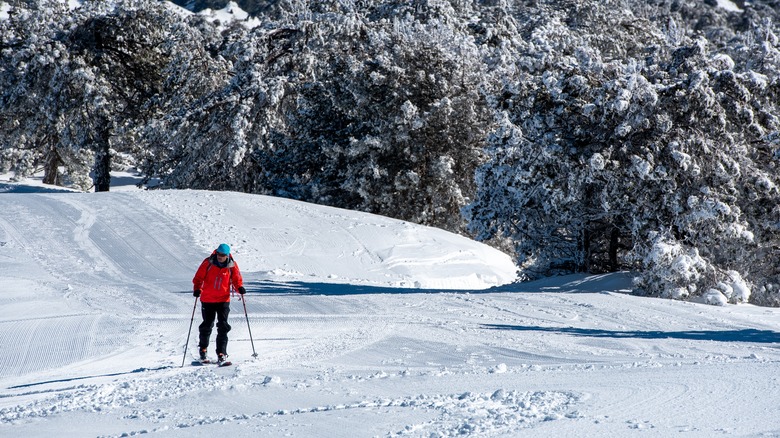
When most people picture a Mediterranean vacation, they imagine sun-drenched islands and breezy boating days. However, it's totally possible to have an amazing ski vacation surrounded by blue waters. Cyprus, the small island nation off the coast of Turkey and Syria, is one of Europe's most underrated Mediterranean islands. It is home to the Troodos Mountains, which are worth checking out for your next ski vacation.
The Troodos Mountains ski slopes operate from January through March on the slopes of Mount Olympus. It was built in the 1960s by the British Army after World War II, and has since been acquired by the Cyprus Ski Club. Standing at 1,951 meters (1.2 miles), it is this island nation's highest point. The Cyprus Ski Club is home to 4 drag lifts and 8 runs of various levels, from beginner to advanced. There is also a restaurant and cafes on site, and plenty of hotels, coffee shops, and other things to do in close proximity.
There are several ski pass options available. For a weekday lift pass, adult rates are around $17 USD and around $29 USD for weekends and holidays. There are also weekend, weekly, and season passes available. On the third Sunday in January every year, the location celebrates World Snow Day, a holiday created by the International Ski Federation to help introduce kids and families to the sport. On Mount Olympus, there are celebrations, free ski lessons for children, and a snow sculpture competition.
Amirsoy Ski Resort, Uzbekistan
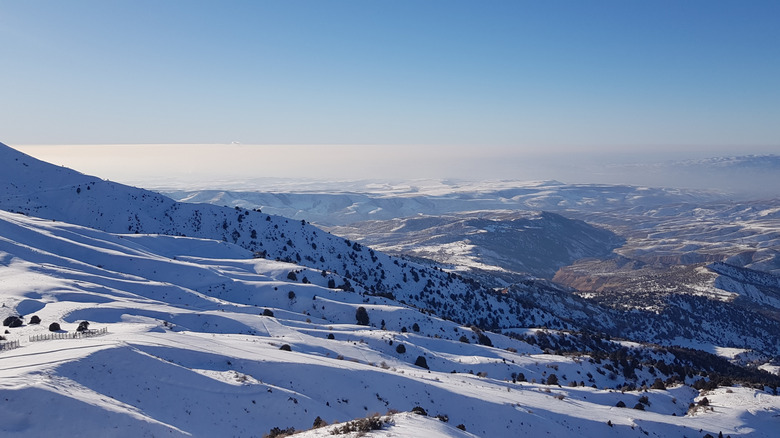
If you come to Uzbekistan to ski the Tien Shan Mountains, you can officially say you've skied on one of the most historical and ancient trade routes — the Silk Road. The Silk Road was an ancient and incredibly important trade route that connected China with Central Asia, the Middle East, and Europe. But today, these mountains are home to three amazing ski resorts all in close proximity called Chimgan, Beldersay, and Amirsoy — the most modern and largest of the three.
The former Soviet nation's ski tourism industry didn't really exist until recent years, starting with the opening of Amirsoy Ski Resort in 2019. Before, there were a few outdated ski locations. Amirsoy was built with a 100 million euros ($117,488,500 USD) investment, and started attracting an international crowd. The resort has a little over 9 miles (15 kilometers) of slopes and is equipped with modern gondola and quad chair lifts. The lift tickets are incredibly affordable too, with a one-way ticket on the slopes costing around $7 USD on the weekends. A season pass costs around $631 USD.
Though skiing and food is quite affordable, accommodation can get pricey if you want to stay right on the mountain. There are 4-star resorts available that have all modern amenities that you'd expect at a European resort, with TVs, fireplaces, and breakfast included. These resorts generally cost around $250 to $500 USD per night.
Antarctica
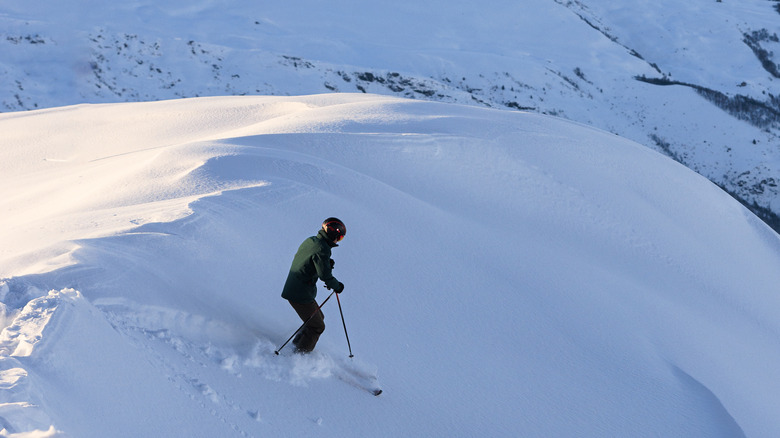
If you were told that you can ski at a place with no resorts, ski lifts, or barely any people, would you? Skiing in Antarctica is for the most adventurous backcountry skiers who want adventure, a really unique experience, and know how much it really costs to visit Antarctica. After all, getting to the most remote place on earth and figuring out all your own logistics doesn't come cheap. However, if skiing in Antarctica is on your bucket list, there are plenty of tour companies that offer experiences to do so.
Because there are no lifts, runs, or any infrastructure, you must be able to skin up the mountain and ski the backcountry down, requiring expert-level skills. The Antarctic Peninsula, where many Antarctica ski companies focus on, is the most easily accessed area of Antarctica and has mountains as high as 3,000 meters (9,842 feet) tall.
These ski expeditions are normally a part of participating in a cruise to the continent, which vary widely in price. Aurora Expeditions, which offers skiing day trips on its cruises, have cruises that start at around $16,800 and go up to $25,600, though prices vary depending on cabin. Pelorus Yachting offers heli-skiing, and its cruises vary in price. Antarctic Logistics offers a 13-day trip to ski Union Glacier for $40,000. These often include food, ski guides, and accommodation during your trip, though each company varies.
Methodology

When writing this article, global ski destinations were considered that did not represent popular or commonly known destinations, such as the European Alps or the Rocky Mountains of the United States. Conditions that made each ski destination unique included considerations for location, climate, terrain, and experiences available, such as skiing on a volcano, on islands, or in remote destinations. Global diversity was also a priority, to include places from different continents and geographical types.