
Bizarre Facts You Probably Didn't Know About Yellowstone National Park
The otherworldly landscapes of Yellowstone National Park have captured imaginations for centuries, with their bubbling mud pots, peculiar rainbow-colored pools, and dramatic geysers that shoot skyward on a schedule all of their own. Yet while this strange geothermal wonderland is famous for its mind-blowing physical features, it's also home to strange secrets and seemingly unexplained phenomena that are even more bizarre.
Yellowstone became the world's first national park in 1872, to protect the unusual ecosystem and its wild inhabitants. Today, Yellowstone is one of the most popular parks in the U.S. with over 4.7 million visitors each year. That sounds like a lot, but at 3,472 square miles, Yellowstone is so vast that it's easy to lose the crowds and head off into the wilderness. It's an enigmatic and intriguing place — one that we may never fully understand — but this air of mystery just adds to the appeal.
For instance, did you know that Yellowstone Lake "sings" in winter, or that, according to some, parts of the park are "haunted?" In this article we'll reveal both science and speculation as we uncover some of the weirdest mysteries of Yellowstone. We'll introduce you to spooky ghosts, a lost thistle-eating explorer, and a bunch of heat-loving organisms that seem otherworldly. Knowing the following bizarre facts about Yellowstone will help deepen your experience of this famous but odd national park.
The frozen Yellowstone Lake 'sings' in winter
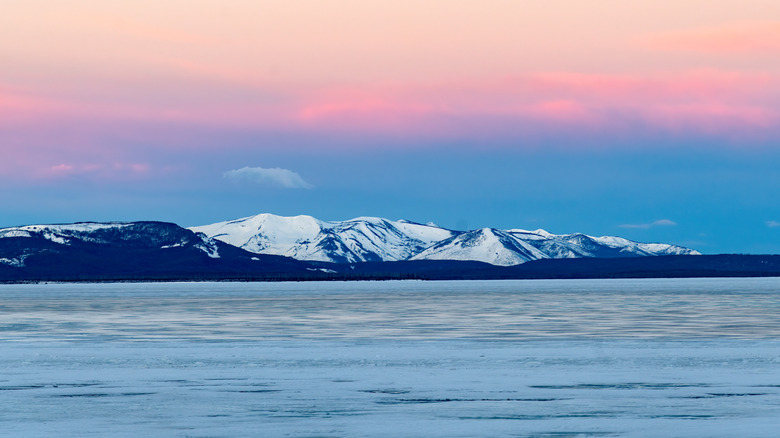
Yellowstone in winter is magical, with frozen waterfalls glistening in the sun, and snow-laden forests resonating with the howls of wolves. At the hot springs, water continues to bubble, while the rising steam gives everything nearby an ethereal coating of frost. Yet nothing is as eerie as the mysterious musical noises that can be heard coming from Yellowstone Lake.
This strange symphony of sound occurs when the lake is frozen sometime between December and May. Since the 19th century, explorers and park workers have reported hearing haunting "lake music" coming from the ice. One of the first records comes from Captain Hiram Chittenden's 1895 book "Yellowstone National Park," in which he writes "a most singular and interesting acoustic phenomenon of this region ... is the occurrence of strange and indefinable overhead sounds." He goes on to say that the noises are similar to "the ringing of telegraph wires or the humming of a swarm of bees." Other visitors have heard deep pipe organ notes and even the sounds of flying birds. Meanwhile, supervisor park ranger Kristine Brunsman commented to Thrillist that "in December 2020, I heard songs I'd never heard before — akin to sonar pings or the call of a whale."
Despite several scientific studies, no one knows the true source of these sounds. One theory suggests that water flowing beneath the ice causes cracks which spread, thus creating these bizarre noises. Other scientists have suggested that the sounds are the result of earthquakes, air whirlpools, or temperature inversions, but no conclusive evidence has been found. Yellowstone is one of the best U.S. national parks for winter hiking, so next time you visit, listen out for nature's extraordinary music.
Yellowstone sits on top of a supervolcano
You might already be aware that there's a volcano beneath Yellowstone National Park, but did you know that it's a supervolcano? It's active too, as evidenced by the ongoing geothermal activity in the park, with explosive geysers, bubbling mud pools, and steaming hot springs characterizing the wild landscape. It's a weird feeling, knowing that just by visiting Yellowstone, you're walking on top of a supervolcano.
Yellowstone was named a supervolcano after a series of massive eruptions. The first, which occurred 2.1 million years ago, is believed to have been one of the largest volcanic eruptions in the world. The second followed 1.3 million years ago, while the third and most recent mega eruption was 631,000 years ago. This latter event created the Yellowstone Caldera as we know it today. There have been several smaller eruptions in the following centuries, and Yellowstone remains one of the largest active volcanoes on the planet.
So, what about the future? Yellowstone will likely erupt again, but probably not for thousands, or even millions of years, so visitors today needn't worry. The area is closely monitored by geologists at the Yellowstone Volcano Observatory, and it's predicted that any future eruption in the region would be preceded by a long period of intense volcanic activity — likely lava flows — giving plenty of warning for evacuation.
Half of the world's active geysers are in Yellowstone
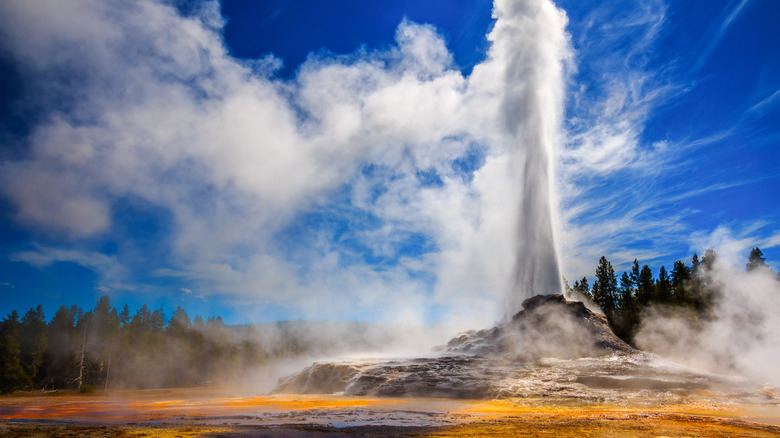
Yellowstone is a hotbed of volcanic activity, with more than 10,000 active hydrothermal features like mud pools, fumaroles, and hot springs punctuating the wild landscape. Yet the stars of the show are undoubtedly the geysers, as they spew water skywards during spectacular eruptions. There are up to 700 active geysers within the national park each year, which is astonishing since there are fewer than 500 annually erupting geysers in the rest of the world combined.
This vibrant geyser basin has a unique ecological environment, which means each geyser behaves a little differently compared to the next. Some geysers have predictable eruptions which are helpful for visitor viewing, but most are more erratic in their behavior. Old Faithful is considered the most famous geyser in Yellowstone, thanks to its easy access and regular eruptions, which occur approximately every 35 to 120 minutes. Each eruption lasts for up to 5 minutes, with the blast sometimes reaching 184 feet.
Meanwhile, Grand Geyser is the world's tallest predictable geyser, with water bursts shooting up to 200 feet. Less reliable is Steamboat Geyser, which is more temperamental in its timing with months or even years passing between major eruptions. Yet if you get lucky and manage to catch the event, you'll witness water plumes of over 300 feet, sometimes lasting for around 40 minutes. You can check the latest Yellowstone geyser eruption predictions on the National Park Service website.
Early explorers used Old Faithful as a laundry
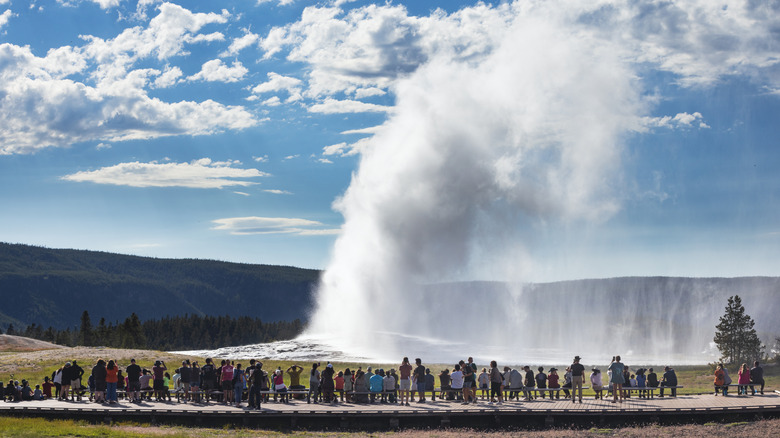
One of the most bizarre tales to come out of Yellowstone National Park was from an 1877 expedition (via Yellowstone Gate), during which the explorers used Old Faithful to wash their clothes. The following year, team member Frank D. Carpenter published his travelogue "The Wonders of Geyser Land: A Trip to the Yellowstone National Park," giving an account of the unusual experiment.
He writes that while camped near the geyser, the explorers decided to do their washing in Old Faithful since "such an opportunity for "boiling clothes" will not be presented again soon." The team used several methods to secure their garments, including wrapping them in a pillowcase and weighing them down with stones. They then "repaired to the laundry, Old Faithful" before casting the clothing into the water. The bundles sank below the surface, and for a moment the onlookers thought their possessions were gone forever. Yet after a few moments, the geyser blew and the wide-eyed explorers watched the "clothes, jacket, rags ... shoot up to a distance of a hundred feet or more." Upon retrieving the items, Frank and his companions were delighted to discover that they were all clean.
Since then, irresponsible visitors have thrown all manner of objects into Yellowstone's geysers, from handkerchiefs and soap to coins and even couches. However, in more recent years, attitudes toward the environment have changed, and today one of the most upsetting mistakes tourists make in Yellowstone is throwing objects into thermal pools. The park service work hard to recover trash from the water, and throwing objects into Yellowstone's hydrothermal pools is now prohibited.
A legal loophole means murder could go unpunished
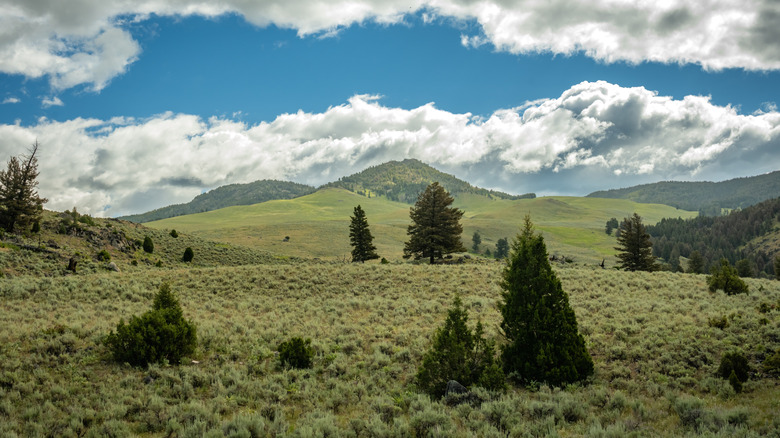
There's a remote area of Yellowstone covering 50 square miles in Idaho nicknamed the Zone of Death, where federal jurisdiction is in conflict with the Constitution's Sixth Amendment. This means that in theory, murder, or any other serious crime, could go unpunished here due to a technicality.
Although Yellowstone sits mainly in Wyoming, it also spills over the border into the neighboring states of Montana and Idaho. To avoid lengthy arguments about authority, Congress declared the park to be federal, rather than state property. It then assigned jurisdiction of Yellowstone to the U.S. District Court of Wyoming in 1872, thereby creating a bizarre legal loophole. Meanwhile, the Sixth Amendment promises a public trial in the state where the murder is carried out, yet in the remote Idaho section of the park, there aren't any residents. This means that a jury cannot be formed, and therefore a trial would be impossible. It's an unusual conflict, and one that hasn't yet been resolved. It's not thought that anyone has tested this legal loophole, luckily.
Microscopic creatures cause Yellowstone's bright colors
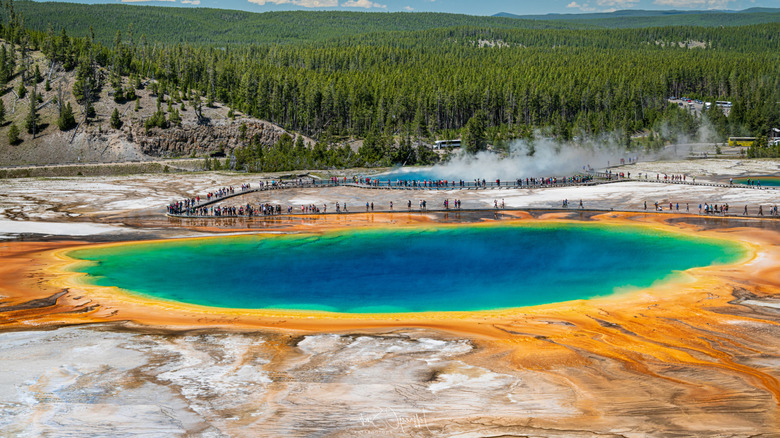
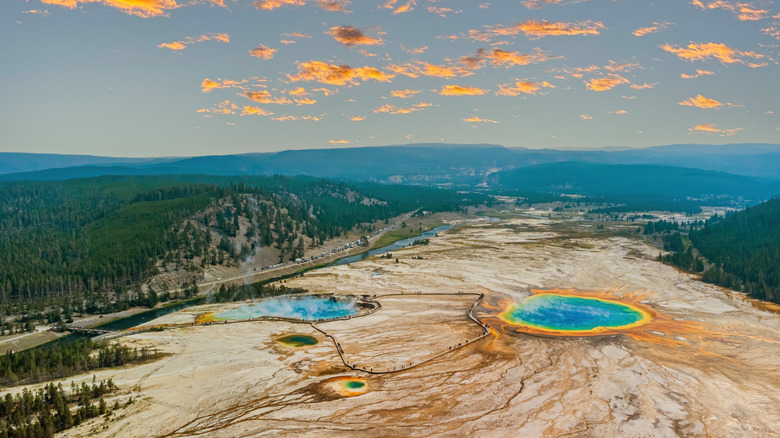
One of the most peculiar features in Yellowstone National Park is the brightly colored water in some of the thermal pools. The vibrant oranges, yellows, greens, and blues bring an otherworldly feel to the landscape, showing off another weird side of nature. For years, people assumed these vivid hues were caused by minerals, because people assumed no living organism could survive in such hot or acidic conditions. Yet scientists now believe that trillions of microscopic creatures invisible to the human eye are responsible for the strange colors.
Known as thermophiles, these unseen organisms thrive in intensely hot environments, on the edge of existence. They likely descend from the first microorganisms on Earth, and their presence in such extreme conditions supports the theory that there could be life on Mars.
Even more bizarrely, the color comes from the thermophilic microbes themselves. When you see the rings of orange, yellow, and green in the thermal pools, you're actually looking at huge amounts of these strange microorganisms, all bunched together to form a mass of color. Different thermophiles flourish in different temperatures, so the distinct color variations in the pools indicate the change in water temperature while also showing where one species stops and another begins. The best places to see these unusual color changes include Grand Prismatic Spring, Morning Glory Pool, and Rainbow Pool. Go around midday when the sun is overhead to see the colors at their most vivid.
A lost Yellowstone explorer was supposedly 'saved by a ghost'
Yellowstone is a place of mystery, so it's not surprising that several people have disappeared without trace in the national park over the years, mirroring similar bizarre tales from the Grand Canyon. From an elk hunter who went missing in 1991 to an 8-year-old boy who vanished from a picnic area in 1966, many disappearances remain unsolved. However, there are happy endings to some misadventures, with the strangest being the story of Truman Everts, a former tax collector from Montana who claimed he was saved by a helpful ghost.
In 1870, Everts took part in the Washburn-Langford-Doane expedition into Yellowstone, with the aim of charting the wild territory, according to Idaho Falls Magazine. It was during this trip that Old Faithful was given its name, thanks to the regularity of the eruptions. Part way through the expedition, Everts got lost near Yellowstone Lake at the onset of winter. His pack horse ran off with his supplies, leaving him to fend for himself for 37 days in the wilderness.
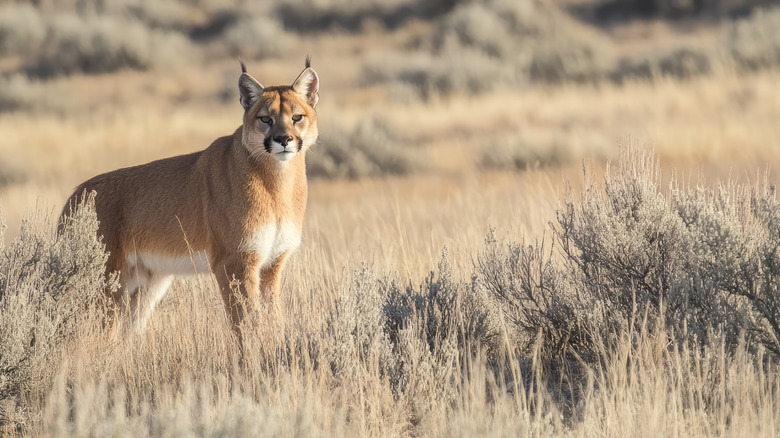
Remarkably, Everts lived to tell the tale, despite being close to starvation. Having survived a mountain lion attack and a forest fire which he inadvertently started, the explorer sustained himself by eating thistle roots before, according to his account, a ghostly stranger led him to safety (via Cowboy State Daily). Everts claimed that a ghostly apparition warned him against climbing a dangerous mountain, instead urging him to head in a safer direction, retracing his steps to the Yellowstone River. He also claimed the ghost accompanied him during the long trek until he was eventually found by a search party. Whether his experiences were truth or delusion, it's certainly one of the more bizarre tales from Yellowstone.
Yellowstone's Isa Lake drains into two oceans
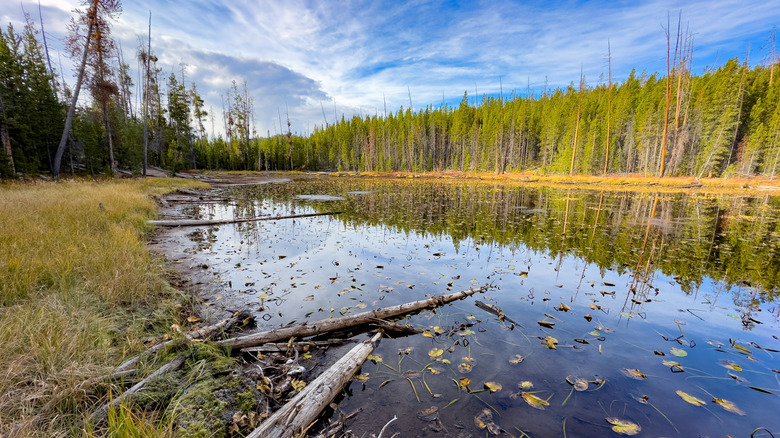
Most lakes in the world drain into a single sea or ocean, but Yellowstone's Isa Lake drains into two. In fact, this is the only natural lake in the world with water running into both the Pacific Ocean and the Atlantic Ocean. There are a couple of explanations for this bizarre double drainage phenomenon.
Firstly, Isa Lake lies on top of the Continental Divide between Yellowstone's Old Faithful and West Thumb Geyser Basin, with the watersheds of the two oceans on either side. This means that water from the lake will understandably drain in both directions. Strangely, however, it's not that simple. You'd think that the west side of the lake would drain into the Pacific and the east side into the Atlantic, but it's actually the other way around, thanks to Yellowstone's unusual topography. In fact, the western end of the lake flows into the Firehole River, and eventually the Atlantic Ocean, while the eastern end makes its way into the Columba River before reaching the Pacific Ocean, especially during springtime when the winter snows melt.
A decade-long treasure hunt ended in Yellowstone
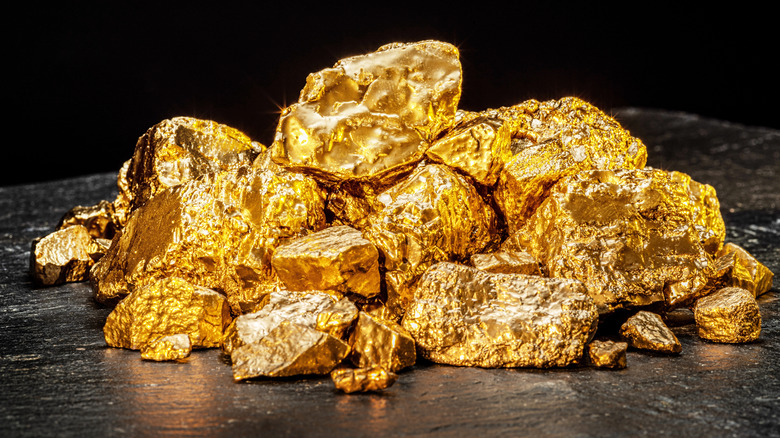
In 2010, a millionaire art dealer from New Mexico named Forrest Fenn hid a treasure chest containing valuables from his collection worth around $2 million. After being diagnosed with cancer, Fenn had decided to have a bit of fun with his wealth, which he knew he couldn't take with him when he died. He then wrote a challenging poem containing clues about the location of the chest, leading hundreds of thousands of people from around the world on a decade-long quest for gold.
Despite the initial reason for the mission, and the fact that several questers sadly perished while trying to find the treasure, this bizarre story does have a cheerful conclusion. Fenn ended up beating his cancer and lived long enough to see the hunt come to an end.
The chest was eventually found in 2020 by a medical student called Jack Stuef. He'd been searching for the treasure for 2 years before finding it hidden in Yellowstone National Park, reportedly beside Nine Mile Hole. Fenn spent many holidays in Yellowstone when he was young, which is perhaps why he buried his treasure here. Inside the chest were gold nuggets, jewels, coins, and antiques, most of which Stuef sold for $1.26 million to help clear his medical school debts.
Bison have roamed Yellowstone since prehistoric times
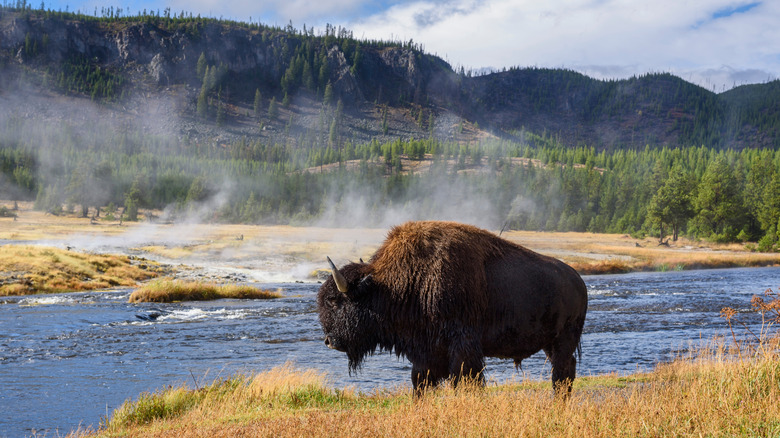
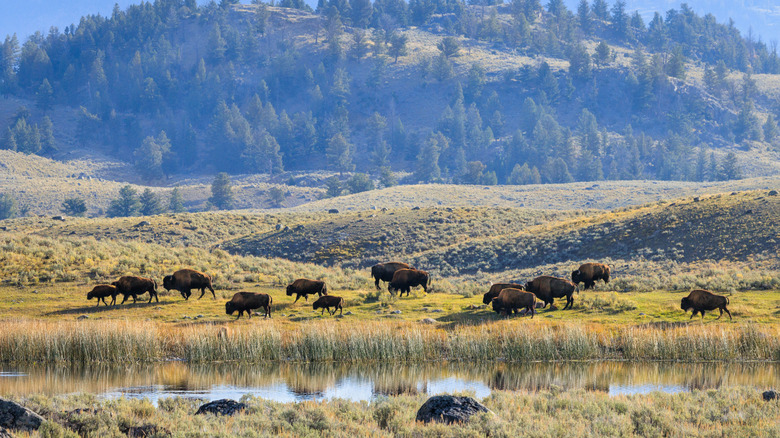
Bison are possibly the most iconic mammals in Yellowstone, and astonishingly, there have been free-ranging herds living here since prehistoric times. Scientific analysis of lake sediment from Yellowstone uncovered the presence of ancient bison dung, thereby revealing that these animals were living here around 2,300 years ago. It's incredible to think that way before they became symbols of the American West, the bison of Yellowstone were roaming the valleys and mountains in this region.
Thousands of individuals now graze within the national park, and today the population is the largest on U.S. public land after surviving an extinction threat from hunting and poaching in the 1800s and 1900s. The bison are a popular sight for Yellowstone visitors, and the herds have a year-round presence in the Hayden and Lamar valleys.
If you want to see bison but don't fancy battling the summer crowds, one of the best times of year to visit Yellowstone National Park for wildlife viewing is spring. The roads are open again after the winter snow closures, and the plains are teeming with newborns. It's a great time to see bison calves taking their first wobbly steps. If you can't get enough of these prehistoric icons, you can also see bison roam in other parks like Montana's National Bison Range and Theodore Roosevelt National Park in North Dakota.
A headless ghost is believed to haunt the Old Faithful Inn
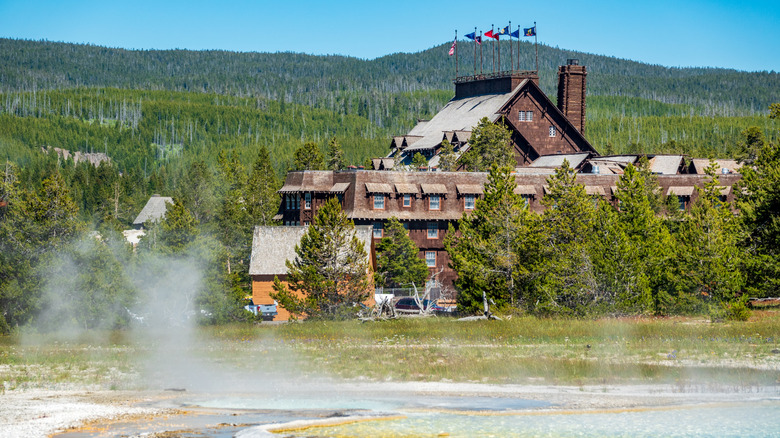
Old hotels and ghost sightings seem to go hand in hand, so it stands to reason that Yellowstone's Old Faithful Inn has a few spooky stories up its sleeve. This presumably-haunted inn opened in 1904, and is believed to have been collecting shadowy inhabitants ever since.
One of the most grisly tales features the ghost of a headless, teenage bride, who is said to roam around the inn after a fateful honeymoon in 1915. According to the legend, she met her horrific demise in Room 127 after an argument with her gambler husband. Her missing head was rumored to be later discovered hidden on the hotel's crow's nest walkway. The subsequent disappearance of the husband led to much speculation, but the murder was never solved. While there's little evidence to support this myth, several hotel guests have reported sightings of the headless girl over the years, in the bedroom and on the crow's nest staircase.
Other ghostly occurrences at the Old Faithful Inn include footsteps in the hotel corridors when no one else is around, doors opening and closing by themselves, and a floating female apparition in 19th century clothing by the bed in Room 2. One worker even said she witnessed a fire extinguisher moving all by itself, turning upside down as she walked past. If you're staying at the inn and fancy a spot of ghost hunting, book into Room 127 or Room 2 for the best chance of a paranormal encounter.