
The 10 Best American Locations For Stargazing Without Equipment
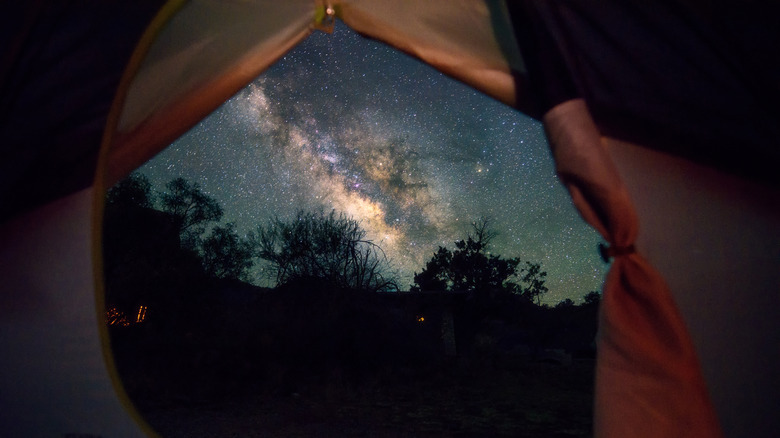
When you live in a densely populated area, one of the most special moments you can have while traveling is looking up at the night sky and discovering that it's absolutely full of stars. For that experience, you need true darkness, which is something that is more difficult — but not impossible — to come by. Unless you're trying to see distant planets, you don't need a telescope to go stargazing. However, you will have better luck in places that are not only far away from major sources of light pollution, but also where local organizations have made an effort to protect the sanctity of the night sky.
DarkSky International is a nonprofit dedicated to combating light pollution through the protection and promotion of parks, cities, and has recognized the first DarkSky-certified airport in Jackson Hole, Wyoming. It has over 150 places listed on its website, each of which has passed a rigorous set of requirements to earn the badge. We took a look through their list to find the best of the best, considering not only scientific data like Bortle scale classifications but also local stargazing events and programs. The Bortle Scale is a nine-level system developed by an astronomer that ranges from Classes 1 through 9, with Class 1 being the highest tier of classification for optimum stargazing conditions. Whether you're an amateur astronomer, night sky photographer, or just looking for a beautiful place to camp beneath the stars, these are the best locations in the U.S. for stargazing.
Big Bend National Park
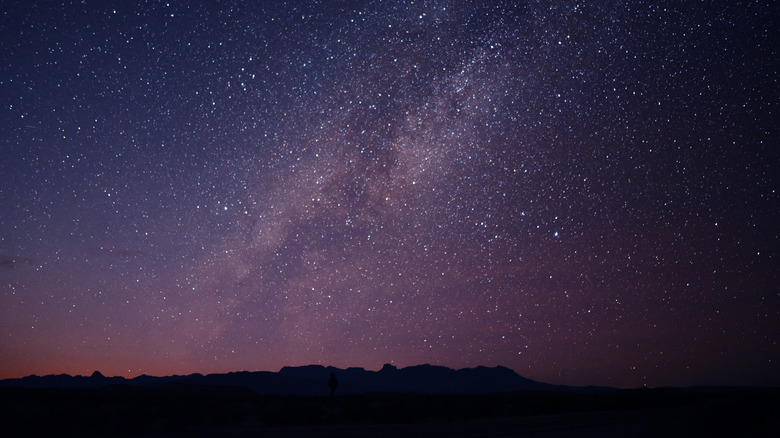
Not only is this considered one of the darkest parts of the U.S., but also this remote national park is an under-the-radar gem. Defined by a landscape of rivers and canyons, the West Texas park is a popular area for hiking and camping, and a place where astrophotographers travel from all over the world to capture the Milky Way. According to DarkSky, Big Bend is "the world's largest Reserve and protected Dark Sky Place," with over 9 million acres that stretch from Fort Davis, Texas to the Rio Grande River. It also has a Bortle Scale rating of 1, which means it doesn't get any darker than this. The desert climate also helps to aid visibility with virtually year-round clear skies.
Park officials know that stargazing is one of the big draws of the park, which is why there are programs like Stars Over Big Bend, during which rangers will bring out telescopes and lead visitors on a tour of the night sky. Evening Star Parties are also offered at the McDonald Observatory in Fort Davis. From the closest airport, Midland-Odesa Airport (MAF), it's a three-and-a-half to four-hour drive to the Panther's Junction Visitor Center, one of the entrances of the park. Camping is very popular here, but there is a variety of accommodations from vacation rentals to luxury glamping hotels, as well as more traditional hotels like Chisos Mountain Lodge, which is located right in the heart of the park.
Central Idaho Dark Sky Preserve
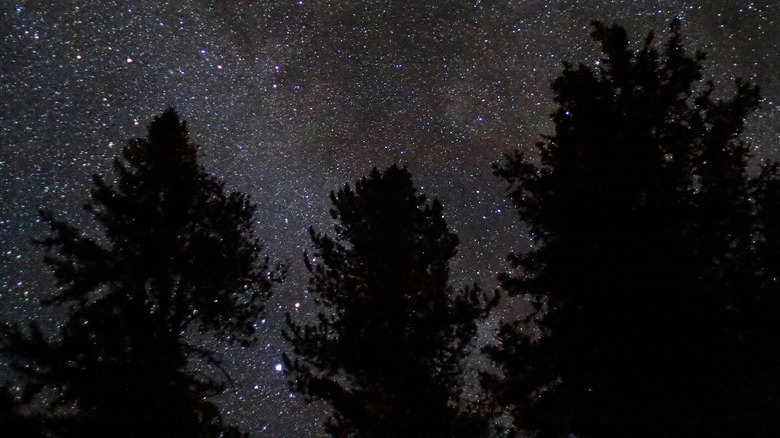
This reservation that spans from Ketchum and Sun Valley to Stanley was the first area to be designated an International Dark Sky Reserve. Unlike a single park, the Central Idaho Dark Sky Preserve is an amalgamation of towns, wilderness areas, and public lands. According to DarkSky, the vast, uninterrupted night skies of the preserve are a culmination of efforts by multiple cities to regulate and plan for the long term, earning the park a Bortle Scale rating of 2. This means that you can experience different conditions depending on where you go in the 1,400 square-mile preserve, which is one of 12 similarly-organized, community-led reserves in the world.
Stargazing events are organized by the Boise State University with observational nights in partnership with the Boise Astronomical Society, which also organizes Star Parties and hosts the annual Stellar Collective, a conference that welcomes citizen scientists to learn from professional astronomers. The closest airport to the preserve is Boise Airport (BOI), and it can take two-and-a-half to three hours (or possibly more, depending on how far you're going) to get there by car. Consider staying near the Sawtooth Wilderness area, where the Stanley High Country Inn offers cozy cabins, plus amenities like a hot tub and a complimentary shuttle to Redfish Lake Lodge.
Natural Bridges National Monument
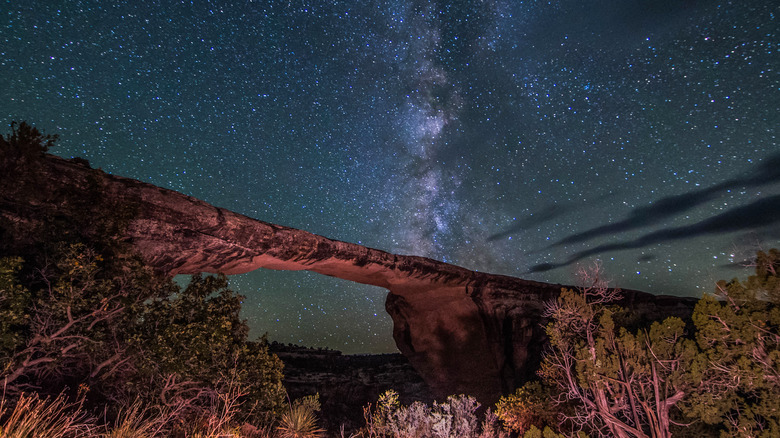
This Utah park has tremendous rock formations that add an otherworldly touch to your stargazing adventures, including Sipapu Bridge, the second-largest natural bridge in the country. It's perfect for photographers because the stone arches serve as natural frames for the stars. DarkSky hails the lack of light pollution as nearly perfect, and it has a Bortle Scale rating of 2. In the summer, you can attend astronomy programs run by the National Park Service (NPS), including photography workshops, so you can capture that perfect shot of the sky behind the Owachomo Bridge. Beyond appreciating the millions of stars, you can also learn more about how light pollution affects the nocturnal wildlife of the park and the many ways night sky conservation efforts benefit the environment.
The fastest way to get to the park is to fly into Cortez-Montezuma County Airport (CEZ) in Colorado and drive about two hours, although it may be more convenient to incorporate it into an itinerary of a Utah road trip with so many other national parks nearby. You also have the option of flying to Moab Canyonlands Airport (CNY), which has a few more flights and connections to larger airports, but a slightly longer drive at about two-and-a-half hours. Hotels are few and far between in this remote area, but there are many affordable inns near the town of Blanding, 45 minutes away. There is a Municipal Airport in Blanding, but it only serves private flights and small and medium aircraft.
Cherry Springs State Park
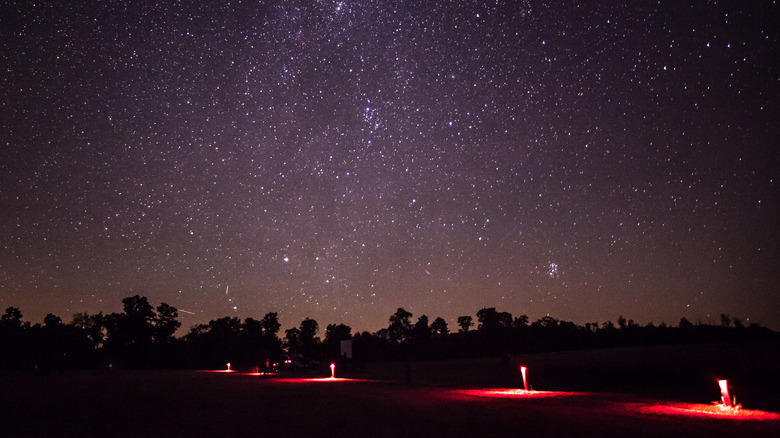
This state park is a stargazing paradise in Pennsylvania with a Class 2 rating on the Bortle Scale. Cherry Springs State Park is located in the mostly undeveloped Susquehannock State Forest, and according to DarkSky, it's one of the best places in the Eastern U.S. for stargazing. From the field, you'll have totally unobstructed 360-degree views of the night sky, and the park also hosts an annual star party that attracts hundreds of amateur astronomers who can camp in the Overnight Observing Field. Stargazing is the main activity here, which is obvious in the design of the park that enforces restrictions on white light and designated observing fields.
Located in North Central Pennsylvania, the closest airport is the State College Regional Airport (SCE), which is a two-hour drive away from the park. You could also fly into Rochester, New York—which has a larger airport with more flight options—and drive south for about two-and-a-half to three hours (depending on traffic). If you prefer not to camp, you can find plenty of lodging near the park, like Blue Skies Lodge, which is a cabin with a private stargazing field. For a more traditional hotel experience, try the extremely cozy Frosty Hollow Bed & Breakfast.
Death Valley National Park
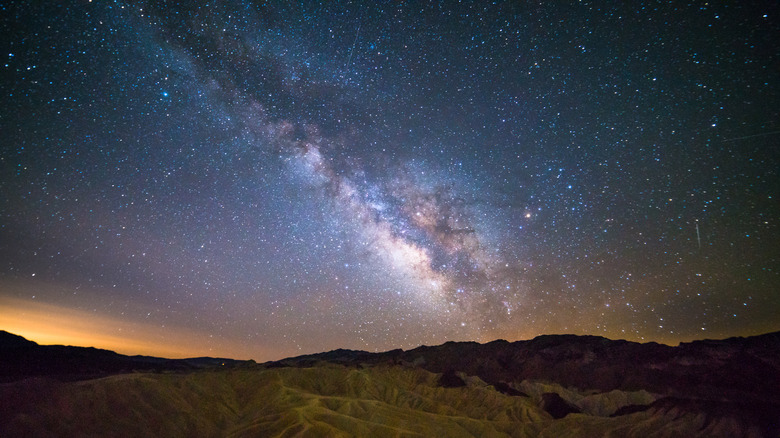
Even if you're in the most remote place on earth on a new moon, clouds can spoil a stargazing trip. That's what makes Death Valley National Park, which has both clear skies and a remote location, absolutely perfect for your astronomic travel endeavors. It's the same geological characteristics that make Death Valley extremely unlivable — low humidity and minimal cloud cover — during the day that also enhance the clarity at night. Being so far from everything, the night sky is the closest you can get to envisioning how all skies would have looked before the cities of the world lit up. Here, the Milky Way stretches out above the desert in an exceptionally bright display.
After you enjoy the best sunset views, you can join a Night Sky Ranger Talk or explore popular photography destinations like Zabriskie Point and Mesquite Flat Dunes on your own because the park has no closing time. You could also go for the Dark Sky Festival in February. The California national park is just a two-hour drive from Las Vegas, and you can find lodging inside the park, like The Ranch at Death Valley, a luxurious and historic inn founded in 1927.
Great Basin National Park
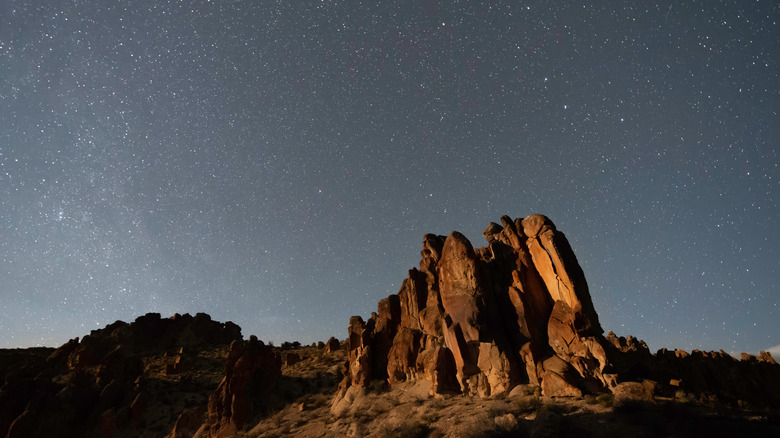
Also located in Nevada and part of the state's astronomy route, which connects the two International DarkSky parks, Great Basin National Park has some of the best conditions in the country for enjoying the night sky. Located between the Sierra Nevada and the Wasatch Mountains, this Bortle Class 1 park is one of the least-populated areas of the continental U.S. DarkSky credits the park's topography for helping to block the light that comes from distant cities.
The park hosts astronomy programs in the summer as well as the annual Astronomy Festival in September, a four-day event with various talks, workshops, and tours of the Great Basin Observatory. One of the more unique stargazing experiences in the country — located about an hour's drive away from Great Basin National Park— is the Star Train, which departs from Ely's Northern Railway Depot and arrives at Star Flat, a designated observation area equipped with telescopes. To get to the national park, you can drive four-and-a-half hours north of Las Vegas, or fly into Cedar City Regional Airport in Utah and drive for two-and-a-half hours. You can camp or find accommodations in the nearby town of Baker, where there are a few vacation rentals and motels like Stargazer Inn.
Grand Canyon National Park
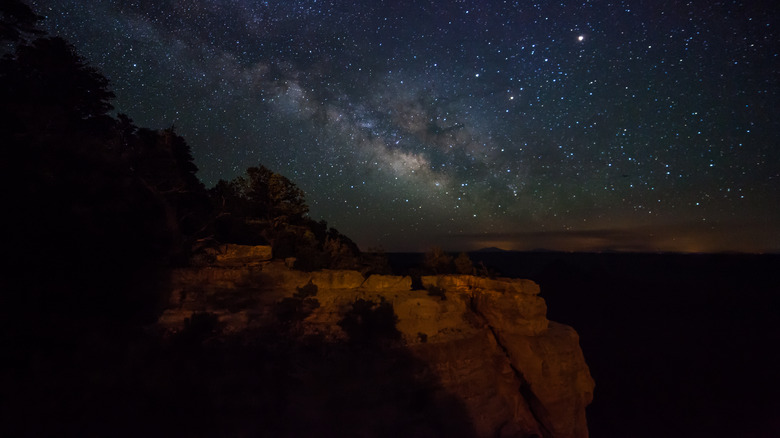
This legendary national park needs no introduction, but if you've only seen the Grand Canyon during the day, you're missing half the park—as the NPS slogan goes. Seeing a night sky full of stars above the Grand Canyon adds an entirely new dimension to the sublime landscape. As darkness settles, the sky transforms into a an expanse of stars that echoes the scale of the canyon below. Not only is it rated as a Bortle Class 1 park, but DarkSky also notes how the park adapted its visitor infrastructure to reduce light pollution and update over 5,000 light fixtures to comply with the International DarkSky Association (IDA) requirements.
Now the third most-visited national park in the country offers a slew of stargazing events with opportunities for volunteers and even an Astronomer in Residence to get involved, not to mention the Grand Canyon Star Party in June. This event is free, but it's recommended that you reserve your campsites in advance. Or you could find accommodations in one of the many luxury glamping resorts that surround the park, such as Backland Luxury Camping, Arizona's hidden resort known for stargazing. It's located about 20 minutes from Williams, Arizona, and there are plenty of stars to enjoy on this 160-acre property.
Katahdin Woods and Waters National Monument
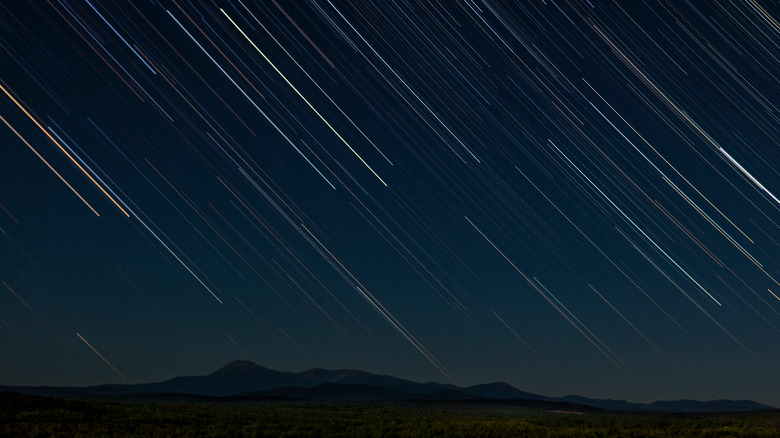
This dark sky sanctuary is a flourishing woodland, a Class 2 destination on the Bortle scale, and an epicentre for stargazing in New England. The area covers over 87,000 acres of woods east of Mount Katahdin, which is the terminus of the Appalachian Trail, and it is unique in the way stargazing programs intersect with the indigenous roots of the area, which is home to the Penobscot Nation. There are no commercial power sources within the national monument, and even though the eastern states tend to be more densely populated, this part of Maine is quite remote, located two hours away from the nearest airport in Bangor.
There are fewer programs at this park, but the event of the year is Stars Over Katahdin, which is hosted by the Friends of Katahdin Woods and Waters. Typically held in late September or early October, the one-day event has daytime activities in addition to talks from local indigenous historians, campfire chats with rangers, and traditional performances, plus the astronomer-guided stargazing session. Accommodation choices are sparse if you prefer not to camp, but you can find small inns in the nearest town of Millinocket, a 40-minute drive away, such as Katahdin Suites.
Cape Lookout National Seashore
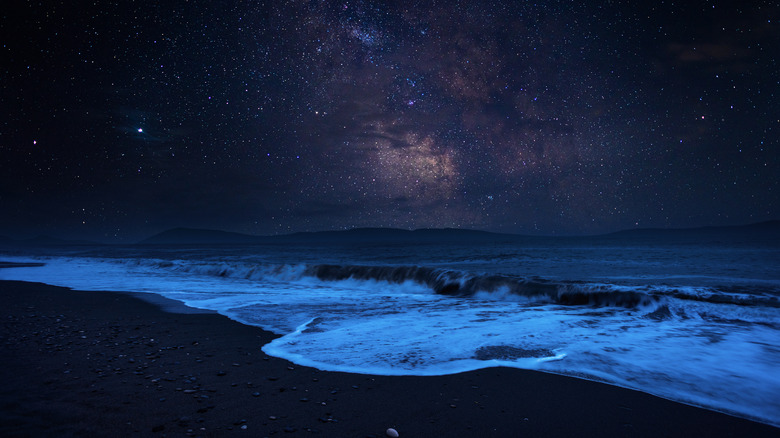
Waterfront destinations are usually busy with brightly glowing resort towns, but when you can find a destination as remote as these barrier islands in North Carolina, you might be surprised to find out just how good beaches can be for stargazing. With a Bortle Class 2 rating, it's an ideal place to see the Milky Way with the naked eye, thanks to the remote location and low-lying islands. To be recognized by DarkSky, the National Seashore also went to great efforts to replace its light fixtures with approved models with timers to improve night sky quality. For events, look to the Crystal Coast Stargazers, an astronomy club that organizes the springtime Crystal Coast Star Party.
Cape Lookout is about a four hour drive northeast of Wilmington, but you can also access it from the Coastal Carolina Regional Airport (EWN), which is two-and-a-half hours away, but it is only serviced by a few airlines, with most direct flights coming from Charlotte. Once you arrive, you still need to take ferries to access the islands. Beach camping is allowed on the majority of beaches in the park, and you can pitch your tent wherever you like. If you prefer a bed on the islands, the Great Island Cabins open for the season between March and November, or you can find something in the nearby town of Beaufort.
Headlands
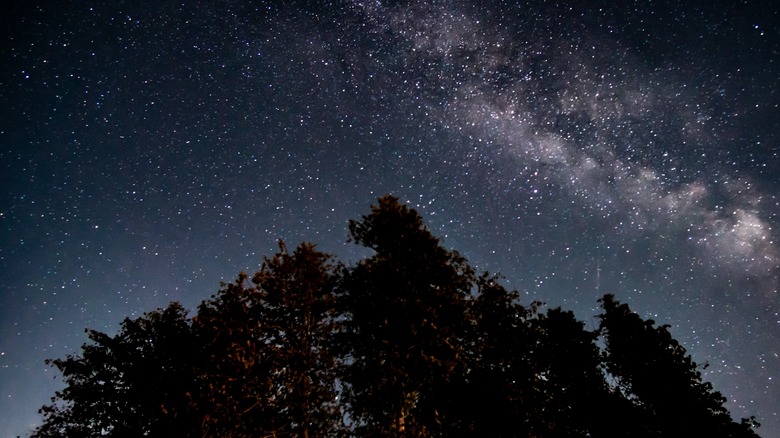
Representing the Great Lake State, the Headlands are located on Lake Michigan and is a stunning destination where you can see the night sky reflected in Lake Michigan. The park is a Class 2 on the Bortle Scale, and according to DarkSky, ordinances that apply to the whole county help restrict the growth of artificial lights nearby, and land is zoned for natural conditions, which stringently limit outdoor lighting.
The park typically hosts events like astrophotography and science workshops, as well as full moon hikes from the spring through the fall. On occasion, the aurora borealis can be observed from the park, so make sure to check the forecast one to two days before your visit. Located on the northern tip of the Lower Peninsula of Michigan, Headlands State Park is about a two-hour drive from Traverse City, or a 30-minute drive if you fly into Pellston Regional Airport (PLN), to which there are daily flights from Detroit. Although visitors are allowed all night for stargazing, camping is not allowed in the park, so you will have to find accommodation in nearby Mackinac City.
Methodology
Every destination on this list is recognized by DarkSky International for outstanding light conditions and has a Bortle Scale rating of two or better according to Go-Astronomy.com, a private website anonymously run by a member of the American Astronomical Society and DarkSky International. DarkSky measures the quality of light and institutes strict guidelines for night-preserving infrastructure. The Bortle Scale estimates the brightness of the sky and level of light pollution based on which stars and galaxies are visible. For example, any place where the brightness of the Milky Way casts a shadow on Earth is a Class 1 location. These measurements are not as exact as those taken with Sky Quality Meters.
A variety of destinations were considered not only for the measurable and recognized quality of the night sky, but also to represent a variety of locations across the United States. Given that the best regions are the most remote, we also took care to provide contextual information about how to reach these areas, many of which require long drives. Beyond camping, the accommodation recommendations were also limited due to the remote nature of each location, and travel time was also considered given the late-night nature of this travel style.