
5 Jobs TSA Does Besides Airport Security

If you thought TSA agents were only in charge of airport security, it turns out these baggage and body-screening stalwarts wear many hats. The Transportation Security Administration, better known as TSA, employs roughly 65,000 people nationwide. About 50,000 work on the front lines at U.S. airports, while the remainder operate behind the scenes, fulfilling critical tasks most travelers never see. If you've ever thought about working for TSA, or are simply curious about how the federal government agency functions, buckle up for a deep dive into the surprising ways it accomplishes its stated mission: "Protect the nation's transportation systems to ensure freedom of movement for people and commerce."
TSA is an integral part of the Department of Homeland Security (DHS), created in response to the September 11, 2001, terrorist attacks. Before it existed, travelers didn't have to remove belts, shoes, or hats, limit liquids, or pass through full-body scanners. You could even accompany loved ones all the way to the departure gate. But after the devastating attacks that took 3,000 lives, Congress passed the Aviation and Transportation Security Act, establishing TSA and fundamentally disrupting the carefree Americans used to travel. In addition to airport screening, the agency was also put in charge of protecting the nation's wider transportation network on land and at sea.
Thus, TSA's functions are far-reaching. From pipeline security to showing up on the front lines of natural disasters, here are five ways the agency contributes to national security beyond the airport checkpoint.
TSA protects the nation's oil and gas pipelines
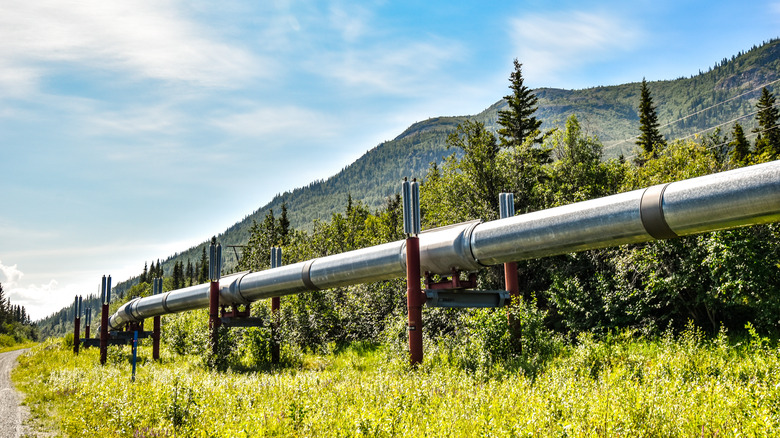
If you spot oil rigs bobbing in the water on your next vacation to Texas' immaculate Gulf Coast islands, you may want to give a silent nod to TSA. They are one of the agencies working to protect the nation's oil and gas pipelines. The United States has roughly 2.8 million miles of natural gas and hazardous liquid pipelines, forming the largest energy transportation network in the world, according to Pipeline 101.
TSA runs pipeline oversight operations from a special headquarters in Anchorage, Alaska, about half an hour from Alaska's most visited mountain bursting with scenic trails. Its main task is to implement guidelines and training materials to ensure the pipeline industry's preparedness and security are in lockstep with the federal government. Of particular concern for the agency is cybersecurity, a vulnerability highlighted in 2021 when Colonial Pipeline was hit with a cyberattack that caused gas shortages and flight disruptions.
In response to the breach, TSA issued a pair of mandatory security directives for pipeline owners and operators. The first stipulated "immediate critical actions" the industry must take, while the second laid out statutes for "improving the resilience of pipeline infrastructure."
TSA tests explosive devices

Mention New Jersey's iconic, vibrant Atlantic City, and visions of glitzy casinos and its legendary boardwalk might instantly spring to mind. It's likely the last place you'd expect to find a federal government testing ground for explosives, but it's home to TSA's Test & Evaluation Laboratory, where hundreds of specialists run critical tests on explosives and detection systems. According to the DHS, the lab's mission is "to enhance homeland security by performing research, development, and validation of solutions to detect and mitigate the threat of improvised explosive devices."
The 12-acre campus is like something out of a spy novel. It houses physicists, chemists, engineers, and mathematicians who work alongside TSA to develop technologies used throughout aviation security, including trace detection methods that explain why TSA may swab your phone or laptop. The site is filled with cutting-edge laboratories that include sensitive spaces for storing an array of domestic, foreign, and homemade explosives, as well as blast-resistant testing rooms.
Additionally, TSA oversees explosives testing at satellite labs in Panama City, Florida, and Huntsville, Alabama. The latter laboratory, known as the Terrorist Explosive Device Analytical Center, is run in joint partnership with the Federal Bureau of Investigation.
TSA agents assist with natural disaster relief
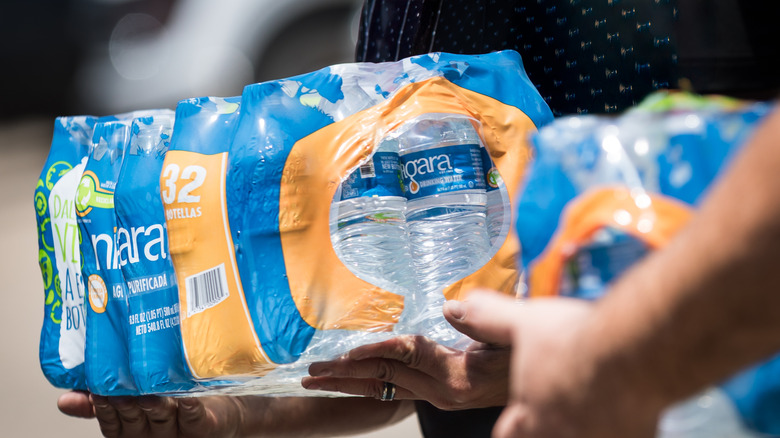
It's easy to see TSA agents as hard-nosed gatekeepers to be outsmarted with airport hacks to zip through security, but as it turns out, many are disaster response volunteers. In 2005, 1,100 TSA agents went to the Gulf Coast to help relief efforts in the aftermath of Hurricane Katrina. Following Hurricane Harvey in 2017, hundreds more were deployed on the ground. They were instrumental in coordinating logistics and supplying canine and security support teams.
TSA participates in these efforts through the Surge Capacity Force, a federal volunteer program created in the wake of Hurricane Katrina. While it isn't a paid part of the job, this philanthropic endeavor enables DHS employees to spend up to 45 days helping the Federal Emergency Management Agency (FEMA) provide response and recovery support during natural disasters. During the height of the COVID-19 pandemic, TSA volunteers even helped staff vaccination sites nationwide.
TSA helps protect the nation's surface transportation resources
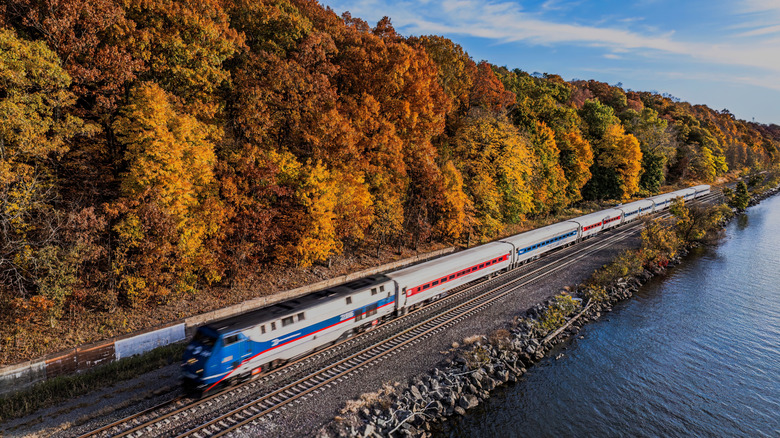
Beyond aviation, TSA is responsible for protecting and overseeing the nation's surface transportation systems, which include highways, freight railroads, passenger railroads, and mass transit. It's no easy feat, considering the U.S. has 4 million miles of public roads and some 140,000 miles of railroad track. To manage it, the agency partners with local, state, and federal transportation authorities to ensure its mandated security measures are enforced. Agents also review and disburse security grants funded by the DHS. The aim of these grants is to secure and improve the country's mass transit systems.
TSA also plays a vital role in assisting the U.S. Coast Guard in maritime security, helping to protect the country's 12,000 miles of coastline. Its main duty is to support the Coast Guard by developing security materials for training passenger vessel crews and port employees.
TSA deploys Federal Air Marshals on flights
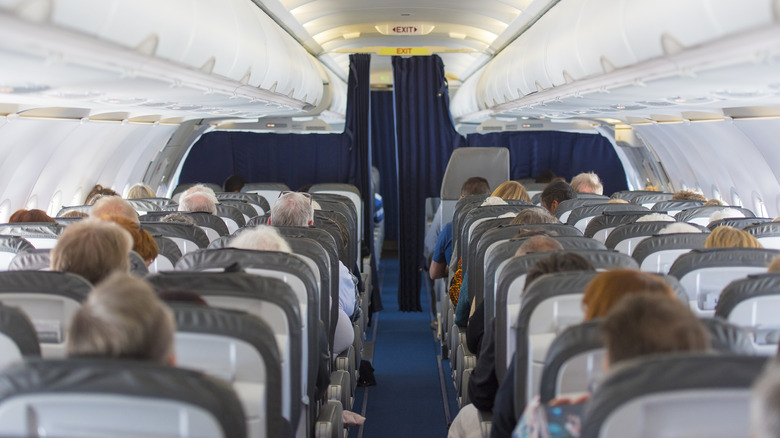
TSA is responsible for hiring and training the Federal Air Marshal Service, whose undercover officers maintain security on flights — and in some cases, trains, ferries, buses — from criminal and terrorist threats. The agency provides these covert security experts with extensive firearms, defensive tactics, and threat-mitigation training before deployment.
Founded in 1962, the program significantly expanded its enrollment after 9/11, growing from a few dozen officers to several thousand. Marshals are experts at sniffing out the same seemingly normal behaviors that TSA ground agents will watch you like a hawk for. The main difference is that air marshals work the skies, flying completely incognito. They wear plain clothes and pass the time on in-flight entertainment, sitting right next to airline passengers who are none the wiser.
Although air marshals fly prepared for the worst, there is one major perk of the job – they get to travel the world for free. According to Assistant Supervisory Air Marshal Esther Fausett, in an interview with The New York Times, unfortunately, there's one benefit air marshals don't get: "Air marshals are not permitted to accrue airline miles while on official duty."