
Florida's 5 Longest Hiking Trails Are Filled With Scenic Views
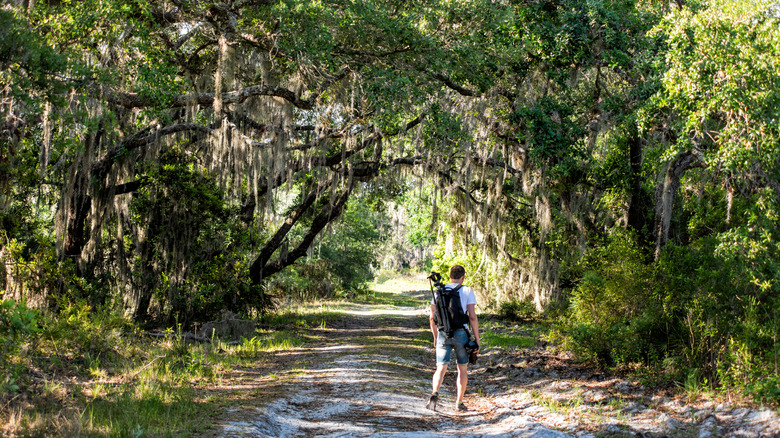
Slinking down the state's sandy shoreline and the viridian heartland, a slew of extended, multi-day hikes unfurl along some of the most scenic trails in Florida. While perhaps not as closely associated with outdoor adventure as the mountains of Colorado or the vast, open wilderness of Alaska, the Sunshine State has an unsung array of uncrowded nature escapes. From the expansive Florida National Scenic Trail to looping routes through the Everglades, active travelers are spoiled for choice — and we narrowed down the five longest treks in the Southern state using data available via hiking website AllTrails.
While all of these trails stretch for many miles across the Florida wilderness, they vary in difficulty. Experienced backcountry hikers will be well prepared for even the toughest of cross-state trails, but those who are new to taking the long-distance routes should conduct thorough research and keep an eye out for the warning signs that your hiking route isn't beginner-friendly.
Packing the right equipment is also essential to ensure a safe journey on any of these lengthy trails. Florida's intense humidity makes waterproof equipment essential — lightweight, water-resistant clothing, boots, and camping gear should all be brought along. It's also worth packing hiking poles. Not only helpful when gaining elevation, poles help hikers wade through the muddy patches that come with the heady humidity.
Florida National Scenic Trail via Eastern Corridor
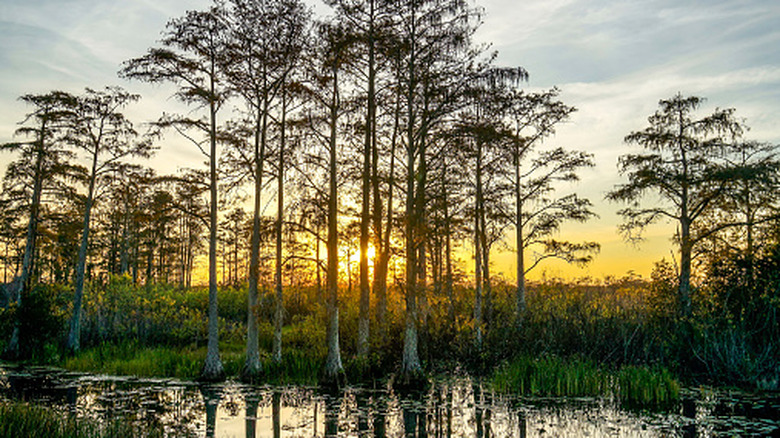
Subdivided into two massive, cross-state routes, the Florida National Scenic Trail is a gargantuan but worthy undertaking for hikers truly invested in immersing themselves in the wilderness of the Sunshine State. The Eastern Corridor version, which spans from Pensacola to the southern side of the Big Cypress National Preserve, is roughly 1,213 miles long. It traverses lake shores, state forests, and wilderness preserves across the state. While many hikers tackle just a short segment of the trail, hardcore adventurers can embark on the arduous but rewarding multi-week excursion.
Both the eastern and western corridor routes share much of the trail, though the easterly route is more popular with hikers. They deviate at Lake Okeechobee, Florida's largest freshwater lake called its "inland sea," near Orlando, and at Eglin Air Force Base. However, both extend across the protected brushes of Florida's oldest and largest national forests, under the sun-dappled cypress trees of the hardwood swamps, to a storied Civil War battlefield, and through state parks filled with old-growth pines and the soft grasses of the vast prairielands. With countless crystalline lakes to cool off in, protected patches of land filled with wildlife, and quintessential Floridian swamplands scattered along the route, the Florida Trail truly encapsulates the state's diversity and natural splendor.
Florida National Scenic Trail via Western Corridor

The other tangent of the massive Florida National Scenic Trail has a very slightly shorter total length of 1,203 miles, according to AllTrails. It also has a little more elevation gain than its sister trail — 20,406 feet spread out over the course of the lengthy route. Of all of the deviations to the route, the most attractive add-ons offered on the western corridor are the Green Swamp Wilderness Preserve and the Withlacoochee State Forest. The preserve is of particular appeal to birders and wildlife watchers, with a plethora of animals thriving in its 560,000 acres of wetlands. The forest's meandering waterways, shaded by dense woodland, feed the floor of wildflowers that flourish under the canopy.
Given the intensity of the local heat and the humidity, as well as the insects attracted to each, both sides of the Florida National Scenic Trail are not recommended as year-round undertaking. Aim to complete the trail between late October and April for prime conditions. It is also worth mapping out your camping sites ahead of time — there are some designated campsites, but they are not regularly spaced out, and even on public lands camping is restricted during the hunting seasons, which are spread out throughout the year.
Suncoast Parkway Trail
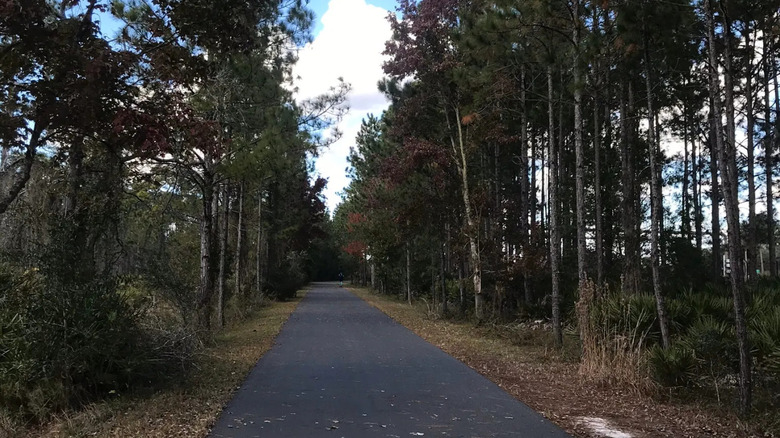
Slightly inland from the state's sun-soaked western shoreline, the Suncoast Parkway Trail is a slowly winding route spanning a lengthy 55.7 miles. Running parallel to the parkway that guides drivers up and down the state's protuberant southern peninsula, the trail passes through the Pasco, Hernando, and northern Hillsborough counties. Exploring airy suburbs, scenic parks, and charming agrarian zones, it's a long but (mostly) only gently sloping trail that invites hikers to explore the state's western side. It takes roughly 17 to 19 hours to complete, but passes through and alongside small towns which can provide overnight refuge for those that don't fancy camping in the Florida heat.
While the bulk of the trail is well maintained, exposed to the searing sun, and relatively out in the open, there are a few worthy diversions into the dense Floridian underbrush. It runs right past the Jay B. Starkey Wilderness Park, an 8,300-acre refuge with its own 50 miles of designated trails. Slightly more shaded than the open trail, its flat shrublands are canopied by the longleaf pines that attract 177 species of resident birds. The trail goes on to cross over the Anclote and Pithlachascotee rivers, carrying on to one of the northern trailheads at Chassahowitzka National Wildlife Refuge. Slightly south of Crystal River, one of the best snorkeling destinations in America, the carefully conserved reserve is a breeding area for wild marine life drawn to its sleepy saltwater bays.
Conservation Levee Greenway Loop
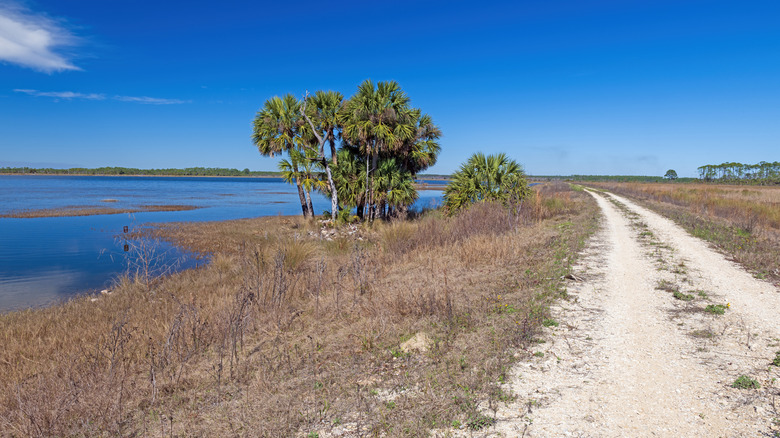
Situated less than half an hour by car west of Fort Lauderdale's up-and-coming South Middle River neighborhood with friendly vibes, the conveniently located Conservation Levee Greenway Loop is an extended trail circling around scenic sawgrass prairies and wetlands protected by the Everglades Wildlife Management Area. Popular with trail runners and bikers as well as hikers, the 52-mile loop gains only 260 feet in elevation. Consisting of a gravel trail intermittently intersected by rocky patches, it winds through quiet, wildlife-filled areas that feel distinctively distant from nearby Fort Lauderdale.
Populated by all the critters classically associated with the Everglades region, the trail also passes near the Loxahatchee National Wildlife Refuge. Dubbed "Palm Beach County's Gateway to the Everglades," the region is replete with birdlife and mighty American alligators. The megafauna isn't the major threat on this trail — hikers should be extra cautious of the infamous Florida heat when tackling the route. There are no shaded areas, and sun protection is essential. The total trail takes roughly 15 to 17 hours to complete, and, while beautiful, hikers have found that the consistency of the environment can make the route repetitive.
The Withlacoochee State Trail
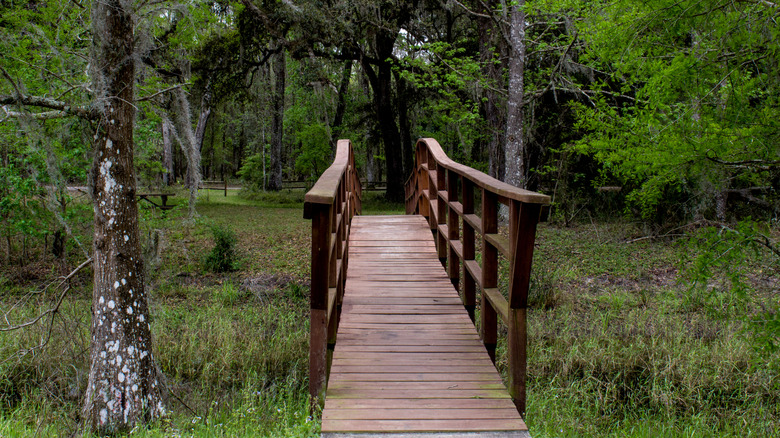
Trailing across three diverse Floridian counties, the Withlacoochee State Trail is one of the longest paved routes in the state. The array of entry points make it easy to tackle just a short section of the trail, but the entire thing stretches for just under 46 miles. Traversing through the orange groves, bucolic ranches, and sweet small towns situated between Citrus Springs and Dade City, it gives travelers a glimpse into Florida's lesser-visited central region. Despite being manmade and well-maintained, the trail is replete with native wildlife.
Thirteen miles of the Withlacoochee State Trail wind through the Croom Wildlife Management Area, where the lush cypress trees and longleaf pines span for 20,000 acres. Hikers keeping an eye on the forest brush will have the chance to spot white-tailed and white piebald deer, chattering coyotes, and Virginia opossums. The woodlands are topped by a bird-filled sky, populated by bald eagles, hawks, falcons, and owls. The trail also passes through Fort Cooper State Park, where hikers can take a break on the banks of Lake Holathlikaha, surrounded by 700 acres of pristine Florida wilderness.
Despite taking an estimated 14 to 15 hours on foot, it's still considered an easy hike. Given its smooth paved terrain and minimal elevation, this trail is also a popular option for bikers and horseback riders.
Methodology
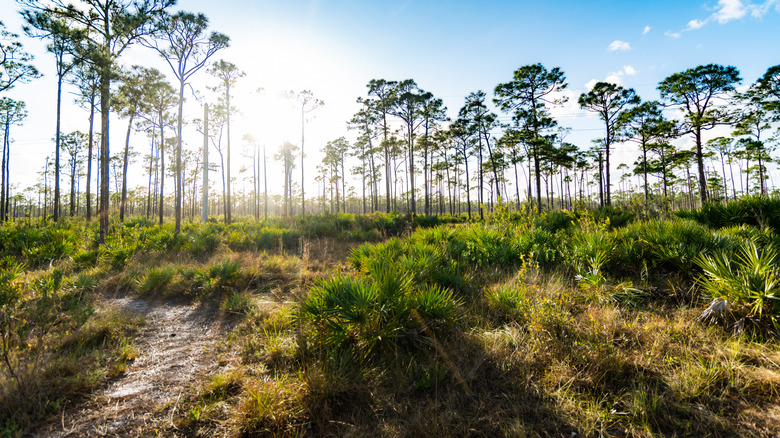
To determine the five longest trails in Florida's extensive scenic network, data was collated from AllTrails. While the aggregator site lists more than 600 trails, many of the longest ones included featured segments of the Florida National Trail. This list doesn't feature each of these separate lengthy segments in order to feature more of the longest unique trails that wind through an array of landscapes across the wild Southern state. While there are some online sources stating differing lengths for the above trails, the distance stipulated by AllTrails has been used in each case.