
12 Countries That Offer 12-Month Visas To Remote Workers

Remote work has changed how many people travel. According to recent data from Skyscanner, there are now 40 million digital nomads worldwide, a figure that has grown rapidly over the past few years as remote work has become more common. Trips that once lasted a few days or a week can now stretch into months, with travelers choosing destinations where they can settle into everyday life while continuing to work online.
That shift has also created significant confusion. Tourist visas were not designed with remote work in mind, and what is permitted under a standard visitor visa varies widely from country to country. In many places, working remotely while visiting falls into a legal gray area, even when income comes from abroad.
In response, some countries now offer visas that allow remote workers, freelancers, and self-employed professionals to stay longer while earning income from abroad. These programs typically allow stays of up to 12 months. They are designed for visitors who are not seeking local employment, which sets them apart from standard tourist visas and other permanent resident- or retirement-focused options.
Estonia
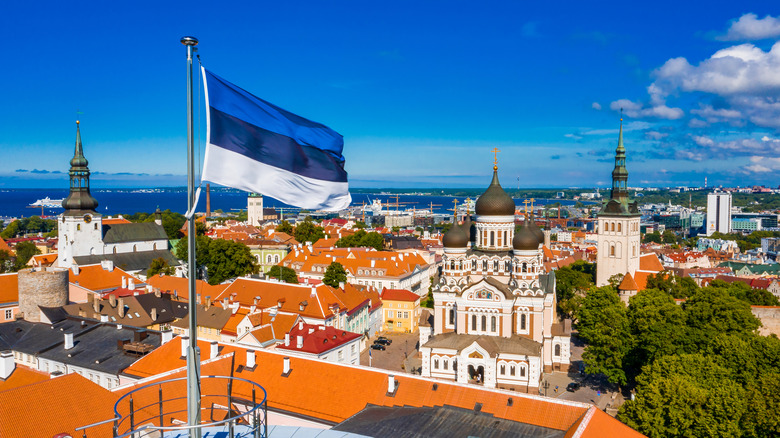
Estonia's approach to digital nomads didn't necessarily coincide with the boom of remote work during COVID. Before this, the country already had a reputation as being a leader in digital infrastructure and online-first public services. The digital nomad visa grew out of that environment, offering remote workers and freelancers the ability to live in Estonia for up to 12 months while continuing to work for companies or clients based abroad. With a low cost of living and great healthcare, Estonia is a fantastic option for people looking to dip their toes into the digital nomad life.
The digital nomad visa is for non-EU citizens whose work can be done entirely online and whose income comes from outside Estonia. Applicants are required to show a consistent level of earnings, currently set at a minimum monthly income of €4,500, along with documentation confirming their employment or freelance work. The visa is issued as a fixed-term stay and is not renewable, though some travelers later explore other residence options if they qualify under different categories.
This visa appeals to many remote workers because it fits into Estonia's broader digital ecosystem. The e-Residency program allows entrepreneurs to establish and manage EU-based companies remotely, without living in Estonia. While e-Residency itself does not grant the right to reside in the country, it makes the digital nomad visa feel less trendy and more aligned with Estonia's approach to online business.
Spain

Spain offers a digital nomad visa to non-EU/EEA citizens who are self-employed, freelancing, or working for a company or employer based in a non-Spanish territory. The work must be exclusively digital and telecommunications-based. What's interesting about Spain's visa is that it allows self-employed people to also work for a Spanish company. The caveat is that work can't exceed 20% of your total professional work.
Spain also requires applicants to have a college degree and at least three years of experience in their current profession. These requirements are in addition to the necessary financial means, currently set at 200% of the monthly Spanish national minimum wage. If you're traveling with family members, the threshold is higher.
W-2 employees in the United States have historically had more difficulty obtaining this type of visa due to bureaucratic red tape and complicated employment and tax laws. W-2 employees may need to seek assistance from an attorney in Spain who is well-versed in the nuances of the digital nomad visa. The added legal fees may make Spain a less desirable option for some travelers.
Barbados
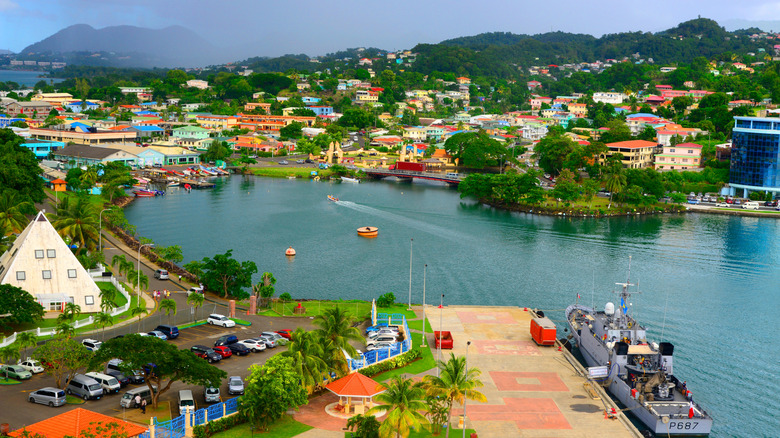
Travelers looking for a tropical destination relatively close to the United States, Barbados offers the 12-Month Barbados Welcome Stamp. As its name suggests, eligible location-independent remote workers can remain in Barbados for up to a year. The income requirement is $50,000 U.S. dollars over a 12-month stay, which works out to roughly $4,200 a month.
Unlike some countries, this visa won't subject digital nomads to double taxation, which is good since Barbados is already one of the most expensive countries to visit. Travelers will still pay local VAT for any services or products they buy. Barbados is also appealing to travelers with fur babies, as the visa allows them to bring eligible pets. However, applicants still need to meet all eligibility requirements and find pet-friendly accommodations.
Ready to pack your swimsuit and hop on a plane? Just take note that the application fee for the 12-Month Barbados Welcome Stamp is hefty. Individual travelers must pay $2,000, while families must pay $3,000. The good thing is the fees aren't due until after your application is approved. However, given that the average approval time is around seven days, you'll want to have that amount saved up when you apply!
Portugal

If Spain's digital nomad visa feels too complicated, Portugal might be an easier alternative on the Iberian Peninsula. Portugal's visa is not specifically labeled as a digital nomad visa; it falls under its residence visa framework. If approved, applicants receive an initial four-month visa with two entries, after which they enter Portugal and apply for a residence permit through AIMA (Agência para a Integração, Migrações e Asilo). For those planning to stay for less than a year, Portugal also offers a temporary stay visa that involves fewer steps. One advantage of the residence visa is that it can count toward long-term residency and, eventually, citizenship.
As with similar programs elsewhere, applicants must show proof of remote work. That can include a work contract, an employer-signed declaration, or documentation of freelance or self-employed activity. Portugal's income requirement is based on recent earnings, with applicants typically needing to show three months of income at roughly four times the national minimum wage.
Portugal also offers other long-stay visas that may be relevant depending on personal circumstances. One option is geared toward people living on passive income, such as pensions, rental income, or other financial assets. In those cases, applicants still need to demonstrate sufficient funds for their stay, generally tied to the country's minimum wage.
Thailand

Thailand offers the Destination Thailand Visa (DTV) that could work for digital nomads looking to spend a year in Thailand. The caveat is that it's a multiple-entry visa that is valid for 180 days. It's renewable, thereby giving you a year in Thailand.
Applicants must show proof of an employment contract or other official documentation. For freelancers or contractors, you need a portfolio that showcases your professional work. The rules on documentation are pretty strict. Pay stubs and offer letters are not acceptable. They require a letter hand-signed by a boss or human resources manager. If you are self-employed, you must submit proof of a business registration or license in your name.
The financial requirements for the Thai visa differ from those of some other countries, too. Rather than demonstrating that you earn a certain amount of income each month, you'll need to put some funds aside. Thailand wants a bank statement showing a minimum of 500,000 THB, or about $17,000 U.S. dollars, depending on exchange rates. If you do renew the visa and spend more than six months in Thailand, you also become a tax resident. According to some Reddit comments, that could expose you to tax liabilities on all global income earned, even passive income. You may want to consider speaking with a lawyer in Thailand who can review your specific income scenario.
Costa Rica

Whether you are looking for a home base in a city with other expats or an idyllic Central American beach town, Costa Rica offers a digital nomad program that could fit the bill. Explore the land of Pura Vida by extending a 90-day tourist visa into a 12-month visa. If you find you're not ready to leave after a year, it can be renewed for an additional year.
Applicants who have a stable income of at least $3,000 U.S. dollars per month from sources outside Costa Rica are eligible for this type of visa. Under the digital nomad program, digital nomads are exempt from local income taxes, can open a local bank account, validate their home-country driver's license, and may be able to exempt customs fees on work hardware devices.
There is a $100 visa application fee, and travelers will need to provide documentation with both English and Spanish translations. That includes copies of financial statements to provide proof of income as well as proof of health insurance for the length of the intended stay in Costa Rica.
Brazil

If you are a digital nomad with a monthly income of at least $1,500 U.S. dollars and are entering the country, you might be eligible for the Brazil VITEM XIV — Digital Nomad Visa. As long as your work can be performed remotely using digital or online information technology and you meet the requirements, this could give you an option for a 12-month initial visa that can usually be extended for a second year, allowing you the option to stay for two years in total.
In lieu of the $1,500 a month in income, applicants can also present proof of a bank account balance of at least $18,000 to ensure they can fund their entire stay in Brazil. To prove digital nomad status, applicants must provide a declaration that confirms they can perform their job remotely and will not rely on local employment to fund their stay. Travelers also need a work contract or another document proving their employment.
Unsure where to base yourself in Brazil once your digital nomad visa is approved? Recommendations from Visit Brazil include São Paulo and Rio de Janeiro for their abundance of coworking spaces. Want somewhere a little less chaotic and quieter? Consider Florianópolis, an island paradise perfect for remote working.
Seychelles
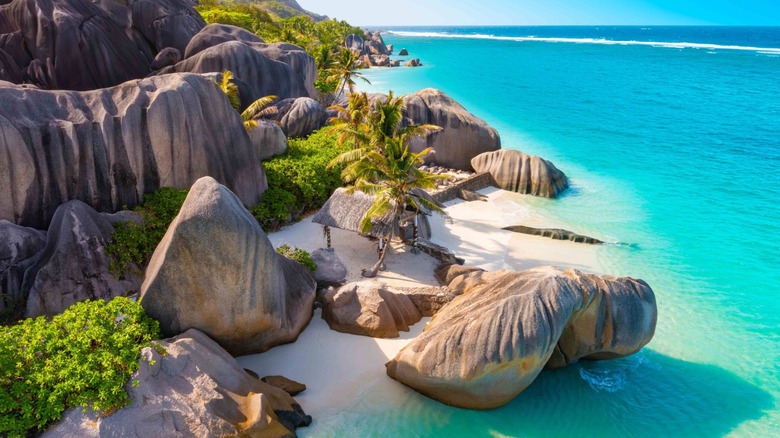
Looking for paradise? Seychelles is an archipelago of 115 tropical island paradises located in the Indian Ocean off the coast of East Africa. Mahé is the main island and home to the capital city, Victoria. Seychelles offers a simple visa for stays of up to a year, as part of their Visitors Workcation Retreat Programme. It allows visitors to work for a foreign employer during their stay, unlike the Gainful Occupation Permit, which is required if you plan to seek local employment.
You can apply for the VWP program online, but processing time may take up to 60 days, so it is best to apply well in advance. Applicants will need to show proof of employment and financial means, as well as accommodation and travel documentation for onward travel. As of early 2026, there is nothing noted on the official site about a minimum income amount, but that could change down the line. As a visitor, you are not entitled to free healthcare either, so you must also have adequate health and travel insurance.
Malaysia

Malaysia remains one of the premier destinations for digital nomads, offering the DE Rantau Nomad Pass. This visa allows digital nomads to travel and work in Malaysia for three to 12 months, with the option to renew for an additional 12 months, for a maximum total duration of 24 months. This pass allows you to live in Peninsular Malaysia and the Federal Territory of Labuan, while traveling to Sabah or Sarawak will be on a tourist basis.
There is a minimum annual income requirement of $24,000 U.S. dollars to be eligible for the DE Rantau Nomad Pass. The program is open to all nationalities except citizens of Israel, and you can apply before your travel to Malaysia. There is a non-refundable application fee of around $270.00 (RM 1,080) for the primary applicant. Income requirements and fees vary by profession. Those who fall under the tech talent classification must have an annual income of at least $24,000, while non-tech talent must have a yearly income of at least $60,000.
Bulgaria

In 2025, Bulgaria joined the Schengen Zone of Europe, and as of 2026, the country now uses the euro. With these changes, some remote workers may be eyeing a move to Bulgaria. If you're a non-EU/EEA citizen, there's an option that could get you a one-year stay. An added perk is the ability to travel within the Schengen Zone without worrying about the 90-day tourist visa limit.
The Bulgarian Digital Nomad Visa is actually a 12-month Type D visa. You should apply for the Type D long-stay visa at the Bulgarian embassy or consulate in your home country, usually at least two months in advance. When applying, make sure you have all your documentation, including proof of accommodation, employment, and income, as well as a valid health insurance certificate valid within the Schengen area. Applicants also need to present a certificate of any previous convictions.
Croatia
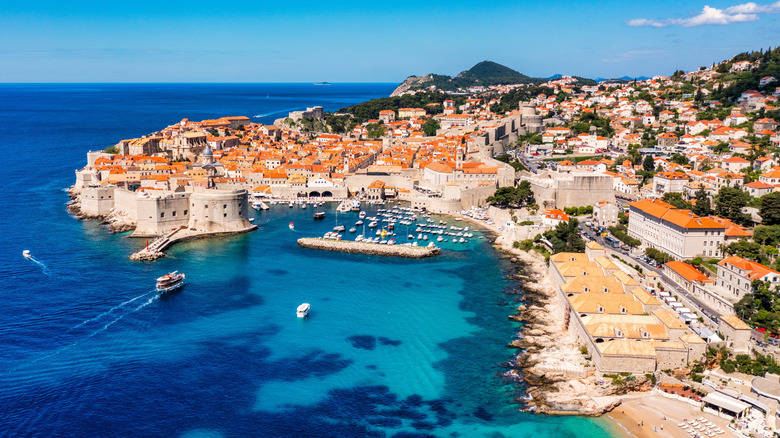
Croatia offers a visa, called a temporary stay permit for digital nomads, for stays of up to 18 months. This program is for non-EU/EEA/Swiss nationals who wish to live in Croatia while working for clients based outside of the country. Like other remote work visas, you'll need to provide evidence of your employment and health insurance to cover your time in Croatia.
Applicants will also need to provide proof of financial means to cover expenses during their time in Croatia. The amount is currently equivalent to two and a half average monthly net salaries, as set by the Croatian Bureau of Statistics. Two ways to demonstrate proof include a bank statement covering the entire period of your stay or a statement showing that you receive monthly income equal to the required amount. There's also the option to use pay stubs from at least six months to meet the minimum amount.
While cities like Dubrovnik are very popular with tourists, digital nomads are eyeing cities like Pula and Rijeka, which are great jumping-off points for visiting Croatia's islands. And as Croatia joined the Schengen Area in 2023, you can also travel to other Schengen countries without worrying about the 90-day limit.
Greece

If you are tempted by Greece's climate, culture, history, or looking to work on the beach from remote yet accessible islands, then consider the Greek Digital Nomad Visa. This visa will allow you to stay in and work in the country, hassle-free, for up to a year.
You apply for the Digital Nomad Visa at the Greek consular authority in your country of primary residency. To obtain this visa, you do need to prove you have sufficient income for the duration of your stay, around €3,500 per month after taxes (more if you are traveling with a partner or children). This income should be from a company or clients outside of Greece, as this visa does not permit you to work for a Greek company. After a year, you can apply to extend your stay with a two-year Digital Nomad Resident Permit, which can be renewed for an additional two years, giving you a total of five years of legal residence.
If you live in Greece for under 180 days in a calendar year, you will have no tax liability in Greece. However, if you live in Greece for more than 180 days in a year, you may be required to establish your tax residency, including obtaining a Greek tax number, and to pay local taxes.
Methodology

This article used a mix of firsthand experience, official government and tourism sources, and recent reporting on digital nomad and long-stay visa programs. We also leaned on digital nomad resources, immigration updates, and news coverage to confirm which programs currently allow stays of up to 12 months and how they are structured.
The countries included here are not meant to represent the only options available, nor are they necessarily the "best" for every traveler. Instead, the focus was on highlighting a range of programs across different regions, including some newer visas, updated policies, and long-standing options that work well for remote workers but may not always be explicitly labeled as digital nomad visas.