
5 Astonishing Facts You Didn't Know About Lake Tahoe
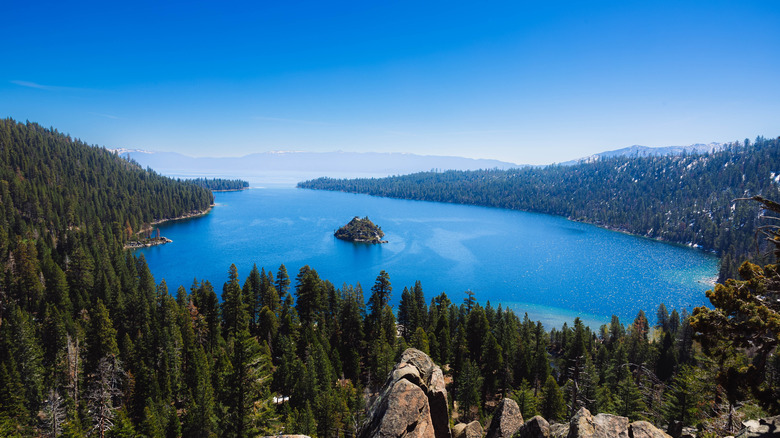
It's no secret that Lake Tahoe is beloved for its picturesque mountain views, quiet towns, and crystal-clear water. Spanning the borders of California and Nevada in the Sierra Nevada, it has been a popular vacation destination for decades, inspiring everything from family-friendly road trips to romantic nature getaways. (It's also a classic American vacation town that Boomers used to love back in the day.) However, beyond its scenic beauty — and beneath its vibrant blue surface — the giant lake and the area surrounding it are full of secrets, mysteries, and little-known facts that may surprise you.
Have you ever wondered just how big Lake Tahoe is? Or where the name came from? Do you know what mythical creature is said to lurk deep beneath its waters, or which famous crooner once owned a casino resort on its breathtaking shores? We'll answer all that and more with these five astonishing facts about Lake Tahoe.
Lake Tahoe is the second-deepest lake in the U.S.
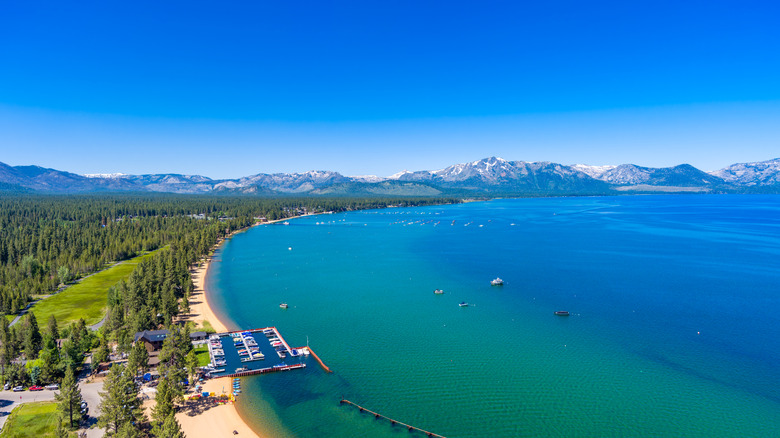
At 1,943 feet deep, Oregon's Crater Lake is the deepest lake in the United States. Lake Tahoe follows closely behind at 1,644 feet, making it the second-deepest lake in the country and the 16th deepest in the world. To put that depth into perspective, if New York City's iconic Empire State Building – which measures 1,454 feet tall – were placed upright in Lake Tahoe, it would be completely underwater. The lake is so deep that it's even rumored that mobsters used it as a dumping ground for bodies back in the day.
Of course, all that depth holds an extraordinary amount of water. It's estimated that if Lake Tahoe was drained, it would be enough to cover the state of California with about 14 inches of water.
Lake Tahoe is also massive in surface area. Crowned the largest alpine lake in North America, it measures 12 miles wide and 22 miles long, with a surface area of 191 square miles. There are also 75 miles of shoreline around the lake, boasting a plethora of destinations like Incline Village, the chic Nevada town full of mountain charm, renowned views, and amenities.
It wasn't always called Lake Tahoe
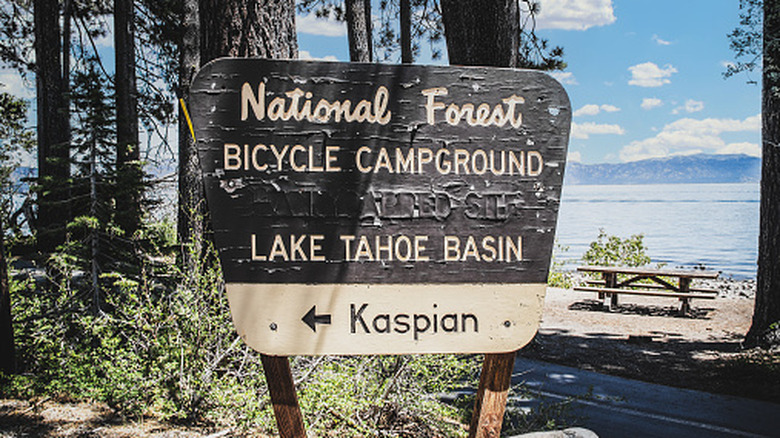
It's hard to imagine Lake Tahoe by any other name, but the famously blue lake has gone through several name changes over the years. Though explorer John C. Frémont documented it in 1844, the story of Lake Tahoe actually began about 10,000 years earlier, when it was inhabited by the Washoe Tribe, whose ancestors lived in the region for thousands of years. Nevertheless, Fremont took credit for discovering the beautiful body of water, which he originally named Lake Bonpland after botanist Aimé Bonpland. The name never caught on. Shortly thereafter, it was briefly known as Mountain Lake and later as Lake Bigler, after California Governor John Bigler.
It wasn't until 1945 that the state of California legally declared Lake Tahoe. The name change came from Dr. Henry DeGroot, a journalist hired to devise a new name. Drawing on the lake's Indigenous roots, he proposed "Tahoe," meaning "big water" in the Washoe language. Suffice to say, that is the name that stuck, and doesn't appear to be going anywhere anytime soon.
Lake Tahoe is said to be home to a Loch Ness-like monster
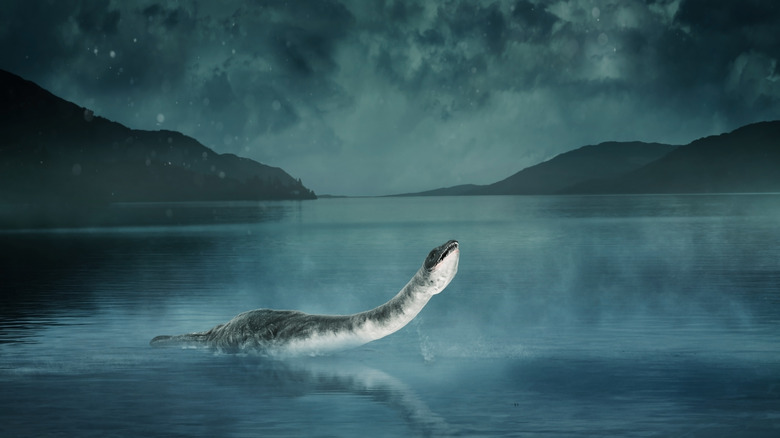
You've probably heard of the Loch Ness Monster, the mythical creature (nicknamed Nessie) said to inhabit the waters of Loch Ness in Scotland. But have you heard of Tahoe Tessie? Described as a long, serpent-like creature slinking below the surface of Lake Tahoe, the legend of Tessie dates back centuries, drawing loosely on Indigenous stories that spoke of mysterious beings lurking in the water known as "water babies." These entities were believed to possess both good and evil powers and were said to punish those who disrespected the lake.
Without a ton of historical records to go on, the facts are much murkier than Tahoe's crystal-clear waters. However, it is alleged that these age-old stories metamorphosed into the legend of Tahoe Tessie that we know today. Over the years, sightings of Tahoe Tessie have been reported for decades by fishermen, divers, and locals. Perhaps the most famous "sighting" was by explorer Jacques Cousteau, who, after a deep dive in the 1970s, reportedly said, "The world isn't ready to see what's down there."
What's more, in the mid-1980s, local TV station host Mike Conway was shooting a commercial at the lake when the sight of a hump-backed creature swimming below the water prompted him to turn the cameras around to film it. Unfortunately, the footage was mysteriously destroyed, but the legend of Tahoe Tessie prevails.
Frank Sinatra once owned a Lake Tahoe casino resort
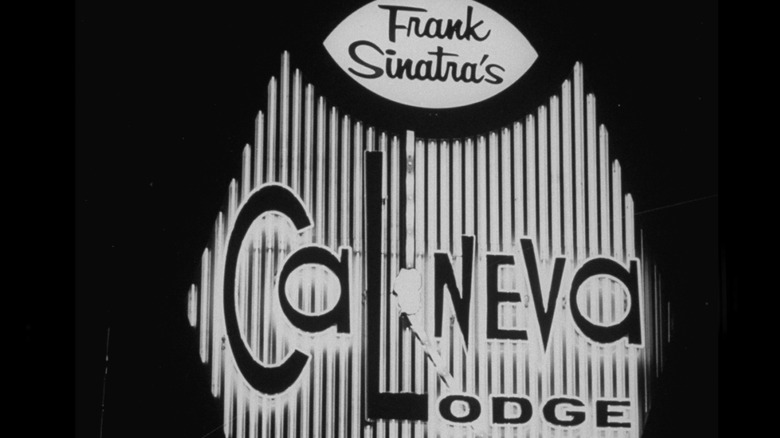
If you've explored both sides of Lake Tahoe, you might wonder why its North and South Shores have totally different vibes. On the California side, outdoor recreation, health and wellness, and family-friendly activities are in the spotlight, while the Nevada side tends to be a bit rowdier, marked by neon-lit nightlife and casino resorts. The reason is fairly simple. Due to California state laws, commercial casinos aren't permitted in the area, leaving all gambling spots on the Nevada side.
Situated on the state line in North Lake Tahoe, the now shuttered Cal-Neva Lodge was a haven for Hollywood royalty from the 1930s through the 1960s, who would flock from Los Angeles to engage in gambling and debauchery. Cal-Neva was uniquely positioned, with half of the glimmering resort on the California side and the other half on the Nevada side. There was even a line painted at the bottom of the swimming pool to show the divide.
One of Cal-Neva's most illustrious regulars was Frank Sinatra. The blue-eyed crooner frequented the joint with the likes of Marilyn Monroe and fellow Rat Pack members Dean Martin and Sammy Davis Jr. In 1960, Sinatra bought the lodge, adding fancy flourishes like a helicopter pad and the exclusive Celebrity Room. His ownership, however, didn't last long. In 1963, he was pressured to sell Cal-Neva after the Nevada Gaming Control Board learned that blacklisted mob boss Sam Giancana had been staying on the property, and subsequently suspended his gambling license. Though Cal-Neva operated under new ownership for the next few decades, it eventually shut down and now sits empty. As of this writing, redevelopment plans remain in progress, with a potential reopening projected in 2027.
Lake Tahoe is a film-famous destination
Bursting with cinematic natural beauty, it's no wonder that Lake Tahoe has played a starring role in many films and television shows over the years. Perhaps most famously was its role in the 1974 classic "The Godfather: Part II." The stunning Fleur de Lac Estate on Lake Tahoe's West Shore served as a mobster compound and was featured in several key scenes, including the one in which Michael Corleone throws a First Communion party for his son, Anthony. At the end of the film (spoiler alert), Fredo Corleone is dumped into the deep blue lake itself.
Another famous filming location in the area is Fallen Leaf Lake, south of Lake Tahoe, where Kevin Costner takes Whitney Houston to his father's rustic lakeside house to hide her from a crazed stalker in the 1992 hit film, "The Bodyguard." The same house was used just a few years later in 1998's "City of Angels," starring Nicolas Cage and Meg Ryan, who famously rides her bike around the lake in the film.
Beyond Lake Tahoe's movie appearances, the former Ponderosa Ranch in Incline Village was used in the western TV series "Bonanza," and the show's opening credits were filmed at nearby McFaul Creek Meadow. More recently, Lake Tahoe has appeared in shows such as "The Bachelor" and "Modern Family," including scenes filmed at Camp Richardson, a rustic, year-round lakeside resort that has been operating since 1924.