
5 Tennessee Historic Sites To Visit That Feel Stuck In Time
Tennessee's historic landmarks encapsulate a swath of different eras, going back further than many visitors might realize. Its first inhabitants — nomadic early humans — came to the land up to 15,000 years ago. Later, indigenous tribes settled along Tennessee's great waterways: the Tennessee, Cumberland, and Hiwassee Rivers. In the frontier era, Tennessee was the site of rough-hewn forts, trading posts, and a major American Revolution battle, the Battle of Long Island Flats. It endured even more battles in the Civil War, including the Battle of Shiloh. In the early 20th century, the Great Smoky Mountains National Park was established, conserving the dense wilderness across Eastern Tennessee, dotted with cabins and old resort communities in the misty foothills. So obviously there are quite a few sites for history buffs to visit.
Traces from all of these eras and events remain intact across Tennessee. The state's unique mesh of sacred indigenous grounds, battle sites, and Appalachian homesteads make it a sweeping, one-of-a-kind destination for travelers with a historical inclination. You could make a history-based road trip across the state or pick out one of these spots to dive into for a day. These are five sites that will take you back to different chapters of Tennessee (and American) history, with maintained buildings, original artifacts, and engaging exhibits.
Pinson Mounds State Archaeological Park
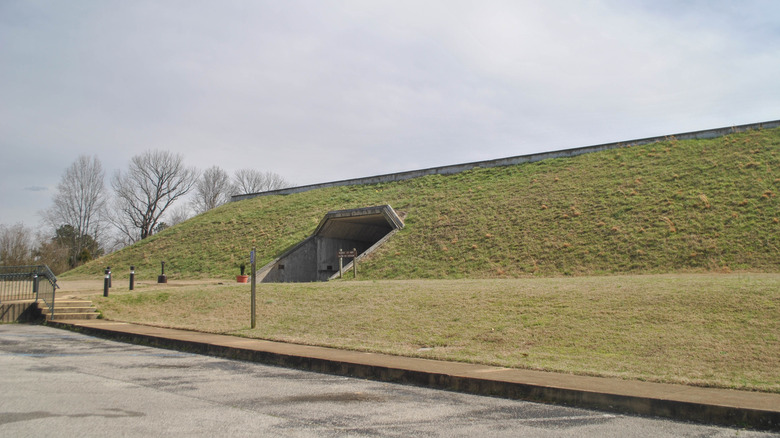
Long before Tennessee was settled by Europeans, prehistoric indigenous civilizations built settlements along the banks of Tennessee's rivers. Many of these prehistoric sites were razed and lost from history to make way for modern developments. Yet one that remains remarkably well-preserved — and the biggest ancient mound site in Tennessee, per TN.gov — is the Pinson Mounds State Archaeological Park. The mound complex, located on a bluff by the Forked Deer River, dates back to what's known as the Middle Woodland Period, lasting from A.D. 0 to A.D. 500. In fact, the complex holds the tallest Middle Woodland Mound, named Saul's Mound, in the country.
The whole park is nearly 400 acres, with 13 confirmed earthwork mounds. Pinson Mounds is about a 10-minute drive outside of Henderson, a little city with cute shops and coffee spots, and just under two hours from Memphis. It's free to enter, and inside, there's a small network of trails that range in length from 0.2 miles to nearly 2.5 miles, depending on how much you want to see. The trails get very positive feedback from visitors. One Tripadvisor reviewer wrote, "The concrete walking paths are always beautifully kept and if you want something more adventurous, the trail through the woods is phenomenal!"
One thing you can't miss while at Pinson Mounds — if mobility allows it — is climbing up steep stairs to the top of Saul's Mound. For about the first 1,000 years of its existence, this mound was the highest human-made site in the U.S., according to The Tennessee Magazine. It's believed to be the middle mound of a wider mound complex functioning as an astronomical calendar. There's a viewing platform at the top that grants visitors expansive views of the surrounding Tennessee floodplain.
Cragfont State Historic Site
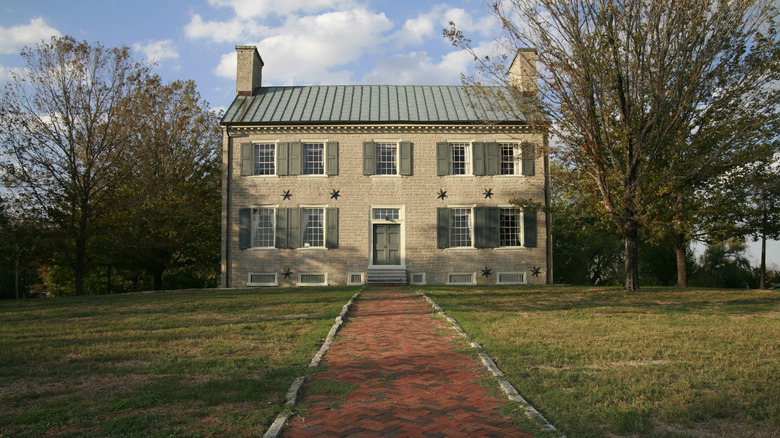
James Winchester is an important figure in Tennessee history. He served as an officer in the American Revolution and later became a co-founder of Memphis. But it was in Castalian Springs, a town outside of Nashville, where Winchester built his stately mansion, a property that's been preserved today and named the Cragfont State Historic Site. Before the mansion, the site was home to Fort Tuckahoe, Winchester's earlier endeavor to settle the area (which was frequently attacked by indigenous people who already lived in the area). The mansion, modeled on a late Georgian style and considered one of the most stunning of its time, was built starting in 1798. Some of the furniture was specifically crafted for the home and remains there for visitors to admire.
The Cragfont mansion is open for visitors from April through November, Thursdays to Sundays. It takes about a 50-minute drive to get there from Nashville, and you have to pay admission, but the ticket covers a guided tour of the home.
The tours are what really make the site an immersive historic experience. "The passion and knowledge brought to the tour by our guide made this a great experience," a Google Local Guide wrote. You'll get a walk-through of the rooms, filled with period-accurate furnishings, as well as the surrounding gardens and family graveyard. If your visit's timed right, the site also hosts some unique events, including a Hidden History tour that ventures into off-limits areas like the attic and a theatrical night telling ghost stories in October.
Andrew Jackson's Hermitage
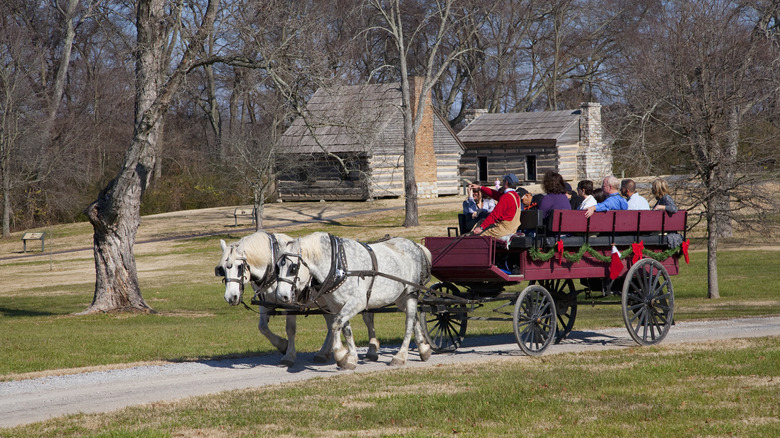
The Hermitage — sometimes called Andrew Jackson's Hermitage, to avoid confusion with the opulent Nashville hotel with a famous restroom — is one of Nashville's historic sites that visitors cherish most. It holds a 2025 Traveler's Choice award from Tripadvisor, and it's a designated National Historic Landmark. The estate, comprising a central mansion and its surrounding acreage, was President Andrew Jackson's home, which Jackson bought in 1804. Jackson turned it into a cotton-growing plantation, and as much as the site is a symbol of the early American republic, it also serves as a memorial to the enslaved workers who propped up Jackson and his wealth.
The Federal-style mansion is the site's centerpiece, much of it dating to 1837 (when the house was rebuilt after a fire) and full of original, historic items ranging from Jackson family heirlooms to wallpaper. However, the whole site spans over 1,100 acres and includes dozens of structures, including restored cabins where enslaved people lived and Jackson's tomb. One of the more solemn elements on the estate is the Enslaved Cemetery — It was discovered only in 2024, and now it's a part of the Hermitage experience, fenced off with a walking path that circles it.
It's about a 25-minute drive from Downtown Nashville to the Hermitage site. The site is open daily from 9:30 a.m. to 4 p.m., and you have to pay for admission. A ticket grants you access to the breadth of the grounds, letting you unhurriedly roam its grounds. Don't overlook the gardens, which one reviewer called "spectacular." There's also a museum store, café, and education center on the property.
Shiloh National Military Park
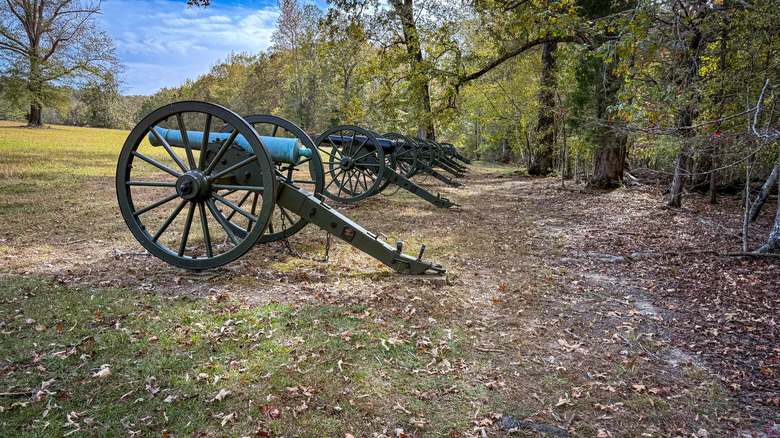
Wooded ravines, a sunken road, and artillery pieces remain imprinted on the landscape of Shiloh, as if a battle had just ended days ago. Southern Tennessee's Shiloh National Military Park was the site of the Battle of Shiloh, the largest Civil War battle in the Mississippi Valley, with over 23,000 casualties. It's often considered one of the most authentic Civil War grounds in the country. "Shiloh is unquestionably one of the best-preserved Civil War battlefields in the United States," a Tripadvisor reviewer wrote, noting, "Unlike some places such as those around Richmond, Nashville, or Atlanta there are no nearby cities to cause development to rub up against the park."
The park is huge, stretching over 5,200 acres. It's about a two-hour drive from Memphis, and, being a property of the National Parks Service (NPS), it's free to visit. Shiloh is considered a "living history museum" filled with intriguing heritage sites, from the battlefield landscape itself to a cemetery holding over 3,500 fallen soldiers of the Civil War (most of them anonymous). Unlike more dramatized battlefield parks, Shiloh is more restrained in its monuments, with some sparsely placed historic markers and artillery, lending the scene a contemplative, subdued atmosphere.
Also worth keeping in mind: The sites at Shiloh are spread out. If you choose to walk, you could spend anywhere from four to eight hours hiking around the grounds to get the full scope of the park. If you're not looking to set aside that much time, you could do the NPS's self-guided auto tour of Shiloh. It covers 22 notable stops throughout the park on a 12.7-mile journey, with route maps available at the visitor center.
Elkmont Historic District
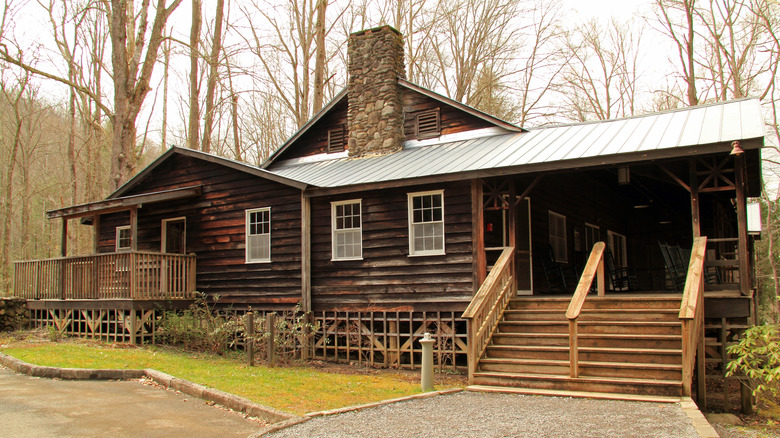
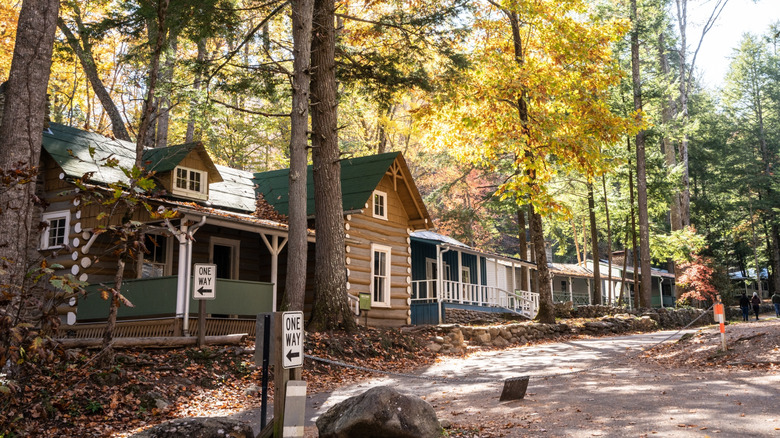
As the industrial age entered full swing in the late 1800s and early 1900s, more and more outposts began to pop up in Tennessee's Appalachian region to capitalize on its lumber. That's where the (now-abandoned) town of Elkmont's story begins. Elkmont was centered around the Little River Logging Company, which set up shop in the area in 1900, per the Tennessee State Museum. With the new community and railroad connections, Elkmont became an Appalachian vacation enclave, too, with clubs, a hotel, and cottages. Elkmont persisted as a resort community until the 1990s, when private leases expired and it was reclaimed by the Great Smoky Mountains National Park. But 19 of the town's original structures — including cottages and a clubhouse — were added to the National Historic Register and preserved.
Today, these structures make Elkmont an eerie gem with abandoned cabins and serene trails. The historic district sits just over an hour by car outside of Knoxville, and there's no fee to enter and explore it. The most prominent cluster of historic cottages are in an area of the district called Daisy Town, close to the parking lot, where you can walk inside the cabins and see the former clubhouse. A bit deeper into the woods is an area known as Millionaire's Row, where larger homes were built for the wealthy to vacation. These two areas are connected via the Little River Trail. The whole trail is 12.4 miles (great if you want to extend the hike), but the preserved structures are a short distance apart. There's also a campground within the district, the Elkmont Campground, with tent and RV sites, open from April through November.
Methodology
The five historic sites we selected showcase Tennessee's history with minimal modern intrusion and well-preserved structures. We sourced sites that are included on the National Register of Historic Places or listed as National Historic Landmarks, attesting to their historic importance. To qualify, each site needed to be easily visitable (with consistent public hours), have original historic structures still standing, and offer unique insight into a period significant to Tennessee history. We used official site websites, the National Park Service, and state archives and museums to verify the historical integrity and uniqueness of each place.