
The Tell-Tale Signs To Look For When Finding A Locals' Bar In Spain, According To Rick Steves
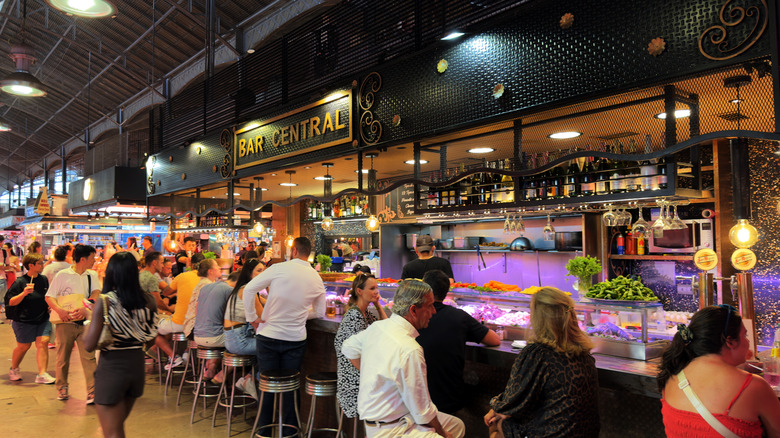
Spain made the news for welcoming a record-high 96.8 million visitors in 2025 (via Euronews). But why is it so popular? Well, Spain features everything necessary for a vacation paradise — gorgeous beaches with vibrant waters, imposing ancient structures, and local gems still somewhat unburdened by tourists — after all, the country is still combating rampant overtourism. Immersing yourself in local life the best way to turn a tourist spot into an authentic experience, which is why European travel expert Rick Steves advises visitors to look for a few things to find authentic locals' bars in Spain: trash and TVs.
In a column for The Times Colonist, Steves says, "To find the most authentic tapas atmosphere, I look for noisy bars with piles of napkins and food debris on the floor (part of the tapas tradition), lots of locals and the TV blaring." Kino Martínez, head of the Gipuzkoa Hotel and Catering Association, concurs with Steves' assessment, claiming, "Napkins on the floor are a sign that we offer a good service," via The Local. According to traditional Spanish tapas etiquette, people are expected to throw napkins and leftover food waste on the floor when they're done eating, and the practice is now seen as a way for local bars to signal their authenticity.
Steves also advises tourists looking for local bars to check what's playing on the TV. In his column for The Times Colonist, he mentions that TVs showing bullfights, soccer games, soap operas, and Spanish game shows are a great indication that the bar caters to a local clientele. Aside from his articles in other publications, we've also looked through his blog and other local sources to create this simple guide to finding and enjoying authentic tapas bars in Spain.
How to find and enjoy authentic tapas bars
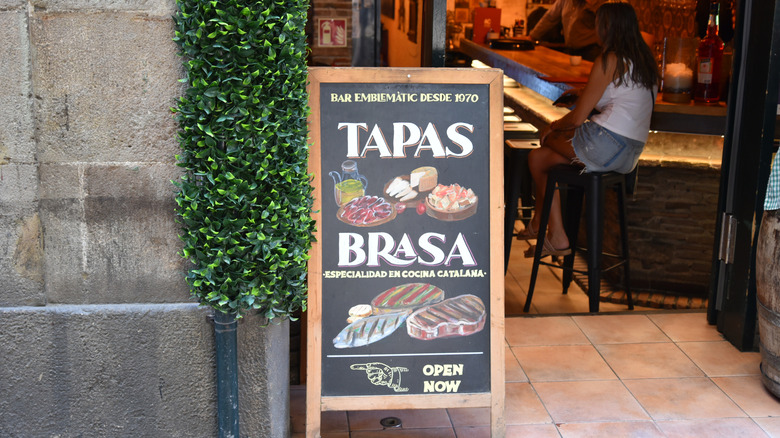
Tapas are small plates of savory dishes served with a beverage (typically wine or beer) in Spanish bars. According to Steves, they're the best way to enjoy Spain's wide range of culinary offerings. While tapas are served throughout the day, most bars only pick up steam around 9 p.m. However, if you're not used to asserting yourself in the kind of high-energy frenzy that grips tapas bars at dinner time, you can head there a little earlier to avoid the dinner rush. You can also ditch the more expensive seafood options to save a few bucks.
For most tourists, finding an authentic tapas bar is usually the hardest part. According to Totally Spain Travel, an easy way to spot local bars is to look for a menu scrawled on a blackboard in the local language while checking the crowds and decor — if the place looks crowded, there's a high turnover, and if the furnishing looks simple and a little grubby, it's authentic. In Europe, Steves suggests asking locals for their recommendations and simply heading to the nearest place. "Chasing down a particular bar nearly defeats the purpose and spirit of tapas — they are impromptu," he asserts in an article on his website.
Tapas bars exist all over Spain, from the Basque Country's San Sebastián, a foodie paradise with over a dozen Michelin stars, to Barcelona and Madrid. According to Steves, Madrid in particular has so many tapas bars within a short distance of each other that he recommends visitors "go mobile" and eat while standing up, hopping bar to bar to taste all the delicious tapas. This way, you can get a full, affordable meal of bite-sized munchies alongside an immersive experience of local Spanish life.