
America's Most Affordable State Parks That Are Worthy Of National Status
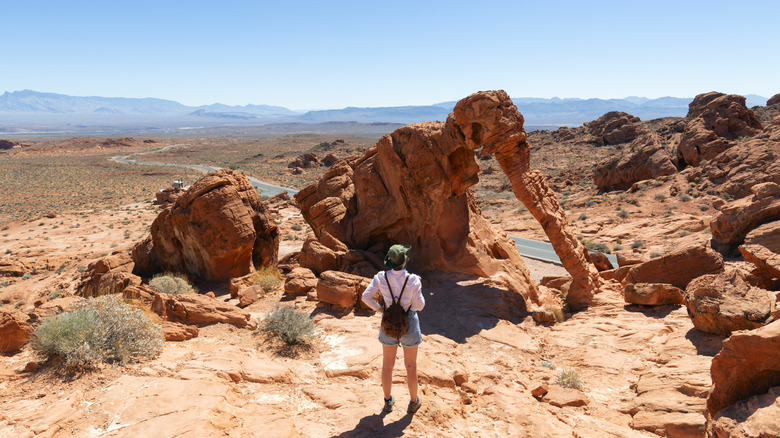
From the arid, rugged peaks of the West, to the lush, green rolling hills of the East, there are no better places to experience America's beautiful and varied landscape in all of its glory than visiting one of the county's 63 national parks. However, while these parks are true national treasures, some of the country's most well-known parks can also be expensive. Not only that, they can also be full of tourists looking to do the same activities you set out to do, thereby making the trip more of a headache than an awe-inspiring experience. But, fear not, outdoor lover, as this is where the beauty of state parks can come to save the day.
Unlike America's national parks, state parks are a lot more affordable while also offering some of the same stunning landscapes and outdoor adventures. In fact, some places might actually exceed what you'll find in a national park — so much so, that these parks are worthy of national park status themselves. We researched blog posts that specialize in breathtaking state parks, and came up with destinations that match up to the awesome beauty of their national counterparts. In order for a state park to qualify for this list, each park must feature an exceptional natural element that's irreplaceable and holds state significance, such stunning coral reefs and fiery sandstones. Each park must also offer national park-quality recreation that's also affordable for park goers to enjoy. Here are the best state parks you can visit on a budget.
Maine's Baxter State Park
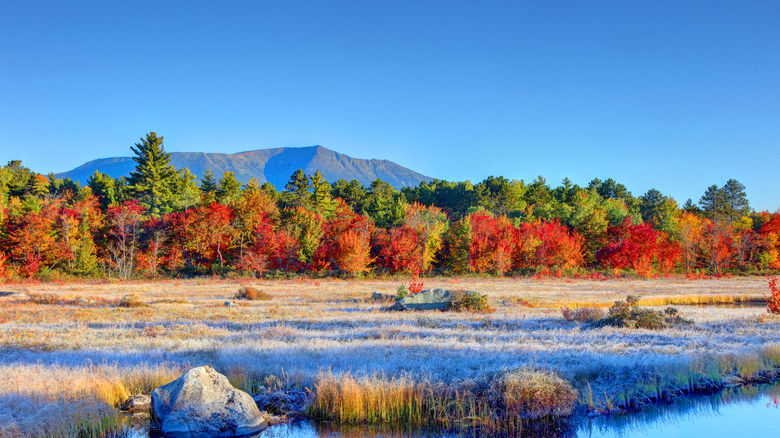
With picturesque, mirror-like lakes and towering mountain peaks, the Central region of Maine looks like a place Norman Rockwell would have painted. If so, the famous artist would have drawn inspiration for a beautiful canvas from Baxter State Park. The park was named after Percival P. Baxter, a former governor of the state and a philanthropist who made it his life's work to create a natural haven that would forever stay in its natural state for the people of Maine. The landmark of the park is Mount Katahdin, which, at 5,269 feet, is the highest mountain peak in the state.
You can hike to the peak of the mountain on the Katahdin Trail, a series of trails that are quite challenging and more meant for expert hikers. The hike to the summit takes around 8 to 12 hours round trip, and will require hikers to climb around 4,000 feet — a serious elevation gain that presents a challenge even for experienced climbers. But, if you can make the steep climb, the payoff is a jaw-dropping view of Maine's lush North Woods below, punctuated by the splendid sapphire ponds that dot the park. If hiking one of the trails to the so-called "Greatest Mountain" feels out of reach, Baxter State Park offers over 200 miles of trails that are less physically demanding, but offers the same equally stunning vistas of the park's terrain. At just $20 per vehicle (free for Maine residents), you'll have access to a pristine National Park-caliber park without the crowds.
Nevada's Valley of Fire State Park
In an era where $10 can barely afford a value meal at a fast food restaurant, true value can feel like a desert mirage. But just about 50 miles from the glittering casinos of Las Vegas lies a place where $10 can still buy you an out-of-this-world experience: Valley of Fire State Park. Often considered one of the nation's most cherished state parks, Valley of Fire covers nearly 40,000 acres of otherworldly desert landscapes. Opened to the public in 1934 and becoming an official state park a year later, Valley of Fire is the oldest and most visited state park.
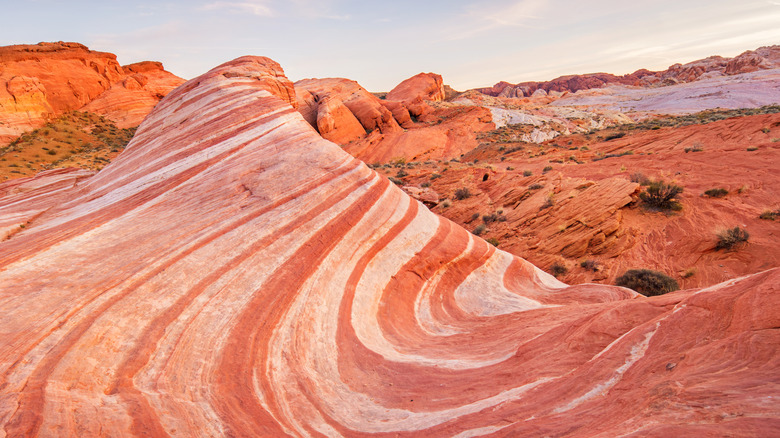
Photographers and visitors come to Valley of Fire State Park to see the park's namesake, the massive Aztec Sandstone outcrops that are truly a sight to behold. When the sun directly hits the sandstones, it gives off the appearance of the sandstones being on fire — hence how the park got its name. To access the sandstones, take a hike on the Fire Wave trail, a 1.3-mile trail that will take you to the prime Instagram spot of this natural wonder. While the Aztec Sandstones are the star of the show here, Valley of Fire State Park has other natural attractions that are just waiting to be explored, from petrified trees to petroglyphs that date back over 2,000 years. The trails here can be physically challenging at times, but you might not mind that after seeing the awe-inspiring beauty that surrounds you, especially on the Prospect Trail, which offers and escape into the silent, jagged landscape that feels less like Earth and more like a fever dream of Mars.
California's Anza-Borrego Desert State Park
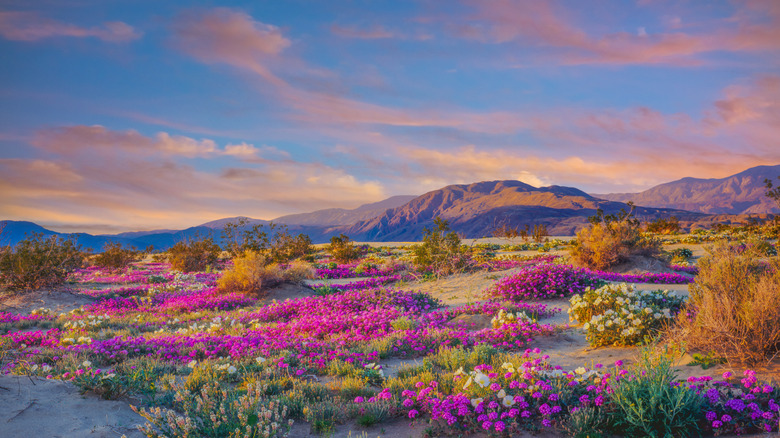
California is home to some of the country's best national parks, from the lush national forests of the state's north to the ultra-hot and dry landscape of Death Valley. But just as amazing as California's national parks are, the ecological wonders and world-class recreational opportunities offered at its state parks offers visitors the chance to explore more of the state's diverse natural attractions at a fraction of the cost, with Anza-Borrego Desert State Park as a prime example.
California's largest state park, Anza-Borrego challenges the notion that everything in the Golden State is expensive. You'll only need $10 to enter the park, and for this modest price, visitors will be treated to over 650,000 acres of splendid desert beauty. Created in 1933, the park is named after Juan Bautista de Anza, a Spanish explorer who created a route from California's coast to Mexico in the 1700s. With such a large expanse of land, Anza-Borrego Desert State Park offers a myriad of activities for nature lovers.
You can bike the nearly 500 miles of desert dirt roads within the parks, and hike the many miles of trails to witness the natural beauty on display, from palm groves to wildflowers, to sweeping vistas of the desert landscape, including The Slot, one of the park's most popular trails, where, at about 2.8 miles, will loop you through a narrow siltstone slot canyon. If that may seem claustrophobic for you, head to Fonts Point, where you'll get a stunning view of the Borrego Badlands. Dubbed "California's Grand Canyon," this sight is even more awesome during sunset or sunrise.
Minnesota's Itasca State Park
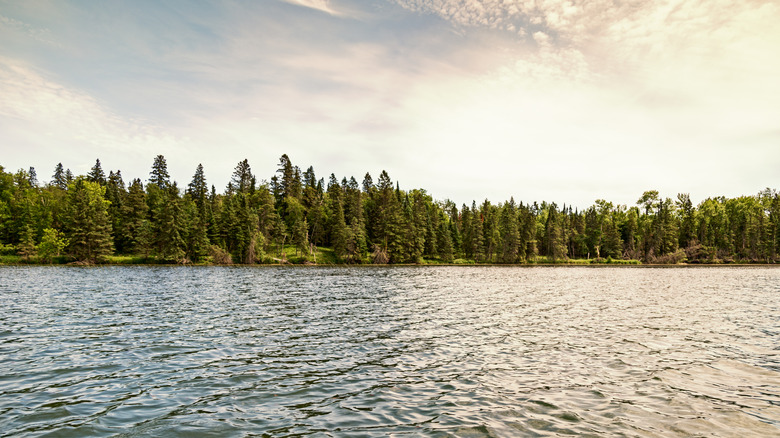
The mighty Mississippi River, a river that has shaped economies and acts as the dividing point between the East and the West, is an important part of America's geological landscape. Amazingly, for only $7 for a day permit, visitors can make a pilgrimage to the Minnesota state park where the river begins its long journey to the Gulf of Mexico at Itasca State Park. At over 32,000 acres, Itasca State Park is the crown jewel of Minnesota's cherished state park system, which shows off Lake Itasca.
First established in 1891, Itasca is the oldest state park in Minnesota. While witnessing the headwaters of the Mississippi River is the main highlight, you can also hike and bike the over 49 miles of trails that line the park filled with splendid old-growth forests. You can witness all of this by climbing the Aiton Heights Fire Tower, which will give you a sweeping view of the parkland, all unfolded before your very eyes.
Of course, because Minnesota can get quite cold and snowy during the winter, Itasca State Park offers a myriad of areas where you can go sledding and snowshoeing as well. But even with so many amenities to explore, the headwaters of the Mississippi River is the star of the show here, and it's a scene you won't soon forget.
Ohio's Hocking Hills State Park
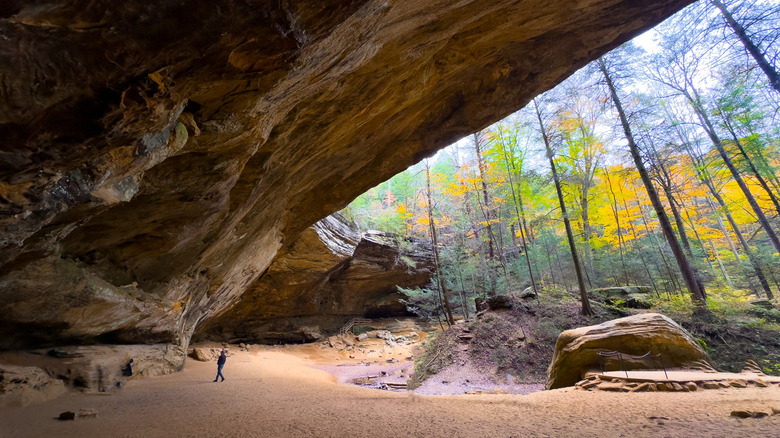
Hocking Hills State Park is a place that doesn't feel like it should be in Ohio, let alone worthy of being included in America's national park portfolio. Ohio's geological landscape is often associated with the words "flat" and "boring," but this sweeping park loudly proclaims that the Buckeye State is anything but that.
Nestled in the south-central corner of the state, Hocking Hills offers a quiet escape from urban life, with the sounds of wildlife and rushing waterfalls providing the soundtrack to hikes on leafy trails and cave exploration. Hocking Hills State Park, which opened in 1924, is well-known for its gorges, dramatic waterfalls that one wouldn't associate Ohio with, and sandstone cliffs that offer a panoramic view of the surrounding landscape — all for free.
Ohio is one of just eight states in which there is no entrance fee to explore its state parks, meaning that you won't even have to break out your wallet to check out stunning areas within the park, such as Old Man's Cave, a large cave that was named after 19th-century hermit Richard Rowe, or Cedar Falls, the largest and most powerful waterfall within the park that is simply memorizing to watch. The park is also home to the John Glenn Astronomy Park, which offers park goers with a stunning view of the night sky from March until November (which is also free).
Texas' Palo Duro Canyon State Park
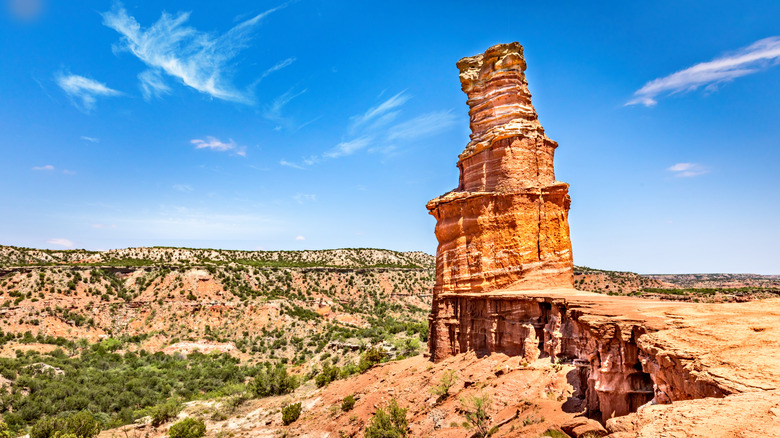
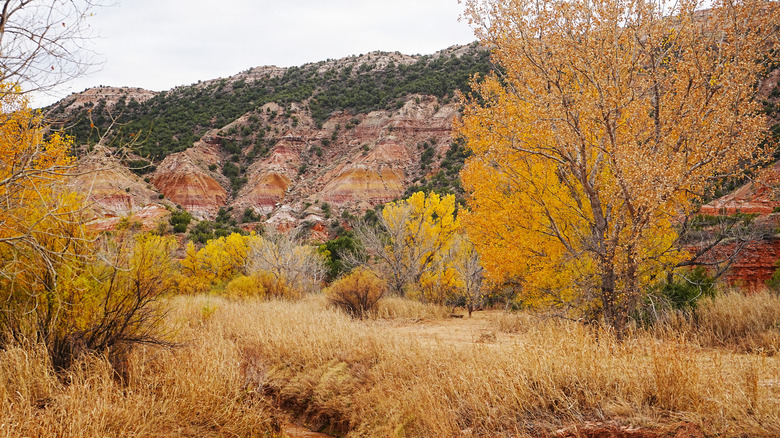
For 107 years, millions of visitors from around the world have flocked to Arizona to witness one of the world's most iconic natural masterpieces in the form of the Grand Canyon. However, if crowds are not your thing and affordability is top-of-mind, then skip Arizona and head to the panhandle of Texas, home to underrated Palo Duro Canyon State Park. Sitting southeast of Amarillo, this beautiful state park, which opened to the public in 1934, and for only a modest $8, you'll have access to over 29,000 acres of beautiful red rock cliffs, sweeping mesas, and deep, eroded canyons that are waiting to be explored in the "Grand Canyon of Texas" by hiking (or biking) one of the park's 35-plus miles of trails.
The signature feature that draws visitors to Palo Duro Canyon is The Lighthouse, a hoodoo-style rock formation that's shaped like a lighthouse. To see the rock formation up close, hike the Lighthouse Trail, a 2.8-mile-long hike that's surprisingly easy to navigate outside of Texas's scorching summer months.
One of the more unique attractions at this gorgeous state park is the TEXAS Outdoor Musical, which runs during the summer at the Pioneer Amphitheater within the canyon. You'll be treated to a sterling musical celebrating the pioneer spirit of the Lone Star State, complete with a barbecue dinner before the show. The musical is not part of the park admission, with ticket prices ranging from $25 to as much as $45 (kids under the age of 5 get in free).
Tennessee's Burgess Falls State Park
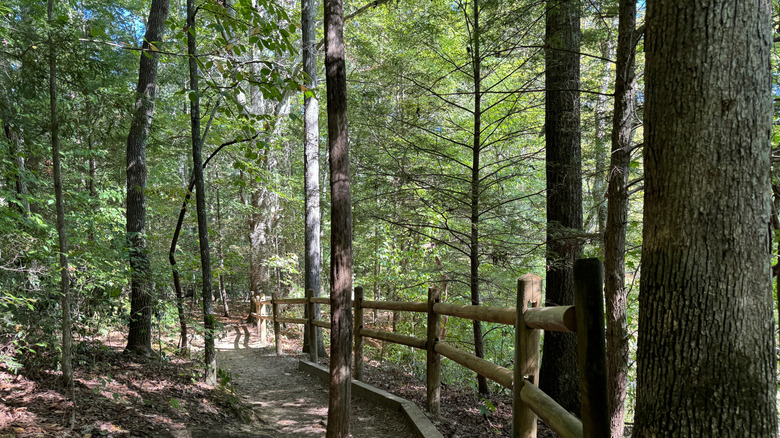
If the bustle-and-bustle of Nashville is starting to feel a little too overwhelming, set your GPS east to the rugged, rolling terrain of Tennessee's Cumberland Plateau, where Burgess Falls State Park lies. Before it became a park for recreational use, this area was once used to generate power for the city of Cookeville, which sits about 11.5 miles north of the park. When the city stopped using the Falling River for electricity in 1944, the state stepped in to transform the land into a place for state residents to enjoy, and, in 1971, Burgess Falls State Park was formed.
Tennessee is another state that doesn't charge a fee for exploring its state parks, which makes these natural wonders a heaven for hiking and biking enthusiasts who want to be at one with nature. The star of the show at Burgess Falls State Park are the four powerful waterfalls on the Falling Water River. You can see all four of the waterfalls via The River Trail, a 1.5-mile (round trip) trail that will allow you to witness the thunderous beauty of each waterfall.
Make sure to complete the trail, as the final waterfall is a crowd-pleaser. The Lower Falls is massive, and at 136 feet, you'll see the water from Falling Water River rush over its banks, creating a stunning visual palette. For visitors that own a kayak, seeing Lower Falls from the base is an unforgettable, Instagram-worthy experience, with the layered cherry limestone of the gorge giving the water a curtain-like effect. While the park doesn't offer kayak rentals, the Outdoor Experience in nearby Cookeville has kayaks you can rent starting as low as $30. Keep in mind that the only boat ramp is from the Cane Hollow Recreation Area.
New York's Letchworth State Park
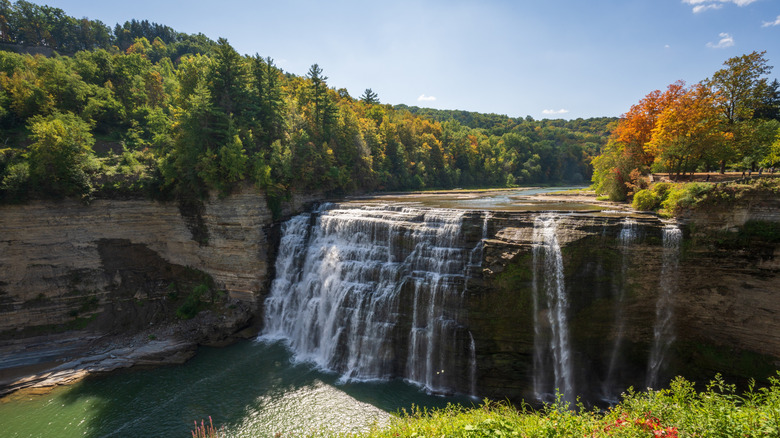
While the Grand Canyon gets all the international press, tucked within the rolling landscape of Upstate New York lies Letchworth State Park, a park that lays claim to the title of the "Grand Canyon of the East." For only $10 per vehicle, you'll be treated to a state park that feels like a lost chapter in the nation's national park portfolio. Created in 1907, Letchworth State Park is over 14,000 acres of stunning beauty, with most of the park accessible by 66 miles of hiking trails.
Letchworth is a shapeshifter, feeling like an entirely different world depending on which time of the year visitors decide to crest its ridges. In the winter, the park is one of the prime spots for cross-country skiing and snowmobiling, and this is also the time of year when you'll get to witness the Ice Volcano, a frozen geyser, that sits near the Glen Iris Inn.
In the spring, when the snow has melted away from its landscape, Letchworth transforms into a lush, green paradise. This is where you'll see the canyon in all of its glory, lining the Genesee River. The river itself is a sight to behold, as it thunders through the gorge and goes over three huge waterfalls in the park. This is a great river to engage in whitewater rafting, and Adventure Calls Outfitters provide rafting on the river during the spring, fall and summer at $60 per person, which is a bargain for an adventurous trip down the Genesee River.
Florida's John Pennekamp Coral Reef State Park
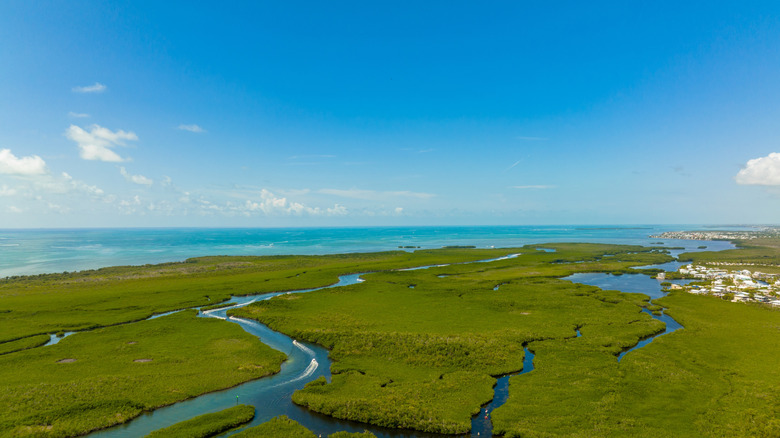
John Pennekamp Coral Reef, located in the Florida Keys, certainly feels like a national park. However, this stunning state park will only cost you $8 to access the park. With growing concerns about the damage that was happening to the unique reefs in the late 1950s, The Florida Board of Parks and Historic Memorials stepped in to preserve the reefs off of Key Largo, and in 1963, John Pennekamp Coral Reef State Park, named after the man who spearheaded the effort to save marine life in the Keys, opened to the public as the nation's first undersea park.
There are plenty of above-water amenities for park goers to partake in, but seeing the coral reefs is the main selling point at the park. For just $49.95 (excluding equipment rental, which you can obtain at the park, you'll be able to go on a snorkeling tour to see the stunning coral reefs from Cannon Beach, which is also home to artifacts from a Spanish ship that wrecked off the coast in 1715.
While you're enjoying the marine life and reefs during your snorkeling session, you'll see something that may seem surprising: a statue of Jesus Christ. The Christ of the Abyss statue, a replica of a similar statue in Italy, was placed in Florida, off the coast of Key Largo, in 1965. Since then, it's been a major attraction for snorkelers to visit at the park. In addition to the snorkeling ventures, John Pennekamp is also home to sunbathing beaches, paddling trails through the lush mangroves, and boardwalk trails that will offer a splendid look at the beautiful wildlife that calls this state park home.
Wisconsin's Peninsula State Park
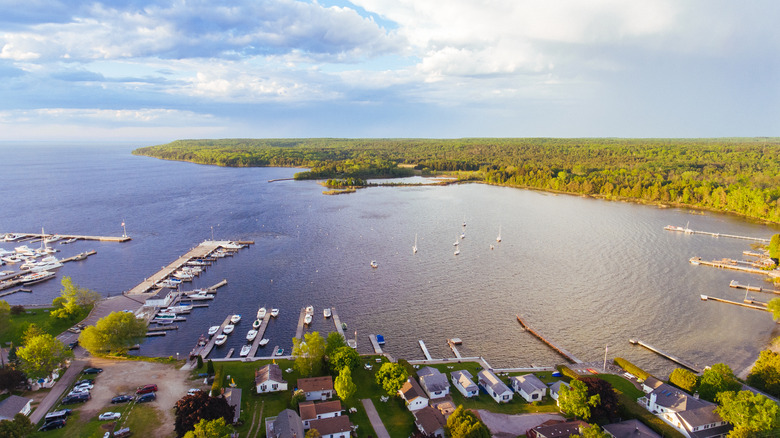
Wisconsin is home to some of America's most stunning state parks that would be right at home in the nation's national park portfolio. The lovely, idyllic Peninsula State Park is certainly one of those them, which has the distinction of being crowned the state's most "complete" park thanks to the myriad of amenities and recreation opportunities this area offers. As per its namesake, this stunning state park sits at the tip of the state's peninsula, lining Green Bay, and was the second park formed in the state, officially designated as a state park in 1910.
What can you do in this sprawling park? Simply put, everything. Within its over 3,700 acres, you'll have 20 miles of hiking trails, over 460 campsites, numerous boating and fishing opportunities (in the warmer months), and, the main attraction, the 8-mile shoreline that has spectacular views of the Green Bay. The shoreline sits on the Niagara Escarpment, a cliffside ridge that heightens the beauty of the shoreline. The area is also framed by the park's historical lighthouses, the primary one being Eagle Bluff Lighthouse, which was built in 1868 and overlooks the Strawberry Channel. To get a birds eye view of the entire park, make sure a visit to Eagle Tower is part of the day's itinerary. Standing at 60-feet tall, this observation tower stands stately as a landmark above Green Bay, giving you a panoramic view of the park and the bay. Getting to the tower is half the fun, as you need to cross an 850-foot canopy walkway to access it. All of this for only $16 per vehicle ($13 if you're a Wisconsin resident).
Methodology
To come up with our picks for the affordable state parks that were worthy of national park status, we searched through lists of the best state parks from sites such a as Thrillist and The Lost Meander, as well as our extensive knowledge of state parks. To qualify for inclusion, each state park listed must have an entrance fee of $20 or less, with affordable amenities within each park. We did this by researching each state park website for prices of admission and any added fees for amenities within each park.