
14 Tokyo Disney Attractions You Can't Experience In The US Theme Parks
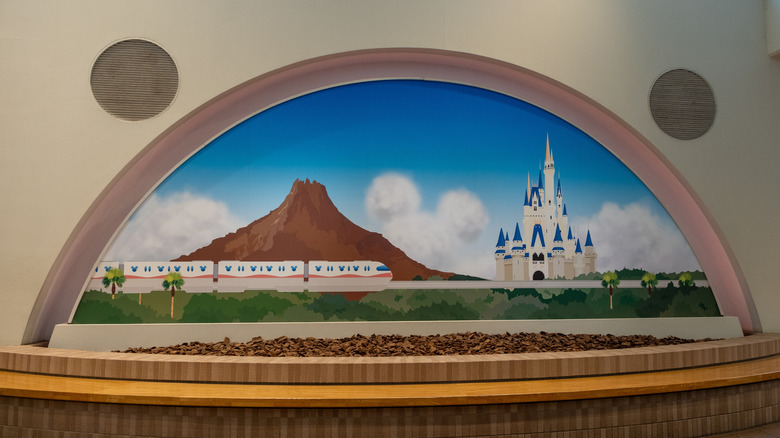
While Tokyo Disney shares some similarities with Disneyland in California and Walt Disney World in Florida, there are some distinct differences, including in many attractions. Some rides and attractions are variations of ones you find at Disneyland, like Pooh's Hunny Hunt, but offer a completely different experience. Other attractions, such as Baymax's Happy Ride, are nothing like anything you'll find in the U.S.
The Tokyo Disney Resort consists of two theme parks — Tokyo Disneyland and Tokyo DisneySea — and is operated by Oriental Land Company (OLC) under a license from the Walt Disney Company. Like the U.S. parks, there's an adjacent shopping and dining area, Ikspiari. Tokyo Disneyland opened in April 1983, becoming the first international Disney theme park, while Tokyo DisneySea opened 18 years later in 2001 and is currently preparing for a year-long 25th anniversary celebration.
If you're planning a trip to Japan and are interested in visiting the theme parks at Tokyo Disney Resort, it's a good idea to get acquainted with some of the best attractions. Tokyo Disney typically doesn't offer park hopper tickets anymore, so it's best to allot at least two days if you want to experience both Disneyland and DisneySea. Currently, there's a limited offer for a one-day park hopper, but you'll need to visit before the end of March 2026.
Enchanted Tale of Beauty and the Beast (Tokyo Disneyland)
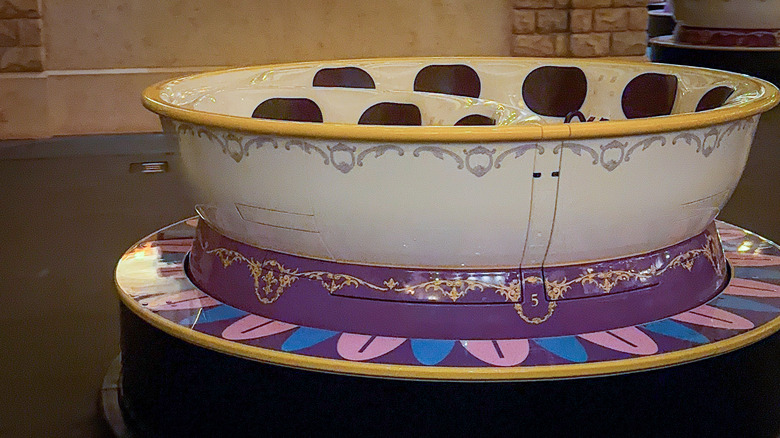
The Enchanted Tale of Beauty and the Beast was part of Tokyo Disneyland's Fantasyland expansion that opened in 2020. After a walk-through storybook introduction featuring Belle and the Beast (in Japanese), guests are ushered into the boarding area to oversized teacups. Because this attraction is on a trackless system, the teacups twist, twirl, and move in ways that almost feel like they are dancing. Glide through different rooms in the castle that reenact different scenes from the movie.
Sets in each room are extremely detailed and filled with advanced animatronics. One of the most impressive moments of the ride is when Beast turns into the Prince. This illusion is achieved using a popular Disney technique called Pepper's Ghost. If you've ridden Haunted Mansion, the infamous ballroom scene uses the same technology.
While Beauty and the Beast characters appear in the U.S. parks, there is no equivalent attraction at either Disneyland or Walt Disney World. This ride was built exclusively for Tokyo Disneyland, showcasing the differences in storytelling at the Japanese theme parks. One thing to note: if you are especially prone to motion sickness, especially on rides that spin in circles, this may be a ride you want to skip.
Monsters, Inc. Ride & Go Seek (Tokyo Disneyland)
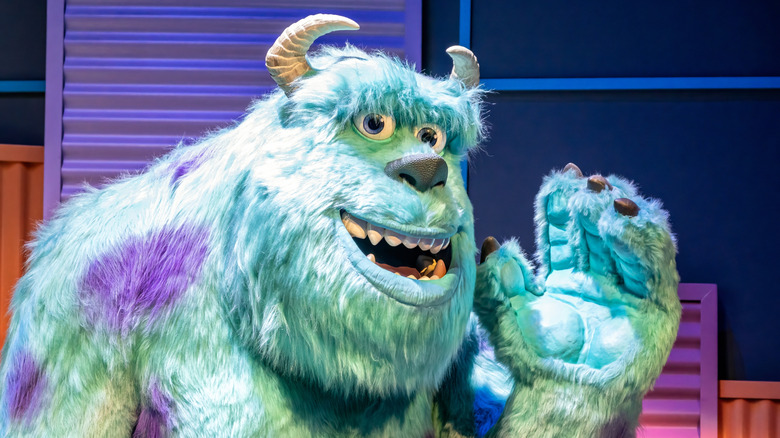
At first glance, Monsters, Inc. Ride & Go Seek! might sound similar to the Monsters, Inc. attraction at Disney California Adventure. However, the experience at Tokyo Disneyland is entirely its own. Guests hop aboard ride vehicles equipped with handheld flashlights and then move through various scenes searching for hidden monsters. When you shine a light on a target, you'll trigger animated surprises and other fun effects.
Disney California Adventure's Monsters, Inc. Mike & Sulley to the Rescue! essentially retells events from the original 2001 film in a straightforward dark ride format, while Tokyo Disneyland's ride is an entirely new storyline. Here, you're transported to a post-movie world where Boo returns to Monstropolis for a game of hide-and-seek. It's more interactive and great for both kids and adults.
You might've heard about a planned Monsters, Inc. attraction at Walt Disney World's Hollywood Studios. That one is going to be a suspended roller coaster — a first at any Disney resort. This attraction might shift perceptions of Hollywood Studios, which has previously been rated Disney's lowest-rated theme park.
The Happy Ride with Baymax (Tokyo Disneyland)
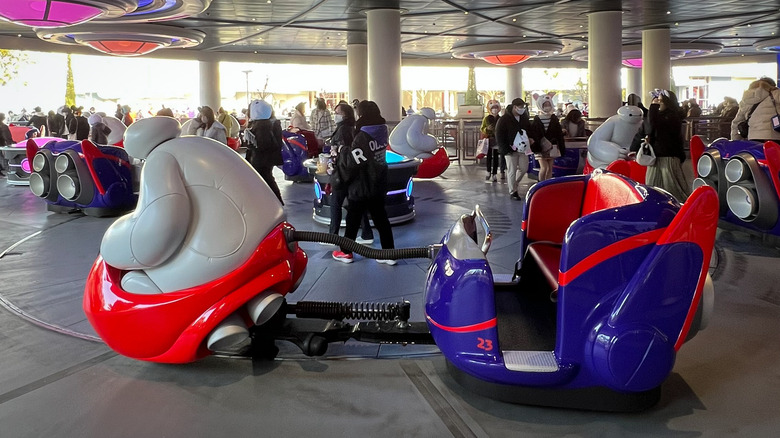
The catchy music is likely one of the first things that draws you in at The Happy Ride with Baymax. However, what truly sets this attraction apart is the audience's enthusiasm and participation. Repeat guests tend to linger nearby to sing along and mimic the signature moves from Disney Cast Members. Needless to say, it is quite the show.
The Happy Ride with Baymax is set to six original, upbeat songs that pulse throughout Tomorrowland before you even get in line. The open-air queue wraps around the ride, so you'll get to watch plenty of fans singing in tune. Some days, it can feel more like an interactive mini-dance party than a theme park ride.
Climb above your own vehicle that Baymax pulls behind. It's a whip-style ride, so you spin and whip around in time with the music. The only downside is that the ride lasts only 90 seconds, so the fun ends quickly. The line for this attraction is often pretty long, which is why Disney Premier Access is available. This Baymax attraction is one-of-a-kind, as there's no comparable ride at either Disneyland or Walt Disney World. Similar styles of attractions include Mater's Junkyard Jamboree at Disney California Adventure or Alien Swirling Saucers at Walt Disney World, but the similarities only go so far.
Cinderella's Fairy Tale Hall (Tokyo Disneyland)
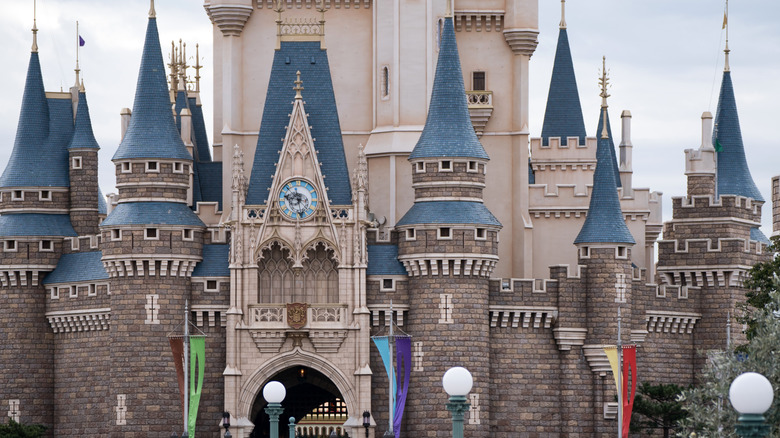
When you step inside Cinderella Castle's Fairy Tale Hall, you won't find a character queue or restaurant. Instead, it's a quiet, gallery-style walk-through attraction dedicated to storytelling. Here, you're invited to wander through ornate rooms filled with paintings, detailed dioramas, and dimensional scenes that retell the classic Cinderella story. You'll even visit the throne room and see Cinderella's glass slipper.
Tokyo Disneyland approaches its castle differently from the U.S. parks. At Disneyland's Sleeping Beauty Castle, there is a small vignette display that tells the story of Sleeping Beauty. At Walt Disney World, Cinderella Castle features Princess Fairytale Hall, which is a princess meet-and-greet.
Walking through Tokyo's Cinderella Castle, it feels more like a museum exhibit than a traditional theme park attraction, one that lets you move at your own pace rather than feeling rushed. It's a great attraction if you need a little break between longer lines. Instead of rushing through, you're likely find visitors lingering for the great photo opportunities. It's an example of how OLC's creative control differs while maintaining Disney's intellectual property standards.
Pooh's Hunny Hunt (Tokyo Disneyland)
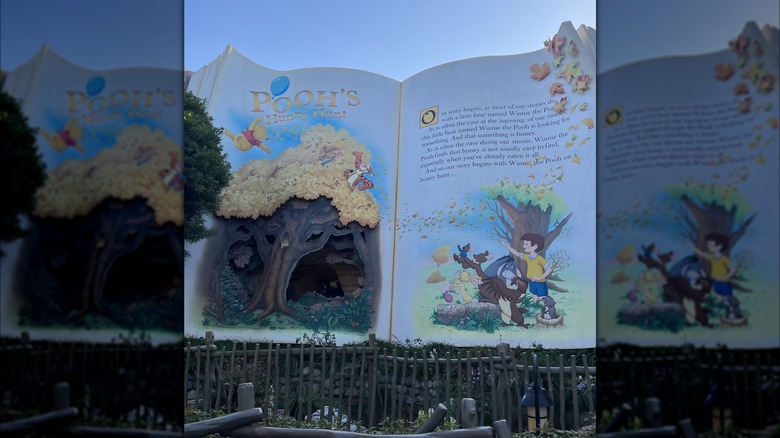
Both Disneyland and Walt Disney World feature a Pooh-themed ride called The Many Adventures of Winnie the Pooh. Tokyo Disneyland's version is called Pooh's Hunny Hunt, and it was one of Disney's first major trackless dark rides. Here, the honey pots glide, spin, and move separately without any visible guide rail. It feels very different from the rides in the U.S. and is definitely worth the lengthy line if you visit Tokyo Disneyland.
Riders embark on a dreamlike interpretation of the Hundred Acre Wood. Hunny pots bounce through Tigger's room, drift through the blustery wind scene, and then swirl in the blacklight Heffalumps and Woozles sequence. Because of the trackless system, multiple ride vehicles can move independently within the same space. The result is a dynamic energy that feels different every time you ride it.
Although the Winnie the Pooh ride is familiar to American park-goers, many visitors agree that the execution in Tokyo is far superior (as per Wandering In Disney). Both Disneyland and Walt Disney World use a track-ride system and static scene transitions, whereas Tokyo Disney's attraction feels alive in motion. This attraction is another clear example of how Tokyo Disneyland reinvents classic attractions rather than replicates them.
Journey to the Center of the Earth (Tokyo DisneySea)
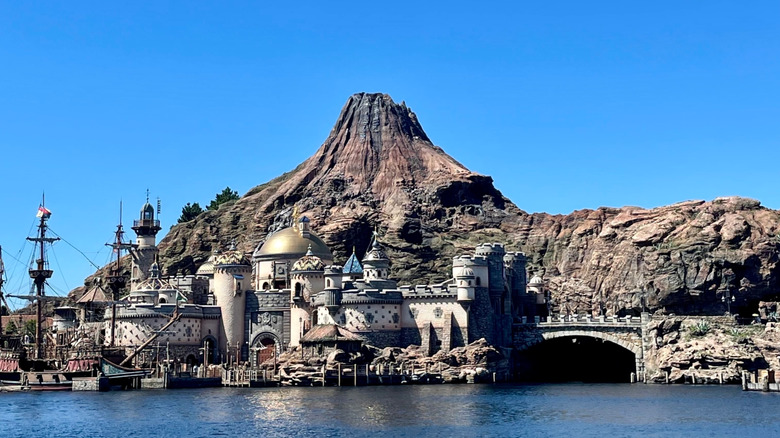
Moving to Tokyo DisneySea, towering over Mediterranean Harbor is Mount Prometheus, and hidden inside it is one of the park's coolest attractions — Journey to the Center of the Earth. As you walk around the harbor toward the ride, look for the drill in the mountain. This detail symbolizes the entry point toward the center of the earth. The queue is also interesting, filled with lava, equipment, maps, and more. Hop on a futuristic drilling machine vehicle ride that includes glowing caverns, subterranean seas, bioluminescent plant life, and crystalline formations inspired by Jules Verne's classic science fiction novel.
While the ride starts off a little slow, the pacing is deliberate. The early scenes emphasize the atmosphere and the journey itself. Tension starts to build as your expedition vehicle encounters unstable terrain. That culminates in a sudden, high-speed launch that sends your vehicle toward the volcano's summit. It is quite the ride.
There's nothing like this attraction at either Walt Disney World or Disneyland in the United States. The closest attractions, technology-wise, are Test Track or Radiator Springs. While both theme park resorts have dark rides and indoor coasters, neither combines this scale of immersive set design. Journey to the Center of the Earth is an example of how the park emphasizes attractions that feel inseparable from their environment.
20,000 Leagues Under the Sea (Tokyo DisneySea)
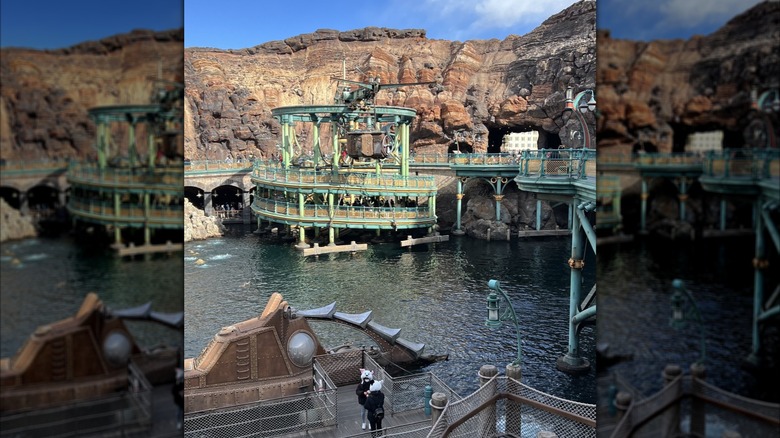
Fancy a little more Jules Verne? Behind Mount Prometheus, you'll find 20,000 Leagues Under the Sea. This ride also feels like you've stepped inside a Jules Verne novel. Guests board submarine-style vehicles and look through illuminated portholes as they descend into an imagined underwater world. There aren't any fast movement or tension-building scenes. Instead, the story builds through detailed sets, lighting effects, and the illusion of depth. One major difference between this attraction and submersible rides at other Disney theme parks is that the vehicles on the Tokyo ride are suspended from an overhead track. The special effects create the sensation that you're deep in the ocean.
As you might expect, given the Jules Verne inspiration, the mood is atmospheric and dark. You'll pass sunken ruins, glowing sea creatures, and more. It's less of a thrill ride and more of a slow exploration. One cool interactive element is the light you can control with a joystick. Listen for the bell to ring and the spotlight to come on, then you can point it in any direction.
Walt Disney World had a 20,000 Leagues Under the Sea attraction when it opened in 1971, which was similar to the old Submarine Voyage at Disneyland. The popular Walt Disney World attraction permanently closed in 1994. A Disneyland submarine ride operated until 1998, eventually transitioning into the Finding Nemo Submarine Voyage in 2007.
Sinbad's Storybook Voyage (Tokyo DisneySea)
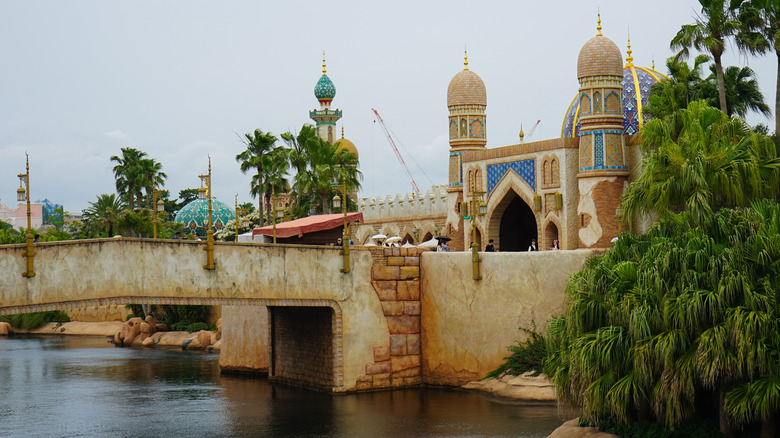
Located in the Arabian Coast section of Tokyo DisneySea, Sinbad's Storybook Voyage is a fun ride that tells the story of Sinbad and his adorable sidekick, Chandu. Some on the Disney Tourist Blog describe the attraction as a blend of "it's a small world" and Pirates of the Caribbean. Guests board colorful boats and follow Sinbad and Chandu the tiger on a journey across oceans and continents. Each detailed scene has animated figures with expressive moments and layered staging.
The ride's central song is an original score written by the legendary Disney composer Alan Menken. He is known for work on a number of other Disney films, including "The Little Mermaid," "Beauty and the Beast," "Aladdin," "Pocahontas," "Tangled," and more. The song — "Compass of Your Heart" — is performed in Japanese, and essentially narrates the journey.
Raging Spirits (Tokyo DisneySea)
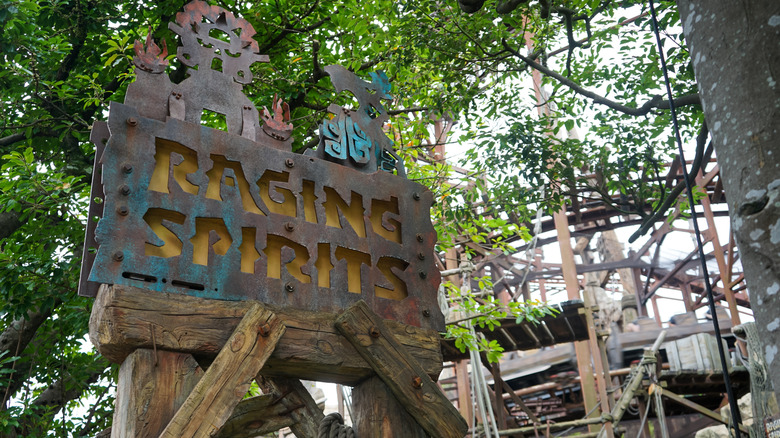
Hidden at the back of Tokyo DisneySea in the Lost River Delta is the Raging Spirits coaster. This ride is one of the few attractions at Disney parks that include a full 360-degree loop. The compact, high-speed coaster is designed to mimic an archaeological site set among crumbling temple ruins and jungle overgrowth.
Once you're on the ride, the steel coaster weaves through weathered rocks before you climb into the signature loop. The footprint for this ride is quite small compared to some of the larger, more sprawling coasters you might be used to at other Disney parks. While there is no comparable ride at the American Disney parks, Raging Spirits shares some similarities with Indiana Jones and the Temple of Peril at Disneyland Paris, one of Europe's highest-rated theme parks.
Aquatopia (Tokyo DisneySea)
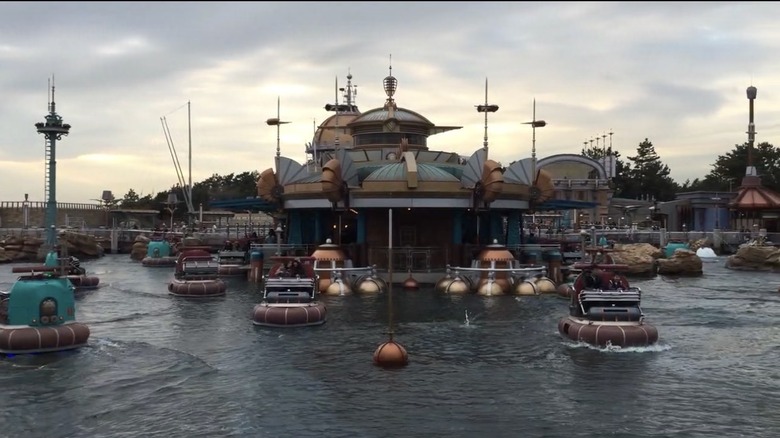
Located in the futuristic Port Discovery area, Aquatopia appears deceptively gentle at first. However, it's not a thrill ride, which is why it's still family-friendly. The attraction features small, three-seat vehicles that glide across the shallow lagoon. There are no visible tracks, dramatic drops, or any obvious storyline. Instead, you travel around the lagoon in no discernible pattern.
The unpredictability of where you are going is precisely the point. The ride relies on a trackless system beneath the surface, which allows each vehicle to change direction and movement mid-ride. Part of the journey might be a calm and smooth ride, while other parts might be filled with sudden spins and near-miss encounters with waterfalls. The playful misdirects keep riders entertained, making every ride feel different. And, if you visit during the summer months, you might find Aquatopia offering the "Get Soaked" line. It's a fantastic way to beat the Tokyo summer heat!
You won't find anything comparable to Aquatopia at either Disneyland Resort or Walt Disney World Resort. There are several trackless-system rides in the U.S. parks, but none combine elements in the way Tokyo DisneySea's Aquatopia does. Unfortunately, you need to ride this one soon, as it is slated to close at some point to make room for the DisneySea expansion in a few years.
Venetian Gondolas (Tokyo DisneySea)
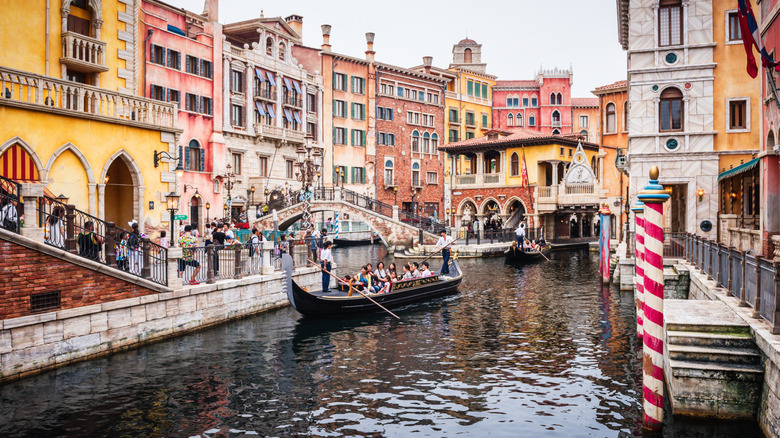
Venetian gondolas might not be the first attraction that comes to mind when you think about a Disney theme park, but Tokyo DisneySea has them. Costumed gondoliers steer the boats through the Venetian canals and out into the Mediterranean Harbor. You'll even pass traditional Venetian-style pastel facades and a mini Rialto Bridge. While not as romantic as a gondola ride for two in Venice, Tokyo's gondolas are still worthwhile.
Like authentic gondola experiences, the pace is unhurried. Take in the scenery around Mediterranean Harbor and use this as an opportunity to relax and recharge before getting back in line for some of the most popular attractions. Your experience on the gondolas will also vary depending on the time of day you ride, as the gondolas will stop running whenever there is a water show happening in the harbor. U.S. Disney parks have some water-based attractions and riverboats. However, neither resort offers an intimate, Venice-inspired experience like this.
Rapunzel's Lantern Festival (Tokyo DisneySea)
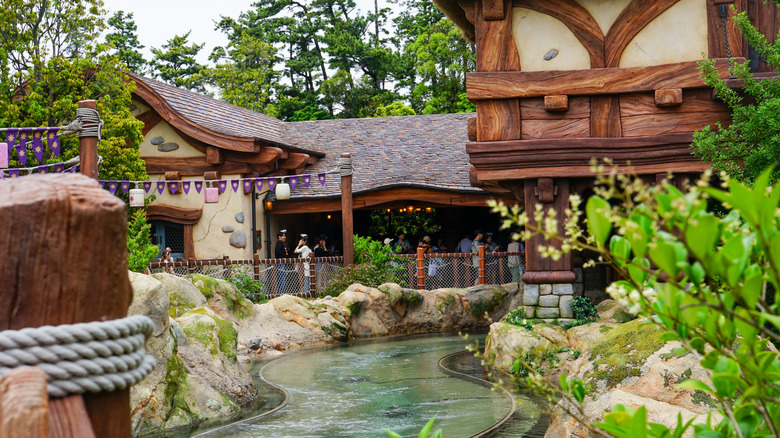
Tokyo DisneySea opened the new Fantasy Springs area in June 2024. One of the main attractions is Rapunzel's Lantern Festival, which brings one of Disney's most visually iconic scenes to life. Here, guests will board a small boat and glide through familiar moments from "Tangled." The ride starts at Rapunzel's Tower and then passes other movie moments, including the iconic lantern scene. The ride includes both indoor and outdoor elements, and is great for kids and adults alike.
One element that distinguishes it from other Disney boat rides is its emphasis on lighting and atmosphere. The finale with the lantern scene fills the building with warm reflections that create a sense of intimacy and depth. The set pieces, combined with modern-day animatronics and the immersive musical score, make you feel like you're part of the ride.
Although you will find Tangled-theme elements at the U.S. Disney parks, there is no comparable ride at Walt Disney World or Disneyland. After all, Rapunzel's Lantern Festival was created specifically for the Fantasy Springs expansion.
Peter Pan's Never Land Adventure (Tokyo DisneySea)
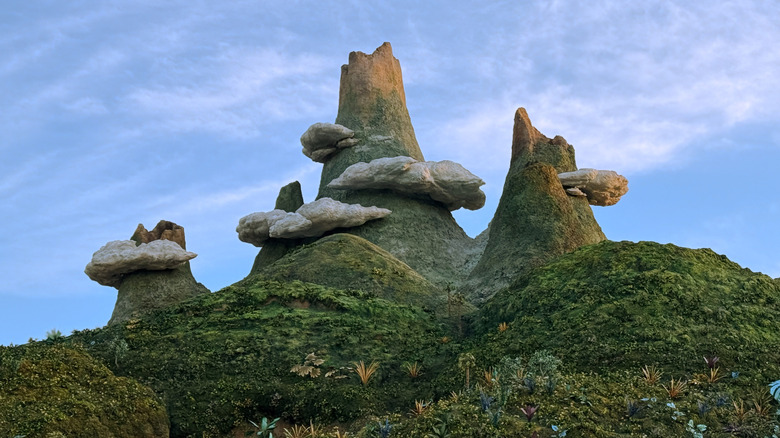
Peter Pan's Never Land Adventure is unlike any other Peter Pan ride at Disney theme parks. It's not a simple update of the classic ride you might be used to. Instead, it's a complete reinvention. This next-generation ride system blends large-scale physical sets with immersive projection and 3D elements. Guests will join the Lost Boys on a mission through Neverland, where movement feels very different from traditional Disney dark rides.
In U.S. parks and Tokyo Disneyland, Peter Pan's Flight suspends guests in pirate ships that glide through miniature sets. It's more storybook quality and nostalgic. In contrast, Peter Pan's Never Land Adventure at Tokyo DisneySea makes you feel like you're in the action. You dip, tilt, and accelerate through environments that feel cinematic.
The queue sets the expectation for what's to come. You first move through caves before getting inside, which is essentially the base camp for the Lost Boys. There's also a pre-show, but like most Tokyo attractions, it's entirely in Japanese. Even if you don't understand Japanese, it's still entertaining. One thing to note: Because the ride is 3D and moves in multiple directions, it might be worth skipping if you are prone to motion sickness.
Anna and Elsa's Frozen Journey (Tokyo DisneySea)
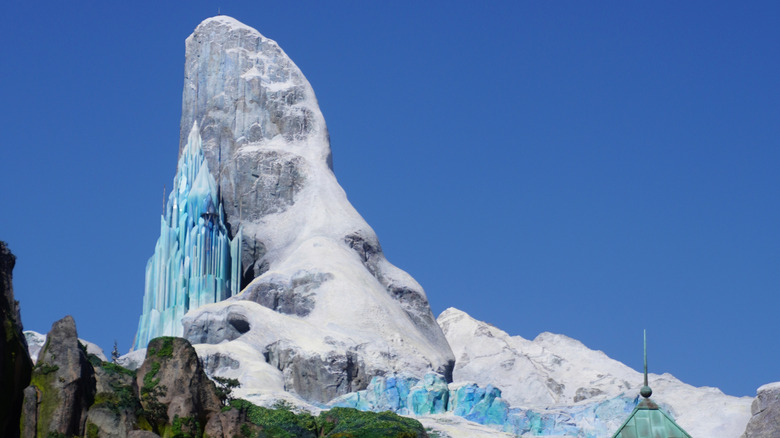
Another signature attraction in Tokyo DisneySea's new Fantasy Springs area is Anna and Elsa's Frozen Journey. The level of storytelling here goes beyond the Frozen-themed attraction at Walt Disney World. Here, guests board boats that travel through the entire arc of the "Frozen" film. The ride unfolds in expansive show scenes featuring advanced animatronics, perfectly timed musical transitions, and dynamic lighting.
Walt Disney World's Frozen attraction was redesigned from an existing ride at EPCOT's Norway Pavilion and focuses on a few familiar scenes. Alternatively, Tokyo DisneySea's attraction was built from the ground up for the new Fantasy Springs land. That gave designers more freedom to create sweeping fjord backdrops and towering ice palaces. It doesn't feel like a quick swap.
As one of the newest attractions at Tokyo Disney, you can expect the line for Anna and Elsa's Frozen Journey to be long all day long. Fortunately, Disney has added a single rider option — perfect for solo Disney park travelers.
Methodology
This list was compiled using official Tokyo Disney Resort attraction information, press releases from the Oriental Land Company, and current ride documentation from both Tokyo Disney Resort and U.S. Disney parks. Attractions were included only if they do not operate in the same form at the Disneyland Resort in California or Walt Disney World in Florida, even if they share characters or themes with comparable attractions.
The writer also brings firsthand experience to the attraction selection process, having visited Tokyo Disney Resort more than 30 times and previously holding an annual pass. Growing up near Disneyland in California and later spending significant time at Walt Disney World provided direct familiarity with the U.S. attractions referenced throughout this piece. Her combined experiences across multiple parks, seasons, and expansions helped ensure the distinctions outlined here reflect meaningful differences rather than minor variations.