
Forget The Lift Ticket: These 5 Hidden Costs Can Ruin Your Ski Vacation Budget
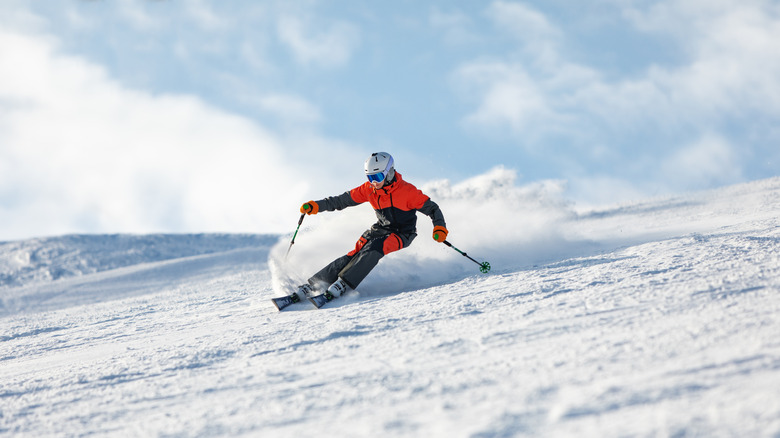
Ripping down a mountainside — be it on skis or a snowboard — theoretically costs only a lift ticket. But the gear, accommodations, food, and all the marginal expenses can carve a hole in your budget that rivals the one you carve into the snow. What you do the rest of the time, off the powder and mountainside, adds up, even at a family-friendly ski resort that's actually affordable. Identifying the five hidden and underestimated costs that can derail your ski vacation budget may help you save enough to squeeze in more runs.
There's already a cottage industry built around making skiing more affordable, though lift tickets represent only a fraction of the actual cost of a trip. The real budget goblins show up in the margins. At many resorts, lift ticket prices fluctuate based on weather, timing, and demand. There are ways to soften the blow, of course. Ski bums of a certain variety, for example, already know about loyalty programs like the multi-resort Epic Pass and Ikon Pass, which provide access to dozens of mountains for a flat fee, plus discounts galore. The best solution, as always, is to plan ahead.
From gear to transportation and accommodations, you'll find a broader range of options if you book in advance. It also gives you time to check the fine print, where surprise fees often hide. Early bookings can mean discounts on everything from lift tickets to accommodations, while day-of prices are almost always higher. Midweek trips outside peak holiday periods remain the top pro tip — at least for those without school-age kids. Digging into your ski pants for your wallet is inconvenient enough. It's worth getting into the weeds on the full expenses of a ski trip to avoid sticker shock.
Paying for sleep is a black diamond for your budget
Careening down a snowy mountainside takes a lot out of a person — up to 500 calories, in fact, according to Harvard Medical School. All that movement requires an equally worthy dose of rest. Unfortunately, rest often comes at a premium.
One of the biggest money-pillaging expenses on ski trips comes from the ancillary fees many resorts charge — similar to the extra hotel fees most guests should be aware of — as well as the cost of lodging on-site. Over the course of a multiday trip, the total climbs quickly. Let's take Vail, Colorado's popular ski destination, considered the most resilient for skiers worldwide, as an example. A lift ticket at the popular resort can exceed $280 per day, depending on when you book and how many days you plan to ski. By contrast, lodging at the resort, slope-side, or nearby for the same date can rival or exceed the lift ticket price, ranging from $338 to $1,100, based on availability and booking window.
There are a few ways to save some bucks, of course. First, avoid staying overnight if you can. Day trips are inherently cheaper if you live within driving distance. If you must overnight but need to pinch pennies, choose accommodations within driving distance of the resort. The aforementioned Vail Resorts' on-site or nearby lodgings can wallop the wallet, but 15 minutes away, the Inn at Riverwalk offers a double queen room for $296 per night. In the end, though, it may not be you who decides. "If I'm going by myself, I will always go with the most convenient, affordable location," one mountain regular wrote on Reddit. "If I'm going with my wife and kids, then we will be on the mountain with a pool no matter what, since it makes my life 10x easier."
Your budget's first bumps come with transportation and parking
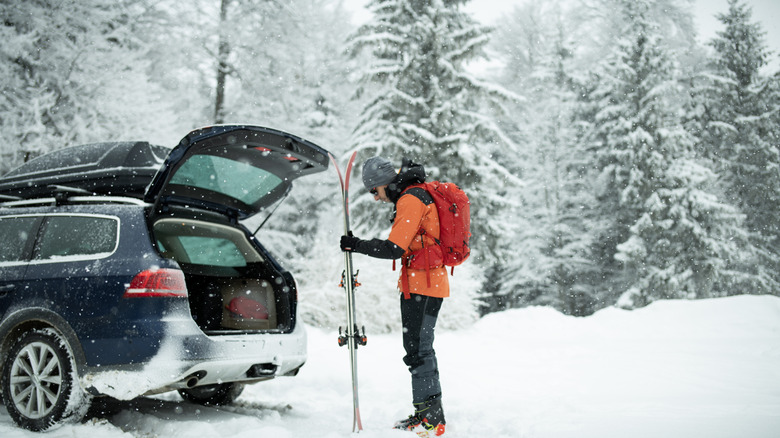
When building a travel budget, "transportation" often becomes a catch-all for all the expenses incurred between leaving your front door and checking into your accommodations. That includes not only your plane tickets, gas, and rental car, but also snacks, beverages, miscellaneous fees, and parking when you get there.
Flights to popular ski destinations like Denver or Salt Lake City have, in some cases, bypassed their usual surge. Yet ski gear can't fit in your overhead bin, which adds about $35 to your flight's checked baggage fee. "Flying with gear is always a gamble," wrote the duo over at The Snow Chasers. "Sometimes your bag shows up. Sometimes it shows up looking like it fought a snowcat. And even if it survives, you'll still fork out fifty bucks for the privilege and twenty more for a sad airport sandwich you'll regret instantly."
You won't get off any better staying on the ground, either. Vehicles of any variety — your own or a rental — bring their own hassles and expenses beyond fuel. Parking can also be a silent money suck. At Vermont's Stowe Mountain, for instance, parking can cost $30 per space, per day. The trick, in some cases, is arriving early to snag a limited number of parking spots. Some mountains, including Stowe, offer frequent, free shuttle service from town to the resort. If you've got a spare seat or two, you can arrange a carpool with a fellow skier using apps like Shredpool, which helps dilute the cost of driving for all involved. Some resorts have also begun encouraging visitors to do the same or reserve a parking spot in advance.
Lodge food can starve your finances
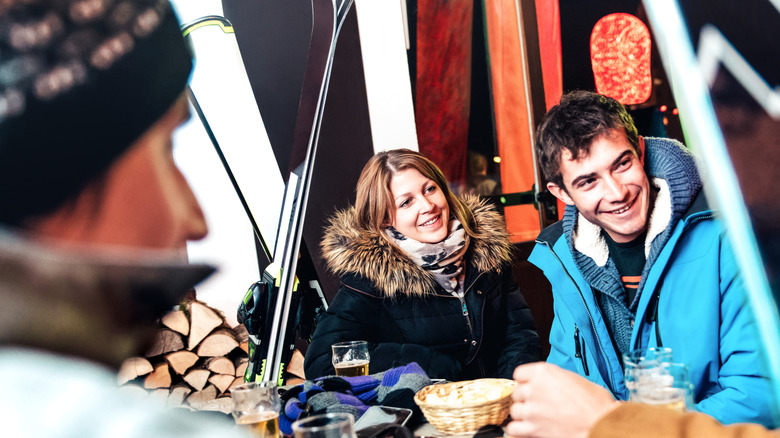
Very few appetites match the ravenous delirium one experiences after careening down a mountainside a few times. The cold weather, combined with the burn of calories and the dissipating adrenaline rush, leaves a rumbling stomach that, at times, can't be satisfied with a simple sandwich. Food, then, will be an unavoidable expense that you won't want to skimp on. The problem is you can't exactly stuff lunch into your ski pants, though some may sneak a good jacket snack or two. Food on a mountain, however, isn't cheap. While some of America's top ski resorts are offering big discounts, they're not focused on their menus.
Despite mostly consisting of school-cafeteria fare like burgers, chili, fries, chicken fingers, and sugary drinks, food at a lodge can quickly devour your budget as quickly as you devour it. At the higher end lies the Cloud Nine bistro at Aspen Snowmass, with its $75 prix fixe menu. That's all before accounting for the wonders of après-ski, that gluttonous social ritual which fills your gullet with drinks and snacks, including cocktails and beer, while emptying your wallet just as quickly.
Summer Hull over at The Points Guy saved every receipt from a trip to Brian Head with her family for a two-day ski trip. "You get hungry on a ski trip, so we didn't try and get cute with skipping meals," she noted. Her outlay for food ended up nearly $250 over two days. "Packing lunch and eating somewhere like McDonald's for dinner could have saved a bit off the food costs if you want to spend as little as possible," she added.
Outfit yourself for skiing — and sticker shock
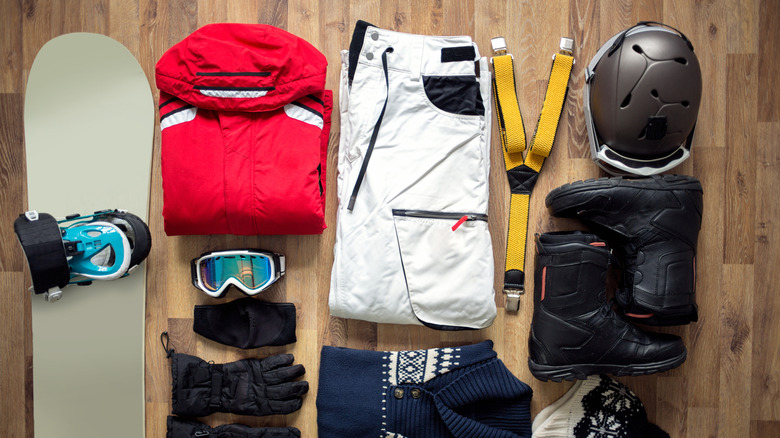
Carving fresh powder induces a unique adrenaline rush. The total cost of all your gear induces a similar rush on your bank account. A full setup — skis, bindings, boots, and poles — can cost several hundred dollars at the lower end and well over $1,000 for premium equipment. That's before outerwear, base layers, helmets, goggles, gloves, and accessories like hand warmers and sunscreen. Storage items, including roof racks, boot dryers, and travel bags, add even more to the tab. Things get even more complicated if you're a tourist skier who must decide whether to join the rental army or buy gear. In reality, both are expensive.
Renting for a five-day outing won't spare you much, either, with base-level gear costing at least $50 per day. There's also the small matter of putting away your non-ski-related stuff. Unless you walk around in your gear, you'll likely need a locker, adding about $10 or more to your costs, depending on the resort. This all ignores the price of maintaining and fixing all the doodads and gear that go along with skiing — tune-ups, waxing, and eventually replacing worn or broken gear.
The trick, according to experienced ski bums, is to shop at the end of the season for next year or to go with used gear in a pinch. But the bottom line for beginners is, don't buy. "Rent!!! The gear is mid-range in quality," one Reddit user suggested. "It's easier to travel. You can ski on different designs and sizes until you and your instructors arrive at what's best for intermediate level."
Ski lessons in carving chunks out of your budget
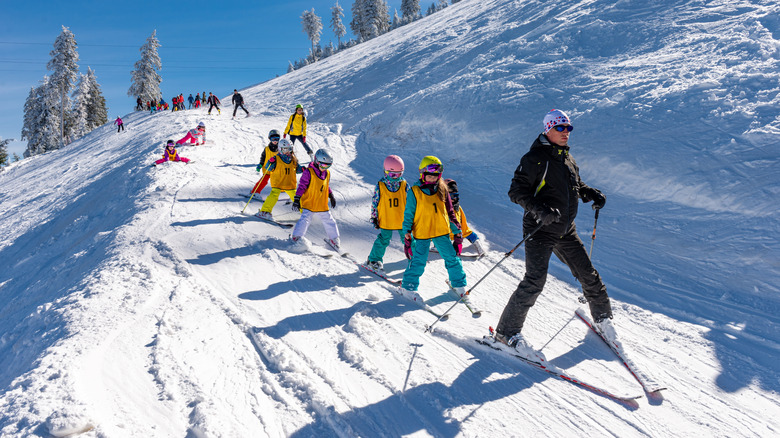
Those who have mindlessly attacked a blue without knowing how to edge properly may have limped away from the experience, wishing they'd shelled out for a lesson. While skiing may look cool on TV and seem relatively easy (what's so hard about leaning and pointing your skis downhill?), it's not. Messing up could leave you chasing a wayward ski through a forest or, even worse, twisted like a pretzel. For beginners or even intermediates kicking off a new ski season, a lesson is non-negotiable. All of them will also teach your bank account a lesson in humility.
"Learning to ski or ride has never been cheap, and private instruction at the highest-end resorts has always cost hundreds of dollars, even for a single lesson," according to Sam Weintraub at Peak Rankings. "But in today's world, these single-day rates have skyrocketed to truly impractical levels."
The aforementioned impracticality can cross into four-digit territory, with a full-day private lesson costing over $1,300 at Aspen Snowmass, for example. The best solution: study cheap and ski expensive. In other words, separate your lessons from your trip. Find a mountain with sensibly priced lessons, ideally a day trip away from home, to iron out any kinks in your technique. Use a weekend to get comfortable on the snow. Then hit your actual ski trip with aplomb.
Methodology

The sheer volume of expenses involved in a ski trip makes singling just one a fool's errand. Instead, the costs were grouped into phases of a ski trip. They were then assessed using a mix of ski-related publications, including Peak Rankings, Powder Magazine, On The Snow, The Snow Chasers, and Ski Magazine. Prices were also compared using sites like SkiEssentials and Sun and Ski for gear. Information such as parking prices and ski lodge menus came directly from resorts. Reddit's sizable and vocal ski community helped provide context and color.