
The 5 American States To Visit With Fewer Ticks Than The Rest, According To The CDC
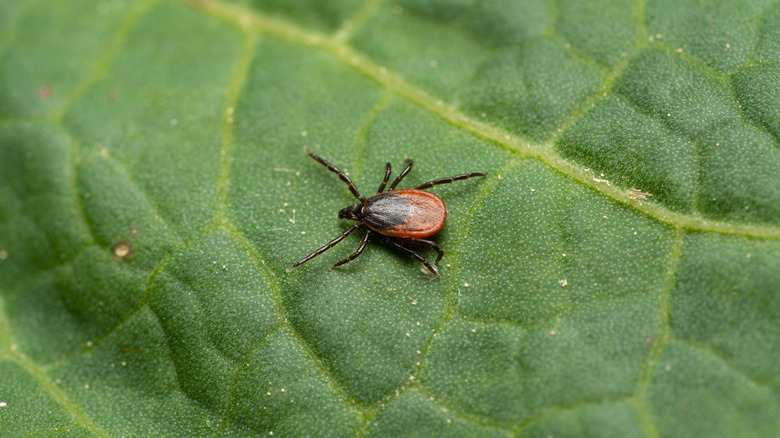
Ticks are like something out of a horror movie. They're tiny, have eight legs, and burrow into your skin when you least suspect them. By the time you notice a tick, it's likely bloated, having gorged itself on your blood. Removing one is a grotesque experience, as the head can break away from the body and remain lodged in your flesh. Small though they are, some species of ticks can infect humans with a specific bacterium, which could lead to Lyme disease. Preventing bites — and spotting these parasites early on — is vital when spending time in nature. Blacklegged (or "deer") ticks are the best known type, and while they run rampant across certain regions, no place in the United States is truly free of the disease-carrying arachnids.
Yet some states are safer than others. The Centers for Disease Control (CDC) studies occurrences of Lyme disease across the country, and while some states are definite hot zones (California, New England, and Florida routinely top the list), many states report few (or even zero) Lyme infections all year. You should always take precautions, especially while spending large amounts of time in wooded areas, but the odds of spotting a tick on your person in these states are extremely low.
So, where should you go if you want to avoid these insidious little bugs? According to CDC reports, the following 5 states show the lowest incidence of Lyme disease in the country, year over year. You'll find many other states with similarly low rates (see "Methodology," below), and Lyme infections don't precisely correspond to tick bites, though they can transmit less-known diseases, such as anaplasmosis and tularemia. But you won't find a better indicator of how to avoid the more tick-infested areas than Lyme data, which means that you should be able to hike and camp in these destinations without getting ticked off.
Oklahoma

The flatlands of Oklahoma make for a popular road trip, and it helps that Route 66 cuts right through this big-sky state. Whether you're browsing the cowboy-themed exhibits at the Sigler Western Museum or swimming in Turner Falls Park, there's a lot to enjoy in this historic state. A visit to Oklahoma's lush, underrated, lake-filled region blends wild natural beauty and urban charm – and it's likely you won't spot a tick the whole time you're there.
Indeed, whole years have passed without a single reported case of Lyme disease in Oklahoma. This is particularly astonishing given the state's proximity to Texas, where several different tick species are prevalent. It's also a little misleading: ticks do exist in the Sooner State, and they're fairly common in summer. But there's little evidence that they cause serious health concerns for Oklahoma's residents or visitors.
Granted, local researchers have disagreed about how to define the disease. As stated in a FAQ from the Oklahoma State Department of Health, "The presence of 'true' Lyme disease in the southern states, including Oklahoma, is controversial because B. burgdorferi bacteria has never been cultured from a person residing in the southern U.S. with symptoms of Lyme disease. However, other evidence suggests that it could be possible to get Lyme disease in Oklahoma." So it's possible you could catch Lyme in Oklahoma, but unlikely, so you should still take the usual precautions.
Hawaii

For many mainlanders, Hawaii is thought of as the ideal place to get away from it all, a land of volcanoes, tropical rainforests, and a dizzying cultural blend. Some tourists come for the surfing, others for Hawaii's premiere cultural center's lovely island villages, authentic eats, and family fun. Whatever your motivation, Hawaii feels very distinct from the continental United States — and that includes having a near-absence of ticks.
More famously, these islands are famous for not having any indigenous snakes, and the state works hard to prevent serpents from coming here. Similarly, the islands have never reared their own ticks, and on the rare occasion that these pests pop up, they're always an invasive species, having migrated from somewhere else on humans or animals. Because of this, the state of Hawaii reports very few cases of Lyme disease on a yearly basis.
But that doesn't mean you should skip the tick-check altogether. Contrary to a popular myth, ticks do exist in the tropics, and they can actually thrive in a humid rainforest. Although few tourists will think of performing a tick check in Maui — even after a backwoods hike — these thirsty stowaways are technically still a danger, albeit a reduced one. Of greater concern are day-biting mosquitoes, which can carry a wide range of infamous illnesses, from yellow fever to Zika virus.
Alaska

Alaska is massive, and its climates are remarkably varied, which is part of what visitors love about it. The rainforests of the southern panhandle are different from the icy peaks of the Alaska Range or the state's Arctic tundra. The vast majority of Alaska's land is wilderness; America's least visited state is a destination full of breathtaking parks, mountains, and abundant wildlife.
That said, most residents of the far-north state are well acquainted with bugs. The state's unique combination of wetlands, soggy "muskeg" soil, and 3 million lakes make Alaska fertile ground for insect spawning. Summers bring massive swarms of mosquitoes, and one type of bloodsucker, the midge, is known locally as a "no-see-um," because they covertly bite and leave itchy welts on your skin. Biologists are also increasingly concerned about the spread of ticks in northern climes due to the rising temperatures worldwide, though, for now, ticks remain far less common here than in the Lower 48.
While ticks certainly do exist in Alaska, and visitors should check themselves after spending time outdoors, Lyme infections are extremely rare. The most common victims aren't humans but furry wild animals; one native species of tick is usually found on hares and squirrels, and a sufficient number of moose winter ticks can actually prove fatal to these large mammals, owing to dehydration and loss of blood. Most humans should be fine, but if you do notice a tick bite — or the signature "bull's-eye" rash that often precedes a Lyme infection — you may have to travel a fair distance to find treatment.
Mississippi
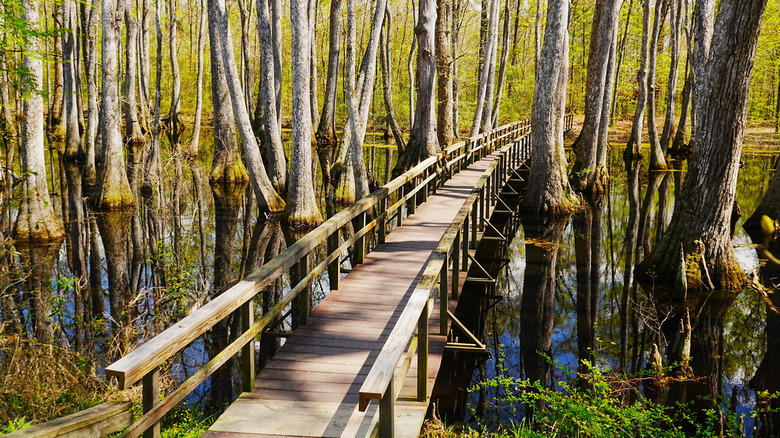
Mississippi is famous for its small towns, blues singers, and sprawling wetlands. Several scenic byways make for a great Deep South road trip, and you can hike, paddle, and fish to your heart's content around here. Once you've finished with the outdoors, you can set up a tent in one of hundreds of campgrounds, where the odds are low that you'll have to pluck out a tick.
The Magnolia State does have several varieties of ticks, including the dreaded blacklegged species. Others include the Lone Star tick, dog tick, and Gulf tick, which converge from different regions in this flat and forested state. They're most commonly spotted in the spring and fall, though scientists have recently observed some in the summer. Still, reports of Lyme disease in Mississippi are extremely low, and most cases are ascribed to residents who traveled elsewhere.
This low rate may surprise visitors, considering Mississippi's reputation as swampy and humid, but Lyme disease is statistically less prevalent south of the Mason-Dixon Line. Instead, other pests live here in abundance; at least 50 mosquito species thrive throughout the state, along with bedbugs, fleas, and fire ants. So instead of a tick-check, you may find yourself shaking out your clothes and sleeping bags for other reasons.
Wyoming
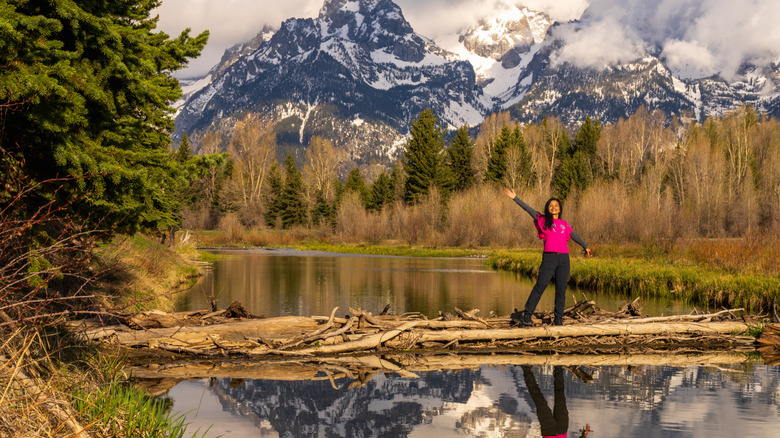
Wyoming is one of the best states in the U.S. to spend time outside, thanks to Yellowstone National Park, Devil's Tower, and the Grand Tetons. One Wyoming hike full of mountain beauty is so picturesque, it's named after how photogenic it is, and you could likely spend every summer for the rest of your life exploring the natural spaces of the Equality State and still find something new on a regular basis. As a bonus, you're also far less likely to encounter a tick here than in most other states.
Wyoming has no native blacklegged tick population, and nearly all reported cases of Lyme infection are assumed to have originated somewhere else. This is a relief for such a rural state, as the distance between healthcare centers in Wyoming can be substantial. The absence may have to do with climate; much of the state is considered semi-arid, which isn't appealing to moisture-loving Ixodes scapularis.
You're not entirely in the clear, though, as Wyoming's backcountry does serve as a habitat for other types of ticks, including the Rocky Mountain wood tick. This particular species is responsible for spreading Rocky Mountain spotted fever, which can result in headaches, rashes, and nausea. In severe instances, RMSF can cause severe and long-lasting damage. As with other woodland areas, take precautions and perform the usual checks when you've been exploring the state's natural beauty.
Methodology
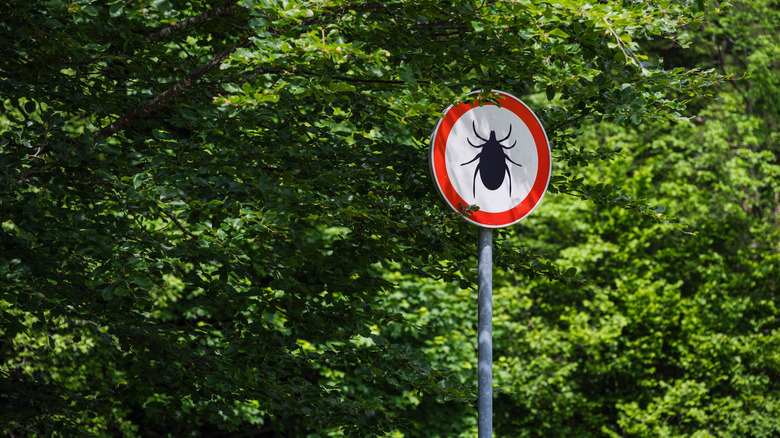
"What are the states with the fewest ticks?" It's an easy question to ask, but the answer can be murky, owing to several factors. Ticks live in every state in the U.S., though some species are basically harmless beyond the discomfort of their bites. These parasites can spread other diseases as well, but the biggest concern across the country is Lyme disease, which can cause severe health problems and, occasionally, even death. Exact tick populations are impossible to calculate, so we focused on the prevalence of Lyme disease in each state, as reported by the CDC.
That said, these numbers change from year to year, and states move in and out of the "top 5" when it comes to the fewest Lyme cases. We reviewed CDC data from 2008 through 2022 and picked the five states that performed best in the most recent years. We found many close rivals; Colorado, Arizona, and New Mexico all report low numbers, probably thanks to their dry landscapes, while southern states like Arkansas and Louisiana paralleled Mississippi's excellent scores. In general, the farther south you go, the better your chances are of avoiding blacklegged ticks. But, if you do end up in an area with a high concentration, here's the first thing you should do after a hike to avoid a tick bite.