
Outside Fort Bragg Is A California State Park Offering A Lush Redwood Forest Getaway
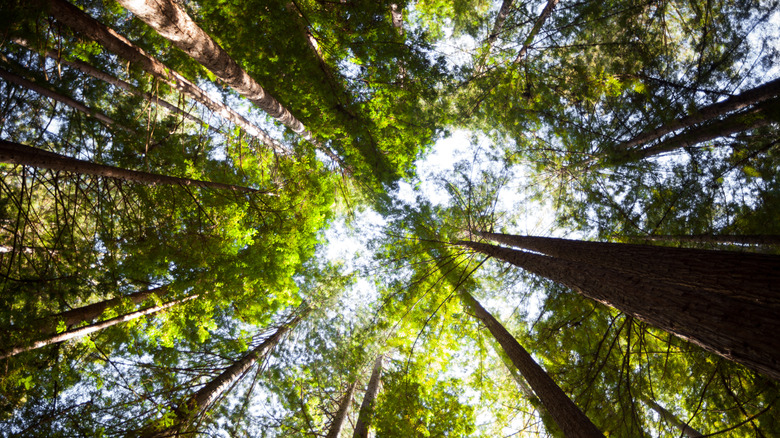
While you're cruising along the coastal highway of Northern California, the beach town of Mendocino will have you thinking you're in New England. The difference is that while New England is dotted with white pines, Mendocino is home to towering ancient redwoods, which deserve a getaway of their own, so instead of limiting yourself to the oceanfront, drive 15 minutes inland to Mendocino Woodlands State Park. Not to confuse it with Mendocino National Forest (located north of San Francisco), Mendocino Woodlands is a lush state park where you'll encounter one of the most majestic sights in the Golden State: The mighty coast redwood. Although this isn't the only place to admire nature's skyscrapers, this experience is extra special because it is off the beaten path.
Covering 720 acres of redwoods, big-leaf maples, and Douglas firs, Mendocino Woodlands was inhabited by the Northern Pomo people before Spanish and Russian settlers came to the area. As with many other lands, this forest suffered at the hands of the logging industry, and the old-growth redwood groves were completely destroyed, some reaching up to 370 feet high. Much of the trees now are second- and third-growth redwoods. Exploring the state park, you'll come across alder trees hidden in the fog, calypso orchids and wild roses blooming in the forest, and sprouting ferns guiding you to the redwoods.
Unlike other state parks that have day visitors, Mendocino Woodlands State Park operates as a group retreat for campers, so gather your crew and organize a camping trip to the state park. The drive from the coastal, artsy town of Fort Bragg takes only 20 minutes. Those coming from out of state should look into flights landing at Charles M. Schulz Sonoma County Airport in Santa Rosa, which is just over two hours away.
Camping and day-use recreation at Mendocino Woodlands State Park
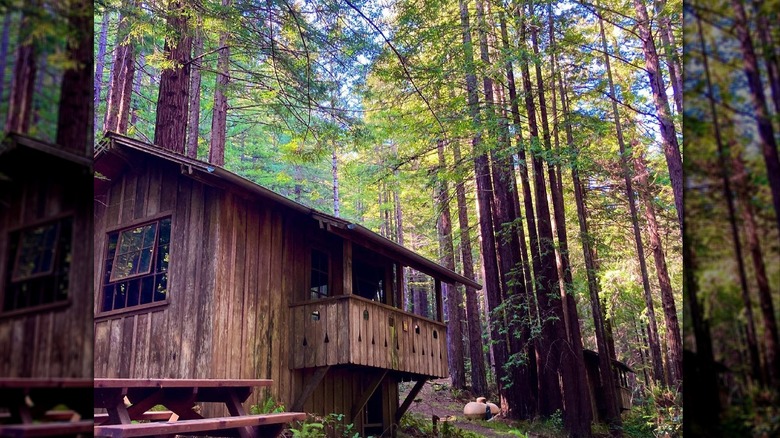
Three different group sites make up the campground at Mendocino Woodlands State Park, comprised of cabins, dining areas, restroom facilities, and fire rings. Camp One is the largest of the three, accommodating up to 200 campers. This zone comprises 46 cabins across three areas, each furnished with four beds. Camp Two can host up to 130 guests, boasting 24 cabins with four beds, along with eight cabins with two beds, and two tent-like cabins. You can stay at the Gate House as well, which is equipped with electricity, a fireplace, and five beds. Also located here is the Hill House, which comes with electricity, six beds, and a bathroom.
The smallest campground is Camp Three, offering a more rustic experience for groups of up to 64 campers. There are 16 tent-style cabins divided between two areas, and both come with cold-water toilet facilities. Venture outside the campgrounds, and you'll come across remnants of the logging industry.
Mendocino Woodlands makes for a great escape if you're planning a getaway with friends, hosting a workshop, or organizing a school trip. For starters, school groups can schedule day trips to learn about the redwoods, tide pools, wildlife, and more, along with canoeing expeditions on the Big River. Students can complete the Challenge Course, too, which consists of critical thinking tasks. The Mendocino Outdoor Science School (MOSS) is another program designed for students to engage in activities revolving around redwoods, tide pools, and other habitats. As for non-students, bring your kayak or canoe to paddle along the Big River Estuary. Those who simply wish for a quiet afternoon of fishing, set your rod along the river to reel in salmon and steelhead.
Enjoy hiking the trails of Mendocino Woodlands
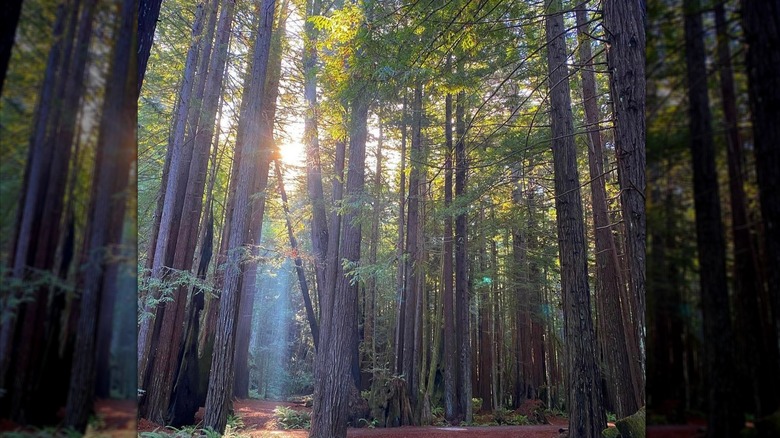
There are 25 miles of paths worth discovering in Mendocino Woodlands State Park. One of the most popular hikes here is the Big Tree Trail, which takes you to the only old-growth redwood that stands tall in the state park. The single-track path takes you through Douglas fir forests and fern-covered areas before arriving at the tree. While this old-growth redwood is a survivor of the logging industry, you'll notice that Mother Nature has also tried to take it down with lightning.
The Old Jeep Trail takes you to the Big Tree, too, albeit on a steeper route than the former, so it won't hurt to bring hiking poles. This trail is relatively uncrowded, with more fern carpets creating a vibrant pathway. Those who wish to see the old logging road can follow the Ridge Trail, which is shared by mountain bikers. Meanwhile, the Marsh Creek Trail is an eye-opening hike that shows the negative impact of logging. Instead of seeing sky-high redwoods, only their stumps remain here.
Avid hikers can combine several trails for a longer journey. The 5.5-mile Steam Donkey Ridge Trail, Big Tree Trail, and Marsh Creek Loop is a great way to view much of the park's second-growth redwoods. The Marsh Creek Trail and Cook House Loop, on the other hand, is a 6.9-mile hike with stream crossings, redwood-lined paths, and even a swimming hole. While you're meandering through the forest, use your binoculars to spot birds like Swainson's thrush, hermit thrushes, and Wilson's warblers. Lucky ones might even catch sight of a Cooper's hawk, Northern spotted owl, or goshawk. If you haven't had enough of California's unique ecosystems, check out the nearby pygmy forest and beach at Van Damme State Park, just 15 minutes away.