
5 Over-The-Top Spring Wildflower Displays In Virginia, According To Research
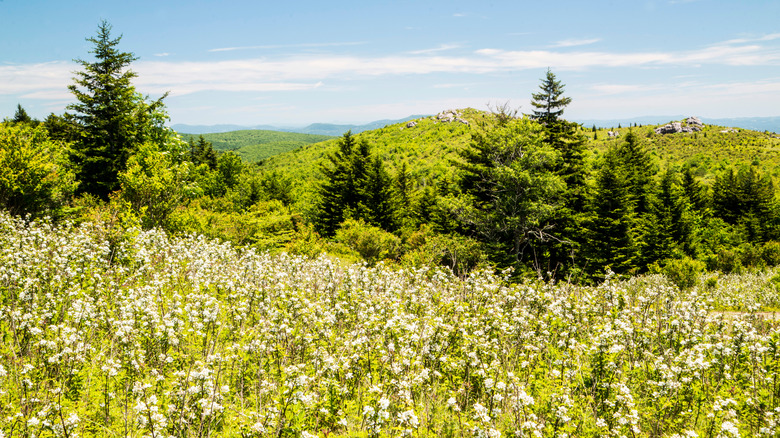
The Commonwealth of Virginia has a potent mix of the old and the new in its many tourist destinations. Anyone familiar with their American history will know about Virginia's central role in the history of the United States, from its Revolutionary War sites and living museums like Colonial Williamsburg to its many preserved Civil War battlefields. On the modern side of things, Virginia's DC suburbs contain underrated areas, like the affordable, vibrant, and happy city of Arlington. Lost in its historic and modern attractions, though, are Virginia's many splendid natural features. With superb sections of the Blue Ridge Mountains with sprawling stretches of Appalachia, Virginia has something for all seasons, from gorgeous fall foliage to fun winter ski resorts. And, when spring and summer roll around, many of Virginia's loveliest parks erupt in some of the East Coast's most dream-like displays of wildflowers.
Enterprising naturalists can find beautiful wildflowers sprouting up throughout Virginia, in both greenways of major cities and remote rural areas. However, a few notable parks have achieved a degree of state-wide fame for their remarkable annual wildflower shows come the warmer months. These parks also boast exceptional hiking trails and sightseeing areas that provide exclusive tours of the state's richest wildflower blooms, often juxtaposed against Virginia's serene mountains or vast woodland areas. While most of Virginia's public lands have worthwhile spring wildflower shows each year, these five locations are particularly notable for their magnificent wildflower scenes, diversity of native flower species, and top-tier wildflower viewing hikes.
Roaring Run Wildflower Trail, George Washington and Jefferson National Forests
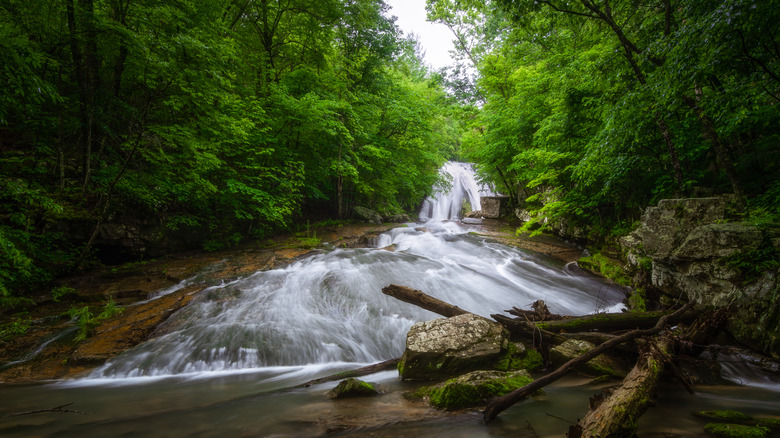
The George Washington and Jefferson National Forests are two federally-managed land preserves that protect stunning areas within Virginia's Blue Ridge Mountains. While they don't get the same publicity as famed Blue Ridge national park sites like Shenandoah, these dual national forests feature many of Virginia's lush forests and streams intermingling with the rolling splendor of Virginia's Appalachian Mountains. When spring hits, wildflower lovers can likely find ravishing floral scenes in these two national forests' joint 1.8 million acres. The most acclaimed wildflower viewing spot, however, is the Roaring Run Day Use Area and its Roaring Run Wildflower Trail.
Even without wildflowers, the Roaring Run Trail ranks high among Virginia's top bucket list hikes. Located in Virginia's Botetourt County about 41 miles north of Roanoke, Roaring Run Falls may be the most easily-accessible of the many waterfalls in Virginia's Blue Ridge Mountains, sitting along a family-friendly 1.6-mile loop trail that begins and ends at a picnic area. In the spring, the forests around Roaring Run Falls come to life with over-the-top displays of wild violets, pink lady-slippers, showy orchis, gaywings, devil's bit, and other multicolored flowers. By some accounts, the Roaring Run Area contains over 70 species of plants when at full bloom!
The Roaring Run Wildflower Trail is particularly photo-worthy for its perfect juxtaposition of colorful wildflowers and the pristine mountain that makes up Roaring Run. The Roaring Run Trail conveniently features several footbridges that take hikers across the stream and offer panoramic shots of the trail's many wildflowers growing along the banks. And, of course, you'll get plenty of amazing shots of Roaring Run Falls itself!
Hungry Mother State Park
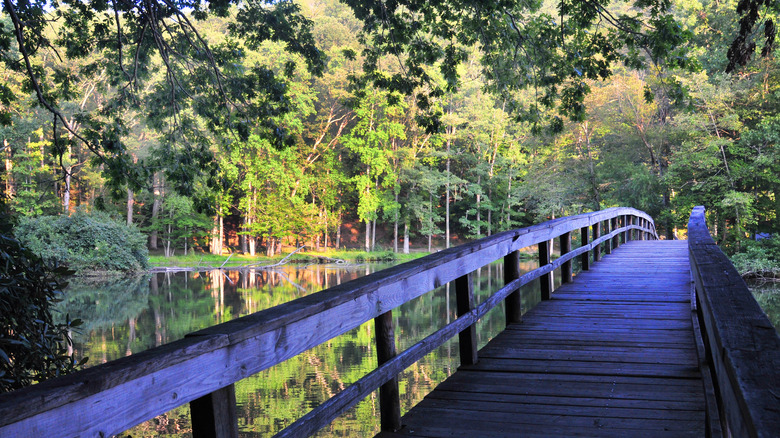
"Hungry Mother" may seem like a strange choice for the name of a state park. Yet, regardless of the name origin (in this case, an apocryphal local legend), Hungry Mother State Park decidedly does not hunger for spectacular natural scenery, including some of Virginia's best spring wildflower displays. Hungry Mother State Park is in Virginia's far southwestern corner, about 100 miles southwest of Roanoke and just north of the state's tri-border with Tennessee and North Carolina. The park's 2,900 acres sit at an elevation of just over 2,200 feet above sea level, perfect for forging a complex diversity of ecological niches within a deceptively small area. Once the winter snow begins to melt, Hungry Mother State Park's already-gorgeous hardwood forests and grasslands assume an incandescent gown of native wildflowers like yellow coltsfoot, white bloodroot, and purple spring beauty.
Hungry Mother State Park's year-round natural splendor centers on its 108-acre lake nestled in the midst of the Virginia mountains. Similar to Roaring Run and its wildflower-waterfall combo, Hungry Mother State Park offers exceptional wildflower viewing opportunities alongside a picturesque water feature, but also excellent water recreation. On top of that, the park's visitor-friendly infrastructure provides several top-tier hiking options for spring visitors looking to see its acclaimed wildflowers in person. The Civilian Conservation Corps (C.C.C.) Trail, for example, is a short but impactful 1.9-mile hiking route that showcases both the park's lake and its impressive woodland features, all while boasting one of Virginia's loveliest displays of native rhododendrons and other wildflowers. Hikers can also combine the C.C.C. Trail with the Vista Trail, Molly's Knob Trail, and Lake Trail for a more comprehensive 6.1-mile loop, with perfect shots of the lake, the surrounding mountains, and plenty of wildflowers.
Natural Tunnel State Park
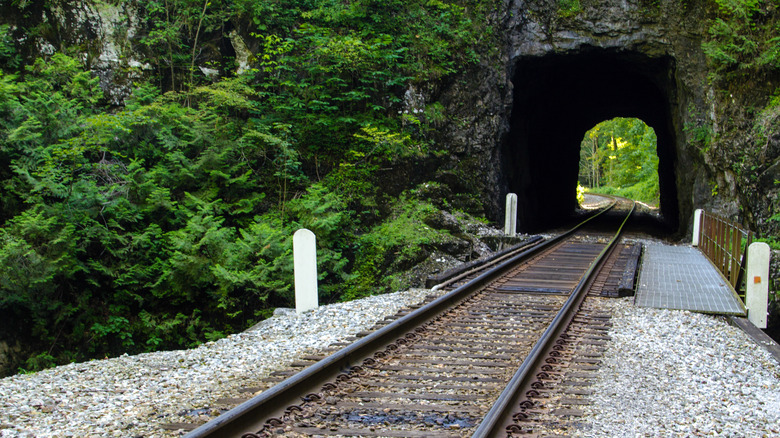
Though not nearly as closely associated with bizarre rock formations as the American Southwest, Virginia still has some unique geological features that combine the strangeness of Utah with the lush greenery of eastern forests. One of these is the central feature of Virginia's Natural Tunnel State Park. Natural Tunnel (not to be confused with Virginia's Natural Bridge State Park in the Shenandoah Valley) features a natural stone tunnel measuring 850 feet long and over 10 stories high. Though it looks man-made, the tunnel was actually created by entirely natural processes, as groundwater from passing glaciers dissolved the limestone and dolomite bedrock over a million years ago. These natural origins didn't stop railroad companies from using it as a train tunnel beginning in the 1890s. Though the tunnel is of interest to geologists and convenient for railroads, Natural Tunnel State Park also happens to be one of Virginia's best spots for spring wildflower viewing.
Alongside its deep rocky gorge and railroad tracks, Natural Tunnel State Park sports a diverse ecosystem of hardwood forests and wildflowers. The park is particularly notable for its magnificent collection of colorful spring ephemerals, including wild trillium, lilies, phlox, geranium, larkspur, and much more. Since spring ephemerals take advantage of sunlight that hits the forest floor before leaves have returned to the tree canopy above, Natural Tunnel State Park is one of Virginia's best spots for wildflower viewing in early spring, often getting significant displays of flowers like trillium and bellwort when other parks are still shaking off their winter snow. In addition to its many scenic nature trails, Natural Tunnel State Park also has working ski lifts that carry visitors down to the tunnel floor — and provide exceptional shots of the wildflower-decorated cliffs along the way.
Big Meadows, Shenandoah National Park
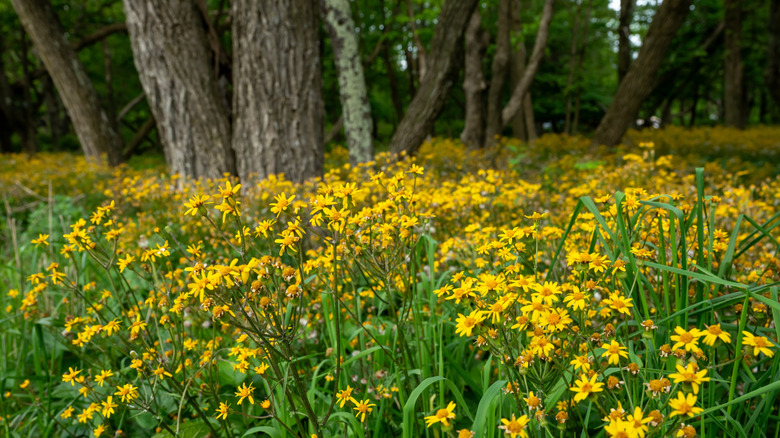
As Virginia's sole national park, the otherworldly Shenandoah National Park is essential for any list of Virginia's top natural features. This is very much the case when it comes to Virginia wildflowers, as anyone fortunate enough to visit Shenandoah in the spring can attest. With such a fertile and multifaceted forest ecosystem across Virginia's ethereal Shenandoah Valley, Shenandoah National Park puts on a monthslong wildflower show each year. As spring turns to summer and summer to fall, the park's low-lying areas change colors with an evolving cast of wildflower species, each taking advantage of subtle changes in temperature and sunlight to paint Shenandoah's forest floors in shades of blues, yellows, and purples.
Wildflowers like geraniums, trilliums, and hepatica can be found throughout the park beginning in the early spring. However, Shenandoah's lush Big Meadows area is often the best spot to see an over-the-top collection of multicolored wildflowers, all growing in a picturesque open field. Big Meadows takes advantage of its mountaintop location to break from the heavy forest cover elsewhere in the park and foster a lush meadow of wild grasses and flowers. The meadow's lack of a forest canopy provides abundant sunlight to one of the most diverse groupings of wildflowers in Virginia, with an equally-diverse population of butterflies and birds coming to take advantage of the natural floral arrangement.
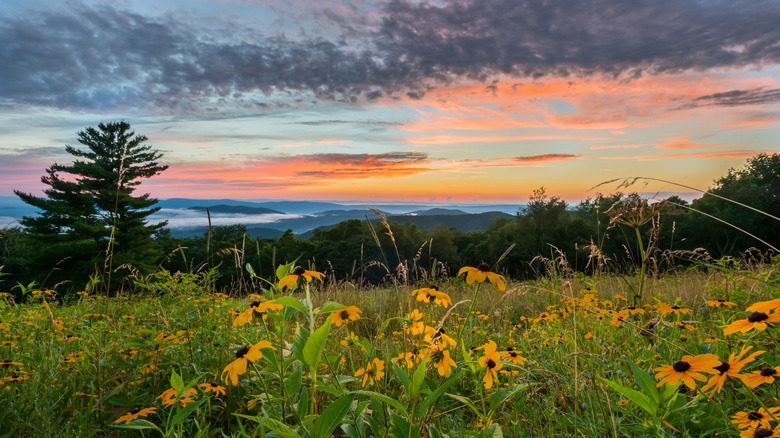
Big Meadows' open skyline also makes it one of Shenandoah's best places for wildflower viewing outside of peak spring season. In the cooler autumn months, Big Meadows still shines with beautiful displays of wild sunflowers, asters, and goldenrods. Outside of Big Meadows, trails like Shenandoah's iconic Stony Man offer breathtaking mountain views interspersed with groves of trilliums, bluebells, and other wildflowers during the spring.
Grayson Highlands State Park
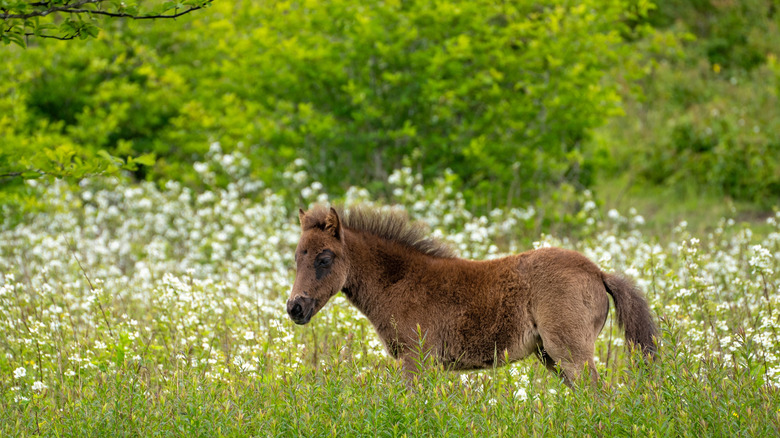
Of the many Virginia state parks, Grayson Highlands State Park may have the best claim for scenery rivaling Shenandoah National Park. Grayson Highlands lies between Mount Rogers and Whitetop Mountain, the two highest points in Virginia, and includes no shortage of extravagant Appalachian scenery. This includes picturesque views of forested mountain summits, lush meadows, and even rare bald highlands. Amazingly, Grayson Highlands' most famous feature may not be its impressive mountains at all, but rather its animal residents. Similar to Assateague Island along the Virginia-Maryland coastline, Grayson Highlands State Park is home to a thriving population of wild ponies. From mountains to meadows to ponies, Grayson Highlands is a perfect setting for enjoying Virginia's best wildflower displays in the spring.
Flower-wise, Grayson Highlands State Park is well-known for its superb groves of rhododendrons, which add an enchanting splash of pinks and purples to the park's mountain scenery. The Rhododendron Trail and Rhododendron Gap are particular favorites among hikers, with wide-open meadows offering exceptional views of rhododendrons (and other wildflowers), plus excellent opportunities for seeing the park's resident ponies. The Rhododendron Trail is also notable for its ascent towards the summit of the 5,729-foot Mount Rogers, offering unforgettable views of Virginia's highest mountain adorned in a garland of native wildflowers.
In addition to the warm pinks and purples of the rhododendrons, Grayson Highland State Park also manifests bright yellows of wild sunflowers, deep blues of gentians, and soft whites and reds of saxifrage and snakeroot, just to name a few. Spring hikers can find plenty of spaces to enjoy these alluring flowers even off the main Rhododendron Trail, with an extensive network of scenic hikes ranging from short, family-friendly jaunts to challenging, multi-mile treks up the park's mountain slopes.
Methodology
Wildflowers can be found throughout Virginia in the spring, especially in the state's many national and state parks. With so many different types of wildflower displays to choose from, and so many wonderful parks available for hiking and sightseeing, a list of the best spring wildflower destinations in Virginia will always be somewhat arbitrary. That being said, the five destinations that made our list stood out in our statewide research for their consistent wildflower blooms throughout the spring and summer, the diversity of native flower species that visitors may find there, and their exceptional arrays of other scenic attractions that make perfect complements to lovely wildflower scenery.
The five destinations on this list received specific recommendations from the Virginia tourism department, particularly for their showcase of Virginia's year-round best hiking spots. We specifically narrowed our list down to these five destinations because of their well-regarded network of hiking trails and broadly scenic natural setting. By using these particular criteria in our research, we were able to identify five parks that go beyond one or two small wildflower views and offer a much more comprehensive wildflower viewing experience. Each of the five parks on this list has excellent hiking trails that are known to blossom in a diverse number of native Virginia flower species, creating a truly "over-the-top" wildflower viewing experience for spring sightseers, rather than a single photo opportunity or static experience.