
Rare And Beautiful Wildlife To Look Out For On Your Hawaiian Vacation
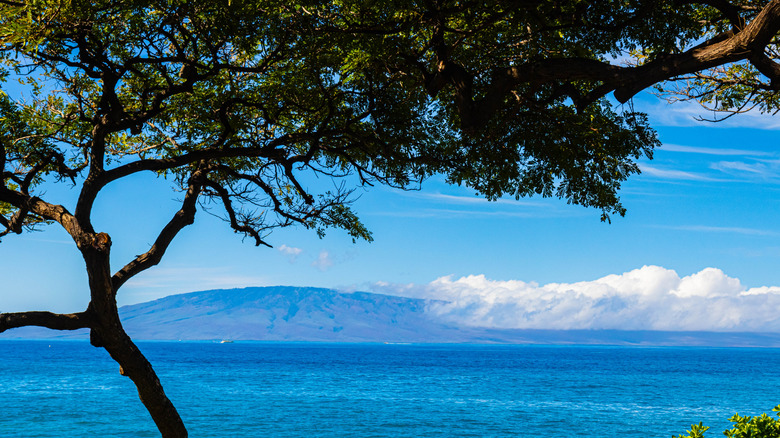
As any decent Hawaii travel guide can tell you, the island chain in the North Pacific Ocean is home to a whole slew of unique flora and fauna. With no native land mammals, aside from a famously hairy bat, the islands of Hawaii existed in a state of perfect isolation. All that changed when Polynesian explorers arrived some 1,500 years ago, bringing dogs for companionship, pigs to help with subsistence, and rats that came along for the ride in their usual unwanted fashion. The 18th-century rediscovery of the archipelago by Europeans introduced another set of domesticated animals, including goats, cattle, and sheep.
Explorers must have been impressed by what they saw. The coral reefs teemed with life, the scenic coastlines today counted among America's best offered shelter for unnamed tree-dwelling birds and ocean-bound turtles. Those taking the time to ascend through some of Maui's high-altitude hiking trails were treated to brightly colored birds unseen anywhere else. Across the aquamarine waters, dolphins leaped into the air in acrobatic displays that seemed to defy gravity, while schools of fish provided kaleidoscopic displays of unfamiliar coloring.
Sadly, today, many of the region's endemic species have vanished forever, and some that remain are on the verge of extinction. What follows is a list of wildlife you can still encounter on your trip to Hawaii. Most are endemic to the islands, some are subspecies of familiar fauna, but all are exceedingly rare and undeniably beautiful.
Hawaiian hawk
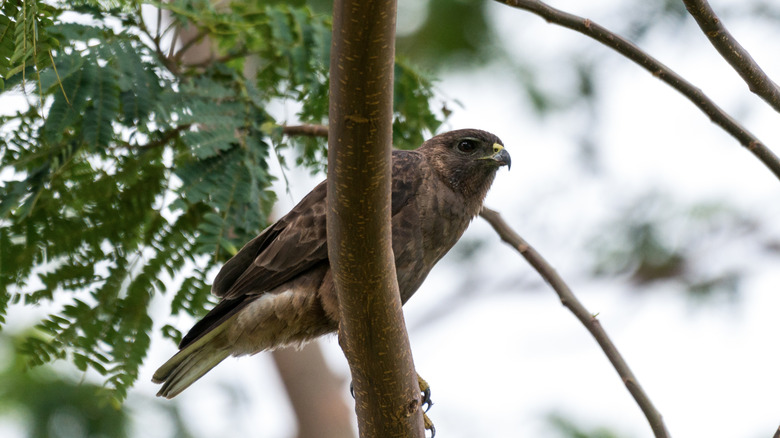
Some 137 islands spread out over close to 11,000 square miles of Pacific real estate form what is collectively known as Hawaii. Close to 1.5 million people call it home, with the vast majority spread across the eight main landmasses. The island of Hawaii itself, the colloquially titled Big Island, is by far the largest of this set, and it is there that the Hawaiian hawk makes its home.
The Big Island is a place of adventure. Treks through 'Akaka Falls State Park bring visitors face to face with lavish tropical forests dotted with magnificent waterfalls, and beaches that offer some of the world's best sunbathing and surf opportunities. There are zipline tours, erupting volcanoes to observe, and, naturally, the entire island acts as an opportunity to experience ecotourism on a scale rarely seen.
The 'io prefers to nest in the native 'ōhi'a trees that are found across six of the largest Hawaiian islands. Around 1.5 feet in length, the bird's plumage changes with the seasons, so it can be seen in both light and dark forms. Still, it is easily identified regardless; it is one of only three birds of prey in Hawaii, and the only hawk.
Hawaiian insular false killer whale
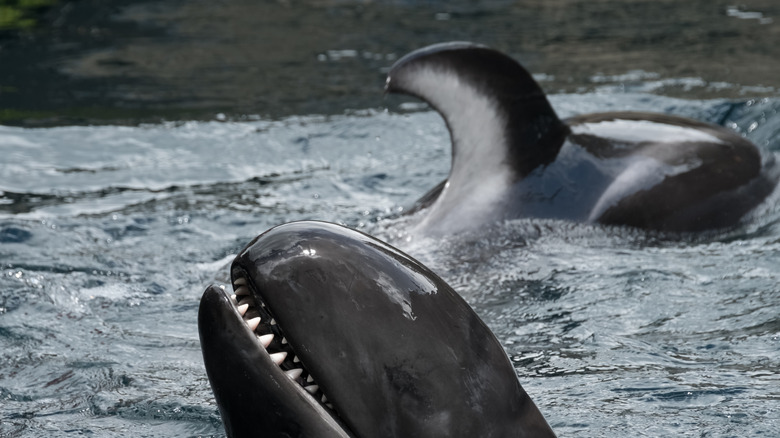
There are two ways to spot a false killer whale in Hawaii. The first is to simply observe them from the comfort of the beach. Hawaii makes the cut when it comes to lists of the top five scenic coastlines in America, so if this is your approach, you'll be doing it in style. A shallow stretch of water between the islands of Maui and Molokaʻi provides the best opportunity for shore-side viewing. The waters on the south side of Molokaʻi or beside well-trodden spots on Maui, such as Honokōwai Beach Park, are treated to visitations of humpbacks and orcas between mid-December and early May.
Those wishing to get a more up-close and personal look can book any one of dozens of whale-watching excursions across the island chain. Here, however, you can also spot any number of fascinating aquatic mammals that tend to shy away from shallower waters. Sperm whales proliferate, as do their deep-water-loving pilot whale cousins and the extremely hard-to-spot Cuvier's beaked whales. And, hidden among the throng, there is always a chance to encounter a Hawaiian insular false killer whale. Spoiler alert: They aren't actually any of those things.
While these dark gray mammals rarely stray too far from the islands, they definitely prefer deeper waters. They can live for up to 60 years, but the name is somewhat misleading: The shape of their skulls is like that of an orca's, but they are, in fact, dolphins.
Scarlet honeycreeper
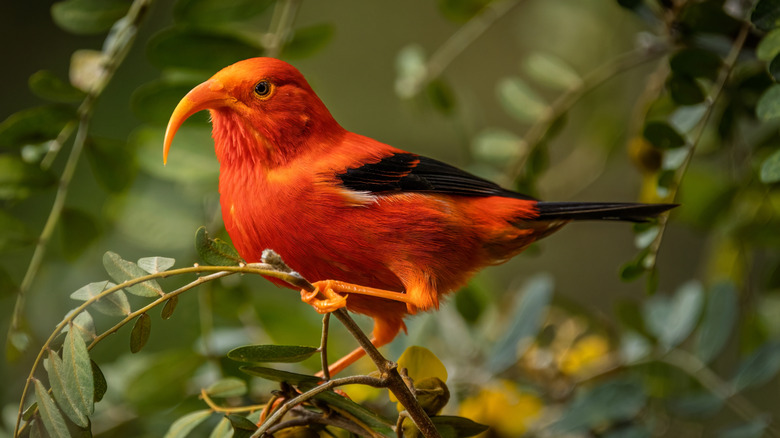
With eight national parks to discover, and well over 100 endemic species of birds to spot as you hop from island to island, bird enthusiasts have long been well served by the islands of Hawaii. There are underrated hiking gems to explore, unique kinds of striped geese to uncover, a species of coot that lurks among the wetland reeds, and, most charmingly, over 50 different types of honeyeaters scattered across the entire region. Few, however, are as elusive as the scarlet variety. The scarlet honeycreeper, or "'i'iwi," as it is known, is, as the name suggests, a vivid red-breasted creature with black wings and a bright yellow beak. Once present across the island chain, today, this endangered species is restricted to Kauaʻi, Maui, and the Big Island itself. Even in such locations, they spend most of their time at higher altitudes, so uphill treks offer the best opportunities for spotting one.
Fortunately, there is no shortage of such hikes in Hawaii. There is a challenging trek to the summit of Mauna Kea, though less engaging day hikes, such as a walk across the cliffs of the Pololū Valley Lookout Trail, are also an option. On Kauaʻi, the Kalalau Trail is something of an 11-mile endurance test — although it can be parsed into a series of smaller segments — while Haleakalā National Park, located on Maui's eastern half, is as Instagram-worthy a spot for sighting a scarlet honeycreeper as you could hope to find.
Hawaiian stilt
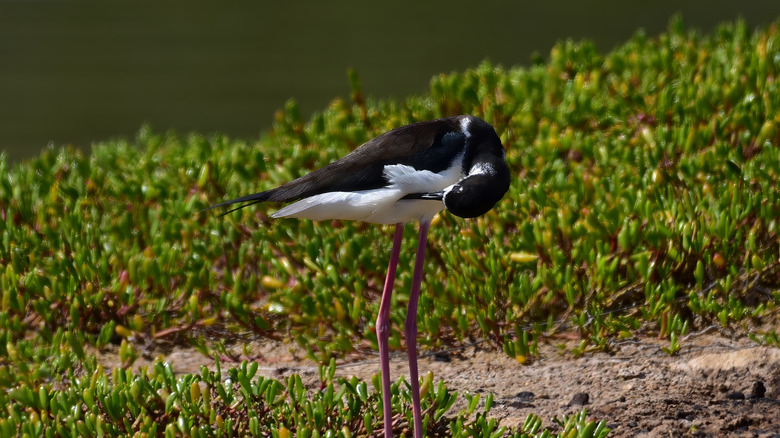
Hawaii is a place blessed with an abundance of wetlands, and Oahu is something of a paradise. The third-largest island by size, and home to the capital city of Honolulu, it has long been known for its breathtaking views and flawless beaches, but it is also a haven for nature lovers — among that nature is where the Hawaiian stilt can be found.
In truth, this black-and-white wader can be found across all the main islands aside from Kahoʻolawe, but in the wetlands of Oahu, its presence is more or less assured. Here, the 'ae'o, to use its local name, whiles away its hours foraging for crabs and whatever other invertebrates are unfortunate enough to get in its way. It can grow to around one and a half feet long and is easily identified thanks to its black wings, white underbelly, and gray beak. Their calls are high-pitched and distinctive, and they prefer to feed in pairs, but actual sightings of this endangered species are becoming increasingly rare.
Hawaiian monk seal
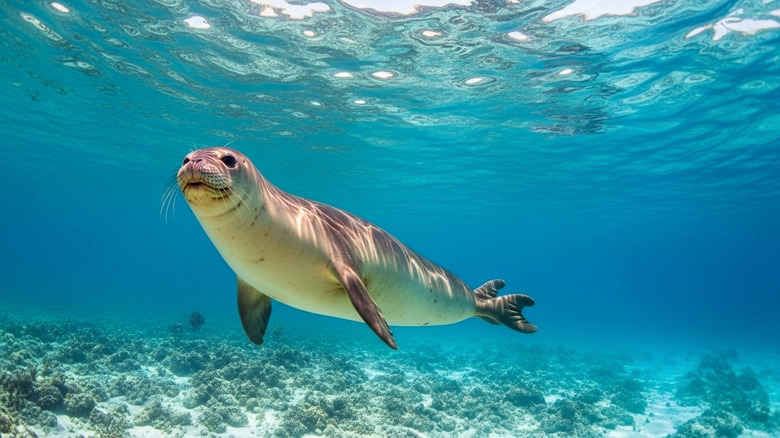
The monk seal is one of 34 recognized species of seal, and like all such ocean-faring mammals, they exist in the collective consciousness as a mass of contradictions. Seals live in the ocean, aside from a freshwater variety found in Russia's Lake Baikal. They haul themselves up onto land or ice floes to sleep, apart from those times when they decide to sleep underwater while holding their breath. Oh, and they prefer to live in the cool regions of the planet, such as Iceland, the Baltic, or the choppy waters of the Southern Ocean. Unless, of course, they don't.
The Hawaiian monk seal is a critically endangered species of pinniped that prefers to spend its days in the warm tropical waters surrounding the Hawaiian archipelago. Estimates suggest that there are fewer than 2,000 of them left in the wild, and to see one, you will have to visit the archipelago itself or else venture northwest toward the Papahānaumokuākea protected portion of the North Pacific.
Your best chance of spotting one is on or off the coast of O'ahu or Kaua'i, since Ni'ihau Island is an invitation-only destination. Private tours to visit can be arranged, but there are strict rules in place when it comes to interacting with the seals. Approaching them is forbidden, and even if it were not, adults can weigh as much as 500 pounds, and although they only become aggressive if they feel threatened, they pose a significant danger nonetheless.
Green sea turtle
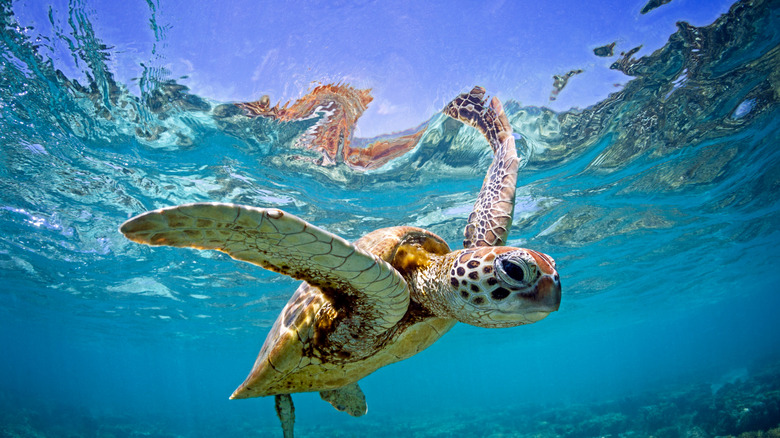
If ever anyone needed an excuse to try snorkeling or scuba diving, the chance to spot a green sea turtle in the warm waters of the Hawaiian archipelago surely provides one. Versions of this oversized reptile can be spotted in all four corners of the globe, but the Hawaiian variety is only found in the land that gave it its name.
More of an autumnal brown than green, their carapace is covered in large, radiating segments, with smaller plates found along the center. Their head and flippers alternate between dark and light, and they lack the distinctive beaks of their hawksbill cousins, which are also present in the region. A protected species, fines for interfering with a green sea turtle are no laughing matter, but watching one swim gently by is bucket-list-worthy stuff.
The best place to sight these oversized delights is on and around the beaches of the Big Island or within the swirling waters of O'ahu. By the time they make their way from the ocean to lay their first clutch of eggs, each turtle is already at least 20 years old, and many of them will live to the ripe old age of 70. Visitors who arrive in early summer may get to witness this annual pilgrimage, although it's a nocturnal affair and the beaches are generally closed to minimize the chance of even accidental interference with the process.
Small Indian mongoose
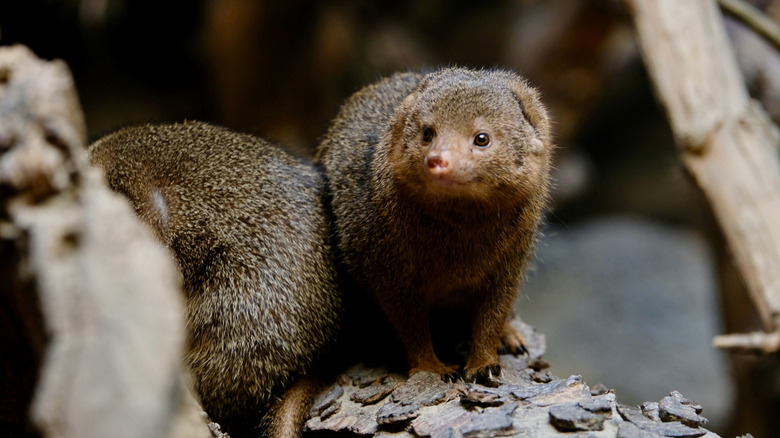
History is littered with good intentions that turned out badly. The Australians introduced cane toads to control beetle populations; American gray squirrels decimated populations of their red cousins in England, and, in Hawaii, the small Indian mongoose has been wreaking havoc for well over a century.
The Hawaiian sugar fields of the late 19th century had, by all accounts, something of a rat problem, and the decision in 1883 to shuttle some mongooses from India carried with it some ironclad logic. Alas, while the mongoose did indeed reduce the rodent population, they also proved to be less than fussy eaters. They went after native fauna with equal gusto.
Today, you can spot them on most of the main islands except for Kaua'i and Lāna'i. Visitors to either of those places — the one famed for its river kayaking adventures and the other for its ziplines and golf courses —or anywhere on Maui, should report sightings to the authorities. It is, of course, permitted to appreciate their undeniable cuteness while doing so. The damage they cause runs into the tens of millions of dollars each year. Ground-nesting birds are particularly vulnerable to their attacks, but they also consume native insects, including several vital pollinators.
Axis deer
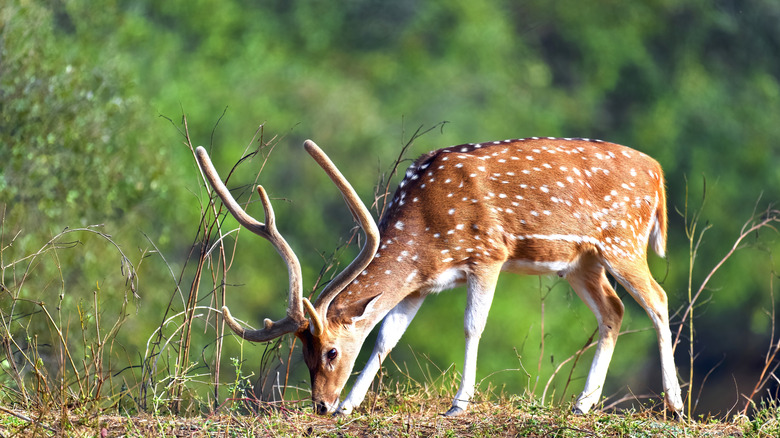
The sight of an axis deer roaming around a set of islands that are famously free of land-based mammals tells tales about their origin. The species hails from the Indian subcontinent, including Nepal, and the island of Sri Lanka. They arrived in 1868 as a gift to the reigning monarch, Kamehameha V, were released into the wilds of Moloka'i, and eventually spread to several other islands. It was, to put it mildly, a bit of a disaster. They cause damage to agriculture, the eradication of native flora, and contribute to soil erosion.
Despite their beauty and grace, they are an invasive species, and efforts to curtail their spread have continued well into the 21st century. With so many protected species present, game hunting is necessarily restricted in Hawaii, but exceptions are made. On both Maui and Molokaʻi, hunting deer is permitted during certain times of the year, although permits are required. On the island of Lānaʻi, lotteries are sometimes held to restrict the number of people who can hunt in any given season.
They look striking in the wild. Pale brown with white spots, they pose little danger to humans aside from their deer-like propensity to cause road collisions. Still, the damage they have done to the environment is not insignificant. Attempts to cull and perhaps even eradicate the species from the islands are understandable, but they remain a majestic sight regardless.
Hawaiian short eared owl
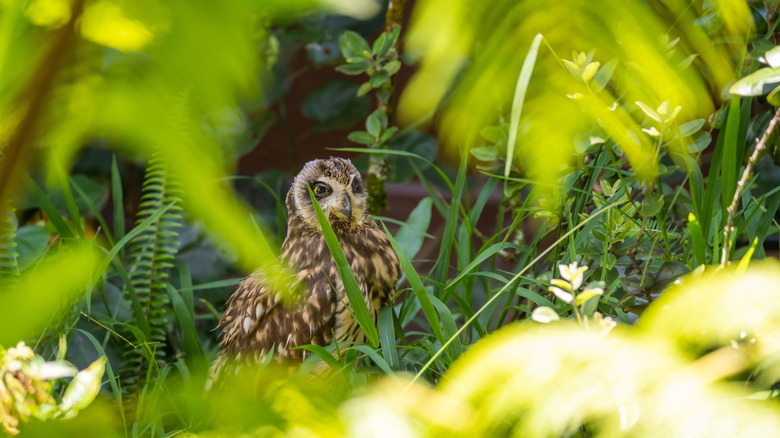
The Hawaiian short-eared owl, or pueo, is, along with the Hawaiian hawk, the only endemic bird of prey you will find on the islands. The Hawaiian variety, unlike many of its short-eared cousins, prefers to hunt by day, increasing the chance of spotting one while visiting the area by some margin. Present across all the main islands, it is currently endangered on O'ahu; the best time to see one is shortly before dawn or dusk as they swoop across open grassland in search of a meal.
As guides to the best views in Kaua'i might suggest, a visit to the archipelago's fourth-largest island in search of an owl sighting comes with some added benefits. An ATV trek across some of the low-lying areas gets you up close and personal with nature, while the terraced trails at Limahuli Garden offer a less high-octane opportunity to take in the island's magnificent flora and fauna. Meanwhile, Kōke'e State Park is blessed with an abundance of lookout points and some truly stunning trails to explore. Admiring these birds is a genuine delight, but you should always keep your distance, especially if they are nesting.
Spinner dolphin
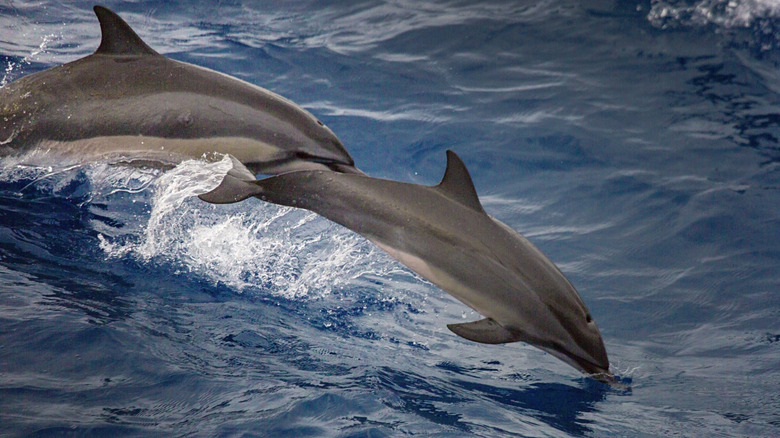
The only thing better than spotting a dolphin in the wild surely must be watching one breach and spend a few luxurious seconds flying above the waves in seeming satisfaction. Why they do this is not fully understood, but it is thought to be an attempt to communicate with other members of a pod in as acoustic a way as possible as they crash back down. Still, although most dolphins exhibit this behavior, few do so with quite as much gusto as the spinner dolphin. As is so often the case in the animal kingdom, the name gives them away; as they leap from the water, they perform acrobatic leaps and can turn over tail-to-beak as many as seven times.
Such visual spectacles are, of course, a major crowd pleaser, and tours that take you out in search of them can be found across the region. Still, they are found in particularly high concentration around the island of Kaua'i. The waters around the island also provide a chance to spot humpback whales, season permitting, with chartered excursions costing around $115 per person, with concessions for children available.
Hawaiian hoary bat
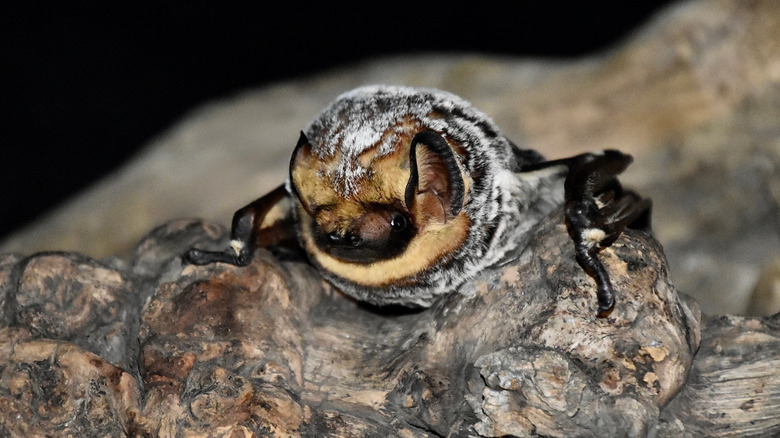
The island's populations of feral pigs, goats, rodents, and axis deer are all well and good, but the only actual land mammal endemic to Hawaii is the delightfully named hoary bat. The word hoary comes from an old term that simply means covered in hair, and the native Hawaiian bat certainly lives up to its moniker. Their fur is luxuriously thick and brown in color, but with distinctive white tips that give it a mottled and distinctive appearance.
Like most bats, they are nocturnal, and they can often be spotted flying above the tree line in great numbers as they hunt for food. Night safaris are an excellent way to spot one of these shy creatures, and there are a range of options to choose from. There are stargazing tours in O'ahu, nocturnal treks to the summit of Mauna Kea on the Big Island, and, over on Lānaʻi, a trip to the island's observatory takes you close to several hoary bat breeding grounds.
Hawaiian crow
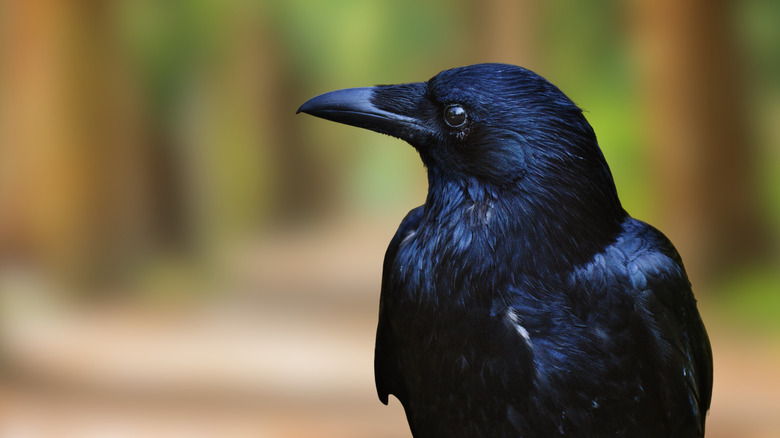
The Hawaiian crow is part of a family of birds known collectively as corvids, which are counted among the most intelligent creatures on the planet. Across the world, crows have been known to make use of traffic lights, dropping nuts in hard shells on the road and waiting for the lights to turn red again before retrieving them. They can differentiate between different geometric shapes, make use of simple tools, recognize individual humans, and even hold grudges against those who slight them.
The Hawaiian crow is decidedly non-glossy and is a little fluffier than many of its corvid brethren. Once rendered extinct on the islands, in recent years they have been reintroduced with great success. Today, several pairs have been released into the forests of Maui and seem to be thriving. These woodlands are crisscrossed with hiking trails, providing ample opportunities to spot this charismatic bird in its natural habitat. There are also bamboo forests to explore, hidden waterfalls to discover, and some truly world-class beaches to visit along the way, so even those who fail to spot the reintroduced native are guaranteed a good time regardless.
Methodology
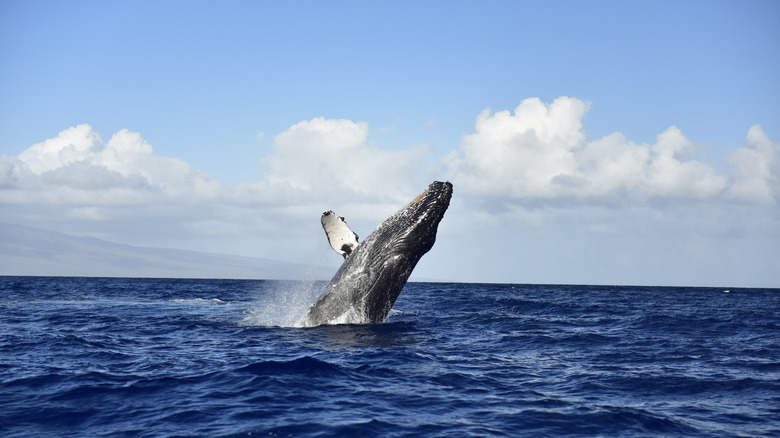
The idea of something being both rare and beautiful is somewhat subjective. Spinner dolphin populations are far from being endangered, but the chance of seeing them perform an acrobatic display is something of a long shot. Many people find bats odd, but equally, some find them utterly adorable. For this list, we tried to find a mix of land and sea animals that had the potential to put a spring in the step of anyone lucky enough to witness them.
Yes, some are less welcome than others due to their invasive nature, but such a status was thrust upon the animals. Others are rare in a very real sense of the word, and spotting them is a genuine once-in-a-lifetime thing. Population sizes and rules and regulations regarding their treatment were taken from official government sources, and any hard data found within the article was double-checked against various databases, including the NOAA Fisheries site.