
If You Know These 5 Under-The-Radar Yellowstone Trails, You're A True Backcountry Legend
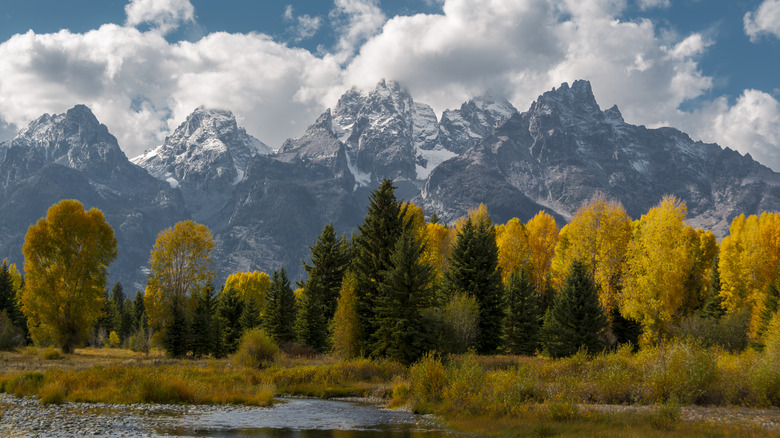
Some National Parks — like Yosemite in California, Grand Canyon in Arizona, Zion in Utah, and Great Smoky Mountains on the East Coast — are famous for their trails that appeal to seasoned hikers. Yellowstone National Park, however, is better known for its scenic drives, busy boardwalks, and roadside wildlife encounters. In fact, it's one of the best National Parks for non-hikers. For savvy outdoorspeople, however, this just means that it's full of under-explored gems. We've scoured the internet's own "backcountry" — sifting through numerous forum posts and trail reviews — to unearth the most rewarding.
When it comes to exploring Yellowstone's backcountry trails, timing is everything. In July, the rivers may be too swollen to ford, and the mosquitoes may be fierce, but by late August, conditions are ideal. Fall colors make September and October a beautiful time to explore, too. Don't rule out a winter snowshoeing excursion, either.
For any overnight stays, you'll need to obtain a backcountry permit. These can be issued online months in advance, but there is often walk-up availability, too, if your plans are flexible. Part of the reason Yellowstone's backcountry is so pristine is that the park strictly limits how many permits it issues. The downside is they're hard to get, but once you score one, you're well on your way to backcountry legend status. Hikers do need to take bear awareness seriously in the Yellowstone backcountry, which means traveling in a group, as well as carrying bear spray and a bear canister.
Slough Creek Trail
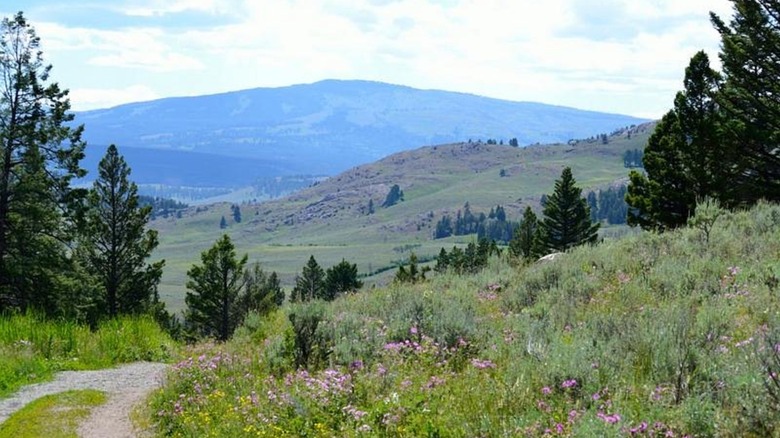
Don't let the crowds of tourists with cameras near the trailhead discourage you. Once you hit the Slough Creek Trail, you'll encounter very few humans. Even a quick 2.5-mile hike along this spectacular backcountry trail can be packed with memorable highlights, as one AllTrails user found, writing, "Two horse drawn wagons came down the trail. Bison along the creek. Heading back we encountered a large black bear and her cubs coming up. Scary then, unforgettable now."
Yes, you can still encounter horse-drawn wagons from time to time on the historic Slough Creek Trail, which pioneers once used to move west. If you do encounter horses, the National Park Service advises stepping off trail on the downhill side and waiting for them to pass, holding still in order not to spook them. This trail can be easy or hard, depending on how far you choose to go. Turn around at the first meadow for an easy stroll, turn around at the second meadow for a more vigorous 8.6-mile day hike, or tackle all 19.8 miles for a multi-day backcountry adventure. If you're lucky enough to score a reservation at the popular Slough Creek Campground near the trailhead, you can sit around the campfire after your hike, stargazing and listening for howling wolves.
Slough Creek Trail is accessible year-round. The fact that it's wide enough for wagons also makes Slough Creek an excellent snowshoe trail for sampling some backcountry solitude in winter. In August, you may get to see rutting bison fighting each other for the right to mate. Just be sure to keep a good distance from any wildlife you encounter.
Hellroaring Trail
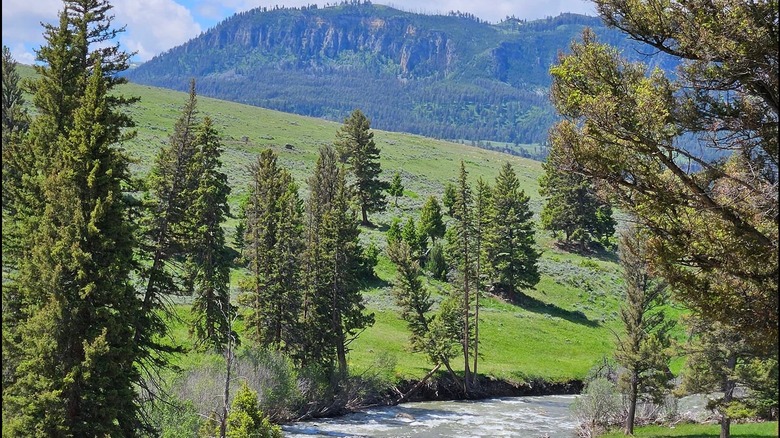
The steep, sunny Hellroaring Trail is a less-traveled Yellowstone backcountry route, dotted with inviting campsites. Follow all or part of this 14.3-mile trail for a day hike or longer backpacking excursion. You'll pass plentiful water sources where you may spot wildlife, as the animals are just as thirsty as you are. This trail makes for another excellent first backpacking trip for beginners, and backcountry veterans can create a six-day, 44-mile loop hike to Black Canyon of the Yellowstone by combining the Hellroaring Trail with the Buffalo Plateau Trail, as recommended by Backpacker Magazine.
The trail begins with a steep descent via many switchbacks to a suspension bridge over the Yellowstone River. Most casual hikers turn back here, but if you continue on, you'll be one of the few who gets to trek across an enchanting meadow covered in fragrant sagebrush, which will lead you to the Yellowstone River's confluence with Hellroaring Creek. Here you'll find inviting spots to drop a fishing line. If it's a hot day, you can find a shallow pool along Hellroaring Creek's rocky shore to dip your bare toes into the chilly water. By late summer, you can even ford the creek to continue on to campsites on the other side (always check conditions with park rangers before you set out on a hike with stream crossings). Just don't try to wade out into the fast-flowing Yellowstone River, as the Park Service forbids swimming in it due to safety concerns. Not all of Yellowstone's wildlife is big and scary, so keep your eyeballs peeled on this trail for cute, furry pikas, one of many adorable critters in the park.
Beaver Ponds Loop Trail
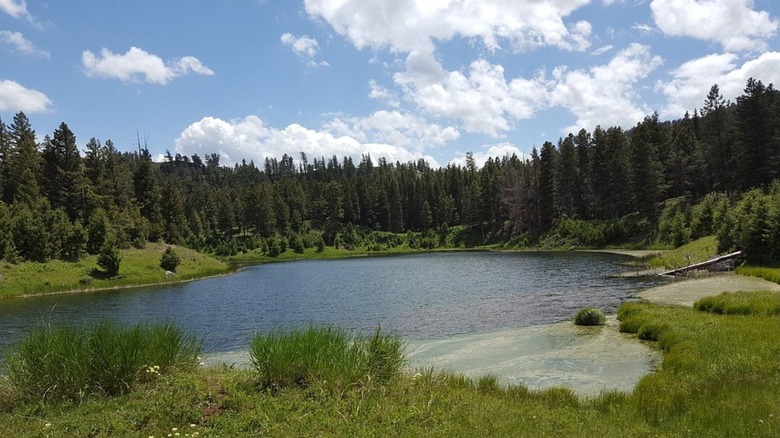
Not all of Yellowstone's backcountry hidden gems are hard to reach, and the Beaver Ponds Loop Trail is an easy 5.7-mile route that's hiding in plain sight. It has a trailhead right at Mammoth Hot Springs, one of Yellowstone's popular geothermal areas. You can join the throngs strolling the boardwalks around Mammoth's jaw-dropping travertine terraces, but resist any temptation to stray from their safe confines. Then, when you're ready for some solitude, you can hit the Beaver Pond Loop Trail and feel the serene solitude of nature.
You can choose to tackle this trail either clockwise — to get the steep climb out of the way, followed by a long, gentle descent — or by climbing slowly counterclockwise, with a steep downhill at the end. Either way, the hike culminates at placid, scenic ponds formed by beaver dams. You aren't guaranteed to see wildlife, of course, but many hikers do. "Antelope and black bear sightings, and an elk bugling. Highly recommended," one AllTrails user writes.
Heart Lake Trail
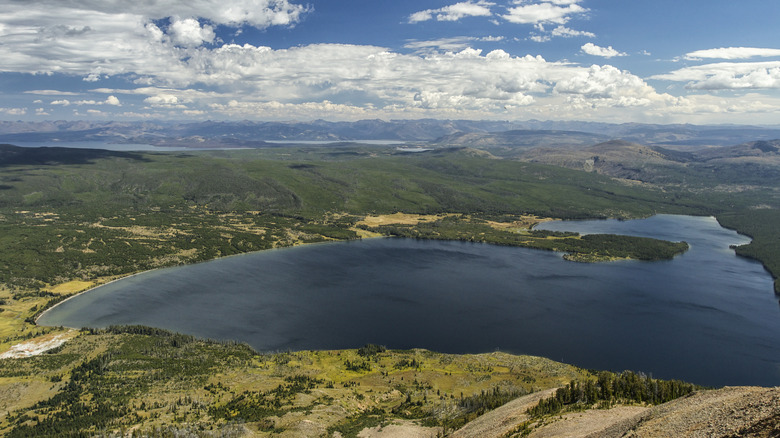
Yellowstone's second-largest backcountry lake is a wonderful backpacking destination, with an extra perk if you're inexperienced in bear country: The campsites on this route all have high poles for hanging your food out of the reach of curious ursine visitors, so you won't need to carry a bear canister. Heart Lake's camping is just a little over 7 miles from the trailhead, so Heart Lake Trail is an excellent choice for a first Yellowstone backpacking experience, whatever your experience level. "Probably the quickest and one of the easiest ways to get deep into the Yellowstone wilderness!" says one hiker on Tripadvisor.
This trail traverses wide-open meadows full of wildflowers and rolling hills covered in pine forest. There are a few creek crossings but no grueling climbs. If you're craving more of a challenge, you can add on a trip to the summit of Mount Sheridan. Leave your heavy pack at your lakeshore campsite to tackle the 7-mile round trip to the summit as a day hike, and you'll get a stunning view of Heart Lake. You'll feel on top of the world and definitely earn your backcountry legend status.
Even though this hike may appear more approachable than others in the park, don't try it solo. The National Park Service recommends traveling in groups of three or more in Yellowstone's backcountry. While solo hiking can be spectacular, save the experience for parks without an active grizzly bear population.
Bechler River Trail
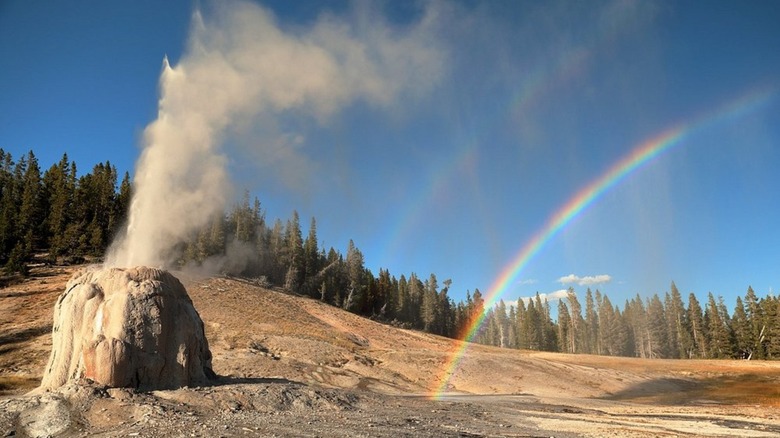
This remote trail has just one review on Tripadvisor as of this writing, but it's a rave: "This remarkable portion of Yellowstone is seen only by those prepared to hike and camp for at least several days. Prepare to be amazed." The Bechler River Trail is Yellowstone at its bizarre, surreal best. You'll see trailside geysers, and this part of the park has so many waterfalls that it's sometimes called "Cascade Corner." The area also has a high concentration of wildlife, including mountain lions, moose, wolves, river otters, and bears. "The whole area is crawling with grizzlies," writes one Redditor who is a frequent visitor, nothing that they saw more signs warning about bear activity on this trail than elsewhere in Yellowstone.
The park offers a shuttle to the trailhead at the Bechler Ranger Station. Climbing less than 3,000 feet total over its 24.1 miles, the trail is relatively flat, but some hikers take as long as five or six days to savor its wonders. "If you're there in August, look for raspberries, huckleberries, and thimbleberries and bring ingredients to cook some yummy desserts," one Redditor writes. "Plan time for soaking at the hot springs and chilling at the waterfalls. Those are the highlights of any Bechler adventure."
Be sure to add a side trip to Shoshone Lake, the largest backcountry lake in Yellowstone, and Shoshone Geyser Basin, a collection of over 80 dramatic geysers. Around the mid-point of your journey, the famed Mr. Bubbles hot spring burbles up into a rock pool at the edge of the Bechler River, mixing with the cool river water to achieve a blissful soaking temperature. Enjoy.
Methodology
To track down Yellowstone's best under-the-radar backcountry trails, we scoured Reddit forums like r/Yellowstone and r/WildernessBackpacking, combed through blog posts written by experienced adventurers, and boned up on wisdom from authoritative outlets like Backpacker and Outside magazines. You won't be a backcountry legend for long if you don't take the appropriate precautions, so we also paid particular attention to the National Park Service's safety recommendations and season-specific advice when selecting trails to recommend. Lastly, we tried to include a range of distances, including beginner-friendly day hikes hiding in plain sight, as well as challenging, bucket-list backpacking excursions.