
The Most Travel-Friendly Cities In The World Where Exploring Feels Effortless
It's said that life truly begins at the edge of your comfort zone, and many people say the same about travel. And it's true, pushing yourself a little further than the average tourist can open up experiences you didn't think possible. Picking obscure cities in faraway places, or veering well off the beaten path, is a surefire way to expand your horizons.
It's not always what we want. Sometimes, we don't want to find ourselves in the middle of a chaotic train station, with dozens of pushy vendors shouting at us in a foreign language, or squished in the back of the day's only minibus for five hours. Sometimes, we just want a reliable train service, a walkable city center, and a bit of carefree exploration.
Thankfully, it's more than possible to balance out your off-the-cuff adventures with some lower-barrier-to-entry travel destinations. These cities, from all corners of the globe, are renowned for their excellent tourist infrastructure, whether that's an easy-to-navigate metro system, compact city planning, or even just a bit of forethought where tourists are concerned. It goes without saying that most of these destinations are super safe, too, allowing you a little extra peace of mind.
Copenhagen, Denmark
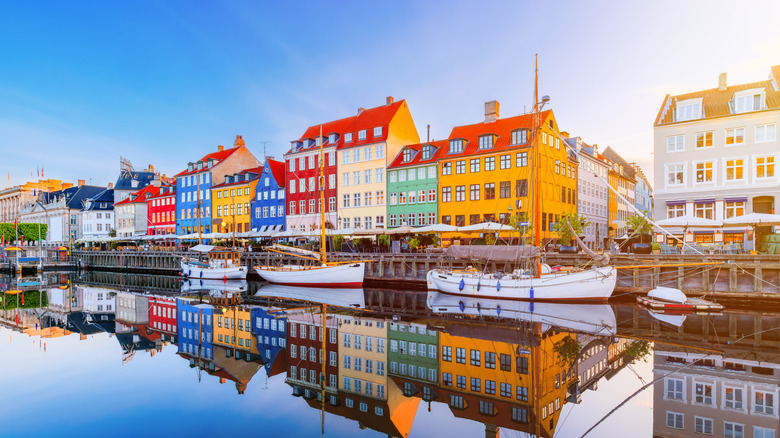
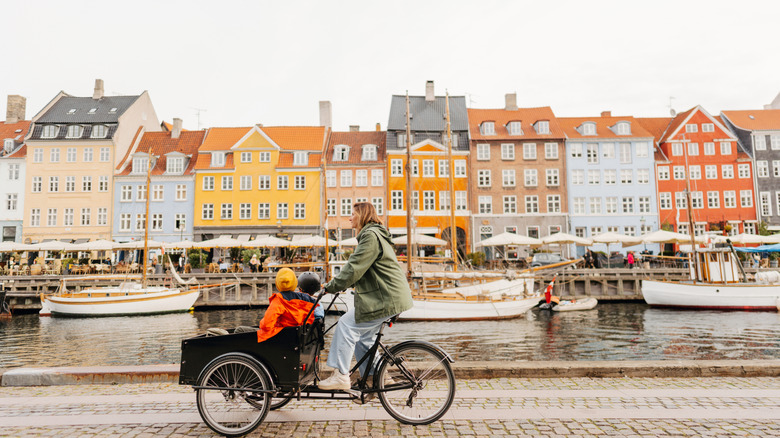
Copenhagen, in line with the high quality of life seen across Scandinavia, feels like a place designed with people in mind first and everything else second. As far as European capitals go, it's refreshingly manageable, with a compact layout that makes it easy to get your bearings almost immediately. Much of what you'll want to see sits around the harbor and historic center, from the colorful houses of Nyhavn to the royal palaces and museums dotted nearby. Everything flows together in a way that makes sense.
What can set Copenhagen apart, especially for American visitors, is its famous cycling culture. Biking isn't a novelty here; it's pretty much the backbone of daily life. There are hundreds of miles of protected bike lanes weaving through the city, making it one of the safest and most accessible places in the world to get around on two wheels. The bike lanes help make it a little less intimidating if you're not used to it, unlike some other European cities, where it can be an intense affair. There are plenty of places to rent bikes, from traditional stores to apps, and sometimes even your hotel. If cycling's not your thing, the metro and train systems — including the harbor boat taxis — are super reliable, clean, and simple to use, with frequent services that take the stress out of longer journeys. The metro runs 24/7, so don't worry if your evenings run a little late, either.
Of course, no city is perfect, and tourists can find themselves the victim of petty crime. However, the local government and tourism board are remarkably up front about it, offering direct advice to tourists about where and when to take extra precautions.
Tokyo, Japan
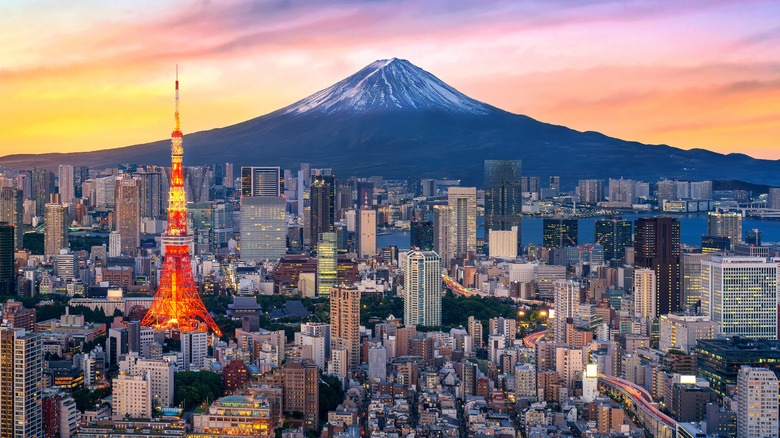
Tokyo is an immense city that may feel intimidating to many travelers. Its scale, the perception of it being almost on the edge of the world, and a language few Westerners can speak can put off anyone not looking for an adventure. But Tokyo (and honestly, Japan as a whole) remains one of the most accessible places in the world for a number of reasons.
Tokyo's metropolitan area is currently the second-largest in the world — the world's new largest city is Jakarta — which means it has an unfathomable number of people moving through it at any one time. Its huge metro transit system was designed to cope with this, covering 220 miles of track across 13 distinct lines, 280 stations (depending on your source), and two operators. This volume of coverage means virtually every corner of the city is accessible to tourists, and with signs, ticket machines, and related apps all multilingual, things are made far simpler. A glance at the map may be a little overwhelming, but once you read the instructions, the numbered and color-coded stations become second nature. It's so easy, it's not uncommon to see children using the metro alone. And from experience, the Japanese are extremely happy to help, too. It also helps that Japanese trains are rarely late and well documented when they are.
Even if you're not as keen on using the railways, many of Tokyo's prime tourist neighborhoods, like Shinjuku and Shibuya, are comfortably within walking distance of each other, and the orderly streets mean this isn't as intense an experience as in other places. Careful planning has allowed Tokyo, a true megacity, to become as user-friendly as some of Europe's most compact capitals. It helps that Japanese culture values respect and hospitality so much.
Amsterdam, Netherlands
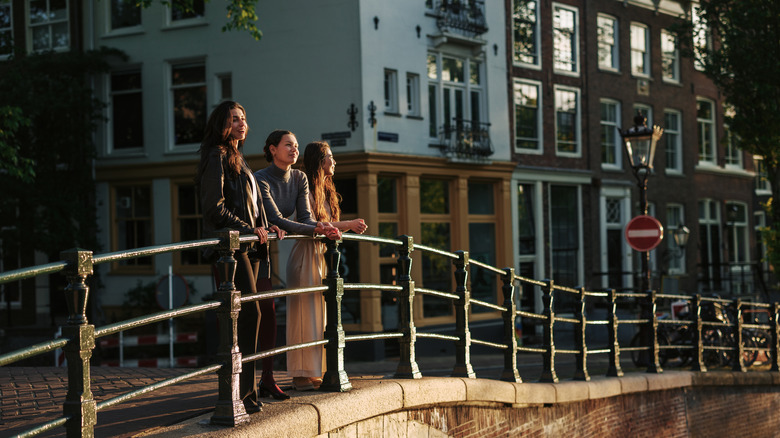
Something many European cities share — and many American cities lack — is their walkability. Until the turn of the 20th century, many of the continent's major settlements were compact affairs, and as their city limits expanded, public transport was able to shore up the differences in a natural way. Amsterdam is no exception to this rule.
Its historic center is one of the most walkable in Europe and frequently tops lists of the world's most walkable cities. With 30% of its population using their own two feet as their primary mode of transport, it's part of the culture. On top of that, it's flat and remarkably compact, covering just 85 square miles, with its historic Centrum area spreading over just 3 square miles. As Centrum is home to many of the city's most iconic attractions, you'll likely spend the vast majority of your time in that comparatively small chunk of the city. Amsterdam's public transport system, including its iconic trams, is there to help you connect with neighborhoods beyond the historic center or to get back to the airport. Cycling is also a huge part of the culture there, but with so many intricate and unwritten rules, it can be a little daunting to make it your first choice. Water taxis, darting around the canals, are also an excellent way to get around.
Amsterdam's relaxed pace lets visitors enjoy it in their own time. Blind wandering will likely bring you to one of its world-class art galleries, museums, and other attractions. At the very worst, it'll leave you in front of a delightful canalside bar or cafe. There's a reason Amsterdam is so attractive to new travelers and experienced ones alike. Spontaneous exploration is effortless there.
Singapore
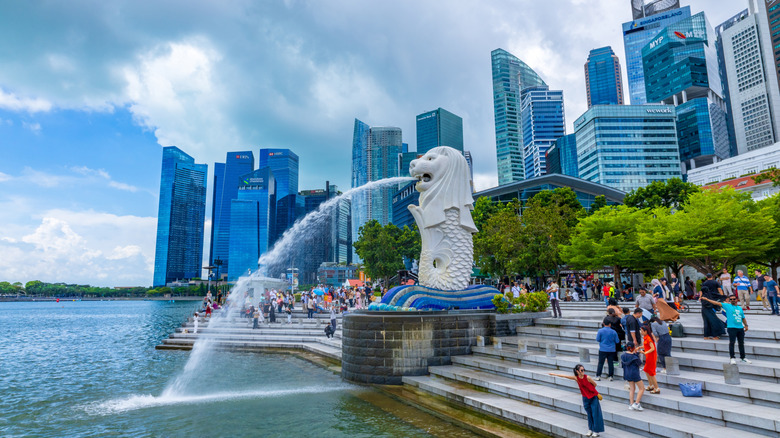
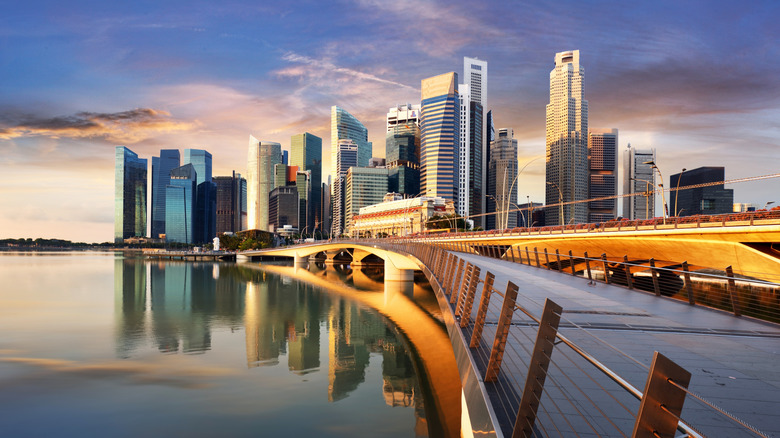
Singapore is a special place. The Southeast Asian city-state has grown from strength to strength over the past few decades, cementing itself as one of the wealthiest places on the planet. One reason for its success is the revolutionary city planning that's helped make Singapore navigable for both its citizens and visitors, transforming it into a tourist hotspot in the process. That ease of access also helps make it one of the best places to travel abroad for first-time travelers.
Almost as famous as the Lion City itself is its airport, Changi International. The futuristic hub is one of the busiest in Asia, frequently ranking as the best in the world, and setting the immediate tone for new arrivals to Singapore. From there, its sparkling MRT services and comprehensive (and increasingly electric) bus services keep things running smoothly. With more than 160 stations dotted around, there's barely a corner of the country that's not touched by a train service, whether you're exploring the historic old towns or heading as far out as the iconic zoo. But even if you're keeping on your toes, Singapore goes above and beyond to accommodate everyone, installing covered walkways to take the glare of the sun away, and even building a few air-conditioned underground shortcuts that can make the distances a little easier to handle when the temperature soars above 90 degrees Fahrenheit.
Making things especially easy is the fact that English, as one of the four national languages, is widely spoken in Singapore. Signs, intercom announcements, menus, and everything else you could need will all be understandable for English-speaking travelers. To add an extra layer of comfort, it's also one of the safest places on the planet. There's a pattern emerging here.
Vienna, Austria
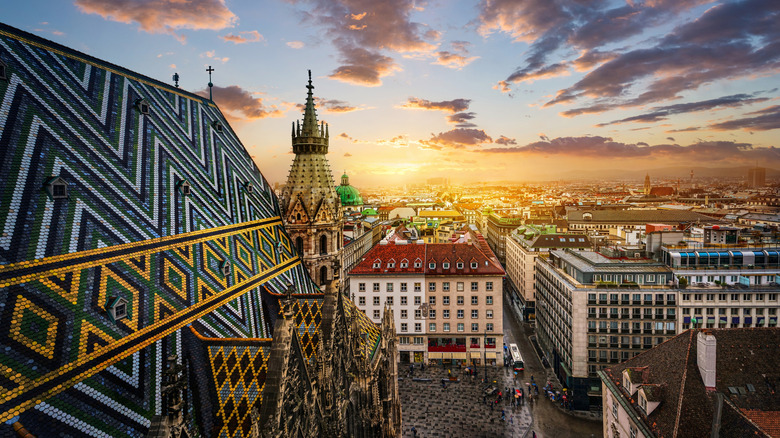
Vienna is one of the grandest cities in Europe, if not the world. But for all that spectacle, it remains wonderfully accessible. Its wide boulevards, ornate buildings, and imperial architecture are what tourists will remember long after the trip has ended, but it's the city's tourist infrastructure and strong city planning that make it so easy to enjoy, even if it was just dethroned by Copenhagen as the world's most livable city.
That ease comes partly from the fact that much of the action in Vienna is centered around its compact historic core, so you're rarely far from a museum, palace, or café worth visiting. It feels big, but never overwhelming. That's bolstered by the city's public transport system, which does a lot of the heavy lifting. The U-Bahn subway network is fast and straightforward, while the trams, some of the most iconic in Europe, are a constant gliding fixture on the Vienna streets. Everything runs on time, everything connects logically, and getting from one side of the city to the other is rarely more than a simple, stress-free journey. Whether you're heading to Schönbrunn Palace or one of the museum districts, it works the way you'd expect an Austrian or Swiss city to operate. Walking the streets is a delight, too, with several routes to carry you from world-class attraction to world-class attraction, with food stops in between, obviously.
The only real qualm travelers have with the city is the reception. People in Vienna are widely regarded as polite but a little more reserved than in other popular places. There's even a local name for this collective grumpiness — "Wiener Grant" or Viennese Grumpiness." This leads to a slight feeling of distance or coldness that could shake up the tourist-friendly reputation. But don't take it personally: It's just the Viennese way.
Zurich, Switzerland
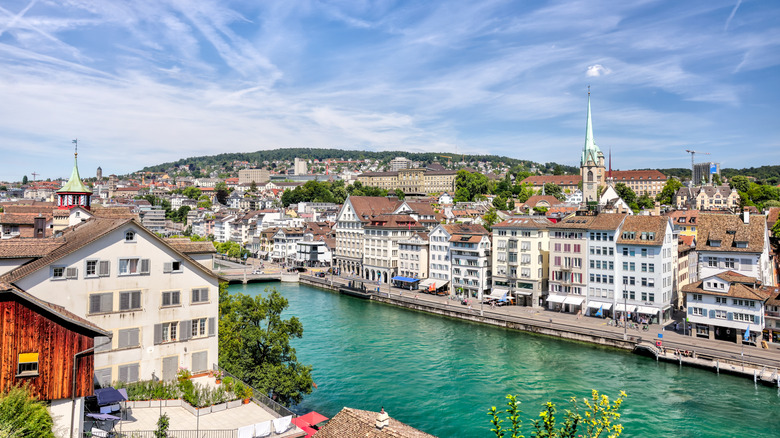
Zurich (and Switzerland as a whole) is often associated with efficiency, and it doesn't take long to see why. Your first train ride along the lake of the same name tells you all you need to know. Arriving punctually, always clean, and smooth as the second hand on the clocks that made the country famous as it glides through the Swiss countryside, it's public transport as it was always intended to be.
Zurich is the country's largest city — although not the capital, that's Bern — but has only 400,000 people, making it a relatively small major city. That plays into its reputation as a tourist-friendly destination, helping keep the historic center walkable and everything else easily reachable via the many modes of public transport. And many modes there are: Trams, trains, buses, and even ferries all operate as part of a seamless network, widely regarded as one of the best public transport systems in Europe, allowing you to move around the city with barely any friction. The connections are tight, services stay frequent, and a delay is basically a citywide emergency. The comprehensive app keeps all your tickets in one place, too. It's simple to get out of the city to explore the iconic Swiss countryside, too. Even walking is made easier by some of the freshest (and free) water fountains you'll find anywhere.
All that is topped off by Zurich's safe reputation. It's consistently ranked among the safest places in the world, including for women and solo travelers. It's ranked as high as third in the world by some metrics, though lists can differ sometimes based on the information gathered. The only real downsides to Zurich are its eye-watering prices and a similar amusing grumpiness to Vienna.
Melbourne, Australia
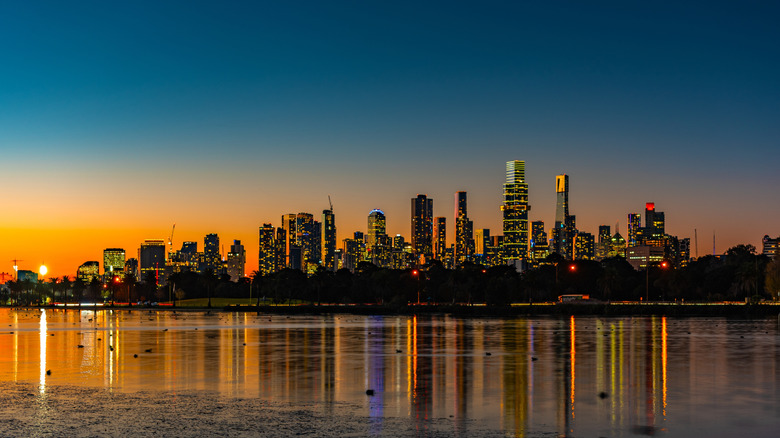
Melbourne, one of the world's best Second Cities (Sydney being Australia's first), is a place that has a lively, vibrant pulse, without straying into the chaotic. Its coffee scene is one of the best in the world, the street art is epic, and there's a constant creative energy bubbling through life in Melbourne. All of that is reason enough to visit, but its city planning and tourism infrastructure elevate things even more, surpassing even Sydney.
Sydney may draw the bulk of Australia's tourists with its renowned headliners like the Sydney Opera House and Harbour Bridge, but its immense, sprawling layout can be tough to figure out. Melbourne, in stark contrast, has a simple grid-like structure and excellent (often free) public transport to facilitate locals and visitors alike. The city's tram system is the largest in the world, with a significant portion of the city center and Docklands areas included in a Free Tram Zone, which is exactly as it sounds. This lets tourists move easily between major tourist attractions without spending a penny, which is a rarity almost anywhere in the world. It does start to charge travelers after leaving that area, capping daily ticket prices at 10.60 AUS (US$7.49).
From there, it's all about the individual neighborhoods. Once you're in Melbourne, it's easy to explore and navigate thanks to the simple grid layout and flat, well-paved streets. It frequently ranks at the top of livability indexes, with high safety and infrastructure metrics, and its healthcare system is among the strongest on the planet. Aussies as a whole are some of the most welcoming people on the planet, too, and its super diverse population and LGBTQ+ friendly atmosphere make sure that everyone is welcome.
Kuala Lumpur, Malaysia
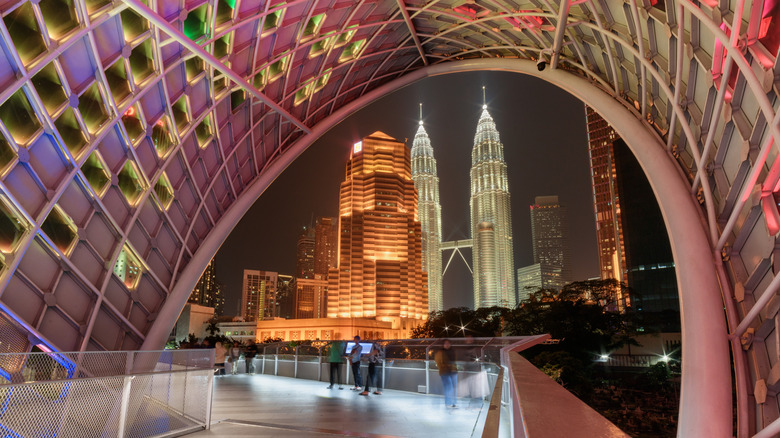
Kuala Lumpur represents an odd place on this list. Compared to the other destinations included, its tourist experience isn't quite as polished (though its iconic, breathtaking skyline suggests otherwise). But it stands head and shoulders above many other cities in Southeast Asia, offering an accessible gateway into what is often an overwhelming corner of the globe (Singapore aside).
Like Singapore, Malaysia — and Kuala Lumpur in particular — has a large English-speaking population owing to its previous status as a British colony. While in the depths of a street market, you might come up against some Chinese or Bahasa, but for day-to-day navigation and most restaurants and tourist attractions, you'll have no issues at all using English. KL's public transport system is also strong, starting with its zippy airport-to-city center train, before connecting most corners of the city with one of 11 fully operational rail lines. They're clean, extremely affordable, and hit all the major tourist spots, whether that's the Petronas Towers or the Batu Caves.
KL takes the chaos of Bangkok, Jakarta, or Ho Chi Minh, and makes it more accessible for less confident travelers. KLCC, the center of town, is walkable, and its hotel and short-term apartments are as luxurious as anywhere for a fraction of the price. It's also far less touristed by Westerners than its neighbors, making locals more receptive and vendors less likely to hassle visitors in the same way. As an easy gateway into Southeast Asia, it's unbeatable, even if its infrastructure hasn't fully caught up with the likes of nearby Singapore.
Edinburgh, Scotland
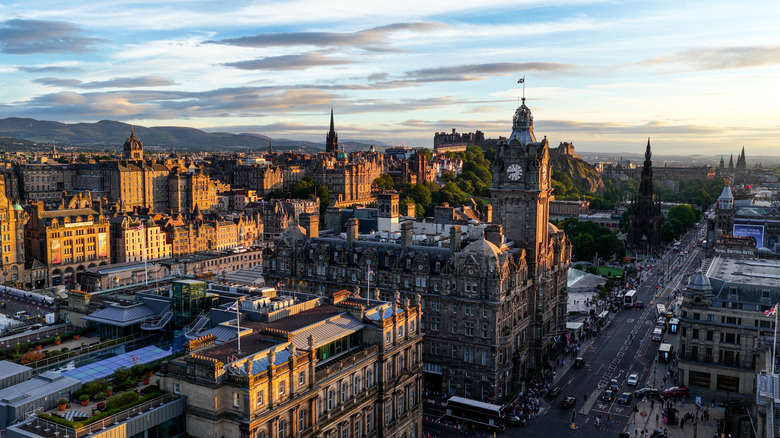
Edinburgh is arguably the United Kingdom's most beautiful city, drawing millions of visitors every year to revel in its gloomy splendor and check out some of its world-class attractions, from the stupendously impressive castle to newer additions like the Johnny Walker Experience. But its kerb appeal is only one part of the equation. It's one of the most approachable cities for tourists, combining its compact layout, strong public transport, and sublime walkability into the perfect no-worries vacation package. It helps that the Scots are a welcoming bunch, too.
Despite being Scotland's capital, Edinburgh isn't big. Condensing over a millennium of history and innovation into 102 square miles, it doesn't take long to get from one side to the other, however you get there. This feeling is heightened when you narrow your trip down to the primary spots, like the Old and New Towns, and Leith. Taking a meandering route from the top of Edinburgh Castle, down the iconic Royal Mile, around into New Town, and along Leith Walk to the harbor would only take you around two hours, and it hits almost every major attraction in the city along the way. If you don't feel like pounding the pavement, the Edinburgh tram system runs conveniently from the airport all the way to Newhaven Harbor.
Everything about Edinburgh screams "tourist-friendly." Wandering the Old Town is a medieval geek's dream, and even if you manage to get lost, the castle's high point atop an extinct volcano serves as a beacon. Head that direction if you're not sure, and you'll hit something you recognize pretty soon. It's easy to save money, too, by opting for one of the Edinburgh City Passes. Grabbing a travel pass is also cheap, with a five-day airport and city zone tram pass costing just £24 (around $30).
Methodology
This list highlights the most tourist-friendly cities in the world, with a heavy focus on navigability, safety, walkability, and public transport in each destination. Some lean hard into comprehensive transport systems like those in Melbourne, Zurich, and Vienna, while others, like Kuala Lumpur and Tokyo, represent accommodating atmospheres for foreign tourists to experience and explore vastly different cultures. Any fact is backed up by tourist statistics, transport authorities, or safety indexes. While we do mention friendliness and how welcome tourists are in a place, the focus was on more practical aspects.