
Washington's 5 Deepest Lakes To Visit, Ranked
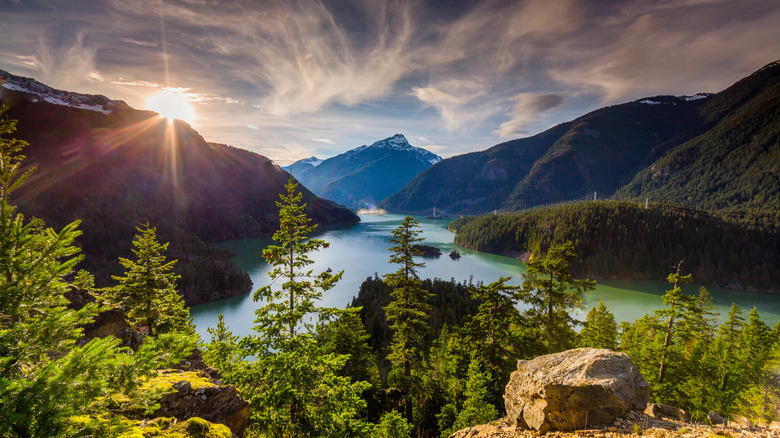
When it comes to outdoor splendor in the U.S., it's hard to beat Washington state. Located in the northwest corner of the contiguous U.S., it's known not just for its natural beauty but for the variety of forms it takes. From these scenic islands with pristine views to a bucket-list hike up an active volcano, the Pacific Northwest gem seemingly has it all, including a rugged Pacific coastline, fast-flowing mountain rivers, canyons, high-desert landscapes, along with one of the United States' largest rainforests.
You'll also find a wealth of lakes in the Evergreen State — over 8,000, to be precise. These range from turquoise alpine beauties to glacier-cut channels that have filled up with cold, clear water over thousands of years. Gouged out during the ice age, these natural reservoirs can reach serious depths, which means Washington is home to some of the country's most intriguing freshwater abysses.
It is possible to visit each of the state's deepest lakes, though they're not all easy to get to. Some require long drives, while others are just a quick shot up the highway from downtown Seattle. Regardless of the effort it takes to get there, each lake offers its own rewards, so here is a list of the five deepest lakes in the state, ranked by reviews online.
5. Lake Kachess
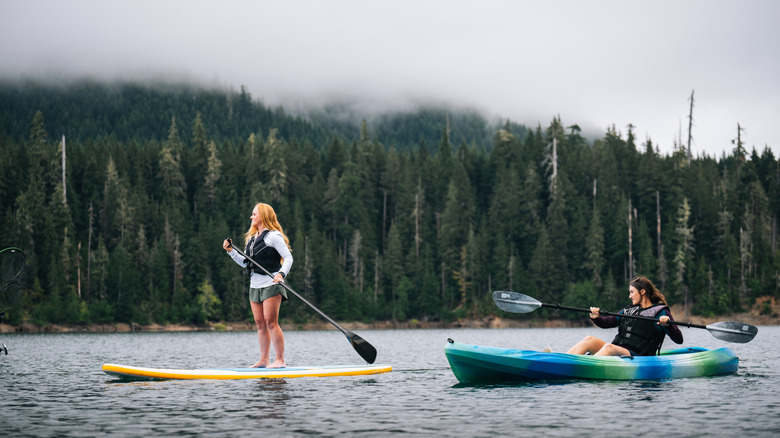
Located just over 65 miles east of Seattle, on the other side of Snoqualmie Pass via Interstate 90, Kachess Lake is very easy to get to, which is certainly a plus. Reaching depths of 400 feet, it's also one of the deepest lakes in the state, though its background is not so typical. Kachess was originally two lakes — Big Kachess and Little Kachess. However, an earthen dam was constructed in 1911 at the outflow point of Big Kachess, which ended up joining the two bodies. This, in turn, made the channel in what was once Big Kachess deeper, so while its depth is formidable, it's not entirely natural.
However it was formed, Kachess Lake is a premier spot for recreation, with opportunities for swimming (it's a chilly lake, so your dip may be brief) and paddling. The surroundings are ideal for exploration via kayak, and fishers also flock to the lake's waters, which are full of rainbow and cutthroat trout, as well as kokanee and burbot. It's also possible to camp at Lake Kachess; the lakeshore is home to a basic campground nestled amongst the trees, though don't expect hookups or dialed-in restrooms.
Lake Kachess is the lowest-reviewed lake on this list, garnering just 3.5 stars on Tripadvisor. This is mainly due to the fact that, as a partial reservoir, the water levels tend to fluctuate. Some times of the year it's high, making for a nice full (and deep) lake, but it can also drop to distressingly low levels, which can detract from the experience. "Was wonderful years back," noted one recent visitor on Tripadvisor. "But now water has receded and place is all dusty... filled with mosquitoes and bugs."
4. Lake Whatcom
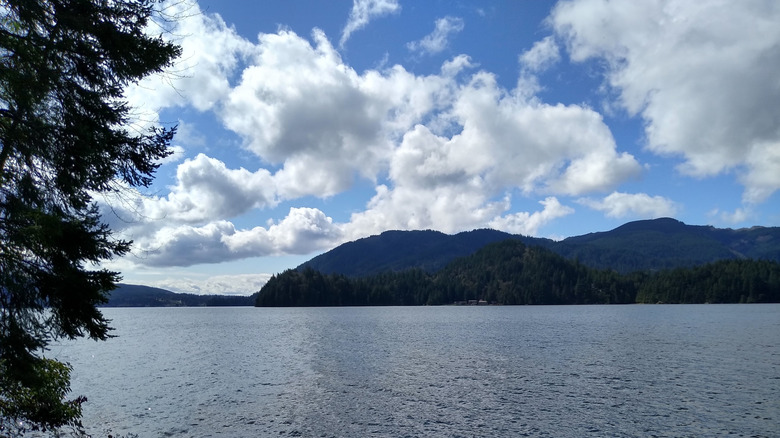
Situated on the edge of the charming town of Bellingham, less than two hours outside of Seattle, scenic Lake Whatcom is the shallowest lake on this list, measuring in at (just) 334-feet deep. Still, that's more than enough to put it in the elite league of Washington's deepest, and, given its proximity to a major settlement, it's also easy to visit. Lake Whatcom was formed over the course of several ice ages, when massive glaciers both depressed and scoured the land, which filled up with water when they retreated. Today, it occupies some 5,000 acres with around 15,000 people living in the watershed, which also supplies drinking water to over 120,000 people who live in the county that shares its name.
While some of the shoreline is residential, there is also plenty of public access. Lake Whatcom Park is a county-run reserve that features miles of hiking and biking paths along the shore and up into the hills overlooking the lake. Haner Park, on the lake's southeastern corner, boasts a little swimming beach and a grassy clearing where you can take in the sunset. There's also a nearby public boat launch, as well. Bloedel Donovan Park, on the lake's northwestern shore, offers a swimming beach, picnic area, off-leash dog run, and playground.
"It's such a peaceful lake that many people around the state never think of," remarked one visitor on Reddit. "It's beautiful and the further south you go, the more mountainous and rugged the lake becomes." Another reviewer, on Tripadvisor (where it's rated 4.4 stars), concurred, running down why they enjoyed their visit. "Best lake, warm enough to swim in, lots of hikes and little beaches to hang out in, blackberries in the summertime."
3. Lake Crescent
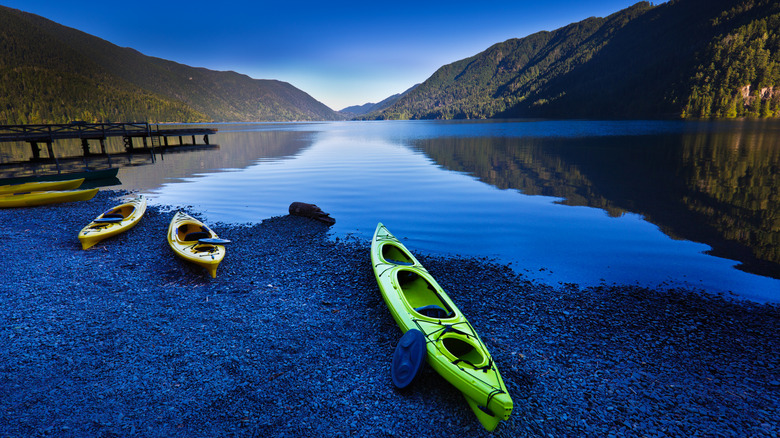
Washington's second-deepest lake is found on the Olympic Peninsula, a rugged and wild piece of real estate about three hours drive from Seattle that can be explored via this road trip with world-renowned stops and views. Reaching depths of 624 feet (and perhaps more), Lake Crescent is the result of glaciers carving out the land during the most recent ice ages. Native American legend tells a different story, though, explaining that the lake formed after the angry man-eating giant, Seatco, put an end to a three-day battle between the Klallam and Quileute tribes by ripping off the top of a mountain and throwing it onto the battlefield. This killed all of the warriors and dammed the river, which in turn created the lake we see today.
Whatever its origin story, there is no denying that Lake Crescent is an exceptionally beautiful body of water, and visitors agree, giving it 4.7 stars on Tripadvisor. There are plenty of opportunities to camp along the lakeshore, but if you're not in the mood to rough it, you can book a room at charmingly rustic Crescent Lake Lodge.
One good way to explore the lake is by strapping on your boots and hitting one of the hiking trails that head up into the surrounding hills, as well as the lowland forests and gullies. The lake's smooth surface is perfect for kayaking, with 12 miles of nooks and coves to check out. And then there's Devil's Punchbowl, situated on the north end of the lake. This idyllic spot is made up of sheer cliffs rising straight from the water and is a popular swimming hole on sunny summer days.
2. Lake Chelan
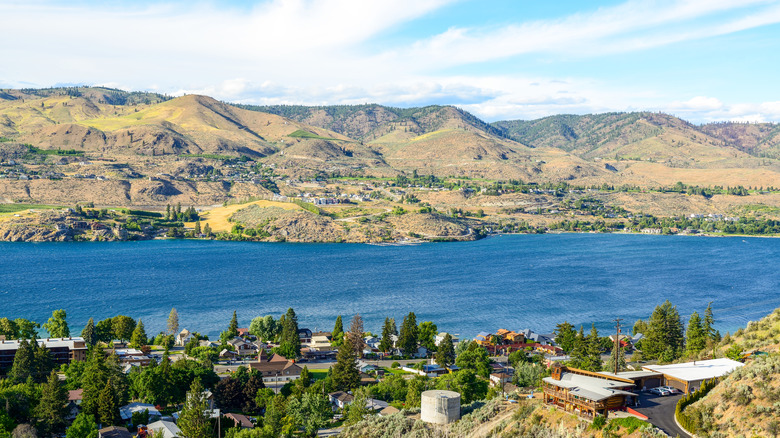
At 1,486 feet, Lake Chelan (about five hours from Seattle)is not just the deepest lake in Washington state but is also the third-deepest in the country, after Lake Tahoe and Oregon's Crater Lake. This narrow body of water stretches 50.5 miles from the town that shares its name all the way to Stehekin, a tiny settlement nestled in a stunning, wildly underrated remote mountain valley. Its natural beauty and sunny climate (the lake enjoys an average of 300 days of sunshine a year) draw visitors from all over the Pacific Northwest who come to relax, enjoy outdoor pursuits, and sample the wares at one of the more than 30 local wineries that have helped put Chelan on the map as a standout wine region.
"The lake is beautiful, and the downtown Chelan area is fun and walkable," noted one visitor in a 5-star review on Tripadvisor, where it has a 4.7-star overall rating. Another reviewer added to the sentiment, raving, "This location is truly a gem for its beauty and fantastic recreational opportunities. Perfect summer weather with temps in the 90s and pristine cooling waters."
Most people come to Chelan to soak up its undeniable outdoor splendor, as the lake is ideal for boating, watersports, kayaking, stand-up paddleboarding, or just swimming. It's also a hotspot for anglers who head there in hope of hooking into a monster lake trout, kokanee, or landlocked Chinook salmon. Out of the water, the lakeshore and surrounding mountains and hills are home to a number of great hiking and biking paths, allowing visitors to enjoy the lake without getting wet.
1. Ross Lake
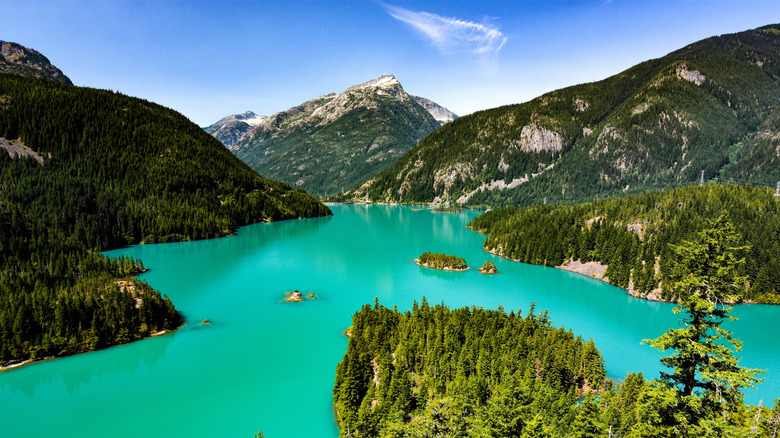
Situated amidst Washington's gorgeous and underrated North Cascades National Park, Ross Lake was formed by the construction of a hydroelectric dam on the Skagit River in 1949. The only fully man-made reservoir on this list, it's also one of Washington's five deepest lakes, reaching depths of up well over 500 feet. Protected as a national recreation area, this relatively slender lake stretches for 23 miles to the Canadian border and features 19 campsites that are only accessible by boat. Its waters are an almost unreal shade of blue-green due to the presence of glacial silt and are perfect for swimming in or exploring via kayak or canoe.
You can get to Ross Lake via Highway 2, otherwise known as the North Cascades Highway. From Seattle, it takes around two and half hours to get there, though parts of the highway tend to be closed for much of the winter due to heavy snowpack. Once you're there, you can camp or stay at the Ross Lake Resort, a floating rustic lodge with guest cabins that are only accessible by boat or hiking trail.
Wherever you choose to lay down your head, Ross Lake is likely to work its magic on you, as it's the highest-rated lake on this list, with 4.8 stars on Google and 4.6 on Tripadvisor. "We were amazed at the gorgeous turquoise color of the water of Lake Ross. The Northern Cascades are spectacular and to view the lake nestled amongst the mountains is surreal," wrote one visitor on Tripadvisor. Another fan offered their own poetic words on Google Reviews, saying, "Ross Lake isn't a lake—it's a line in the land. A thunder-deep green vein running through the heart of the North Cascades, slicing silence into the world with alpine grace and glacial teeth."
Methodology
To determine which lakes belonged on our list of Washington's five deepest lakes to visit and their ranking, we first had to determine which were actually the five deepest in the state. For this, we looked at websites such as the Washington State Department of Natural Resources and the National Oceanic and Atmospheric Administration (NOAA), as well as county resources.
Once the deepest lakes were compiled, we ranked them based on online ratings and reviews. For this, we considered two primary review sources: Tripadvisor and Google. These gave us empirical data in the form of star ratings. We also pored over websites like Reddit, where visitors offer their unfiltered opinions. After taking all of this in, we formed a list that we believe accurately represents how these deep Washington lakes are viewed by their visitors.