
This Charming Hilltop Neighborhood Has The Best View Of Pittsburgh, Pennsylvania's Breathtaking Skyline
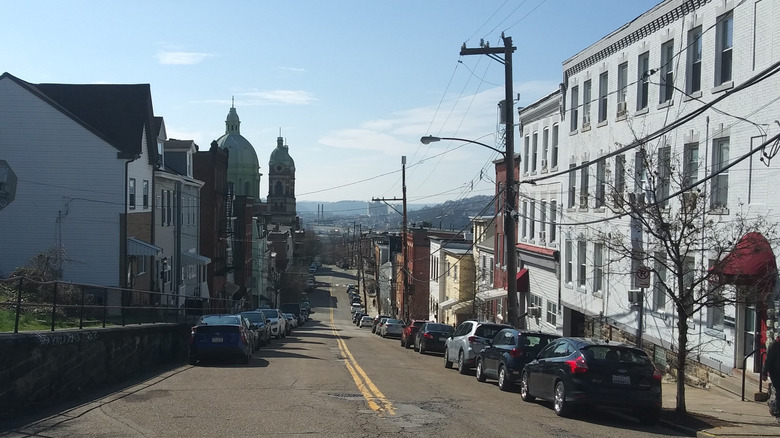
While every city is to some extent defined by its landscape, that's especially true in Pittsburgh. It's built on the hills and valleys around the Allegheny, Monongahela, and Ohio Rivers, with more than 700 feet of elevation change between its highest and lowest points. This creates scenic vistas like the picturesque skyline views of the West End Overlook, and gives it the distinction of being home to America's steepest street (and is also why the city has so many treacherously steep "Death stairs"). This topography also forms pockets of land that feel secluded within close proximity to downtown, like the charming neighborhood of Polish Hill.
Polish Hill is built on a slope that rises from the Strip District to the Hill District. While it's only about two miles northeast of downtown, it's chronically overlooked compared to adjacent neighborhoods like Bloomfield, the "Little Italy" of Pittsburgh. That's largely due to Polish Hill's near-vertical layout, which limits roadway access to four points: the 28th Street Bridge on its western end, Melwood Avenue on its eastern border, and Herron Avenue in the north and south (from Liberty Avenue and Bigelow Boulevard, respectively).
Like many neighborhoods of Pittsburgh, Polish Hill has blue-collar roots. Its first residents were German, Irish, and Polish immigrants who worked in the steel mill and rail yards along the Allegheny River. By the turn of the 20th century, it was known as Pittsburgh's Polish neighborhood, an identity that was solidified when it got its current name in 1970. While you can still see this heritage in the neighborhood's hundred-year-old rowhouses and landmarks like the Immaculate Heart of Mary Church, it's known today as a haven for Pittsburgh's artists and punks, who congregate nightly at bars like the Rock Room and come out in force during Polish Hill's annual festivals.
Enjoy a tour of Polish Hill
Polish Hill is best explored on foot — although I will warn you, as someone who regularly walks through the neighborhood, you'll get a workout. If you want to limit your physical exertion, enter the neighborhood from the Bigelow Boulevard side and work your way down the hill. Take the left fork off of Bigelow to walk down Paulowna Street, where you'll see the green domes of Immaculate Heart as you head toward West Penn Park. This tranquil green space has the only skate park in Pittsburgh's East End, along with a playground, public pool, and community farm.
Just east of West Penn Park on Brereton Street is Polish Hill's most prominent landmark, the Immaculate Heart of Mary Church. Built in 1905, its three-dome design was modeled after St. Peter's Basilica. The interior maintains the feel of a European cathedral, with decorated vaulted ceilings, over 50 stained glass windows, and a 50-foot gilded altar carved from Spanish White Oak. To see inside, you can attend a Sunday mass or visit during confessional hours (Wednesdays 5:30-6:30 p.m. or Saturdays 3:30-4:30 p.m.).
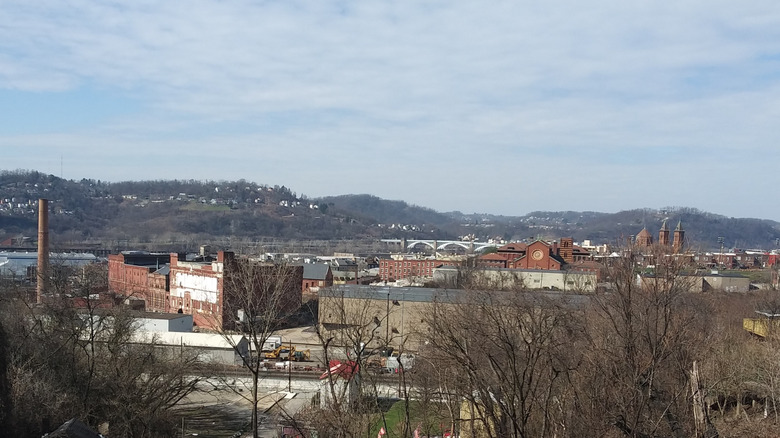
Heading down Dobson Street from the church will take you to Kaibur Coffee, Polish Hill's only café, which serves tasty and affordable breakfast sandwiches (including gluten-free and vegan options) along with pastries and beverages. If you're looking for panoramic views, continue east to the Melwood Avenue Overlook, where you can lounge against the graffiti-decorated wall while admiring the Allegheny River and the communities along it, including the converted warehouses and markets of the Strip District and the trendy (and funky) neighborhood of Lawrenceville. If you want to see downtown, take Bethoven Street to the Bloomfield Bridge and look west for the best skyline views in the East End.
Polish Hill's nightlife and festivals
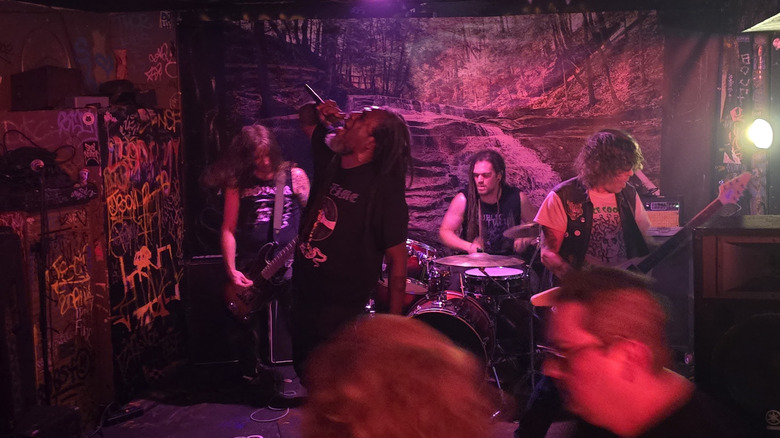
While Polish Hill is a small, mostly residential neighborhood, it's also home to a lot of musicians, artists, and other creative folks. As a result, it has a livelier nightlife than you might expect, including two popular live music venues: Gooski's and Rock Room, both strong contenders for the title of best dive bar in Pittsburgh. Gooski's has been a staple of the local punk, metal, and indie rock scenes since it opened in 1997. When there's not a band performing, you can play pool or ping-pong in the back room, or order some wings or pierogies for dinner. Rock Room draws a similar crowd of punks and metal-heads to its weekend shows, and has pinball tables in the back room for extra entertainment (along with cheap beer and nightly food specials).
If you want to see Polish Hill's tight-knit community out in full force, visit during one of its annual festivals. Early May is the yearly May Day Parade, an event celebrating International Workers Day every year since 2009. Along with the parade featuring costumed revelers and the community marching band, May Day festivities include a variety show, a potluck, and an after-party with live music. Fans of hardcore music will want to visit in August for Skull Fest, a three-day music festival that takes place in multiple venues across Polish Hill and Lawrenceville. In September, West Penn Park hosts the Polish Hill Arts Festival, which includes an artist market of local creators, live music performances, food vendors, and activities like tie-dying for kids (and kids-at-heart).