
5 Stunning Destinations For Free Dispersed Camping In Oregon's Mt. Hood National Forest, According To Reviews
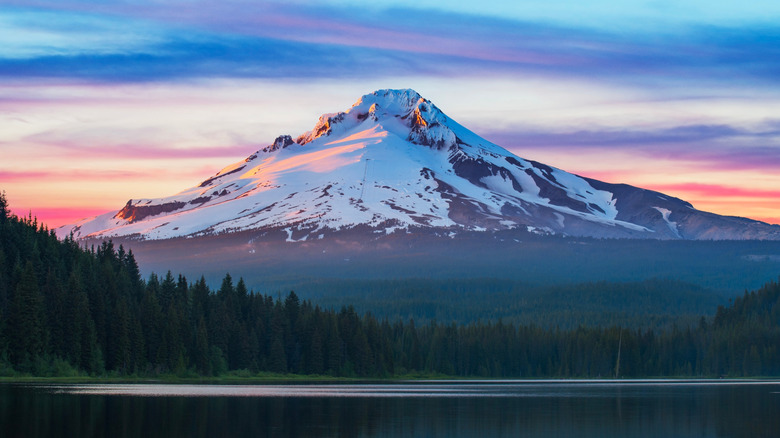
The Mt. Hood National Forest is Portland, Oregon's scenic backyard, just 35 miles from the city center. The steep, snow-capped volcano's flanks are blanketed in lush, pristine forests. More than 150 jewel-like alpine lakes dot this landscape, along with 14 rivers included in the National Wild and Scenic Rivers System. There are also beautiful hike-in hot springs and 1,000 miles of trails. With so much natural beauty, this outdoorsy paradise is a popular camping destination, especially in the summer, with over 70 campgrounds.
One way to beat the crowds is to skip reservation-only campgrounds entirely and seek out Mt. Hood's abundance of free, dispersed campsites. According to the Forest Service, "Dispersed camping means no toilets, no drinking water, no metal fire rings, and no trash service." While you don't have to be a backcountry expert to enjoy these campsites, you will need to be comfortable roughing it. Do remember to take everything with you when you leave, including trash.
We've consulted various resources like The Dyrt and Campendium that regularly highlight free, dispersed camping, and we've combed through Facebook groups and Reddit forums to unearth word-of-mouth finds. Overall, we have sought to highlight a mix of destinations for dispersed camping (aka "boondocking"), from sites you can reach without leaving the pavement to remote backcountry gems where you aren't likely to see many other people. These spots are so beautiful you may want to stay forever, but just remember that even though they're free, all of them have a maximum 14-day limit.
Trillium Lake Airstrip
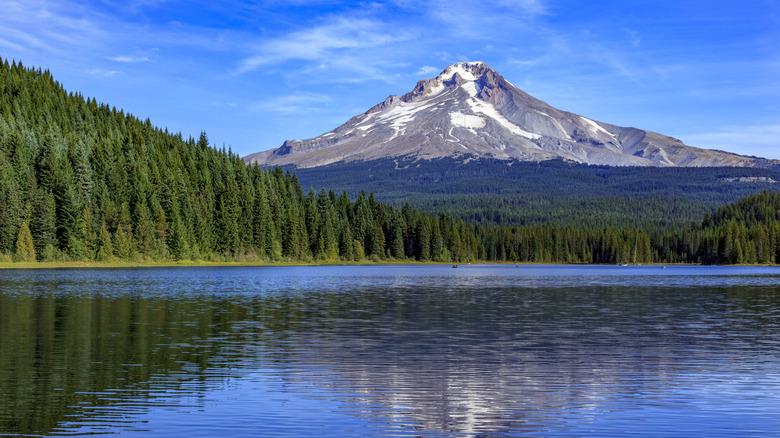
This popular locale is ideal for beginners new to dispersed camping, because it's close to civilized amenities. The Trillium Lake Airstrip is just 2.8 miles outside the cute, Bavarian-style town of Government Camp, en route to Trillium Lake. From Highway 26, turn right on Trillium Lake Road, then right on E Perry Vickers Road, and the airstrip is right there. It's a great option if the popular Trillium Campground is full on a summer weekend. This is a big, flat, open area lined with free campsites. You won't find seclusion here, but it has room for larger RVs, lots of recreation nearby, and solid cell service, all less than 60 miles from Portland.
On the south side of the airstrip is a short spur trail that takes you to the scenic jewel of Trillium Lake, where there's a 1.9-mile loop trail around the lake that one Tripadvisor visitor calls "a perfect blend of serenity and stunning views." Heading clockwise, you'll hike through scenic forest and the campground. Stop at the southern end of the lake and look back for a perfectly breathtaking view of Mount Hood, cradled between forested slopes and reflected in the lake. On your return, you'll meander over a picturesque boardwalk that crosses the lake's marshy section, before heading back to camp. You're also just a 15-minute drive from the historic Timberline Lodge, with skiing in winter and hiking in summer. You can also stop at the cozy Ratskeller Pizzeria in Government Camp for a pie and a White Russian.
Old Barlow Road
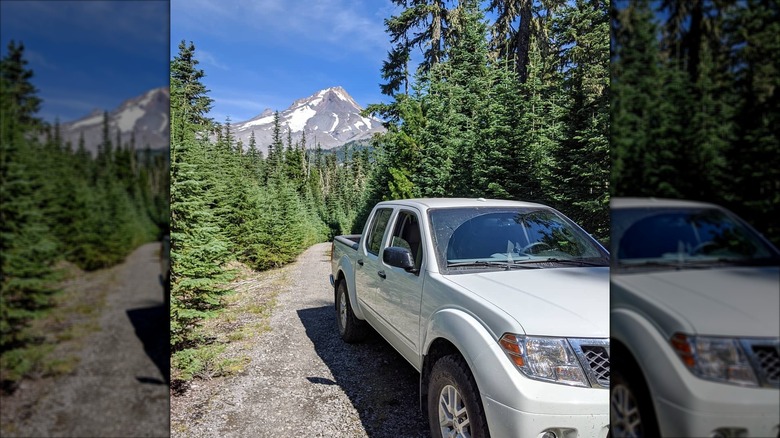
You can imagine yourself as an early pioneer when you boondock along the Historic Old Barlow Road, which was once a segment of the Oregon Trail. The 3-mile stretch of unpaved road that lies between Barlow Creek Campground and White River Station Campground is dotted with dispersed sites; just look for the turnouts and fire rings. Driving conditions are varied on this dirt track, where a sign reads, "Primitive road — drive carefully." "Loads of beautiful dispersed camping sites where you can have some space from the crowds," writes one Redditor.
According to the Forest Service, high clearance passenger vehicles can drive Barlow Road (think the Subaru Outback Wilderness). The road is closed in winter and may sometimes have obstacles like downed trees. If you do decide to drive Barlow Road, keep an eye out for cyclists, as this is a well-known bike route. If you're driving from Portland, you can stop at the Zigzag Ranger Station on Highway 26 for current information on road conditions for your vehicle type.
Timothy Lake
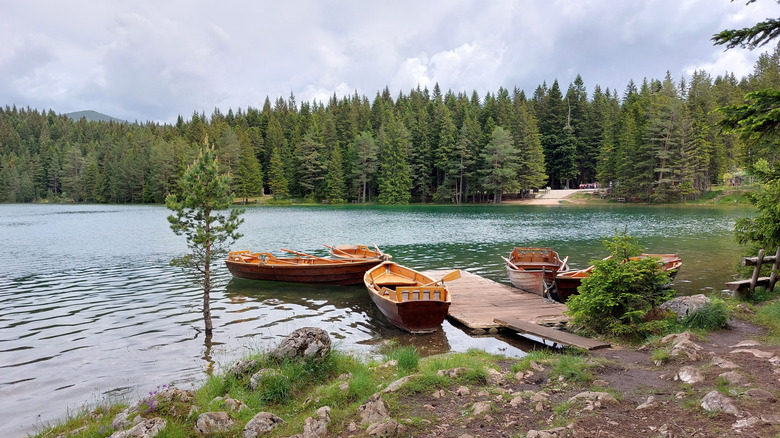
Oregon's Timothy Lake is a limpid blue reservoir with abundant paddling, hiking, and fishing. This recreational gem is managed by Portland General Electric (PGE), which operates nine campgrounds with over 250 campsites to reserve. However, if you're looking for the real outdoor magic, head to one of nearly 40 free, dispersed campsites around the lake.
Most of the developed campgrounds are clustered along the lake's south shore and adjacent areas. Some have jaw-dropping mountain views, while others, like the one at nearby Little Crater Lake, offer blissful seclusion. The dispersed sites are strewn along the rest of the shoreline. All of Timothy Lake's dispersed sites are accessible from the Timothy Lake Loop trail (13.3 miles per AllTrails), which includes a segment of the Pacific Crest Trail. "Set up camp, overnight was lovely. Got up and hit the loop by 9 AM and it was gorgeous," writes one AllTrails user.
For even more fun, you can also reach all of Timothy Lake's dispersed campsites by boat. The lake has a 10-mph speed limit in order to preserve a tranquil atmosphere for fishing and paddling, and there are multiple public boat launches. Just slip your watercraft into the water, load in your camping gear, and glide along to your campsite.
White River West Sno-Park
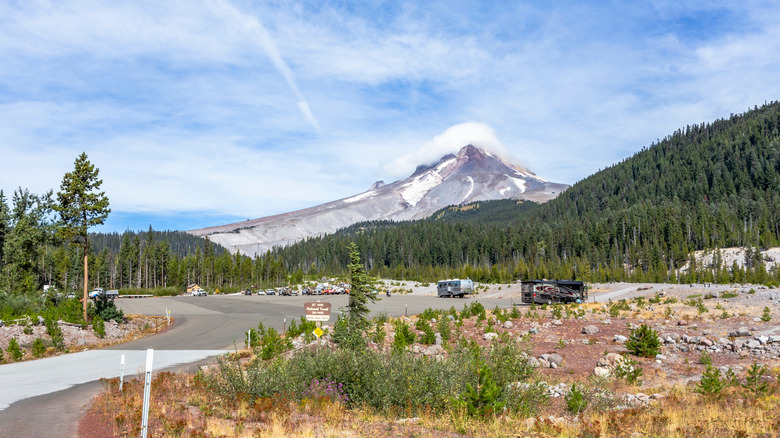
Mt. Hood National Forest has over 20 sno-parks, and all but three allow overnight camping in their parking lots year-round. From November through April, you'll need a sno-park permit, which you'll be getting anyway if you plan to play in the snow. After that, the camping is free. In the summer hiking season, it's all free, with no pass required. The White River West Sno-Park is special enough that The Dyrt named it one of the best free dispersed camping spots in all of Oregon. To get here from Portland, just over 60 miles away, proceed along Highway 26 through Government Camp, then turn North on Highway 35 toward Hood River. The sno-park will be another 4.4 miles up, on your left.
In winter, this spot is great for families, as it has fun sledding spots, in addition to cross-country ski trails and snowshoeing. "If you're into car camping in the snow, this spot's a gem. Easy access, no crowds if you go early, and some of the best views of Hood you'll get without a huge climb," writes one Google reviewer. For summer hikers, there are trailheads nearby leading up the mountain to stunning views. From here, you can also access the Timberline Trail circling Mt. Hood.
Boulder Lakes & Bonney Meadows
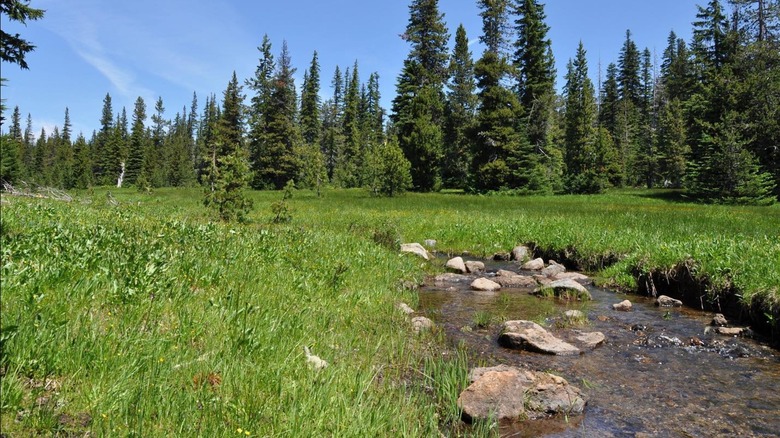
Boulder Lake offers dispersed camping, delightful summer swimming, and fishing for rainbow trout, and it only takes a short hike to get there. Little Boulder Lake is a bit further on, so its campsites are even more secluded, and you can gather huckleberries on the way there. The Boulder Lake Trailhead is accessible via a gravel road that may have some potholes, but it's passable for passenger vehicles. From there, it's just over half a mile (per AllTrails) to Boulder Lake to camp. "This is my favorite camping spot in Oregon so far," writes one Google reviewer. "Every time I've been it has been beautiful. A small and quiet lake with a beautiful ridge behind it."
If you're a hiker, the Boulder Lakes Loop is 6.3 miles (per OregonHikers.org), with sweeping views and a great picnic spot at the scenic Bonney Meadows, where there is another trailhead for an alternative entry to the loop. Note that the Forest Service lists the trail between Bonney Meadows and Boulder Lake as "strenuous," so a dip in the lake will be especially welcome on your return to camp.
Methodology
To find the best free dispersed camping in Mt. Hood National Forest, we scoured websites like Campendium and The Dyrt that singled out free, dispersed camping spots, paying special attention to any "Top 10" or "best" lists we found. We also consulted Reddit, Google, and Tripadvisor for reviews and recommendations. YouTube was invaluable for scouting locations, too. Sites like AllTrails and OregonHikers.org were helpful in finding spots with access to trailheads.
Most camping happens during the summer months, and some destinations are only available seasonally, but we made sure to include at least one suggestion for winter. Lastly, we aimed to include a variety of spots to suit different vacation styles, including car camping on paved surfaces, roughing it on dirt roads, walk-in campsites, and even boat-in camping.