
Common Clothing Mistakes To Avoid On A Trip To Italy
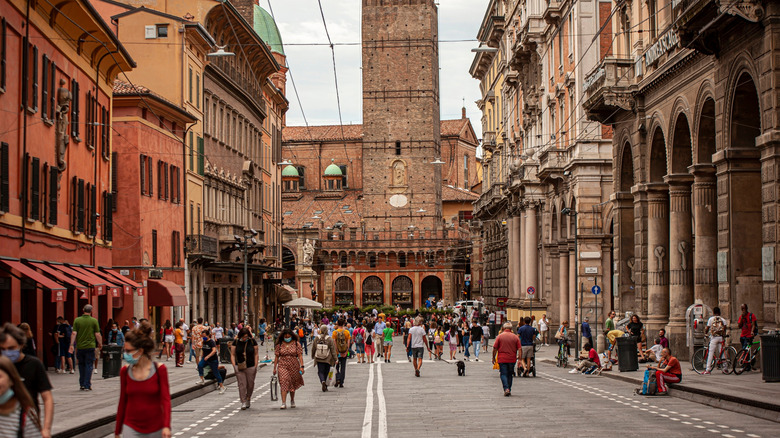
Perhaps it's fitting that Italy is shaped like a boot. The country is Europe's fashion hub, containing the city of Milan, which is arguably Europe's fashion capital. It's safe to say that Italians take dressing very seriously to the point that there is even a phrase associated with it — "fare la bella figura." This concept expresses the idea that one should make a good impression, which starts with taking care of your personal appearance.
There are two kinds clothing mistakes tourists can make in Italy. The first is the fashion faux pas — which are violations of "la bella figura." These are the kinds of things that will make you stand out as a tourist or make you look unkempt in the eyes of Italians. In the past, this included wearing athleisure, sweats, excessively revealing clothing, and designer clothes to show off. Nowadays, many younger Italians have enthusiastically embraced more casual urban styles of the United States, and wearing these clothes has become more a matter of what kind of image a tourist wants to project rather than a simple fashion mistake.
The second type of mistake is the practical mistake. Such errors include not bringing modest clothing for churches, wearing heels where it is hard to walk, and not being prepared for outdoor excursions in Italy's mountainous countryside. Here is a list of clothing mistakes, the nuances, and how to best approach them when traveling "nel bel paese."
Socks with sandals
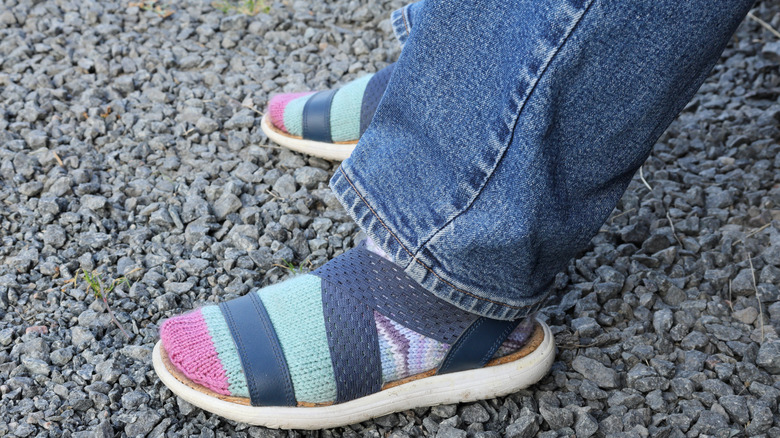
While wearing sandals with socks has become far less taboo in the United States, and to some degree, a fashion statement in certain places, it is still a fashion faux pas in Italy. Multiple Italians who were interviewed for an Australian Broadcasting Corporation article on the subject all said that the combo simply doesn't make sense. Socks and sandals, to one interviewee, was a contradiction in terms, as you wear sandals to allow your feet to stay cool. In other words, wearing socks is just counterproductive. Others found the style "ugly," and in some cases, the adoption of a deliberately ugly style for attention's sake.
While nothing bad will happen to you for wearing sandals with socks — at most, you might get a little side eye — people might assume you are actually a German tourist, as the stereotype of the elderly German wearing white tennis socks with sandals is still very much alive.
Walking around shirtless (outside of beaches or pools)
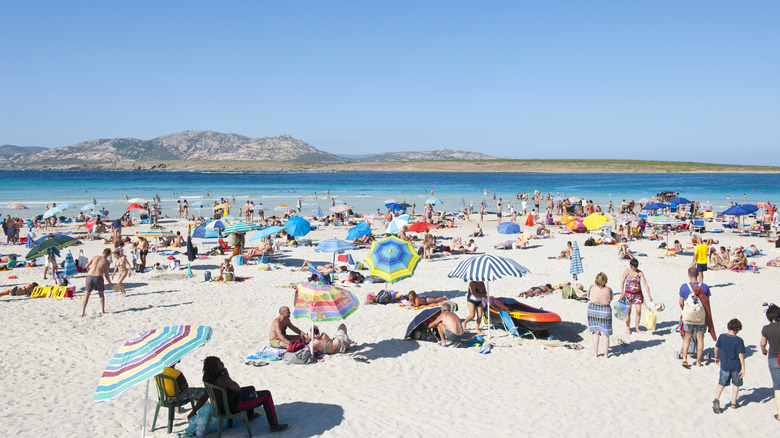
In some places in the United States, shirtlessness outside of beaches is fairly common. Some people sunbathe in public parks and exercise shirtless on hot days. In Italy, however, it is not recommended to be shirtless outside beach or pool areas. Not only might more conservative-minded people find it indecent, it's also illegal in certain locales.
While not all Italian towns have strict laws against shirtlessness outside the beach, those that do are not afraid to enforce them. Sorrento for instance, one of Italy's best beach hideaways on the Amalfi coast, fines tourists up to 500 euros for running afoul of decency laws, which apply to all genders, penalizing shirtlessness for men and the wearing of bikinis or other bathing suits outside beach areas for women. This applies to city centers as well, as one Canadian sunbather found this out when she received a 250 euro fine for sunbathing in a bikini in the middle of Venice.
The rule of thumb is as follows: If the clothing is beachwear or poolside wear, and you aren't going to the beach or the pool, leave it behind. If you are going to the beach, it never hurts to make sure you have a shirt to cover up if you need to leave to run an errand or grab some food from the snack bar. On spiagge attrezzate — that is, beaches that have amenities like umbrellas, boat rentals, and restaurants. This article's writer has also found that, over the years, rules against shirtlessness apply on a case-by-case basis. Generally, you are more likely to be asked to wear a shirt if you are sitting down to eat.
Wearing excessively skimpy swimsuits

While it is against the law to wear bikinis in public in Italy, they are perfectly fine on beaches. In fact, bikinis are almost ubiquitous on Italian beaches and women of all ages wear them without issue. However, there are limits on what public decency is willing to tolerate, and tourists should ensure that their swimwear doesn't attract too much attention in the wrong way.
The kind of swimwear that crosses the line in Italy was perhaps best defined in a 2014 tourism video put out jointly by the Russian and Italian governments telling Russians how to behave in Italy. The video recommended tourists not to wear skimpy, barely-there bikinis with sequins and other shiny objects clearly meant to draw attention to the wearer or mix these outfits with heels. While this video was speaking to Russian tourists specifically, this advice applies to everyone. Again, there is nothing wrong with wearing a bikini in Italy — just be tasteful and only wear it under the right circumstances.
Wearing immodest clothing in churches
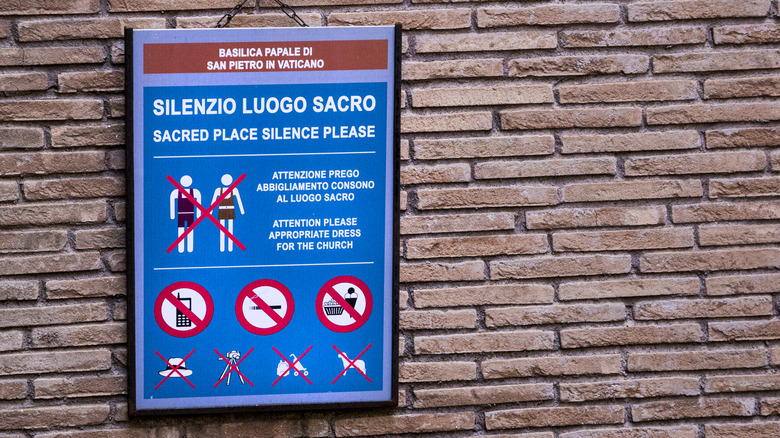
Tourists in Italy, especially in Rome, are almost guaranteed to visit at least one church, as they are must-see attractions in the city. But it is easy to forget that these are still active places of worship with a dress code based on Christian modesty. This means improperly dressed people — local or foreign — might very likely be turned away.
When entering an Italian church, all people must have their chests, stomachs, shoulders, and knees covered. This means no tank tops, crop tops, short skirts, cutoffs, tights, low cut tops, or anything of that sort. Higher necklines are also recommended. Pants or shorts should go below the knee, all shirts should have sleeves, and people are also not permitted to wear hats. According to traveler accounts, some bigger churches may provide tourists who are only somewhat out of line with the dress code a covering to borrow, but this is not guaranteed, and it is always best to show up properly dressed from the get-go rather than having to argue with security over this point and risk being thrown out.
Smaller urban and rural parishes don't have the military or police checking people's dress the way the Vatican and major papal basilicas do, so enforcement will vary. In many cases, tourists are expected to be respectful because it's the right thing to do. If, however, there is a priest or other religious authority present, an improperly dressed person may be asked to leave. Finally, these rules, despite uneven enforcement, also apply to the Pantheon. Although the building is associated with divine geometry, celestial light, and Roman mystery, the building is still a Catholic basilica and should be treated as such.
Wearing heels on old streets
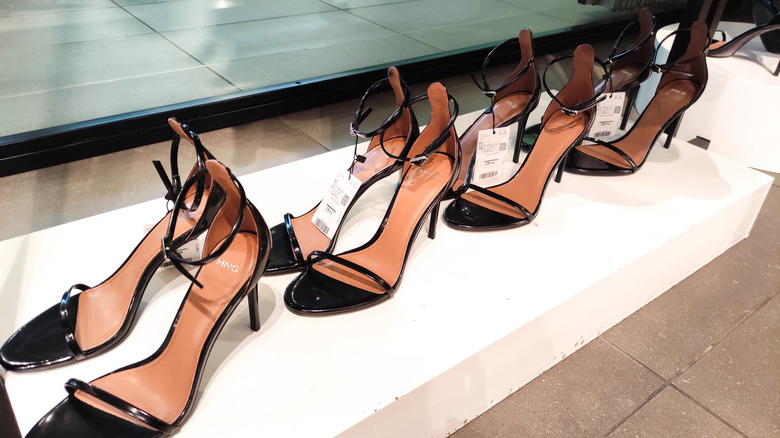
While one might think this top-tier tourist hack for an Italian vacation has to do with modesty, it's actually more about avoiding nasty foot and leg injuries that can ruin your vacation. It is understandable that a tourist visiting Italy might want to wear nice heels. It is one of Europe's fashion capitals, after all. But local Romans say it is best to leave heels, especially stilettos, at home. They are downright dangerous because in the old parts of Italy's cities, many of the streets are still cobblestone.
Imagine you're walking in stilettos. The heel slips or gets stuck in between two stones — or worse, breaks. The result could be a twisted or broken ankle and a trip to a hospital, followed by time on crutches if the injury is severe enough. Just that right there will make it very difficult to enjoy any of Italy's highly walkable cities.
Instead, visitors are best served wearing comfortable walking shoes. Low profile sneakers are always a good option, while others might prefer more formal walking shoes in shades of black and brown. Either one is fine, just make sure they coordinate with your outfit and protect your feet so you're sure to blend in seamlessly.
Wearing flip-flops off the beach
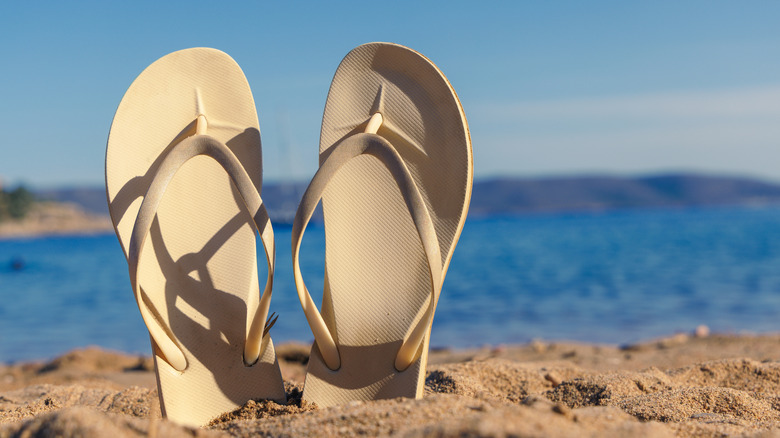
Much like bikinis and swim trunks, flip-flops are generally relegated to the realm of beach wear, according to Italians. They are perfectly good to wear to walk to and from the beach (and, of course, on and around it too). They are not, however, considered proper wear for the city, and they are definitely not the right footwear for hiking the hills behind towns, as has occurred in coastal towns along the Ligurian Riviera in Cinque Terre.
Tourists should observe this one for safety reasons. Flip-flops don't give the best traction, they aren't great for walking on cobblestone streets or worn stone paths, and they can cause you to slip, fall, and hurt yourself pretty badly. Furthermore, some places will fine you for it. The national park near Cinque Terre, for instance, will fine anyone caught wearing flip-flops off the beach $2,800.
While this fine may seem steep and a tad excessive, this is because tourists have hurt themselves trying to hike on slippery rocky paths or steep trails in flip flops. When these incidents happen, the local government has to pay to send the rescue crew, which costs the municipalities money and ties up crews that could be used to help people in need elsewhere. The high fines are mostly a deterrent to avoid the more costly problem of having to save someone, and they are easily avoided by bringing proper footwear.
Wearing designer clothes just for the sake of it
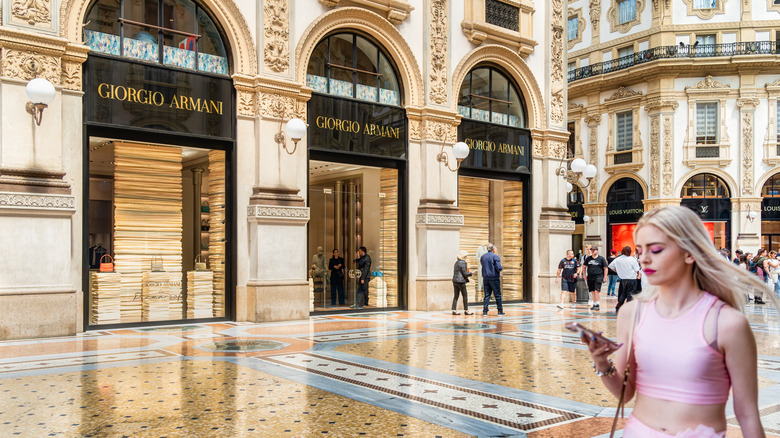
Italy is synonymous with designer brands and fashion houses such as Gucci, Giorgio Armani, and many others, but this doesn't mean that tourists need to go to the country dressed head-to-toe in these few internationally-recognized luxury brands. In fact, it is discouraged to wear designer clothing just for the sake of wearing designer clothing.
Italian society prizes style, elegance, and put-togetherness over brand labeling. Ideally, clothing should be neat, look good, and be reputably made, but that doesn't mean it has to cost a fortune. There are numerous smaller Italian clothing makers that produce perfectly good clothing for everyday wear that won't break the bank.
However, there is a subset of tourists who ignore this rule. In one of the most blatant cases, this article's writer personally witnessed a handful of tourists in a small Northern Italian town wearing Armani head to toe, complete with showy gold chains, fancy sunglasses, and hair gel. Such dress indicates an attempt to flaunt wealth or perhaps seemed (to onlookers) to fit into stereotypical perceptions of what Italians are believed to look like — which is another problem altogether aside from it being a fashion faux pas. There is nothing technically wrong with wearing designer brands, but it's better to wear them because they look good rather than to show off that you have brand-label clothing.
Walking around in athleisure

Athleisure — clothing like yoga pants, sports bras, sweatsuits, and workout clothes that double up as everyday clothes — are pretty common in America's cities. People wear it to go about their daily lives, even when not working out. In Italy, such fashion is rarer, and in the past it has been considered the mark of a tourist. This is because they are considered too casual among Italians, even for quick errands like running to the store or walking the dog. All that said, it is becoming more and more common to see Italian teenagers wearing sweats and hoodies in public, even when they are traveling in school groups and visiting churches or other major sites in major cities. Among men and boys, it is becoming fashionable to wear high-end sweats, and a tourist who can pull off the right look with sweats can probably get away with it. This is the influence of streetwear fashion spread through social media. The same goes for athleisure. The athleisure market in Italy has expanded year after year, and teenagers teenagers wearing athleisure-adjacent clothing in public in major cities is pretty common.
Ultimately, it is up to you to decide what image you want to present. As a tourist, you will not get in trouble for wearing athleisure or sweats as long as you aren't visiting a place with an explicit dress code or breaking local laws by going around without a shirt. However, be aware that impressions are important, and if you, the tourist, want to be taken seriously, then dressing like a teenager is probably not the best way to do it.
Not bringing a jacket in summer

While most of Italy is sweltering in the summer, nature enthusiasts hiking in the Alps and the Dolomites should be forewarned that it is much colder up there even in the middle of August. The higher you get, the colder it is, and if you go to the high passes towards Switzerland and Austria, you might even still see some snow.
Tourists planning a mountain hiking excursion should remember to bring warmer clothing, depending on how high they plan to hike. For instance, looking at Craveggia, a former thermal spa in Val Formazza near the Swiss border, one can see that while most days are warm in the summer, temperatures occasionally drop to 40 degrees even in July and August — the hottest months of the year. In Kurzraz (Maso Corto), a Dolomite town near the Austrian border, temperatures can come close to freezing at times. This writer has personally witnessed 44 degrees Fahrenheit in Craveggia, meanwhile about an hour and a half south in Laveno-Mombello, it was a sweltering 90 degrees. Thus, hikers must plan for unexpected cold snaps, even if it is warm everywhere else. In the mountains, the lack of proper gear can be lethal.
Wearing improper footwear for hiking
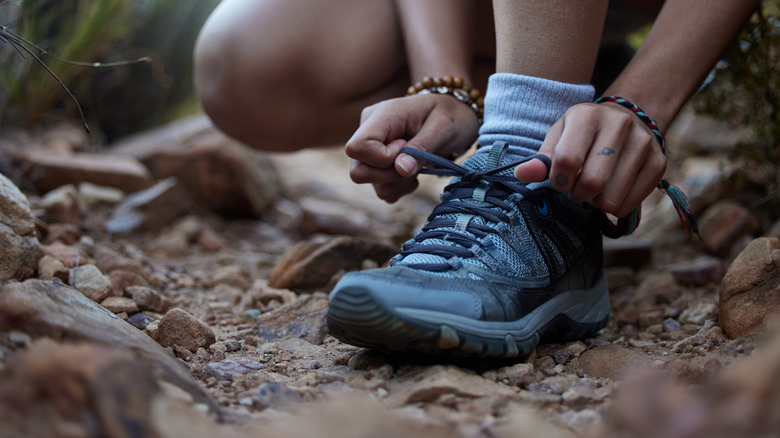
For those exploring a bit off the beaten path, Italy is full of hiking opportunities ranging from the Dolomites and the Alps up north, down through the peninsula's spine made up of the Apennines, and into Sicily. Those looking to hike the more difficult routes, especially in the north of the country, must have proper footwear for a safe and enjoyable experience.
Italian hiking trails in mountain ranges like the Alps and the Dolomites are rocky, steep, and not always well groomed. Trying to hike these in regular sneakers is a great way to hurt your feet and ankles if you fall awkwardly. Injuring yourself on a mountain carries all sorts of risks, especially if rescue teams cannot get to you immediately. The solution is simple: Make sure you have proper hiking boots for these trips with good ankle support. For lower altitude hikes in places like Cinque Terre, travelers suggest bringing boots if there is any chance that conditions will be slippery, as sneakers do not always have the best traction.
Finally, for hikers, there is the added risk of snake bites. Among the dangerous animals you might see in Italy are vipers. Although snake bites in Italy are rare, if you happen to get one, it can ruin your vacation with symptoms like diarrhea, vomiting, and nausea. Proper footwear and socks can help prevent these snakes from biting you if you do run into one.
Wearing too much jewelry
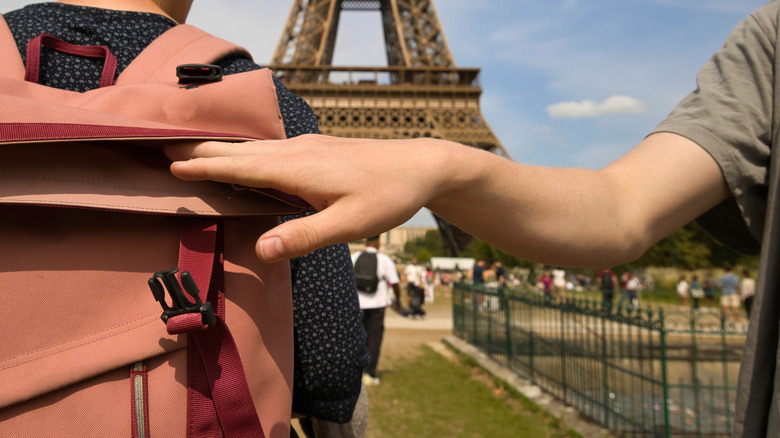
While this is a rule that should be followed no matter where you are traveling, but it applies even more-so to Italy, which, according to stats compiled by UK travel insurer QuoteZone, is the European capital of pickpocketing and snatching (via USA Today). Among those items most likely to be stolen are expensive handbags, wallets, and jewelry. According to the stats, which date to 2024, Italy had 478 different places that were mentioned as hotspots for pickpockets and snatchers.
Not wearing too much jewelry is a major but oft-unstated hack that can protect you against pickpockets. A tourist wearing a large amount of expensive jewelry (or watches, handbags, and phones) immediately signals to would-be-criminals that they have a lot of money in their wallets to take. If you are wearing jewelry, keep it discreet and to a minimum, and you should have no issues. Finally, some pickpockets have gotten very sophisticated, using different distraction techniques that include spilling liquid on you, thrusting a baby at you, and trying to sell you things in order to snatch your stuff, so don't assume every person being friendly is doing so out of the kindness of their hears.