
11 Once-Popular 80's Travel Trends That Are Now Outdated
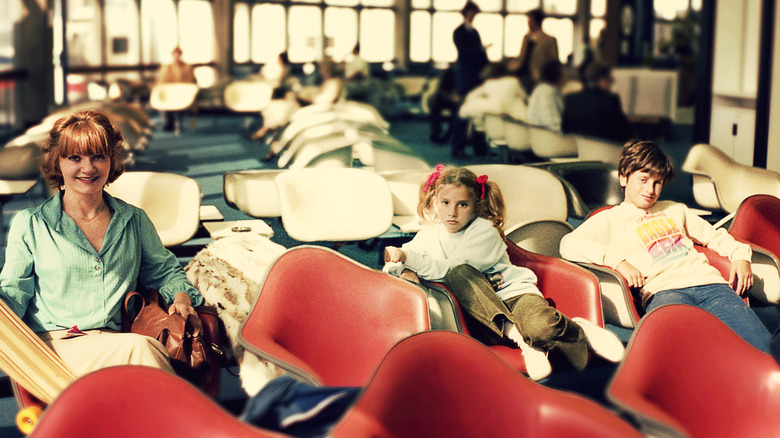
As hard as it might be for children of the '80s to fathom, the decade that brought us the Apple MacIntosh, Donkey Kong, and MTV is as distant a memory to the children of today as the 1950s were to the kids back then. It was a time without social media and without internet, when mobile phones were restricted to an ultra-elite clientele and far too big to fit in a pocket. At home, a full third of all Americans tuned in to watch Dallas every single week, and teenagers spent their free time making endless circuits of malls and roller rinks, or talking to one another via landline phones about what happened at the roller rink or mall. Meanwhile, deregulation led to overseas travel becoming ever-more affordable, and the dawn a golden age of vacationing.
In the U.K., tourists headed south in search of something called sunshine. Over in America, vacationers spent their time in the Caribbean, wandering the streets of Tokyo or London, discovering the joys of the Athenian Riviera or partying with Europeans in Ibiza. Some of those popular destinations are making a comeback, but the way we got there, the culture of travel itself, is lost to the tides of time.
However, traveling internationally back then also had plenty of hurdles.The outdated trends below are a mixture of lived experience and meticulous research. While nostalgia may soften their inconvenience looking back, some of these went away for good reason.
Travel agents and brochures
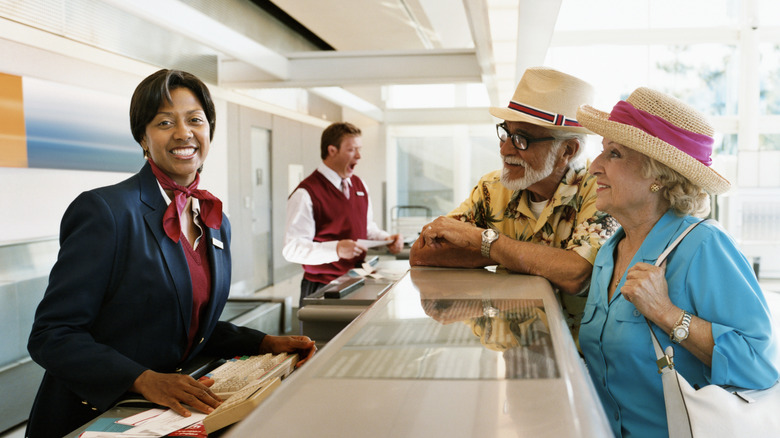
The information age brought a whole raft of tools to the itinerantly minded, but in the 1980s print media and face-to-face meetings with friendly travel agents ruled the day. A search for cheap flights had to be done in person.There was no Googling the best destinations for off-season travel and the cheapest beach holidays in Europe. Tickets weren't stored on phones with cameras that could take the dimensions of your luggage with pinpoint accuracy. Indeed, the 1980s experienced a lack of internet so palpable that most people would have incorrectly surmised that it hadn't even been invented yet.
Travel agents acted as brokers. People were free to pop into any shop that they stumbled upon, but many customers stuck with, and often swore by, their own trusted person, just like their favorite hairdressers. The could recommend vacations, search for flights, make hotel reservations, and advise you on issues such as vaccinations, currency exchanges, and when not to drink the local water.
And then there were the brochures — you would find stacks of them in every travel agency. Full glossy magazines filled with temptingly idyllic locations, price guides, and special offers, available for free. People thought nothing of grabbing stacks of them to take home and peruse at their leisure. Travel agents still exist today, but the days when they controlled 90% of the market are long gone, and a future where they vanish from the collective consciousness altogether is fast becoming a reality.
Suitcase food
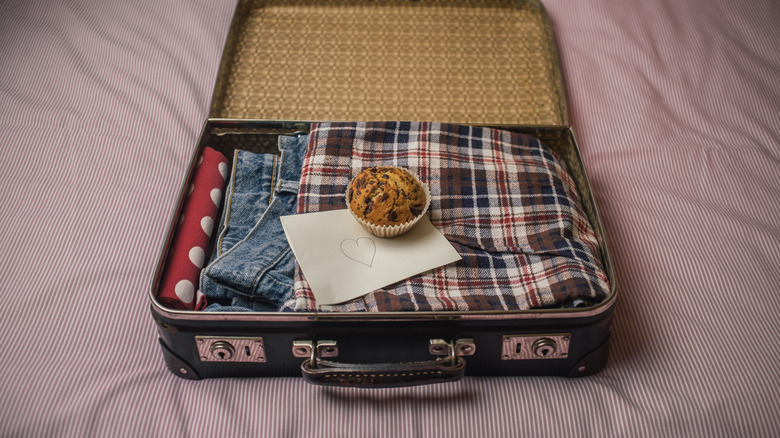
The 1980s acted as a bridge between an increasingly cosmopolitan world and more traditional views on life. Travel brought the existential horror of facing desperately unfamiliar cuisine. For some, that challenge proved too great, leading to additional suitcases full of food. In Asia, the lack of on-the-fly translations often meant there was no way to know what certain dishes even were. In Europe, travelers turned their noses up at the very idea of escargot, fled from the notion of a quattro formaggi without pausing to consider what it might entail, and most point-blank refused to engage with the Nordic propensity to consume fermented fish.
Of course, back in the day, there were no baggage fees, weight allowances were far more generous, and restrictions on what you could and could not bring were comparatively lax. British tourists loaded up their suitcases with tins of Baked Beans and bottles of HP Sauce. Americans could stuff their luggage with Kraft Dinners, boxes of Kellogg's cornflakes, Kool-Aid sachets, and ranch dressing without raising a single eyebrow. Meanwhile, other nationalities practiced their own brand of culinary xenophobia, safe in the knowledge that few, if any, items would ever be confiscated by airport authorities.
Locals took note: In Spain, British tourists could dine exclusively upon huevos estrellados — runny eggs and French fries — while Americans eventually did not have to look far before encountering burgers, hot dogs, or a familiar fast food joint. Package holidays began to take pains to emphasize the availability of comfort options. Although such attitudes remain to this day — albeit in less exaggerated forms — the idea of bringing an entire suitcase of creature comforts along for the ride has faded entirely.
Polaroids and disposable cameras
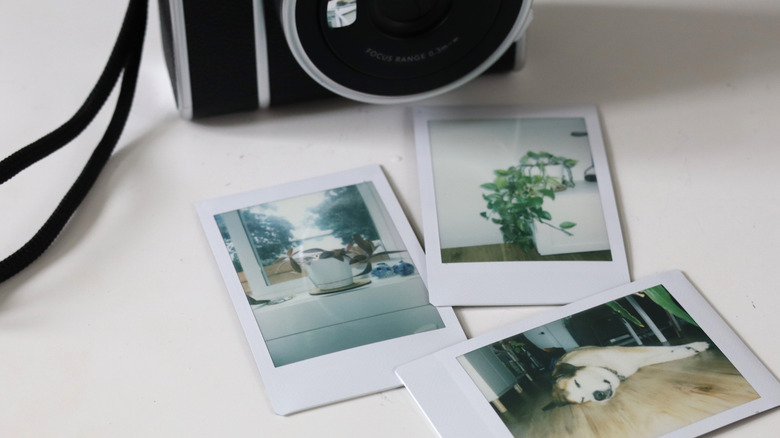
As we mentioned before, in the 1980s cell phones were exceedingly rare, and none them could take pictures. Cameras usually arrived in one of three flavors: ones that required the film to be developed back home, disposable versions of the same, and Polaroids, which spat out your pictures more or less in real time.
The quality of pictures you could take with said devices varied greatly, but those that relied on film generally produced the best holiday snaps. Of course, there was no real way of ensuring that you'd taken an album-worthy photo, nor any opportunity to erase any bad-angle selfies that you'd accidentally taken. No, the rolls of film came home with you, and you had to take them to a shop to be developed, which typically took around 24 hours.
Polaroids, on the other hand, offered something akin to the instant gratification of today. The cameras could spit out a photograph in mere seconds, and as long as you took care not to shake the picture, you only had to wait around a quarter of an hour for a color image to develop. The process was only mildly torturous.
Actual maps

Back in the 1980s, a stack of foldable maps and ring binder route planners was a common sight on the back seat of most cars. In truth, the lack of GPS really didn't feel all that injurious. For most journeys, getting from A to B was a straightforward affair. We don't need satellite navigation to get to work today, and we didn't need it back then. The route to the in-laws' biannual cook-out in the Hamptons was etched in memory, and we could find our favorite deli without too much hassle. For most general travel, road signs did the heavy lifting. It was only when we attempted to leave our geographical comfort zone that things began to unravel.
Driving cross-country required actual physical maps. Planning routes took days of preparation and often involved using neon highlighters to trace color-coded routes. Enormous sheets of paper were folded and unfolded on the fly. Traffic reports — delivered via local radio — warned of troubles ahead, promoting in-transit arguments and the inevitable wrestling of well-thumbed maps.
Things weren't that much better overseas. Drivers still had to rely on physical maps to navigate unfamiliar ground, and city slickers were forced to risk attracting pickpockets by opening one up in a public space. Getting lost was a given, and agreeing to a prearranged meeting point in the event of an unscheduled separation was considered the very height of good practice.
Scarily lax security at airports
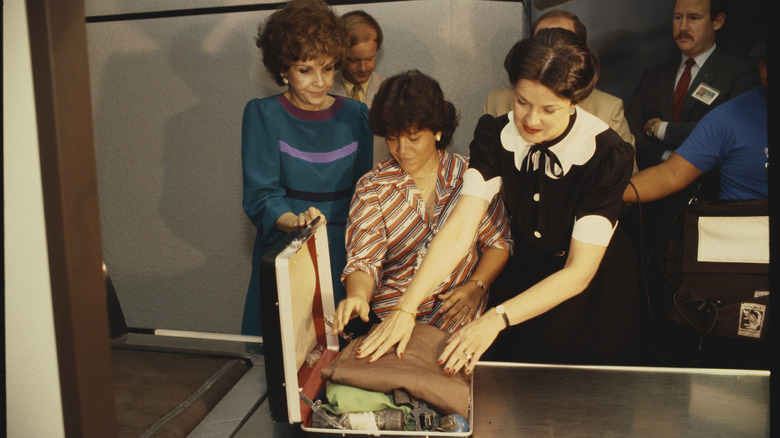
These days, the list of do's and don'ts when it comes to keeping people safe while traveling by air is as extensive as it is now familiar. Carrying aerosols is a no-no, and alcoholic beverages are subject to restrictions. Ammunition is appraised on a case-by-case basis, and antlers are weirdly allowed on most flights. Meanwhile, toiletries are subject to strict volumetrics that would have confounded the minds of the 80's traveler. The list goes on and on, and it includes literally dozens of forbidden carry-ons that you absolutely would have gotten away with in the 1980s.
Knives, darts, and scissors were just fine and dandy, as were entire bottles of liquor and a refreshingly lackadaisical approach to highly volatile aerosol cans. Still, it wasn't a complete wild west. A 1981 rule kept the proof level of hand luggage alcohol below 70% to avoid potential fire hazards, and you were forbidden from knuckling the whole bottle en route for obvious reasons. Mandatory gun screening began in 1974, and by 1978 it was forbidden to stow a loaded gun in your checked baggage.
Cassette tapes and CDs for travel music
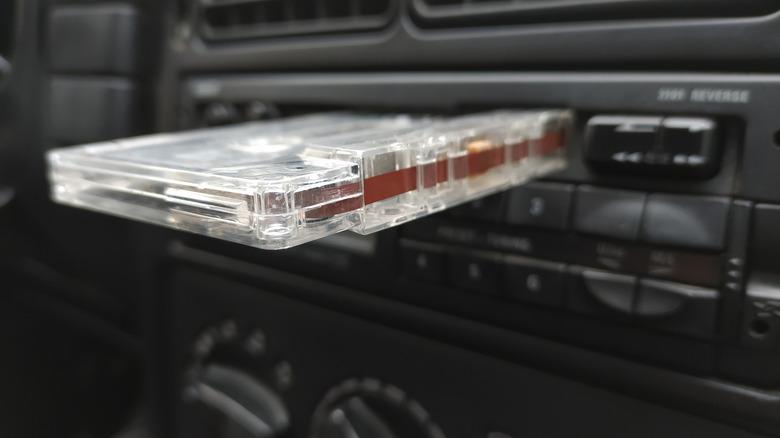
While aviation authorities were getting to grips with the wisdom of checking for explosives prior to embarking, those opting to travel across terra firma had to grapple with a less dramatic issue. Deciding what to listen to generally boiled down to two options: turning on the radio or rifling through a stack of dusty cassette tapes.
Car radios of the AM variety had been around since the 1930s, but 1953 saw the introduction of much higher-quality FM bands. Chrysler rolled also out a car-mounted turntable option for the playing of vinyl records in 1955, but it never caught on for reasons that probably should have been obvious.
By the time 1965 rolled around, cars installed with 8-track cassette players were all the rage, and with them came the option of selecting your own music. However, the format was notoriously hissy, and the tapes themselves were prone to unspooling after continued use, so always having a pen or pencil on hand to fix it was a must (if you know, you know). The cassettes also took up a lot of glove compartment real estate, collected dust, and had to be physically ejected from the player and flipped over in order to access the second half of the album. Car-ready CD players didn't arrive until the mid-80s, but they were restricted to high-end vehicles until the decade was nearly over.
Mailing postcards

During the 1980's, sending a message back home was as analog as it came. With no Instagram feeds, text messages, or telecommunication devices built into Polaroid cameras, snail mail was the only option. For vacationers in the 80's, the speed of mail was hard-baked into the experience via a never-ending stream of hastily scrawled postcards.
For those unfamiliar with the concept, the postcard worked something like this. First, you would travel to a picturesque location such as a much-visited European mountain town nestled against a blissful lake. Next, you would choose a card that best fit the experience you were having, usually featuring a professionally taken picture of the area. In some cases, you would keep the postcard for yourself; not everyone had decent cameras back then, and it's not like drones were a thing. In most cases, however, they would be sent back home. There was just enough space on the back to attach a stamp, add an address, and scribble a few words in incomprehensibly tiny writing.
The postcard's fall from grace was gradual, but inevitable. You can still find them for sale in most tourist hotspots, and their desirability as a souvenir hasn't entirely fallen out of favor — millions of people still send wish-you-were here cards to loved ones. However, the almost ritualistic expectation of finding one sitting in your mailbox two to three days after your neighbors arrived back home (and told you all about how fabulous their break had been_ is largely a thing of the past.
Smoking on airplanes

As if the idea of hurtling through the sky in a metal tube at speeds approaching Mach 1 wasn't terrifying enough, smoking was allowed on almost all flights. Yes, despite the obvious fire hazard it presented, back in the day the no-smoking lights situated above your seat turned both on and off.
During the 1980s, it felt like almost everyone smoked. In Japan, there were 32.6 million smokers out of a total population of 116 million. In 1983, some 39% of U.S. adults admitted to having smoked at least once during the week. Despite the fact that 1984 brought the joys of nicotine replacement therapy through much of the decade, the idea of surviving a 20-hour flight without lighting up was anathema to most smokers.
The dangers of onboard fires were of course well understood, and as the smoking habit began to decline, airlines made moves to ban the practice. The U.S first banned smoking on flights of two hours or less in 1988, extending it to six-hour domestic flights just two years later. The EU banned smoking on planes entirely in 1997. Today, no major airline allows people to light up, and smoking at airports is restricted to specific areas, and perhaps even deliberately grotty areas.
Traveler's checks
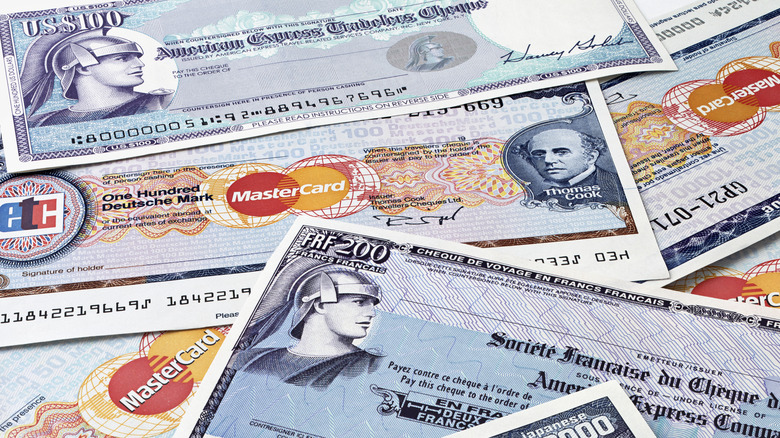
Travelers' checks still exist, but they are most assuredly a relic of bygone days. The credit and debit cards were not alien to people in the 1980s, but it was far from a given that they would work everywhere. Checking balances in real time remained a technological hurdle, and although some 100,000 ATMs were in situ across the globe by the mid-1980s, finding one abroad could be a chore. Meanwhile, the thought of carrying around large sums of money was as suboptimal as it remains today. The traveler's check was a halfway measure.
The concept was simple enough. You ordered the checks before leaving for your vacation, and you could, in most places, simply spend them like money. Alternatively, you could change them back into enough local currency to get you through the day or weekend via a bank, bureau de change, or travel agent. The clever part was that, unlike actual cash, they could be rendered null and void. You had to make a list of the serial numbers on each check and, if stolen or lost, you could use said numbers to cancel the entire batch before too much damage was done to your bottom line.
Communal in-flight movies
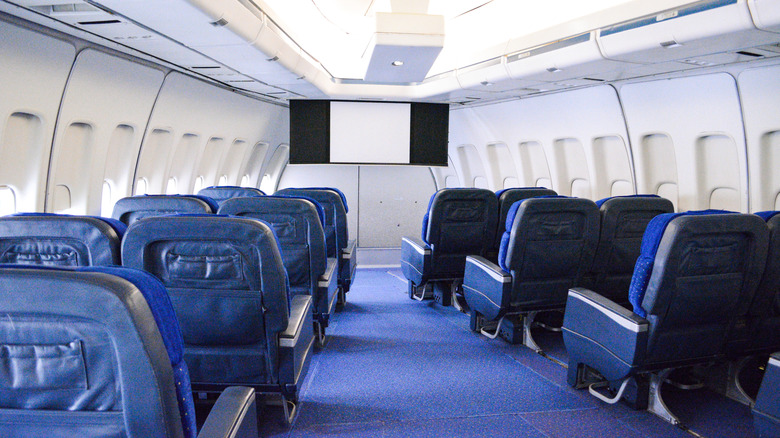
The thought of making it through a long flight without your own personal entertainment system is intolerable to the modern traveler, but back in the day even watching a movie was a communal affair. In 1921, passengers on board an Aeromarine Airway flight out of Chicago were treated to the world's first in-flight movie, a promotional puff piece called "Howdy Chicago!" — which encouraged its viewers to look out the window at the city below. The event proved the practicality of keeping passengers occupied through cinema, but it would not become a regular feature of flying until 1961.
During the 1980s, options were similarly limited. E-readers and tablets were still decades away, and the idea of placing a small screen at the back of each seat simply was not practical. Physical books and Walkmans ruled the day, but passengers could still enjoy a movie or two on their flight. As in 1921, however, the film would be projected on a screen at the front of the cabin. Nobody had any say about what movie to watch, there was no pause for bathroom breaks, and when the credits rolled, you simply had to find something else to pass the time.
Children in the cockpit

These days the idea of letting any passenger, let alone a child, into the cockpit to learn how to fly an airplane sounds like an exercise in insanity. And yet, even though the 1980 movie "Airplane!" parodied the concept, such a thing happened on a fairly regular basis. It was a well-meaning, somewhat folksy treat offered to overexcited youths, no doubt bored by the lack of in-flight activities. Sadly, it was also one that ultimately proved fatal.
In 1994, an Aeroflot flight traveling between Moscow and Hong Kong crashed, killing everyone on board. The subsequent investigation revealed that children were allowed to sit in the cockpit while the autopilot had control of the vehicle. They fiddled with the controls, the autopilot disengaged, and tragedy ensued. Today, airlines operate under what is known as a sterile flight deck. Visits to the cockpit are restricted to those essential to the task at hand.
Methodology
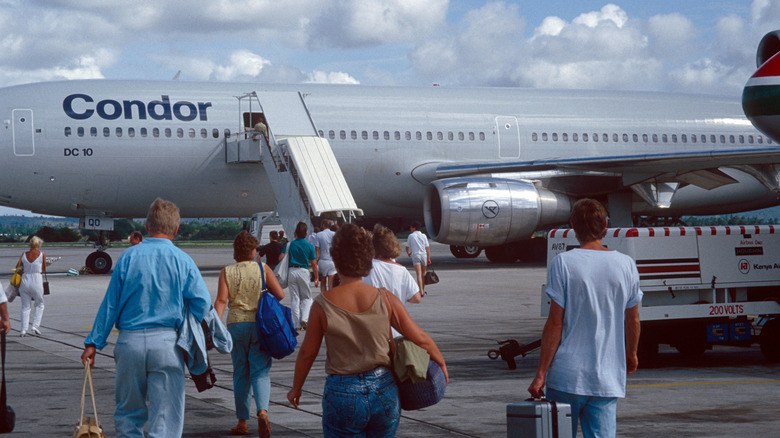
The lived experience of traveling in the 1980s is still fresh in the minds of some of us old hats, and such memories informed much of this article. Of course, nostalgia has a way of warping even the most uncomfortable of reminiscences. Here, we tried to find a balance between the old-school ways of travel that evoke wistful prose and those that make us thankful for the convenience of modernity. Facts and figures were, of course, taken from official sources, and the fuzzy edges of recollection were smoothed out via a curated list of blogs, news items, and articles.