
Chicago's Classic Park Has An Underground, Artsy Feel
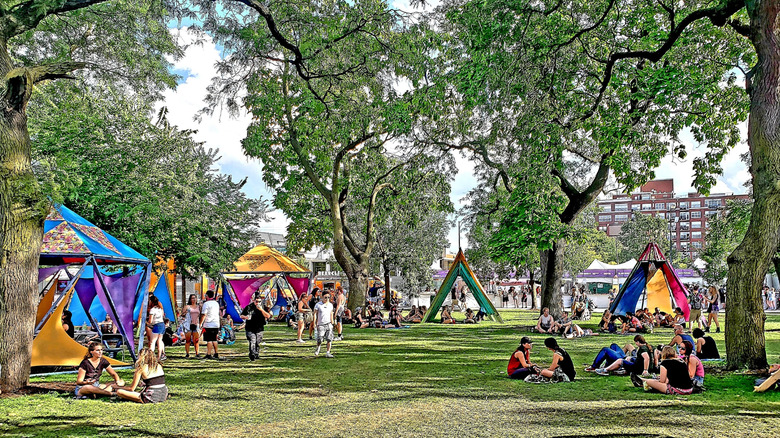
As the birthplace of the skyscraper, Chicago is known for iconic buildings like the Rookery Building, Tribune Tower, and the many architectural wonders along Lake Shore Drive. But the city isn't all steel and glass. There are more than 600 parks tucked between its skyscrapers. Some are just as renowned as its buildings, like the sprawling (and free) Millennium Park in the heart of downtown or the Wild Mile, the world's first floating eco-park. Others are more under-the-radar, making them ideal escapes from the crowds and noise of Chicago's streets. One of these is Union Park, a 14-acre historic green space that has been a hub for arts and culture for over a century.
Union Park is in the West Loop, one of Chicago's most vibrant neighborhoods that's become a foodie hotspot thanks to the impressive variety of acclaimed eateries along the stretch of Randolph Street known as Restaurant Row. Union Park anchors the western end of Randolph Street, just a few minutes' walk from some of the city's best places to eat. It was one of Chicago's first public parks when it was created in 1853.
In the 19th century, the park's artificial lake was a popular place for kids to cool off in the summer, and it featured landscape innovations like an experimental wildflower garden designed by Prairie Style architect Jens Jensen. It was also the first of Chicago's parks to integrate in the 1910s, paving the way for jazz and gospel performances that developed its reputation as a venue for music, dance, and theater. While the lake has since been replaced by a swimming pool, Union Park is still known as a place to listen to music and enjoy the outdoors right in the city.
Festivals and music in Union Park
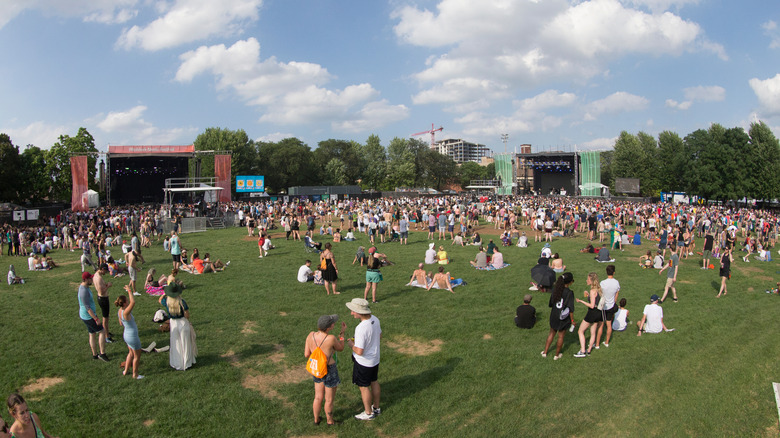
While Union Park hosted musical acts as early as the 1920s, its reputation as a venue grew through the 1930s largely thanks to the efforts of music teacher Anna Walker. She organized so many cultural events in Union Park that the Chicago Parks Department started calling it "Our Broadway." One of the things Walker organized was the West Chicagoland Music Festival, which ran for several years after she started it in 1935, bringing in nationally known performers like Thomas A. Dorsey's gospel choir and the Keen Fleming Orchestra.
The Union Park festival tradition is alive and well today. In May, over Memorial Day weekend, the inaugural Forever Mine Music Festival will feature dozens of R&B and house music artists across three stages, including names like Keyshia Cole, Shaggy, and Kelly Rowland. This nostalgia-laced festival celebrates the R&B, dance, and club culture of the early 2000s, and also includes live art and Y2K-styled photo booths. Late June is the time for Michelada Fest, a three-day Latino festival with live music and local food vendors (and the first day is free). On the other side of summer, over Labor Day weekend, is the four-day ARC Music Festival, which has brought techno and house music to Union Park since 2021. The 2026 ARC festival is the biggest one yet, newly expanded to four stages over four days plus five ARC After Dark concerts.
These festivals aren't the only performances you can see in Union Park, either. It often hosts concerts from Chicago's Night Out in the Parks series, which are typically announced in early May for the upcoming summer. There is also an indoor stage in the fieldhouse that's used for events like concerts and movie screenings.
Visiting Union Park between festivals
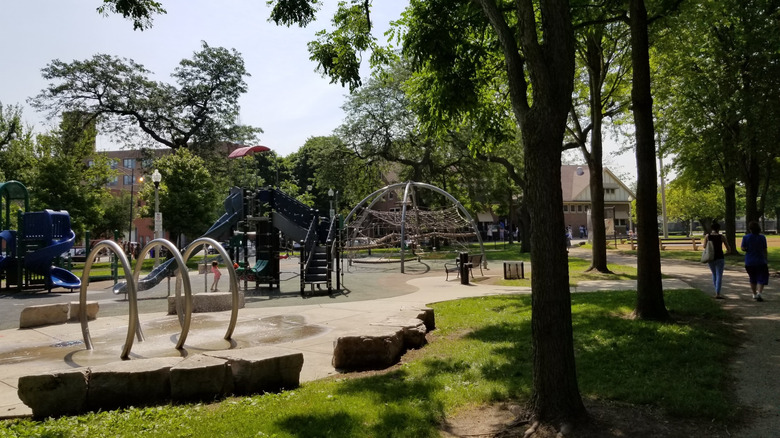
When there aren't any festivals or shows on the schedule, Union Park is a much more laid-back place. You'll see local residents lounging in the shade of the picnic grove, while neighborhood kids cool off in the swimming pool or the spray zone on the playground. Other kids come to Union Park to get their hands in the dirt of the Harvest Garden, a three-season organic vegetable garden that's also a free educational program. You'll find the garden area in the northwest corner of the park if you want to check out what the kids are growing.
One unique feature of Union Park is that it's home to Project Beacon, the first outdoor squash court in the United States that's open to the public. Built by U.S. Squash and the Professional Squash Association (PSA) Foundation, Project Beacon opened in May of 2025 during the PSA World Championships in Chicago and also showcases work from local artists on its exterior walls. Squash isn't the only sport you can play in Union Park, which also has baseball and soccer fields, along with courts for sports like tennis, basketball, and pickleball, a relatively recent addition that's part of Chicago's citywide Pickleball Mania program. That same renovation also resurfaced pathways to ensure the courts are wheelchair-accessible.
There's plenty of history to explore in Union Park. The West Loop was the site of the 1886 Haymarket Affair, a workers' rights rally that turned violent and is considered a major moment in American labor history. That history is honored in Union Park with a statue of Irish labor organizer James Connolly. The statue is on the park's northern edge, near the 1907 statue of Carter Harrison, the "people's mayor" of Chicago, who was assassinated in 1893.