
The National Parks System In 1960 Looked Completely Different. Here's What Changed.
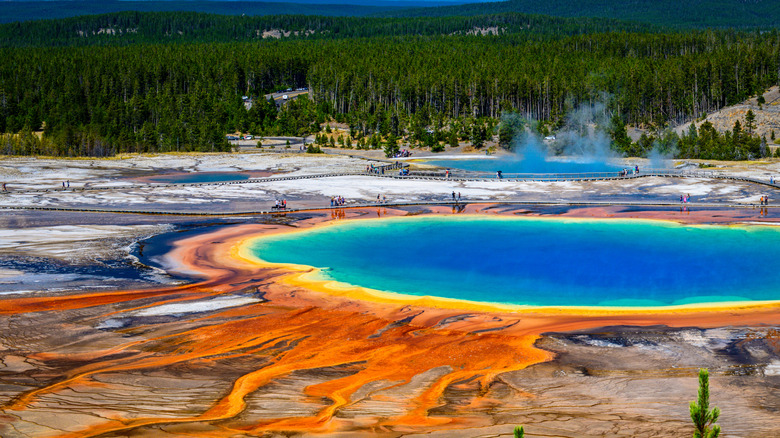
The concept of preserving U.S. land for future generations to enjoy dates back to 1832, when President Andrew Jackson established the Hot Springs Reservation in Arkansas, known today as Hot Springs National Park. Other areas followed: the Yosemite Grant Act of 1864 preserved that territory for further recreational purposes, and in 1872, Yellowstone became the nation's first national park. It wasn't until 1916, however, that the Organic Act established an agency to govern the burgeoning number of parks. In August that year, the National Park Service came into being.
Today, there are 63 national parks, but when you include all the historic battlefields, historic sites, and national monuments, the total rises to 433. Indeed, the complete list of everything the National Park Service (NPS) handles makes for an extensive read. Wrangell–St. Elias National Park in Alaska, at over 13,000 square miles, is the largest; the Great Smoky Mountains is the most popular national park, averaging 12.2 million visitors every year, according to National Park Service visitation data.
Over the decades, laws were brought in, amended, superseded, and redefined. By the middle of the 20th century, it was apparent that more needed to be done. The changes implemented since 1960 have profoundly altered the way parks operate. The long and storied history of America's 433 protected places proved to be as filled with vicissitudes as the turning of the seasons themselves.
Truly wild wilderness areas were thrown into the mix
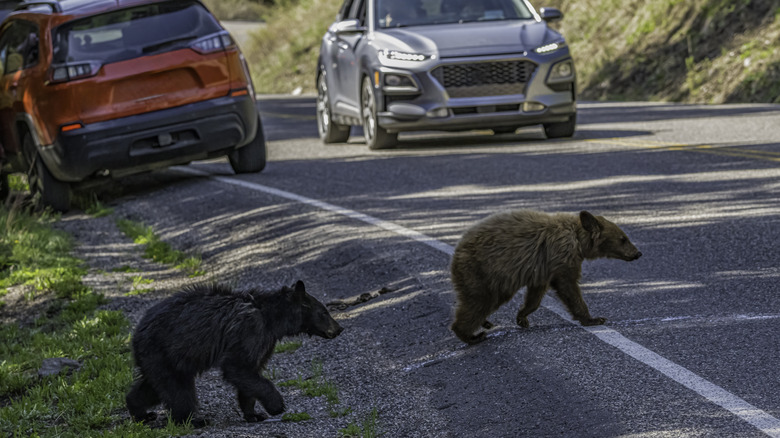
The Wilderness Act of 1964 did not so much solve a problem as it did anticipate one. Anyone who has ever visited a national park will have noticed that, despite their intrinsic beauty, few of them are completely wild. True, they conjure an idealized image of vacations spent getting back in touch with nature, but all that tourist footfall dilutes the idea of a pristine wilderness untouched by man. Can a wilderness truly be said to be wild when it is dotted with manmade necessities? Way back in 1964, there was a pervasive feeling that the lure of tourism dollars might prove too much of a temptation.
Take Yellowstone, for example. The park has a total of nine separate lodges scattered around 2.2 million acres. It sports a network of roads, trails, and housing units. There are campgrounds, wastewater infrastructure, telecommunications, and a whole host of heating plants, bridges, and marinas scattered across the landscape. Yellowstone's pedigree meant that much of it was already protected, but a national response was needed.
The signing of the Wilderness Act set aside 9.1 million acres of land — a figure that has since risen to 112 million acres – as designated wilderness areas. Vast tracts of these areas fall under NPS jurisdiction, while others are administered by the United States Forest Service, the Bureau of Land Management, and the United States Fish and Wildlife Service. No power lines could be laid down in these areas, no roads would ever cut through the landscape, and no planning permissions of any kind are likely to be granted.
The land and waterways are now protected by a taxpayer-free fund
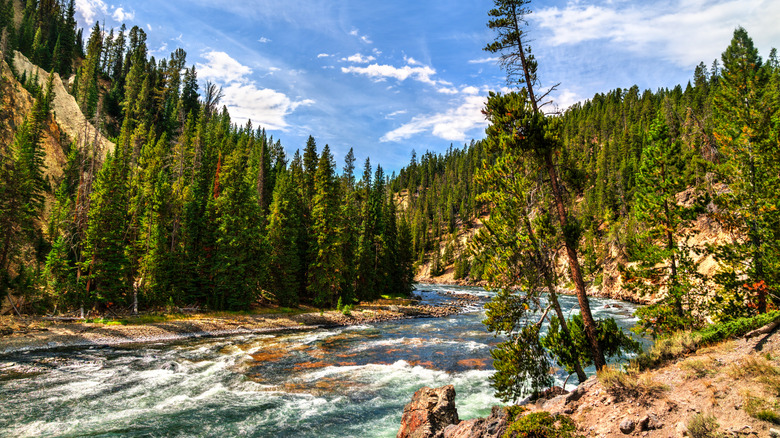
Congress must have had an eye on conservation in 1964 because the Wilderness Act was not the only piece of legislation to redefine the National Park System. That year, the Land and Water Conservation Fund was set up to preserve waterways and sites of cultural significance. Vast swathes of Federal Land needed attention, and the national park system was to be included in that remit.
The idea of visiting some of America's deepest inland lakes is viable at least in part due to the fund's existence. So many fishing and kayaking trips depend on its largess. In some cases, such waterways are remote enough to look after themselves. Others, however, need more careful maintenance thanks to their proximity to human intervention. Lake Superior has a long history of commercial fishing, the Yellowstone River basin suffers from downstream water quality issues, and, across the nation, the effects of climate change have begun to take their toll on delicate water systems. Anything that has a degenerative effect on water systems risks damaging surrounding ecosystems as well.
Tackling such issues is far from an inexpensive exercise, which is where the Conservation Fund comes in. The 1964 Act used profits from offshore oil and gas leases to protect the parks. To date, grants have been issued to over 46,000 projects across the nation. In 2019, the Conservation, Management, and Recreation Act was passed, removing the need for Congress to reauthorize the fund every year, making it a permanent source of revenue for the National Park Service.
Sites of historical significance have been thrown into the mix
The initial intent of the national parks, as stated by the 1916 Organic Act, was certainly noble, but it was also limited in scope. The wording centered around keywords such as conservation, scenery, and wildlife, and focused on what it described as natural and historic objects. What it did not do was specify what constituted an historic object, nor what measures should be taken to preserve them for future generations.
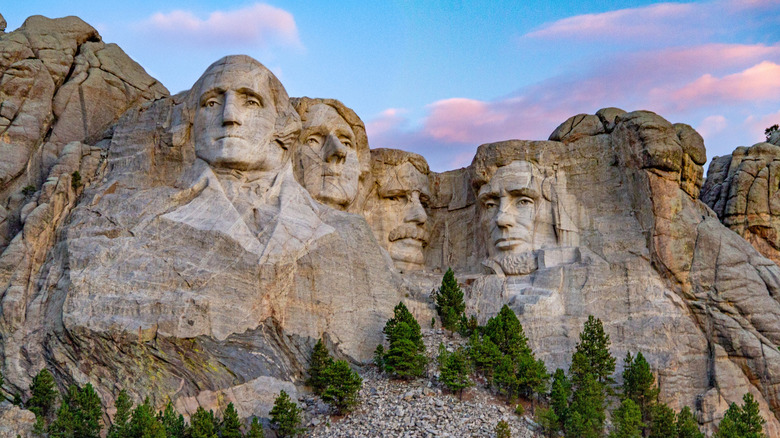
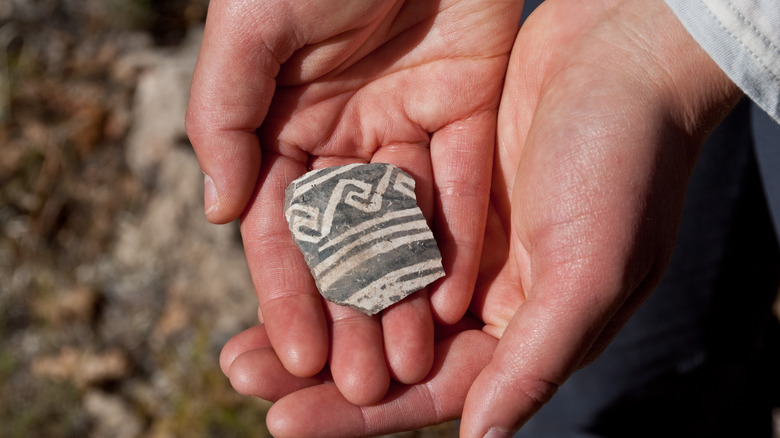
In 1966, the National Historic Preservation Act was passed to clarify the issue. It authorized the National Register of Historic Places, which has identified over 100,000 of them, preserving monuments such as Mount Rushmore, Ford's Theatre, and Fort Bowie. It also provided a federal mandate to balance conservation with the protection of culturally significant locations, creating a harmony between the two that had not existed before. Immediately, the parks' natural beauty was forced into an equal coexistence with cultural assets. The Act also signaled an end to the more cavalier ways of extracting archaeological data from the park system. Such activities were now part of a federal mandate, and the preservation of objects of interest was subject to strict guidelines and professional accreditation.
There have been several amendments. In 1998, they clarified procedures for state, local, and tribal preservation programs. In 2011, national register eligibility rules were tightened. Lastly, in 2012, an amendment required those undertaking actions that might affect an historic property to consult with either the State or Tribal Historic Preservation Officer.
The park system expanded into more urban areas
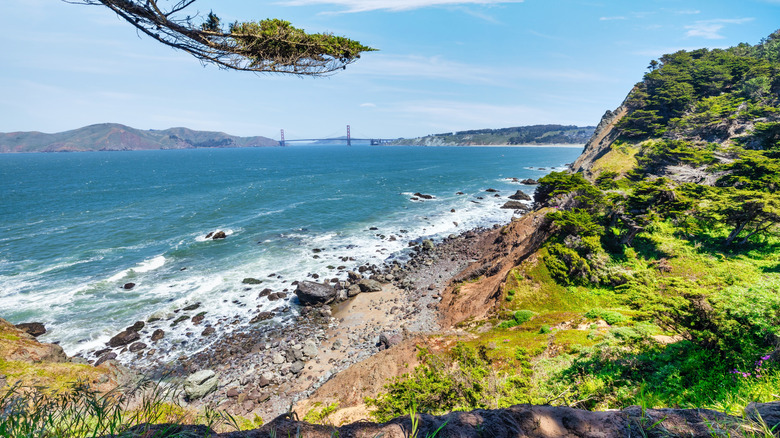
During the 1960s, efforts were made to democratize access to the great outdoors. In 1963, President Kennedy created the Recreation Advisory Council, and just one year later, legislation was passed to establish the Lake Mead Recreation Area, protecting one of America's most beautiful and dangerous areas for the first time.
Several similar locations near urban centers followed, most notably the establishment of the Golden Gate National Recreation Area in 1972, now an iconic destination and one of America's most visited national park sites. The Sawtooth National Recreation Area followed in 1972, as did the hiker's paradise that is the Oregon Dunes National Recreation Area, and Ohio's Cuyahoga Valley National Recreation Area came in 1974.
The National Parks and Recreation Act arrived just four years later, with the stated aim of balancing conservation efforts with the need to provide rights of public access to outdoor activities. The ever-visitable Delaware Water Gap followed in its wake, and today, there are 18 National Recreation Areas spread across states such as Texas, Colorado, West Virginia, and Utah. For many Americans, camping trips and days spent kayaking on the river moved from a theoretical luxury to a protected right backed by the authority of the United States Congress. Still, some regions feel underserved, namely the Central Plains.
The Redwood Act strengthened the NPS mission

The Redwood Act of 1978 further refined the notion that National Parks required robust protection if they were to be enjoyed by generations to come. The Act's principal focus was to preserve irreplaceable redwood forests, in particular those contained within California's 55,000-acre Redwood National Parks, at both state and federal levels.
The act added 48,000 acres to the existing system, almost doubling it in size. Visitors were now free to hike, drive, or ride through the majestic forests and stunning locations such as Endert's Beach, Klamath River Overlook, and the Trillium Falls.
Another amendment to the Organic Act addressed the economic impact on local communities. It created a Redwood Employee Protection Program and offered retraining to those in the lumber industry who had lost work thanks to the park's expansion. It also granted equal legal status to all parks and included a non-derogation clause that forbade the National Park Service from any action that diminished or harmed a park without Congressional approval.
The frenzy of damming rivers came to an end
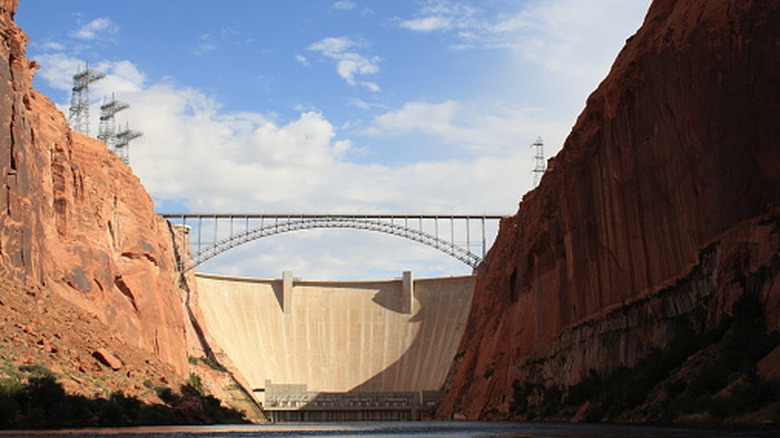
According to the National Aquatic Barrier Inventory, there are some 550,000 dams scattered across the United States. The history of these projects dates back to the early 1800s, when the Rocky Mount Mills Dam was used to power a nearby cotton mill. The mega dam era arrived in the wake of the Great Depression, beginning with one of the world's most recognizable engineering projects, the Hoover Dam. Construction began in 1930 and ended in 1936, creating Lake Mead, which became a National Recreation Area in 1964, where visitors could enjoy hidden hikes with views of the dam.
The frenzy of dam construction peaked in the late 1970s with the New Melones Dam, before focus shifted to shoring up existing infrastructure during the 1980s. The writing was on the wall long before this took place, however. In 1968, the National Wild and Scenic Rivers Act threw around some impressive numbers, but with over 3.5 million miles of waterways scattered across the country, it was necessarily limited in scope. As the 21st century rolled on, an understanding of the ecological impact of damming so many rivers became increasingly apparent, and this — combined with the looming specter of crumbling infrastructure — led to a large-scale commitment to dam removal projects.
The total land area of the parks has doubled in size
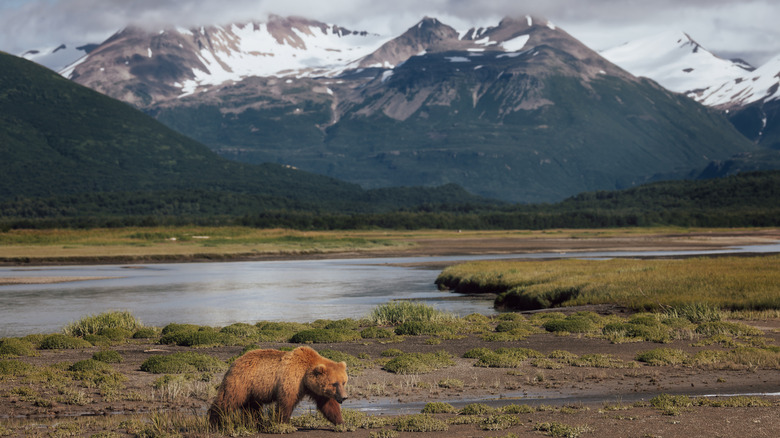
With awesome mountain ranges, sweeping forests, and some of America's deepest lakes, Alaska remains among the most untouched landscapes in the United States. The population density in the "Last Frontier" was a mere 1.3 people per square mile. Still, Alaska lacked many of the protections afforded to other regions until the Alaska Conservation Act of 1980.
The Act expanded the scope of three existing national parks, created 10 new ones, added a couple of national monuments, and set up federal protections for dozens of wild rivers and wildlife reserves. It also added a staggering 43 million acres to the total land area devoted to national parks, doubling the available recreational land overnight.
The bill also introduced rights for subsistence living, allowing Alaskans to hunt, fish, and gather under conservation law. Today, it's possible to visit one of the largest islands in America to view and hunt wildlife while enjoying some of the best hiking around. Some 2.7 million tourists visit the state every year, a metric that seems set to increase over the coming years.
There has been a merger of management and science
Back in 1916, the original Organic Act popularized the idea of preserving the natural world for today and tomorrow. But questions of how to manage these nascent parks and what to prioritize remained. In fact, why do it at all? Conserving beauty, certainly, but the dollar value of such spaces was never lost on those making the decisions. Conflicts of interest between commerce and conservation soon mounted.
The issue wasn't settled until the passing of the 1998 National Parks Omnibus Management Act. Science would lead the way. The basic premise was to mandate that NPS decisions had to follow scientific rather than commercial imperatives. The service formed university partnerships, kept an inventory of long-term trends, and hired management based on academic expertise. The parks remained places for people to vacation and unwind, but such activities were secondary to conservation.
For the average visitor, little seemed to have changed. For the delicate ecosystems, the change was profound. Biodiversity increased, and habitat destruction fell to its lowest levels in decades, even as open spaces vanished elsewhere.
Money has flowed in to repair infrastructure

The cost of travel has been rising in recent years, and many Americans are looking for ways to make their dollar stretch further. There are affordable European countries, but a staycation at a nearby national park is easier. Unfortunately, the nation's parks have also felt the pinch.
As is so often the case with congressional funding, inflation and entropy begin to take their toll, or, more plainly, things get more expensive and stuff breaks. In the late 2010s, the National Park Service faced a backlog of repairs and maintenance that ran to an eye-watering $12 billion. Something had to be done.
The Great American Outdoors Act of 2020 offered a multi-layered approach to ensuring that U.S. citizens and tourists from abroad could continue to enjoy the rich diversity of the American wilderness. To start with, it made the Land and Water Conservation Fund permanent, removing the need for annual congressional approval. With that money now guaranteed, the NPS was able to think longer term when it came to waterway health. Second, it set up a $9.5 billion Legacy Restoration Fund. For once, the fund did what it said on the tin: the money doled out over five years was to help address the growing backlog of repairs. And address it did. With more than 300 million annual visitors relying on park infrastructure, by 2024, the NPS had already set in motion or completed over 100 large-scale projects and three times that amount of subsidiary work.