
Unexpected Traits Canadians Always Notice About American Tourists
The U.S. is a diverse country with incredible variation in geography, history, and local norms. People from different parts of the country are distinguishable by a range of accents, but when it comes to crossing international borders, certain other "Americanisms" can stand out. Canadians can often clock the differences right away, just as many Europeans notice traits about American tourists.
One of the most commonly cited characteristics that people notice about American visitors is that they tend to be loud. Of course, Americans aren't alone in this, and generalizations should always be taken with a grain of salt — especially when discussing travelers from a nation of more than 340 million residents. It can be a slippery slope into stereotypes. Habits or dialects from different parts of the U.S. may be easier or more difficult to detect, but depending on what region you're from in the U.S., there may be certain cues. To make things even more interesting, the differences may be less obvious — at least at first — in Canada, due to its proximity and similar cultures. But some things still stand out!
Details like the way people dress or the use of certain vocabulary are innocuous, but occasionally, certain behaviors or expectations can be perceived as annoying or even rude. We should all feel confident being ourselves when we travel, but sometimes it's nice to know which traits draw people's attention so that we can keep them in mind when deciding what to pack and when we interact with others abroad. For this list, we dug into Reddit discussions to find out what Canadians notice most, and some of their observations may surprise you.
Expecting businesses to accept U.S. currency

While an increasing number of businesses and independent traders — think taxi drivers or market vendors — accept contactless payments these days, cash still comes in handy for tipping travel-related services such as housekeeping or valets. So, carrying a bit of cash with you when on the move is always a good idea, just in case. In Canada, though, one common misconception is that American currency is not just legal tender, it's accepted anywhere. One commenter in a Reddit discussion said, "This happened a lot when I worked in a grocery store in an area that had a LOT of tourism, and it got old very fast!" While both countries call their currency the dollar, $1 USD isn't equal to $1 CAD, so you should expect to use Canadian currency (with a few exceptions). And definitely don't refer to it as "Monopoly money."
Some places in Canada will accept U.S. currency, particularly border towns where people travel back and forth regularly or businesses in touristy areas like Niagara Falls, but it's a dead giveaway that you're an American tourist if you expect Canadian businesses to accept U.S. cash regardless of where you are or how popular the attraction or destination is. And if you're trying to figure out how much something is going to cost you, did you know that the iPhone calculator also has a hidden currency converter? Credit or debit cards are always a go-to, and Canada has long used the tap system for payment, so it's very easy to use physical cards, Apple Pay, or similar services. Many businesses may be cashless, but if you need cash at the last minute, ATMs are never too difficult to find.
Not understanding metric measurements
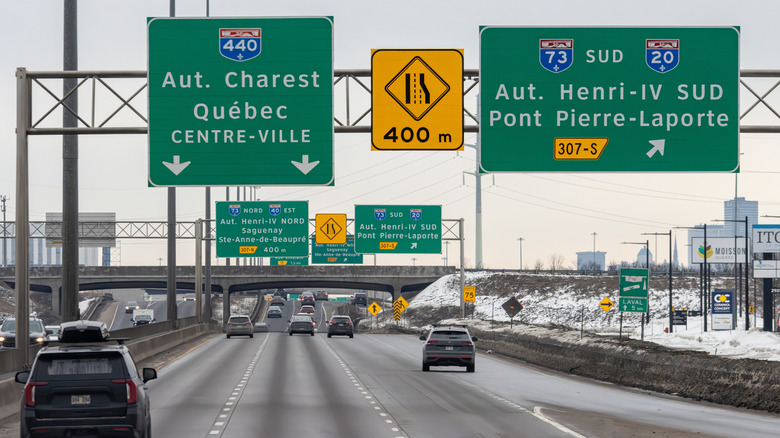
We often associate the use of the metric system with Europe, but Canada also uses measurements such as kilometers and grams rather than miles and ounces. There's always the little exception, such as Canadians still using feet and inches to measure someone's height, for example. "Still" is the keyword here, because Canada actually used the imperial system until a phased introduction of the metric system started in the mid-1970s. Earlier generations were taught to use Fahrenheit for temperatures and avoirdupois — pounds and ounces — for weight, but that has since changed, and as time has passed, the metric system has become more prevalent.
When you're visiting Canada, you'll see distances on road signs denoted in meters and kilometers, and the weight of products will be marked in grams or kilograms. That said, many Canadians tend to refer to distances by the amount of time it takes to reach someplace. "I personally prefer to express distances in hours/minutes," shares one Canadian resident on Reddit. "I can't be the only one!"
You'll be fairly easy to spot as a tourist if you refer to a comfortably warm day as 70 degrees rather than 21, or the freezing point at 32 degrees rather than 0. Expecting Canadians to use the system that American residents are accustomed to can be seen as ignorant or even disrespectful. A handy tool is to temporarily change the setting on your favorite weather app, for example, to show temperatures in Celsius. Also, do a cursory search of good-to-know, straightforward conversions, such as one kilometer being roughly equivalent to .6 miles. To help you remember, approximately every 10 kilometers is 6 miles.
Wearing a lot of athletic wear or branded merchandise
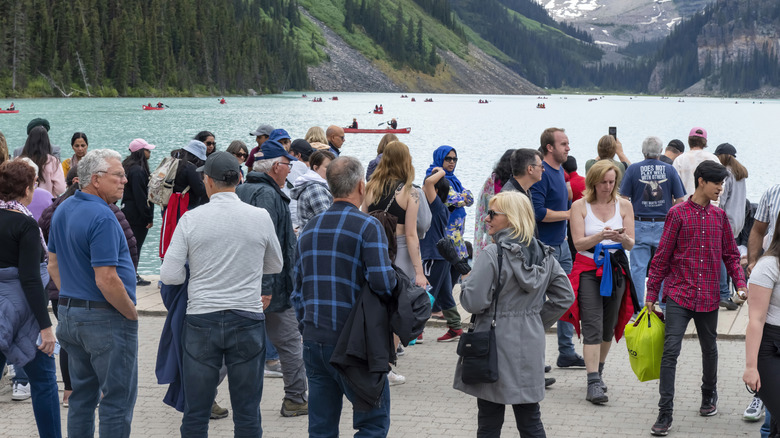
Americans love to wear sweatshirts, t-shirts, and other branded merch, such as apparel from their universities, their favorite sports teams, or popular vacation spots. Athletic wear, in particular, instantly outs you as an American tourist. There's also a penchant among some travelers to wear garments flaunting patriotic symbols such as eagles, flags, military designations, and so on. And because these are so obviously associated with American cities, organizations, or traditions, it can be obvious where people are from.
It's worth noting that while Canada and the U.S. have a unique, time-honored relationship, disparities have emerged over time, often to do with politics and international trade agreements. Canadians often see themselves as the more progressive and friendly of the two nations. Wearing highly politicized apparel will likely draw adverse reactions, which is never a good practice while traveling abroad. In general, most Canadians won't really care what you're wearing otherwise.
While many international travelers find that dressing more like a local is preferable to standing out, it's just as important that you feel comfortable. So, of course, just be yourself, and don't worry about trying to disguise yourself in order to not appear as though you're from the U.S. One British Columbia local writes on Reddit that locals may not even notice you're American based on what you're wearing. "Vancouverites are both busy and largely 'mind your business' people — we're not out looking for Americans, we're looking for parking."
Asking questions about the monarchy

One significant difference between the U.S. and Canada in terms of governance is that the former is typically described as a democracy, but it's more concisely defined as a constitutional federal republic with its executive, legislative, and judiciary branches. Canada, on the other hand, is a constitutional monarchy, which means it has both a parliamentary system and a relationship with Britain's royal family. The nation has a prime minister, who is appointed by the governor-general — the monarch's representative. Canada is one of 56 countries that comprise the British Commonwealth, and therefore, the sovereign — currently King Charles III — is head of state. You'll notice his likeness on Canadian currency and occasionally see the Union Jack flag flying at significant properties.
Why is this important to know as an American tourist in Canada? Since the U.S. doesn't have this system, questions or comments about the monarchy — especially those that indicate you don't know much about it or how it works — are an instant giveaway. "I once had an American tell me they could never live here because they couldn't be ruled by a king and have no freedom," shares a Canadian on Reddit. "Don't say things like that, and you'll be fine."
Using different accents, vocabulary, and spelling
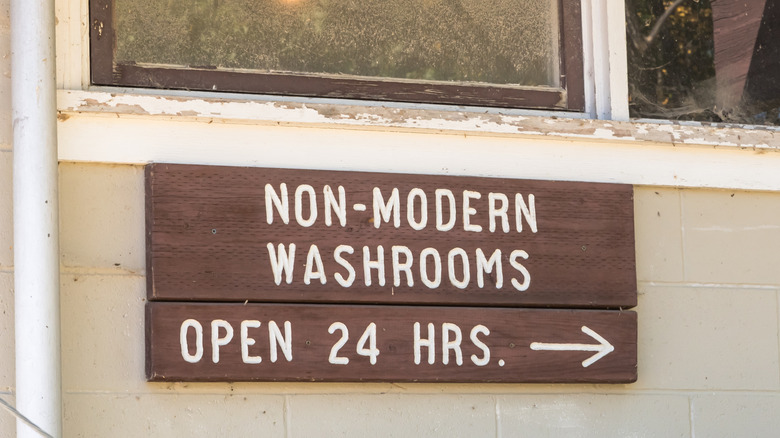
There are parts of the U.S. where people have accents that are easier for Canadians to pick out, such as the South, or urban Boston or Brooklyn. But even in the Upper Midwest and Plains, where some of the dialects are similar, vocabulary can often give American tourists away. While folks from around the U.S. often say "college," Canadians typically refer to post-secondary education as "university." Looking for the restroom? You'll probably be clocked as an American right away, as Canadians tend to say "washroom" or "bathroom" more frequently — although they'll know what you mean, and locals in touristy areas are used to hearing it.
Remember the difference between miles and kilometers? Well, there's also a difference between kilometers and kilometres — do you see it? Canadians use British spelling for some words, such as "centre," "cheque," and "tyre." But they also stick with American English spellings for other words, such as "realize" rather than "realise," which would be the way you'd see it written across The Pond. While it's unlikely your spelling will get noticed if you're on a holiday-type trip, you may give yourself away if you remark on it when you see it.
Thinking the capital of Canada is Toronto — and enunciating the second t
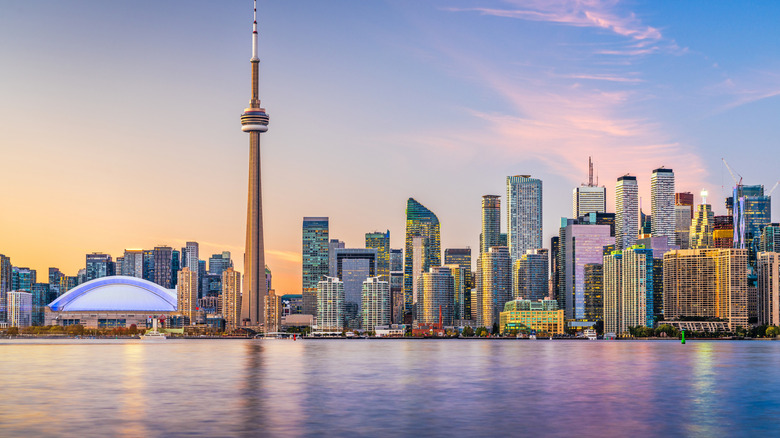
The largest city in Canada may be Toronto, followed by Montreal, Vancouver, and Calgary, but none of these is the nation's capital. That honor goes to Ottawa, which is located in eastern Ontario about 125 miles west of Montreal. And while people tend to associate summer with vacation time, don't discount the snowy season when it comes to planning a trip. Ottawa just so happens to also boast the world's largest natural ice skating rink and is surrounded by villages like Wakefield with storybook scenery and cozy ski culture.
Still, if you do refer to Toronto as the capital, you're only half wrong — or half correct! It's the provincial capital of Ontario, but not the nation, so being able to distinguish the two may be helpful. And for a bonus: if you don't want to stick out as an American tourist, try pronouncing Toronto without the second "t." Many locals called it something that sounds closer to "Tronno." One local says in a Reddit discussion: "This one will be a hot take because there are large pockets of Canadians who pronounce the T. But being near Toronto, I immediately identify someone as an 'outsider' if they pronounce it." Pro tip: In Canada, "Quebec" is also more often pronounced like "keh-bek."
Not recognizing that Canada is composed of numerous (big) provinces and territories
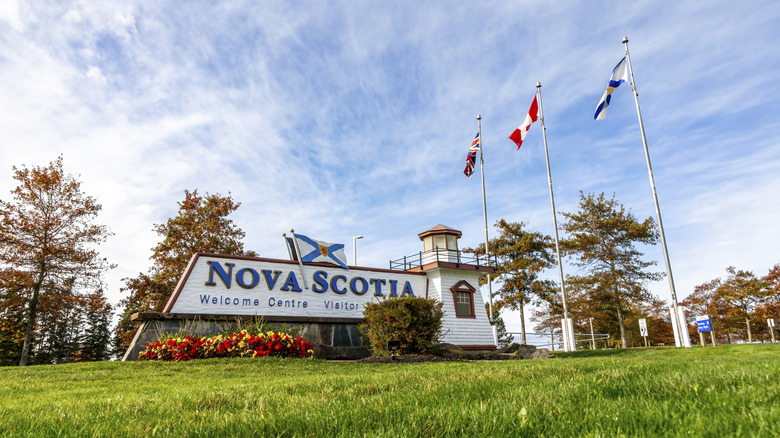
The U.S. comprises 50 states, plus a number of territories and small, independent nations known as Freely Associated States that vary vastly in size, geography, and cultural influences. Canada also has a similar system of provinces and territories, although most of these are, geographically at least, much larger on average than the states that make up the U.S. One thing Canadians tend to notice right away is when people refer to "Canada" very generally rather than indicating what city or province they're visiting. One British Columbia native shares a couple of examples on Reddit that tip her off, such as: '"We're going to Seattle and then to Bellingham and then to Canada,' or 'We're spending time in New York and Vermont and then Canada.'" The effect — even if unintended — is that the speaker makes it sound like the country is just one big lump of a place rather than a wonderfully diverse array of cities, provinces, and territories.
Canada is organized into 10 provinces and 3 territories, and each has its own capital. And much like in the U.S., due in part to the sheer scale of the country, someone may have lived in Canada their entire life but still not know everything about every state. Someone living in Nova Scotia may know very little about Saskatchewan or British Columbia. It would be like asking someone from Indiana what it's like in California or vice versa. Do yourself a favor and acquaint yourself with the essentials of Canadian geography before heading out, especially if you're planning to visit more than just one urban hub.
Being a little too intense for situations

Hand-in-hand with being perceived as speaking at a high volume, Americans can also be perceived by Canadians to be excitable. "They are usually just a tiny bit too loud and too intense for the situation," shares a contributor on Reddit. Another adds in the same discussion: "They don't make polite small talk; they prefer to go right into politics or where they are from."
Loudness and perceived intensity in social interactions are often situational, and of course, it's fairly subjective, too. You'll encounter a lot more loudness if you're among groups of young people or out at busy restaurants or bars, for example, as anyone — from anywhere — can be a little over the top if there's a drink or two involved! But the notion of intensity also applies to the types of conversations that Americans are more prone to having, sometimes about topics that go beyond small talk, such as politics. Tourists who approach casual conversations with bluntness or who try to debate potentially sensitive topics with locals —without building a strong relationship first — may find that Canadians aren't so keen to dive right in. It helps to keep the conversation light.
Wearing your outdoor shoes indoors
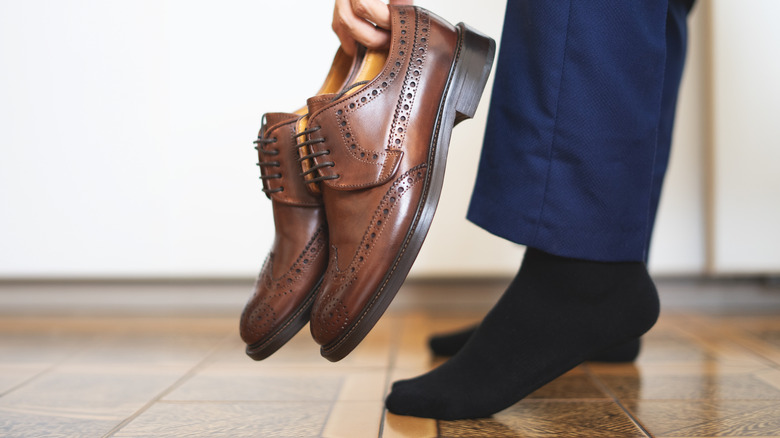
Canada covers a vast swath of land, and its seasons can be as extreme as its geographic diversity. The coast of British Columbia, for instance, sees a lot of rain, but the south-central portion of the province is more arid. Places like Montreal and Toronto see all four seasons, with warm, humid summers and cold, snowy winters. That means there's a lot of slush and dirt tracked around on our shoes. And since rain and snow are generally best kept outdoors, a lot of Canadians tend to remove their shoes when they come inside the house. "Every Canadian I know takes their shoes off in the house," shares a poster on Reddit in Ontario. "It just makes sense with our weather."
A lot of Americans take off their shoes inside the house, too, but it's a practice that seems generally more prevalent across Canada. If you're staying in a hotel or a vacation rental, you technically can do whatever you want as long as you're respecting the cleanliness of the space, but if you're staying with friends or family, bring slippers and/or a nice pair of socks to wear around the house, so your outdoor shoes can stay by the door.
Comparing Canadian businesses or products to American versions
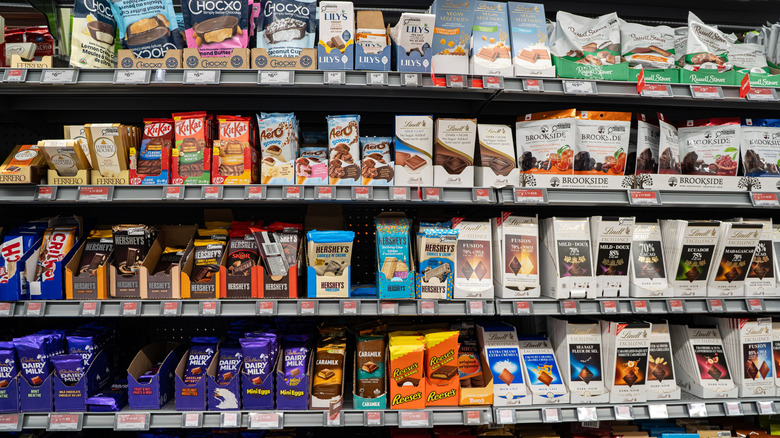
If you're accustomed to visiting Dunkin' Donuts in the U.S., it might be tempting to compare the menu at chains like Tim Hortons or Second Cup to what you're familiar with. Or you may be perusing a shopping area in Canada and run across stores like Roots or Aritzia that remind you of American brands like Banana Republic or Everlane. Perhaps there are different flavors available of your favorite brand of chocolate. Or maybe you're just trying to dissect what poutine actually is based on your knowledge of its components — fries, cheese curds, and gravy. If you're chatting about these things with Canadians and comparing your new experiences to things you know from the U.S., it's pretty much a dead giveaway that you're a tourist.
A big proportion of the joy we get from travel comes from encountering new things, including unfamiliar products, brands, and foods. Relating our new discoveries to things we understand is a way of comprehending similarities and differences, so it's only natural to make these kinds of observations. At best, we're appreciating new options. At worst, these kinds of observations can sound like criticisms, as if the Canadian version of X, Y, or Zed doesn't stack up to the American one. If you prefer to stay a little more under the radar, keep the audible comparisons to a minimum.
Expecting everyone to speak English

As of 2019, nearly one in five U.S. households speaks a language other than English, with more than 60% of those households speaking Spanish. The U.S. is considered a predominantly English-speaking nation, though, and it's the only official language, despite there being a few places where it's not the primary language — think Mexican border towns like El Paso, Texas. Canada, however, has two official languages: French and English. Depending on where you visit, you may encounter English, French, a healthy mix of both known as Franglais, or even an Indigenous language.
Although most Canadians speak English, 22% speak French as their first language. French is particularly widespread in Quebec. There is no clearer sign that you're an American tourist than expecting everyone in Canada to speak English. Fortunately, Google Translate has useful hidden features for use on the go, and you can brush up on a few basic phrases before you head to these regions. Bonjour, merci, s'il vous plaît, and excusez-moi are a great place to start, not to mention the ever-handy phrase for any tourist: "Où sont les toilettes?" — Where is the bathroom?
Methodology
To assemble this list, we relied primarily on Reddit discussions in which Canadians discussed some of the traits and habits of American tourists that make them stand out. The author, hailing from the Upper Midwest, also tapped into her knowledge as a visitor on numerous occasions to both rural Ontario and Toronto. We also found specific information and data on sites including CanadasHistory.ca and International.Canada.ca, plus further statistics, historical context, and travel advice on Wise.com, JonnyJet.com, DailyHive.com, Royal.uk, Babbel.com, Britannica.com, NatHab.com, DOI.gov, EBSCO.com, and Worldometers.info.