
The World's Most Beautiful Destinations That Are Largely Noise-Free For A Relaxing Escape
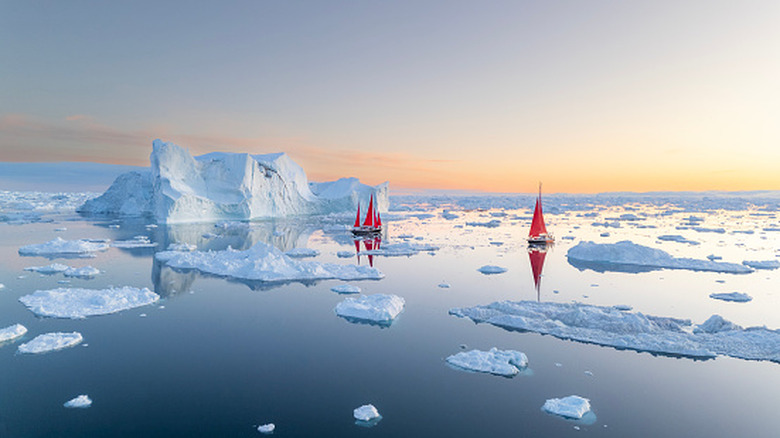
Silence is something that's fast becoming one of the rarest commodities on earth. Acoustic ecologist Gordon Hempton, founder of Quiet Parks International, defines "world-class quiet" as just 15 minutes without human-made noise within a narrow window around sunrise, a threshold he has found in only a handful of places globally. Even in remote landscapes, aircraft noise and distant human activity often intrude, making uninterrupted natural sound increasingly difficult to encounter. "There's not one place on planet Earth set aside off limits to noise pollution," he told The Library by Soundpocket, laying down a stark reality that underscores the need to protect the few quiet pockets left.
Studies show that even brief periods without noise can lower blood pressure, reduce cortisol levels, and improve cognitive function, helping explain the rise of "quietcations," where travel is shaped around low-noise environments and mental reset. As stress and burnout levels rise, travelers are increasingly seeking out places where the absence of constant sensory input allows for genuine recovery rather than a mere escape. At the same time, experts are reframing quiet as the absence of human-made sound as opposed to total silence, where natural soundscapes still dominate what reaches the ears. Be it in the remote wilderness of lifeless deserts and harsh Arctic terrains, or in more culturally and consciously preserved spaces, these environments require going the extra mile to protect. This list brings together some of the places where that threshold of quiet is still within reach.
Lake Inari, Finland
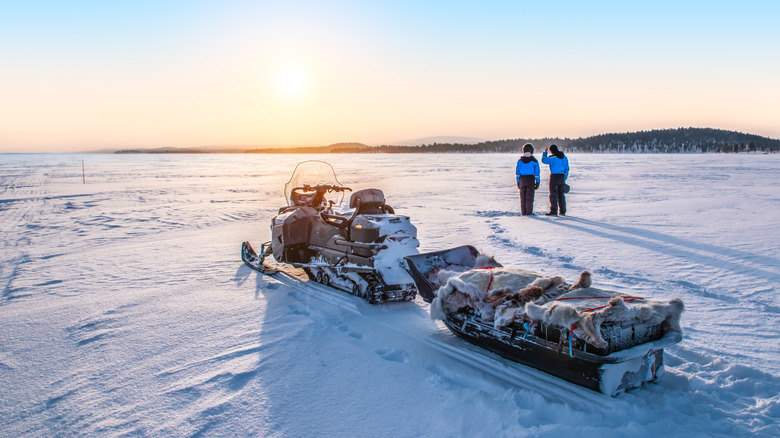
Located deep within Finnish Lapland, Lake Inari, also called the "Sámi Sea," sits in one of Europe's most sparsely populated regions, where vast stretches of protected wilderness and minimal infrastructure keep human-made noise to a minimum. The lake itself, Finland's third largest, is dotted with 3,318 islands. Here, the soundscape is shaped almost entirely by nature, with winds echoing over still waters, the distant call of birds, or, in winter, the soft compression of snow underfoot. While some of these islands have basic provisions for overnight stays, the stillness of the lake overall is a haven for those craving solitude. The isolation is almost effortless here, with boat journeys on the lake unfolding across long, empty expanses of water where human presence is remarkably scarce. It can feel slightly disarming until one gets used to it, but once you do, it's not the easiest transition back to regular civilization.
With its meditative beauty, this corner of the Finnish Lapland has earned recognition among Europe's most beautiful destinations. The beating heart of Finnish Sámi culture, the village of Inari overlooks the sprawling waters of Lake Inari. Silence in this part of the Arctic is amplified by the environment — Inari is the largest municipality in the country, with 72% of the area being protected wilderness. Noise in every sense of the term feels diminished here, be it traffic, voices, or even the restlessness inside your head.
Yangmingshan National Park, Taiwan
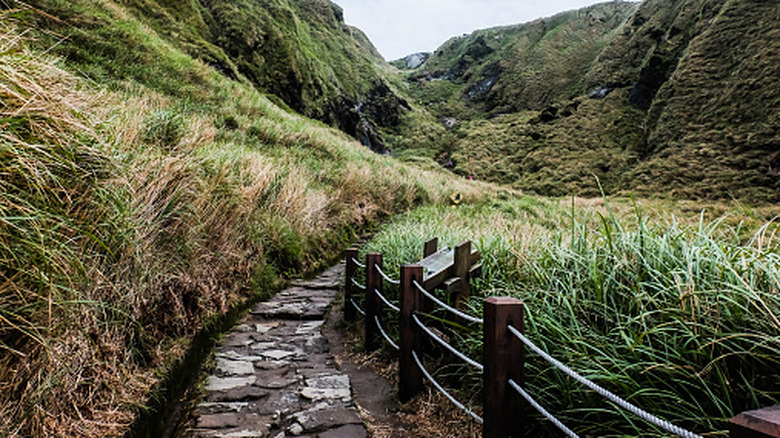
Despite being located near Taipei, the densely populated capital of Taiwan, Yangmingshan National Park stands out as a rare counterpoint to city noise. Sitting in the north of the Taipei Basin, in 2020, this park was designated the world's first Urban Quiet Park by Quiet Parks International, in recognition of its ability to preserve natural soundscapes while drawing more than four million visitors annually. The designation reflects the deliberate conservation efforts to safeguard the park's acoustic environment, an initiative that gained urgency during the pandemic, as attention turned to safeguarding people's physical and mental well-being.
Central to this is the park's emphasis on "nature quiet," which prioritizes the dominance of natural sounds over human-made noise. Most of what can be heard along its picturesque forested trails is birdsong, rustling leaves, and sounds of insects. The area is also home to bubbling hot springs, among the most spectacular hidden hot springs in Taiwan. The popularity of certain spots notwithstanding, seekers of silence have enough to fall back on. The Soundscape Association of Taiwan found early morning background noise levels at the Menghuan Pond dropping under 30 decibels. Aside from the occasional aircraft overhead, much of the audible sound here comes not from human activity but from birds, frogs, and cicadas.
The site has therefore become a model for soundscape preservation, with its trail marking the park's first "Quiet Trail" in 2020. As environmental journalist and founder of the Soundscape Association of Taiwan Laila Fan notes on the Quiet Parks International website, such spaces offer more than respite; they create conditions to "cleanse our body, clear our mind, and calm our spirit."
Valle de la Luna, Chile
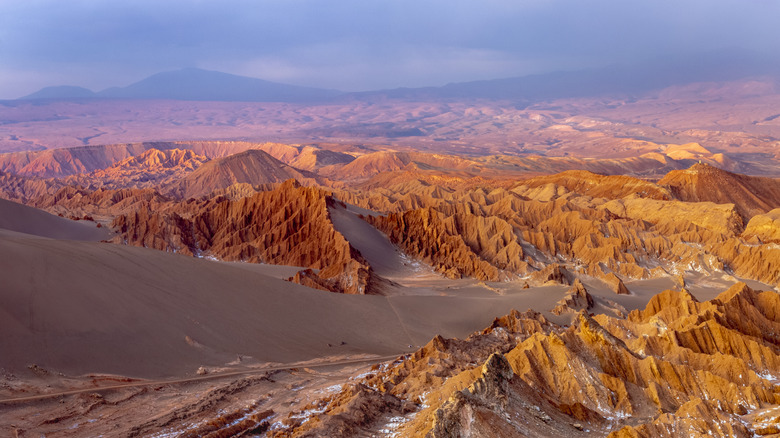
Deep within the Atacama Desert, one of the driest places on Earth, Valle de la Luna is defined by extreme aridity, a near-total absence of vegetation, and, in turn, exceptionally low ambient noise levels. Among the most striking landscapes of Chile, one of South America's safest countries, its stark terrain of salt flats, dunes, and wind-carved rock formations stretches for miles with little to interrupt the soundscape, creating conditions where silence feels almost absolute. Visitors often describe an "eerie," almost unsettling stillness, where the absence of moisture and vegetation leaves the roaring winds and shifting sand dunes as the only audible elements.
The experience could well feel other-worldly, akin to stepping onto another planet, an impression reinforced by its Mars or moon-like geology and its use by NASA in testing space exploration equipment. In the absence of background noise, even the smallest sounds are amplified, like the crackle of salt crystals underfoot as they heat in the sun. Brief pauses in the heart of the valley can reveal "total silence," with no birds, insects, or human sounds breaking the stillness.
Located just 9 miles from the tourist hub of San Pedro de Atacama, the valley forms part of the Los Flamencos National Reserve. Many salt sculptures dot its breathtakingly stark landscape, such as the iconic Las Tres Marías, alongside dramatic rock formations like the Amphitheatre and vast salt cave networks. While the valley is best known for its sunset views, those seeking quiet are better off arriving at sunrise, when visitor numbers are low, and the stillness is most intact. Valle de la Luna may get its name from its moon-like surface, but scientists feel it's Earth's closest equivalent to the lifeless stillness of Mars.
Haleakalā National Park, Hawaii
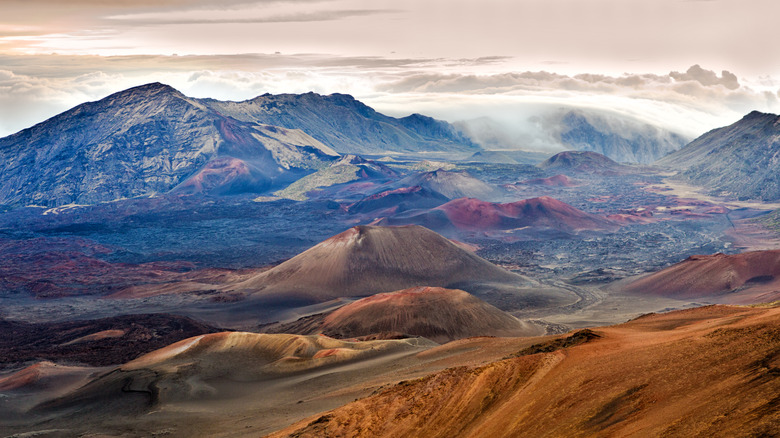
At the summit of Haleakalā, Hawaii's third-largest volcano, is a vast dormant volcanic crater sitting at an ascent of 10,000 feet above sea level, where ambient sound drops close to the threshold of human hearing. Visitors often describe being able to hear their own heartbeat, an experience that has led parts of the crater to be dubbed the quietest place on Earth. Getting there requires climbing through five climate zones followed by a descent of around 3,000 to 4,000 feet. Historically, access to the summit was rare, and Native Hawaiian communities largely reserved it for specific purposes, a practice that continues even today. The crater is now accessible to hikers via several trails following myriad routes and varied levels of difficulty.
Sound levels inside the crater are nearly imperceptible, with some recordings dropping to 10 decibels. Much of the crater's remarkable stillness comes from its geography and sparse environment. At 2,600 feet deep, its steep walls act as a natural acoustic barrier. Add to this the bare minimum vegetation on an extremely dry terrain, and the result is an environment with nearly muted natural sounds. In a world where just 15 minutes without human-made noise is considered a gold standard of quiet, such sustained natural silence has become exceptionally rare.
Known as the "House of the Sun," Haleakalā is best experienced at dawn or dusk, when the hues transform the landscape. Native Hawaiian communities refer to the summit as "wao akua," or realm of the gods. However, the travails of civilization are catching up. Increasing helicopter traffic and tourism pose growing threats, with a 2013 study showing human-generated noise reaching the area nearly 30% of the time, prompting the need to actively protect its acoustic environment.
NamibRand Nature Reserve, Namibia
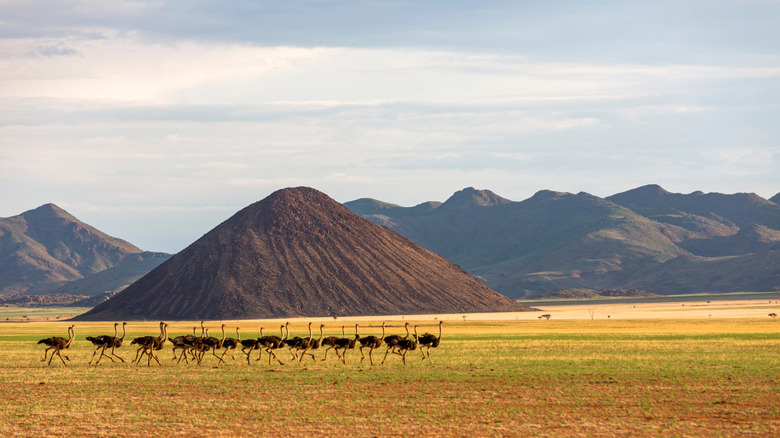
Designated Africa's first Wilderness Quiet Park by Quiet Parks International in 2024, NamibRand Nature Reserve is recognized for its "exceptional sonic beauty" and extended periods of natural silence across a vast, minimally developed desert landscape. Stretching across 200,000 hectares and bordered by two other remote conservation areas — Namib-Naukluft National Park and the NamibSand Sea World Heritage Site — it is a place where the absence of humans and human-made noise is as striking as the landscape itself. Crowds here would most likely mean herds of oryx treading across the wild terrain, or cheetahs and leopards roaming free.
This quiet is a result of deliberate conservation across a vast chunk of Southern Namibia. Established in 1984 through the restoration of former farmland, the reserve has prioritized rewilding, low-impact tourism, and strict limits on infrastructure, allowing both ecosystems and natural soundscapes to recover. Thus, the quiet in NamibRand today is not incidental, but very much engineered and protected through policy. For every 1,000 hectares, tourist accommodation is capped at just one bed — a policy levied since 1994. Strict conservation measures also ensure that development within protected areas is tightly regulated, thus resulting in minimal human disturbance.
Field recordings from the area capture a landscape where even the faintest elements, such as winds over dunes or footsteps in the deep sand, become perceptible in the absence of human-made background noise. In fact, when not in the middle of sightseeing activities, it's the silence that one hears the loudest. That sense of stillness extends well into the night, too. In 2012, NamibRand was marked as a designated International Dark Sky Reserve by the International Dark Sky Association, reinforcing its commitment to preserving both visual and acoustic purity around the clock.
One Square Inch, Olympic National Park, Washington
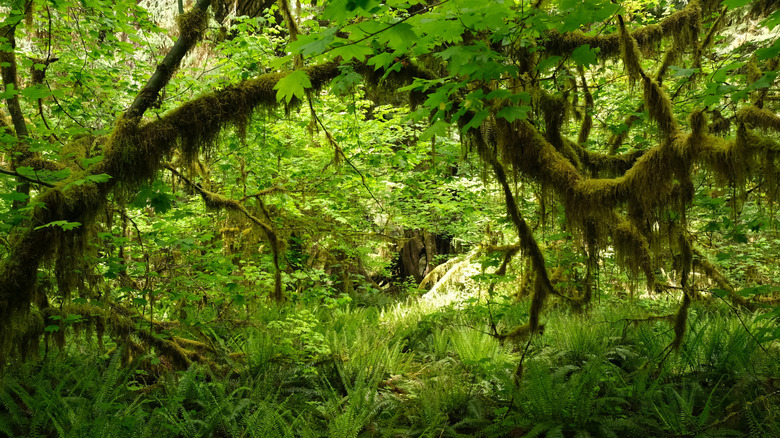
Deep within the Hoh Rain Forest of Olympic National Park lies a moss-covered log that became the unlikely focal point of a global movement to protect quiet. Identified by acoustic ecologist Gordon Hempton as one of the quietest spots in the United States, the site, known as "One Square Inch of Silence," was selected for its ability to sustain intervals of at least 15 minutes without human-made noise.
The surrounding landscape, in all its splendor, plays a critical role. Olympic National Park's mix of glaciated peaks, rugged coastline with a hidden paradise to spot wildlife, and temperate rainforest, densely layered with moss, ferns, and ancient conifers, dampens ambient noise. Unlike other national parks where transportation noise is heavily intrusive, in this park, it appeared easier for authorities to defend the silence, allowing natural soundscapes to persist with relatively less disruption. Launched on Earth Day 2005, the One Square Inch project aimed to protect this quiet through active monitoring over 13 years, by tracking aircraft noise and working with aviation authorities to reduce overflights. Its success ultimately led to the formation of Quiet Parks International, expanding the mission from a single point of silence to a global effort to preserve natural soundscapes. Yet, there is no escaping the fragility of it all. Increased military flight activity in recent years has introduced intermittent noise into the region, underscoring how even the most carefully protected soundscapes remain vulnerable.
Faroe Islands, Denmark
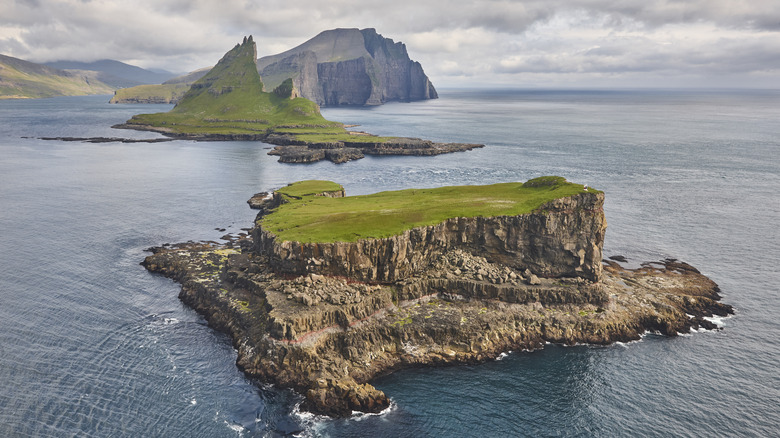
Sitting between Iceland and Norway, the Faroe Islands remain one of Europe's least populated regions. A hidden gem of Denmark, a country widely considered as one of Europe's most kid-friendly, these islands are home to around 54,500 people scattered among 17 islands in the North Atlantic. Several of the smaller islands have fewer than 100 people, while some villages have no more than 14 year-round residents. Streymoy, home to the capital Tórshavn, contains nearly half of the archipelago's population.
Though renowned for their dramatic beauty, these islands have yet to give in to mass tourism, thereby allowing vast stretches of cliffs, fjords, and open landscapes to remain largely undisturbed. This is the place to see towering waterfalls plunging into the North Atlantic below,
and the soundscape here means winds lashing against tall cliffs and seabirds cutting across skies overhead. Experiencing this quiet often means moving without a fixed plan, following transitions in the weather and light.
Drives through Eysturoy towards villages such as Eiði and Gjógv reveal vast, mountainous terrain punctuated by coastal landmarks like the sea stacks of the Giant and the Witch. There is no shortage of places where silence feels almost tangible. On the fjord-lined island of Kalsoy, it is entirely possible to wander for hours through misty landscapes without seeing another human, while the remote shores of Mykines have puffins vastly outnumbering people. The tiny settlement of Gásadalurisis yet another place steeped in silence, framed by mountains and cascading waterfalls. Yet this quiet in the Faroe Islands is not entirely untouched. Visitors occasionally report moments where the stillness is broken by the faint hum of drones, an unwelcome reminder of the modern world.
Ittoqqortoormit, Greenland
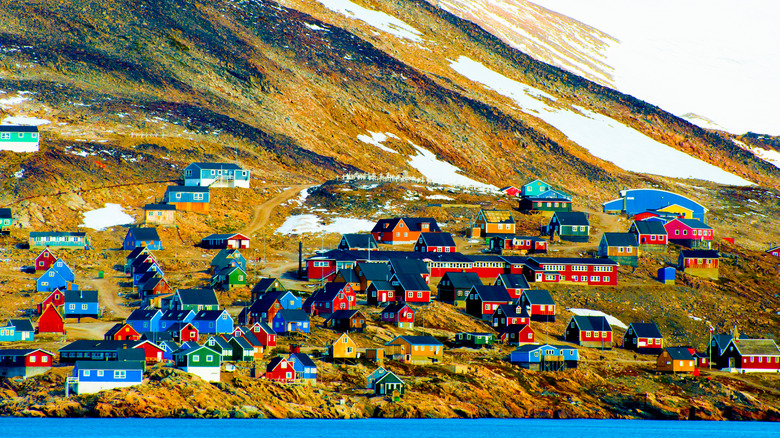
On Greenland's isolated east coast, Ittoqqortoormiit sits at the edge of Scoresbysund, the largest fjord system on Earth, serving as a gateway to the vast Northeast Greenland National Park. With only about 350 residents, it's one of the most remote inhabited places on the planet. Visitors amount to no more than 500 to 700 annually, placing it among the most rarely visited destinations in the world, despite Greenland being one of the best places to see the Northern Lights.
Extreme isolation and feeble infrastructure not only heighten its raw Arctic allure, but also create an environment where human-made noise is an anomaly. The landscape, strewn with icebergs drifting through fjords, shifting sea ice, and endless tundra, creates a body of silence occasionally broken by the call of huskies. Nearly nothing here is curated for visitors, as life is shaped only by necessity. From its founding in 1925 by 80 Inuit families, subsistence hunting and fishing has been central to life in Ittoqqortoormiit, which is still firmly grounded in ancestral customs. Even today, residents continue to procure essentials like food, fuel, and warm clothing from Arctic wildlife including seals, musk oxen, narwhals, and polar bears.
East Greenland is often described as a place that needs to be experienced as much through its sounds as through its sights. Nothing is static here; the icy landmasses and seas are playing constant catch-up with their shifting and retreating and advancing movements. With almost no traces of modern civilization, there's little to interrupt nature's sounds. Movement through the landscape reinforces this as travel here is dictated by terrain, across sea ice, by foot, or by sled. Here, silence is not a feature, but the picture in its entirety, where nature still calls the shots.
Ise Grand Shrine, Japan
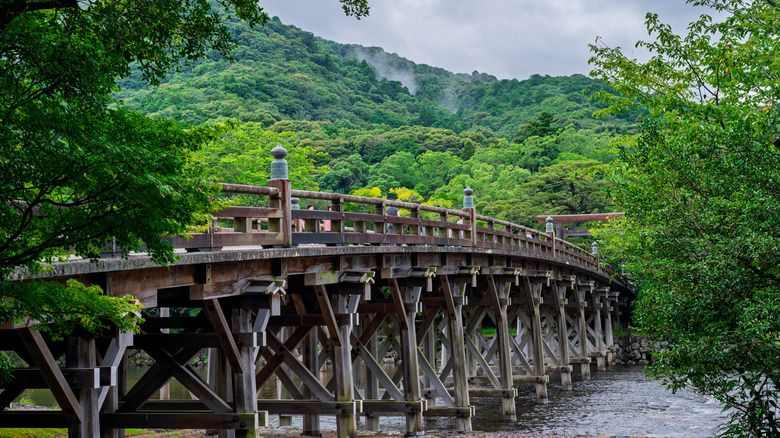
One of Japan's most sacred Shinto sites, Ise Grand Shrine is less a single structure than a vast, forested complex designed to encourage quiet movement and reflection. Spread across two main precincts of Naikū and Gekū and connected by pilgrimage routes, the shrine is embedded within dense woodland, where gravel paths, towering trees, and flowing water shape a subdued soundscape, aside from making it one of Japan's most enchanting and beautiful shrine complexes.
The experience of quiet here is structured rather than incidental. Visitors cross the Uji Bridge, marking a transition from the everyday into the sacred, and move through forested pathways where rituals and etiquette guide behavior, from walking along the sides of the path to maintaining decorum near the inner sanctums. Even with steady footfalls of visitors, the scale of the grounds and the forests, combined with the discipline maintained within, keep noise levels low, with moments of stillness found along the Isuzu River or deeper within the shrine precincts.
This sense of calm extends across the entire complex. Early morning visits, when the gates open at dawn, are particularly noted for their quiet atmosphere, as pilgrims and visitors quietly make their way in. This is a space where sound is moderated through ritual, layout, and collective behavior, bringing about a silence created by restraint rather than absence.
Spiti Valley, India
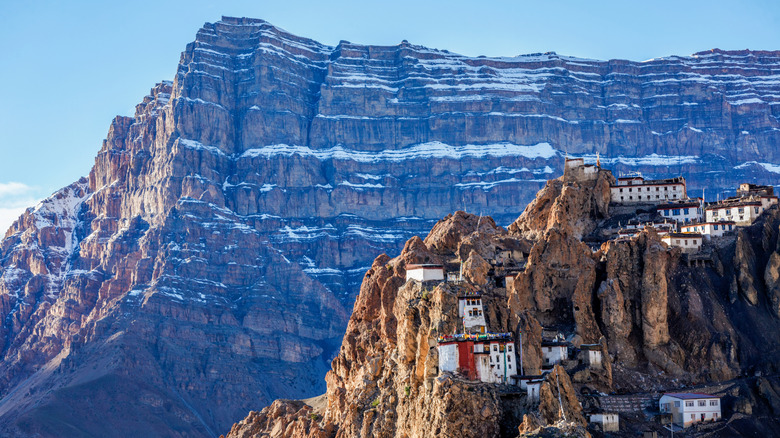
The population density of the Lahaul-Spiti district is roughly two people per square kilometer. Spiti Valley, one of the most remote corners of north India with its settlements scattered across an unforgiving high-altitude terrain, offers a form of quiet shaped by a geography of isolation. Between late November and early March, heavy snowfall cuts off access to many villages, limiting both movement and visitor numbers, reinforcing a landscape where human presence becomes sparse. At altitudes where even basic travel is demanding, silence becomes a natural progression, especially when one ventures beyond the frequented stops, into lesser-known villages and high-altitude outposts where life moves slowly, and sound carries differently. In places like Mane or Tashigang, and in settlements that are home to only a handful of families, or in some cases, a single household, all one hears are faint echoes of prayer chants from a monastery far away, drifting through roaring mountain winds.
Deep within the Himalayas' awe-inspiring scenery, the quiet feels earned. Reaching them often means navigating through some of the most treacherous roads in the world, where you feel you're within an inch of life. At these altitudes, which are home to some of the highest settlements on earth at 18,000 feet, climbing a single flight of stairs can leave you breathless. Thus, the world you meet on the other side — where mobile network is minimal, and power cuts are abundant — for seekers of silence, it feels like a reward.
Methodology
This list draws on acoustic research, including benchmarks set by Gordon Hempton, co-founder of Quiet Parks International, along with verified reporting, environmental data, and field accounts. Locations were selected for their low levels of human-made noise, geographic isolation, and active soundscape conservation. Each destination offers sustained intervals where natural sound dominates, even if complete silence is rare. Personal experience has been included where relevant.