
Between Chicago And Peoria Is Illinois' Restored Wetland Haven For Birdwatching, Fishing, And Hiking
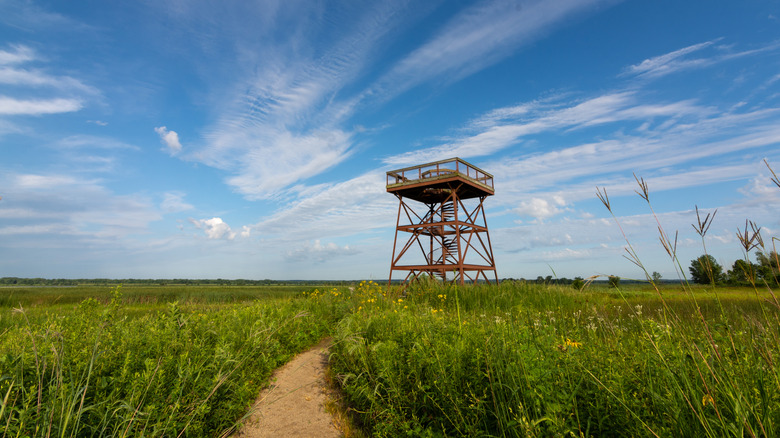
You probably assume that the best views in Illinois are found atop the breathtaking observation decks of Chicago's iconic skyscrapers. Though those vistas are certainly worth seeing, the rest of Illinois has some under-the-radar — but equally impressive — views far from Chicago's bustling streets. About two and a half hours southwest of Chicago and an hour north of Peoria sits one of Illinois' most important nature preserves, where subtle yet alluring landscapes provide a stark contrast to the state's urban corridors. The Sue and Wes Dixon Waterfowl Refuge (or just "the Dixon Waterfowl Refuge") is, per its name, an essential sanctuary for the region's waterfowl within a crucial tract of protected wetlands. Beyond its mission statement, the refuge is also an excellent destination for exploring one of Illinois' greatest ecological restoration success stories.
The Dixon Waterfowl Refuge is in a region of central Illinois that had previously been cultivated for farmland. A consequence of this development was the widespread drainage of many natural wetlands throughout the region. Thanks to the Dixon Waterfowl Wetlands, many of these vital habitats have now been restored. One result is some of the best birdwatching opportunities that Illinois has to offer. Open from dawn to dusk every day, it is also a terrific place for a scenic hiking tour through a restored wetland ecosystem. And with its lakes and marshes open to the public, the refuge provides excellent fishing opportunities as well. Even better, entry is completely free!
A Midwest birdwatching paradise just a short drive from Chicago
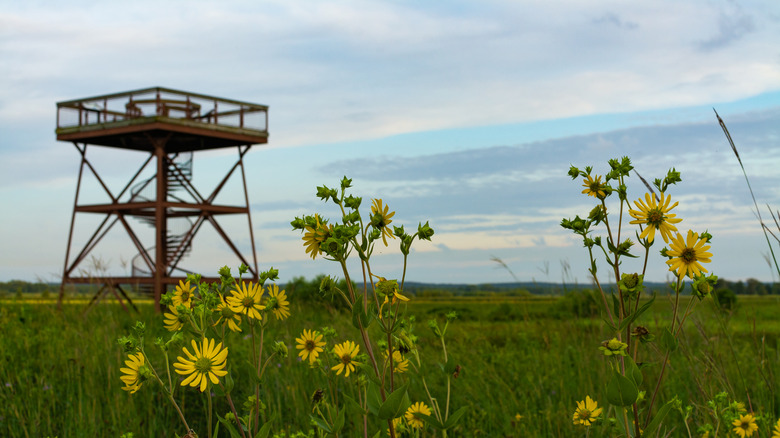
The Dixon Waterfowl Refuge covers around 3,000 acres near Hennepin and Hopper lakes in Illinois' Putnam County. The restoration of former farmland has revealed just how significant this region was for Illinois' native flora and fauna. Before cultivation and drainage transformed the landscape, Hennepin and Hopper lakes sat within the landscape left behind by an ancient glacier, where deep glacial grooves and remnants of an old floodplain created ecologically diverse lakes, marshes, savannas, and prairies.
According to the Illinois River Road National Scenic Byway's official site, the now-public waterfowl refuge was "one of the first large-scale floodplain restoration projects along the Illinois River," an underrated Midwestern waterway and natural treasure in its own right. At Dixon Waterfowl Refuge, the Illinois River supports a complex of wetlands that are home to more than 730 plants and 270 species of birds. Birdwatchers at Dixon Waterfowl Refuge have terrific opportunities for seeing rare and sought-after birds like bald eagles, sandhill cranes, great blue herons, pelicans, terns, sandpipers, loons, rails, and even tiny hummingbirds.
Like Wisconsin's Horicon Marsh, known as the "Everglades of the North," the Dixon Waterfowl Refuge is one of the Midwest's best places to see the magnificent trumpeter swan — the largest native waterfowl in North America. The refuge also features a 30-foot observation tower with sweeping views of the wetlands where many birds nest and migrate throughout the year. Local groups like the Illinois Audubon Society often host guided birding tours through the refuge as well.
Illinois' hidden hiking and fishing treasure
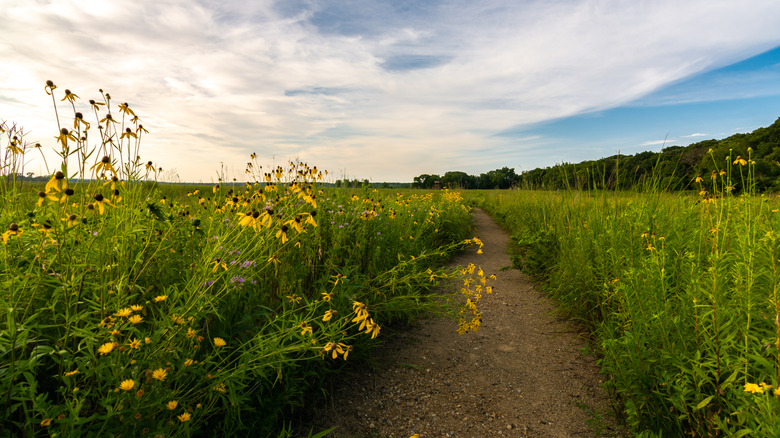
Visitors to the Dixon Waterfowl Refuge can look for its many resident birds along several trails that wind past both the wetlands and the shores of the Illinois River. The refuge's hiking trails are relatively flat overall, with most rated only "moderate" at their most difficult. The 2.7-mile Dixon Waterfowl Refuge Trail is a pleasant one-hour hike through several great birdwatching spots by the river and surrounding prairies. Meanwhile, the 4.4-mile Seep Trail is a longer trek through one of Illinois' rare wetland formations known as a "seep." Both trails are rated "easy" on AllTrails.com and receive positive reviews for their excellent birdwatching opportunities and lovely wetland views, though many hikers warn that ticks can be a major problem.
Fishing is permitted on the refuge's lakes from May 1 to September 7 at no additional cost. Shore fishing is prohibited, however, and anglers may only fish from non-gas-powered boats. If you're interested in fishing from a paddleboat or a boat with an electric trolling motor, the refuge's Hennepin and Hopper lakes have diverse populations of gamefish like largemouth bass, muskellunge, northern pike, pumpkinseed, bluegill, bullhead, crappie, and bowfin. Do note that live bait is limited to only red worms, wax worms, and night crawlers, while other types of bait (like minnows, crawfish, and leeches) are prohibited.
The Dixon Wildlife Refuge is open for day-use only, with no overnight campgrounds. Travelers hoping to spend multiple days exploring the area can stay in the underrated and affordable Illinois town of Dixon, about an hour north of the refuge. Along with ample lodging options, Dixon also serves as a gateway to charming Illinois villages with serene vibes, including Bishop Hill and Arthur.