
Between Lubbock And Waco Is Texas' Abandoned Military Fort That's Now A Historic Destination
Measuring 268,596 square miles, Texas is the second largest U.S. state and has a long history. This land served as a military frontier for centuries, from Spanish occupation to the Republic of Texas and into annexation and U.S. statehood. As more and more settlers moved into what was also the hunting grounds for the local Native American tribes, conflict was inevitable. It doesn't matter which government was in charge — their response to protect their citizens was all the same: build a fort.
Fort Phantom Hill was one of those forts, built in the mid-1800s to try to keep up with the rapid westward expansion of the United States after the end of the Mexican War. However, the rush to build new defenses for the big state of Texas meant the forts weren't always thoughtfully located or made of the best quality materials. Fort Phantom Hill was a victim of both, and its useful life was short-lived. It was abandoned by the military after just three years in service, and much of it burned to the ground shortly thereafter.
Today, Texas is full of abandoned forts near modern-day cities. Fort Phantom Hill is 20 minutes north of Abilene, between Lubbock and Waco. The fort's ruins are well-preserved and free and open to the public to visit. It's a unique addition to a Texas road trip to Abilene and makes for a short and interesting stop if you're just passing through.
What to see at Historic Fort Phantom Hill
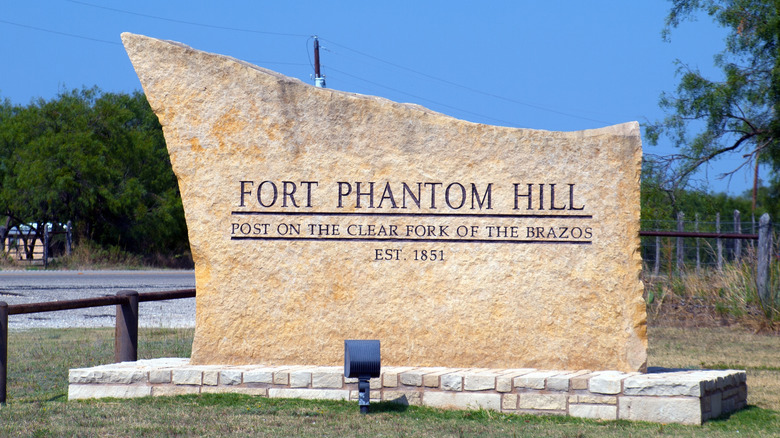
Originally called the "The Post on the Clear Fork of the Brazos River," Fort Phantom Hill was established by the U.S. Army in 1851, despite the commanding officer's opinion that it wasn't in an ideal location. Durable materials were hard to come by, so only a few buildings were made entirely of stone. Most were built with wood and brush materials. The fort's quartermaster even said, "that God [n]ever intended white man to occupy such a barren waste." West Texas landscape is not a green, lush place, by any means.
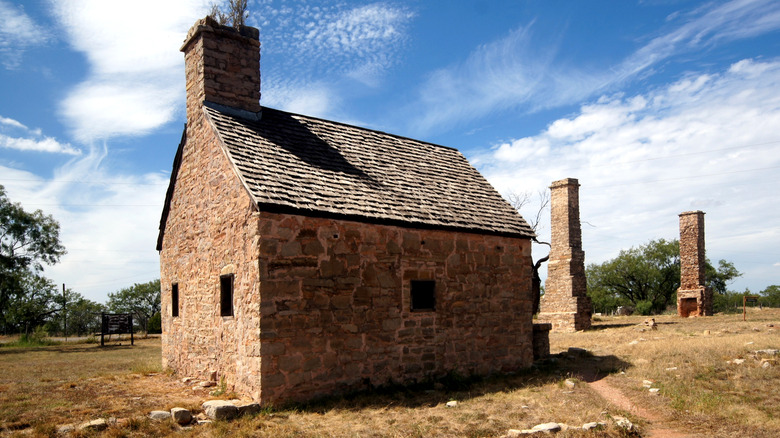
The fort housed five companies of infantry at its peak, but that didn't last long. The Army used Fort Phantom Hill for only three years before abandoning it. A fire then destroyed everything but a few stone buildings, foundations, and chimneys. A few decades later, the remaining buildings were used as a stop on a postal service route and a small town rose, counting just over 500 residents, only to be abandoned again by the 1890s when the county seat was moved to nearby Anson.
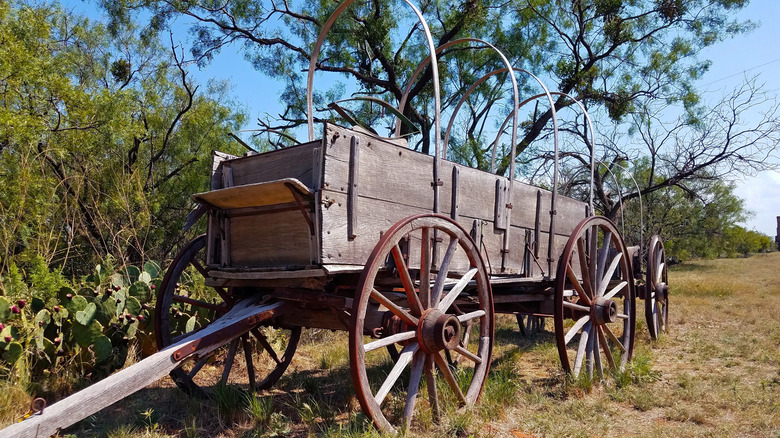
Visitors today can still see a handful of the original fort buildings, including a powder magazine, storehouse, guardhouse, and several chimneys and foundations. Kids especially love that they can run around the site. Old capped wells and a discarded covered wagon frame complete the scene. Wander between the towering chimneys, still standing tall right where they were originally attached to houses. You can even walk right up to and touch the ruins, but it is outside, so watch for wildlife that may have made this space its home. The welcome kiosk explains the history of the site and has brochures that will guide you around the site to each of the remaining ruins.
Tips for visiting Fort Phantom Hill
The abandoned Fort Phantom Hill has been tidied but not restored, so it's important to know what to expect at this historic site. There's no paved path to follow, so watch out for snakes and insects as you wander along the dirt paths and through the scrub brush on your walk around the ruins. The area is well-cared for and maintained, though. Metal detecting is forbidden, and vandalism comes with hefty fines. There's a paved parking lot and a nice restroom here, and tour pamphlets are available at the welcome kiosk to aid you on your self-guided tour. Most visitors spend an hour or two here, making it a good day trip option.
If you have time, visit Frontier Texas in downtown Abilene for more interactive and in-depth information about this slice of Texas frontier history. While Abilene has its own regional airport, you might want to fly into Fort Worth and drive 2½ hours to Abilene instead. Fort Phantom Hill is also part of the Texas Forts Trail – a road trip route that visits a series of historical sites across west Texas. Fort Griffin has great camping, fishing, and trails, and is 45 minutes away from Fort Phantom Hill. Meanwhile, Fort McKavett is another abandoned fort turned well-preserved historic site, very similar to the ruins at Fort Phantom Hill but about a 2.5-hour drive south.