
10 Florida Beaches Where You Can Watch Sea Turtles Hatch
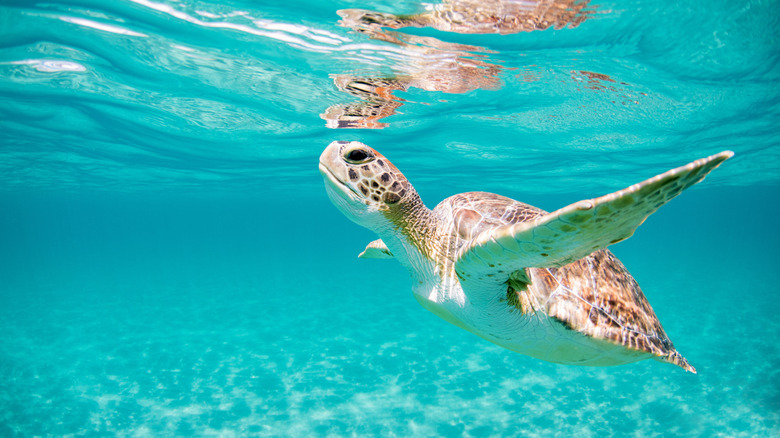
Florida's 8,436 miles of coastline are famous for beautiful Gulf Coast beaches with white sand and some of America's best scenic beach sunsets, but they are also home to an absolutely incredible array of wildlife. For many travelers, seeing baby sea turtles hatch on Florida beaches during nesting season is a once-in-a-lifetime highlight. Every year, about 100,000 loggerhead, green, and leatherback sea turtles lay their eggs on the Sunshine State's shores, and lucky visitors at certain beaches are sometimes able to watch as tiny turtles hatch and scurry towards the ocean.
Remember, though, that participating in any type of sea turtle viewing comes with important conservation responsibilities. Sea turtles are federally protected, and it's important to follow certain guidelines, especially during nesting season. Most people know they should never touch baby sea turtles, as it could interfere with their journey to the water, but it's also critical to leave them with smooth sand (that means destroying sand castles and filling in holes), and avoid flash photography since external lights can confuse them. That said, responsibly viewing sea turtles leaving their nests can be quite rewarding. Here, we'll look at 10 Florida beaches where you can watch sea turtles hatch.
To put together this guide, we used the official websites for various beaches and wildlife refuges, as well as the BBC, National Geographic, government websites like FWS.gov and the National Parks Service, the Florida Fish and Wildlife Conservation Commission, FortLauderdale.gov, and various official tourism pages, such as Visit Space Coast, Visit New Smyrna Beach Area, Visit St. Lucie, and Visit Florida.
Archie Carr National Wildlife Refuge
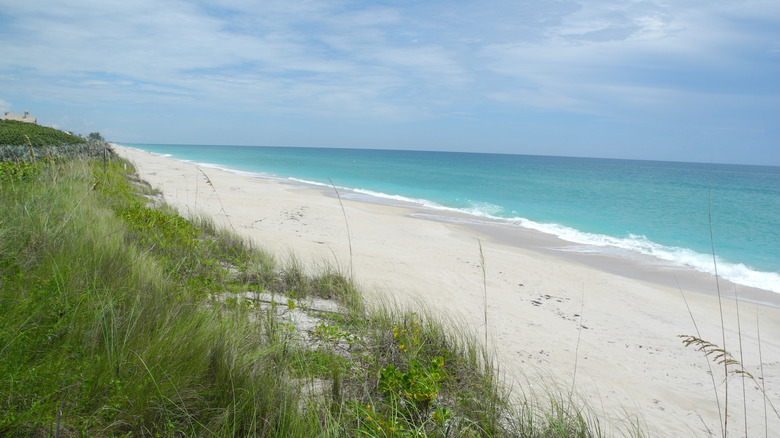
The Archie Carr National Wildlife Refuge is one of the most preeminent sea turtle nesting habitats in the entire nation. Established with federal protections in 1991, this beach area has always been specifically intended to protect sea turtle species and allow them to thrive. Named after sea turtle researcher and conservationist Dr. Archie Carr, the refuge saw 15,174 loggerhead nests and 23,220 green sea turtle nests in 2023 alone. Considering that only one in 1,000 sea turtle hatchlings successfully lives to adulthood, even these tens of thousands of nests do not increase the marine turtle population the way one might think, which is why refuges like the Archie Carr National Wildlife Refuge are so essential.
Visitors who come to the refuge during nesting and hatching season have a chance to witness tiny turtles as they make their way to the water. However, it is important to note that the Archie Carr National Wildlife Refuge itself does not provide guided turtle walks or hatchling experiences. If you see turtles hatching here, you will simply have to observe them yourself from a distance. There are, however, some local nonprofit organizations like the Sea Turtle Conservancy that lead turtle walks along the 20.5-mile-long Archie Carr beach. Participants must be at least 8 years old and it costs $25 a person. In addition to sea turtles, guests who come to this Florida wildlife refuge can enjoy a variety of other species, including brown pelicans, manatees, and gopher tortoises.
Canaveral National Seashore
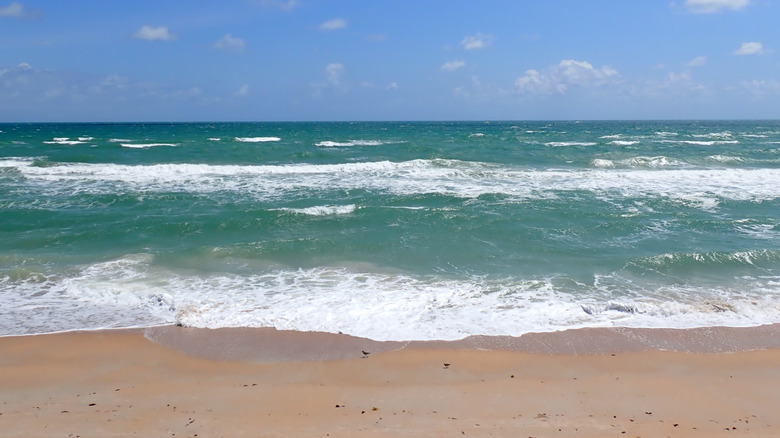
As one of Florida's longest stretches of coastline, Canaveral National Seashore is a great place to spend a day relaxing by the water or even camping overnight. It also happens to be an excellent spot for visitors to potentially witness sea turtle hatchlings as they make their way to the Atlantic Ocean. Located just 30 minutes from the Kennedy Space Center Visitor Complex, the Canaveral National Seashore typically sees about 6,000 sea turtle nests per year — which is markedly fewer than the Archie Carr National Wildlife Refuge, but still significant. Per the National Parks Service, multiple sea turtle species make their way to the Canaveral coastline annually. Loggerheads are the most common here, followed by green sea turtles and leatherbacks. Even rarer turtles like Kemp's ridleys (the tiniest sea turtle species) and hawksbills have also been periodically spotted.
Throughout the months of June and July, visitors can make Sea Turtle Watch reservations, led by a Canaveral National Seashore ranger. This is a popular outing, so you will need to make your reservation as early as possible if you're interested in the program. It's also important to note that visitors must be over 8 years old to participate. Fees cost $10 for anyone 15 years old or under, and $25 for anyone over 16. While hatchling sights are not guaranteed, this educational experience is still worthwhile. In addition to the possibility of watching sea turtles hatch, Canaveral National Seashore offers a wide range of other activities, including canoeing, hiking, and fishing, for outdoor enthusiasts to enjoy all year long. This is a raw, undeveloped stretch of coastline, so guests have the opportunity to witness various species of wildlife, from the beloved sea turtles to manatees to Southern bald eagles, in a truly natural environment.
Juno Beach
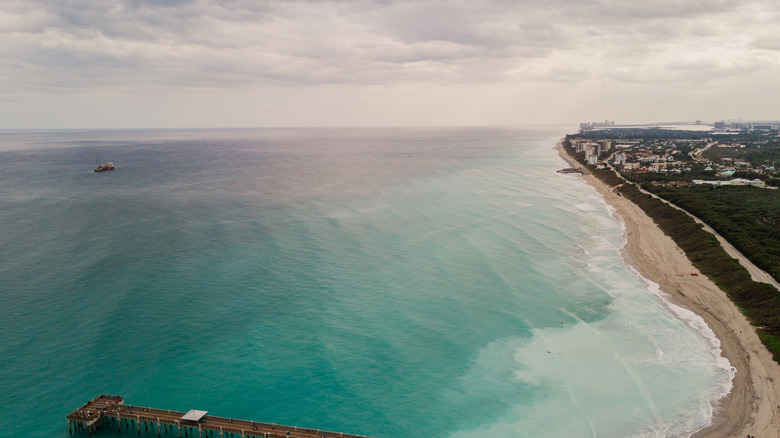
Our next entry on this list is a great option for those who want to experience in-depth sea turtle education, as well as an objectively beautiful beach destination. A breathtaking coastal town outside of West Palm Beach, Juno Beach also offers some of the most sea turtle nesting in the U.S. It is home to the highly respected Loggerhead Marinelife Center (LMC), a facility that is entirely devoted to sea turtle conservation, research, rescue, and rehabilitation. Sea turtle nesting season, which officially runs from March through October, is a huge event for the LMC and for Juno Beach as a whole. Visitors hoping to view hatchlings can take advantage of several wonderful experiences offered by the LMC. Public hatchling releases, conducted with the safety of the baby turtles in mind, are quite popular. Visitors can also adopt a sea turtle nest, and locals can even volunteer to become hands-on hatchling release experts.
The educational component provided by the Loggerhead Marinelife Center is what makes Juno Beach a truly unique sea turtle destination. In addition to the facility's nesting and hatchling release programs, guests can participate in weekly self-guided beach clean-up initiatives, hike on the sea dunes, attend a series of ongoing lectures with sea life experts, and partake in rehabilitation education. These events are all free of charge. Fans of the LMC can even keep tabs on their favorite rehab animals via a convenient online portal.
Vero Beach
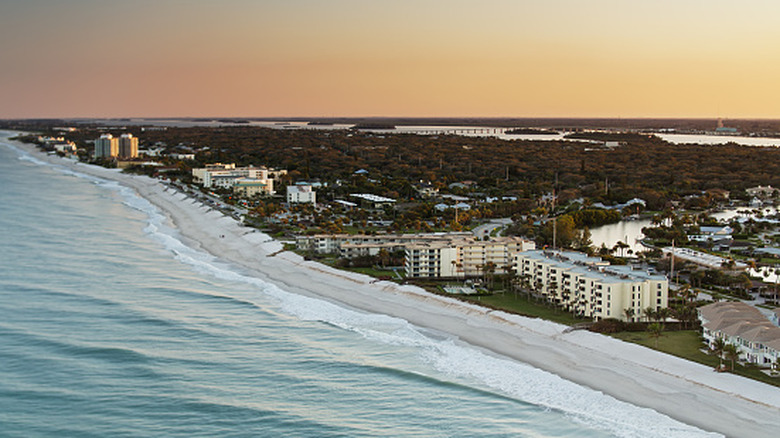
Vero Beach has become one of Florida's best destinations for travelers who have an interest in sea turtles thanks to its concentrated nesting activity, as well as the upscale atmosphere of local resorts, shopping, and restaurants. Located on Florida's Treasure Coast, Vero Beach had over 11,000 sea turtle nests across all species in 2025, and the town has a few turtle viewing experiences identified by the Florida Fish and Wildlife Conservation Commission (FFWCC). One such experience is offered by a local organization called Coastal Connections. This group offers regular guided turtle walks that costs $20 per participant (refundable due to weather) throughout June and July each nesting season. Another opportunity is provided by the Friends of the Sebastian Inlet State Park, Inc. This conservation society also provides summertime turtle walk experiences, with a non-refundable $15 fee. Both organizations begin accepting reservations on May 1, annually.
Another of the area's most immersive turtle-centric experiences can be found at Disney's Vero Beach Resort. Throughout the year, vacationers staying at this resort can interact with Disney Conservation Experts on the beach, and potentially watch green, leatherback, and loggerhead eggs hatch during nesting season. Disney's Vero Beach Resort also hosts the Tour de Turtles, an event that tracks two specific female sea turtles and their hatchlings every year. Hotel guests and researchers alike gather on the beach to watch the mother turtles "race" to the ocean during this unique party. Travelers can also enjoy local kayaking and paddleboarding, the Pelican Island National Wildlife Reserve, the McKee Botanical Garden, and other outdoor activities throughout Vero Beach.
Hutchinson Island
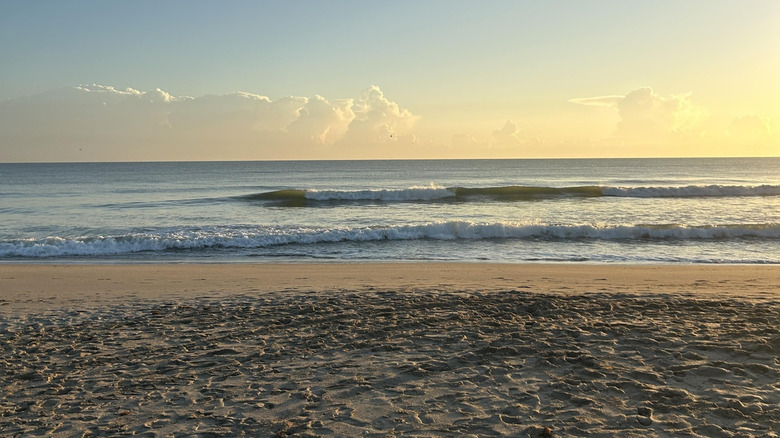
Also located on Florida's Treasure Coast, Hutchinson Island is an exceptional destination for sea turtle lovers. During nesting season, visitors have the opportunity to take turtle walks to enjoy some of the hundreds of nests that dot the island's beaches. SLC Hikes is a great option for those interested in a guided walk, though it's important to note that there is no guarantee of seeing hatchlings. These turtle walks are free, but pre-registration is encouraged. Even if you don't encounter any turtle activity, though, witnessing the nests and learning from the biologist leading your group are sure to make this a worthwhile experience. Loggerheads are by far the most prevalent species on Hutchinson Island, though green and leatherback turtles have also been spotted here.
Hutchinson Island visitors can also enjoy museums dedicated to life on the water. The Florida Oceanographic Society has been promoting conservation and marine education since 1964. Today, visitors can get up close and personal with stingrays, sea turtles, and view sharks and other native Florida marine life in aquarium tanks. Meanwhile, at the House of Refuge — the oldest building in the county, where sailors once sheltered from storms — guests can enjoy regular lectures about the marine history of Hutchinson Island (including when pirates frequented its shores). Whether you're hoping to witness sea turtles hatchlings with your own eyes or discover details about Florida's maritime history, Hutchinson Island is a great year-round destination.
Boca Raton
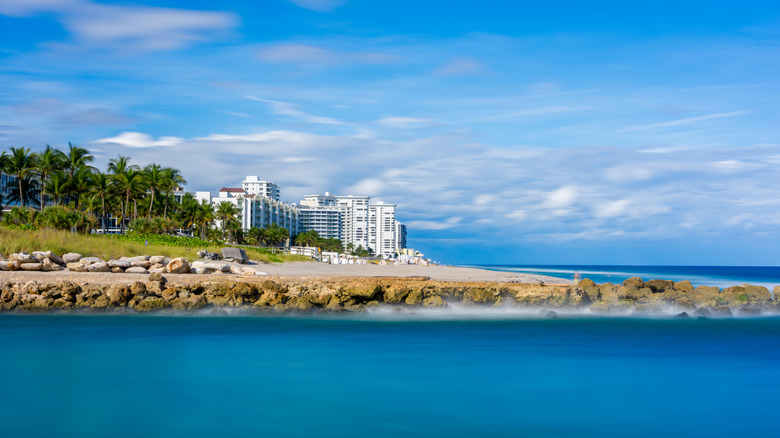
While Boca Raton is typically associated with wealth, upscale resorts, exclusive golf courses, and waterfront living, local beaches are also incredibly important for the sea turtle population. Since 1977, the city has made sea turtle protection a huge priority. The Boca Raton Sea Turtle Conservation and Research Program works diligently year-round to educate locals and visitors, as well as protect endangered sea turtles species that nest on Boca's shores. In 2025, the city recorded a total of 1,083 nests across green, loggerhead, and leatherback turtles. Meanwhile, as of May 2026, near the height of nesting season, Boca Raton officials had already clocked around 40 leatherback nests, which is a local record.
Among the most popular turtle-related activities in Boca Raton are guided turtle walks and hatchling release sessions. Both events occur on select dates throughout the summer months, and attendees must register in advance. It is important to note that children under age 8 are not permitted at turtle walks and there is a limit of six reservations per group. However, children of all ages are welcome at hatchling releases, as long as a parent or guardian accompanies them. Both of these activities require guests to abide by specific rules, such as not touching any turtles, eggs, or nests, and listening to all instructions given by the guide.
Fort Lauderdale
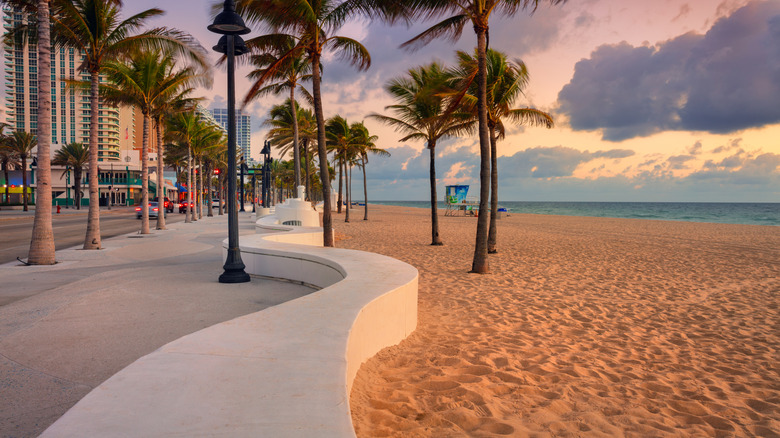
Fort Lauderdale Beach is one of the Sunshine State's most popular tourist destinations, known for its high-end shopping on Las Olas Boulevard, cruises out of Port Everglades, and the ever-popular Riverwalk. In addition to its cultural scene, though, the city is a bastion of sea turtle nests every year. In fact, Fort Lauderdale has some of the best beaches in America for sea turtle nesting and hatching. Near the Riverwalk, in fact, guests can enjoy guided beachfront turtle walks with an expert from the Museum of Science and Discovery. The fee is $19 if you're a museum member and $21 for general admission. Over the years, the city has actively sought grants and funding to help educate the public about endangered sea turtles and how to best protect them. This includes signage on local beaches explaining various sea turtle species.
Fort Lauderdale visitors and locals should also consider checking out the Sea Turtle Oversight Protection organization. Referred to as "S.T.O.P," this group exists to "resist extinction," and regularly educates the community with turtle talks and other events. One of the coolest opportunities at S.T.O.P. is the ability to name a hatchling turtle. Furthermore, local hotels in Fort Lauderdale also get involved in turtle tourism and conservation. B Ocean Resort Fort Lauderdale Beach, for example, allows guests to view turtle nests directly on their private beach. The hotel is also invested in taking eco-friendly measures to protect all local wildlife, including sea turtles.
Sanibel Island
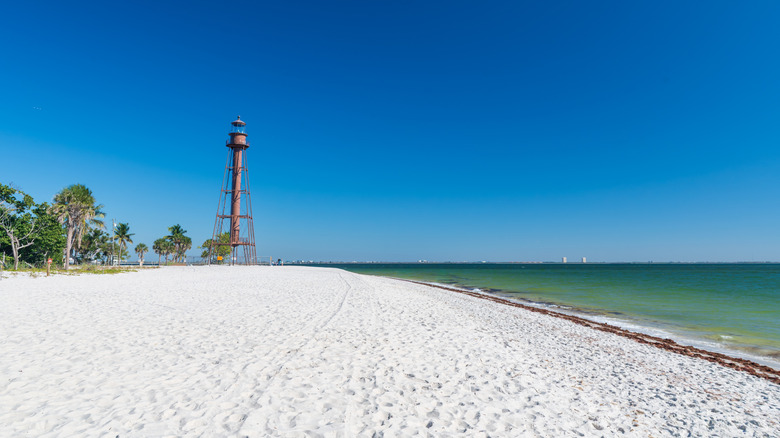
There is really nowhere else on Earth quite like Florida's Sanibel Island. Famous among seashell collectors for its hundreds of shell varieties, this city of about 6,500 year-round residents doesn't have a single stoplight and is a haven for wildlife. Sea turtle nests are common on the beaches here during nesting season, with over 340 nests already discovered in 2026, at the time this article was published. The Sanibel-Captiva Conservation Foundation (SCCF) operates an incredible sea turtle program that consists of nighttime tagging so turtles can be tracked, daily nest checks, care and rehabilitation for injured or sick turtles, and much more.
One fun thing families can do, even from far away, is engage with the SCCF's online turtle tracking portal. This is a great way to see tagged turtles' trajectory in the water, and allows parents to educate kids about these fascinating animals' lives. Furthermore, the SCCF offers adoption programs for those who are passionate about sea turtle conservation, whether they live locally on Sanibel or elsewhere in the United States. Enthusiasts can adopt a sea turtle mother for a specific nesting season for a fee of $500. This means they will receive regular updates about her nest for that calendar year. For $5,000, people are able to adopt a sea turtle for her entire nesting life. Participants are even able to rename their turtles and receive various commemorative items marking their one-time donation.
Anna Maria Island
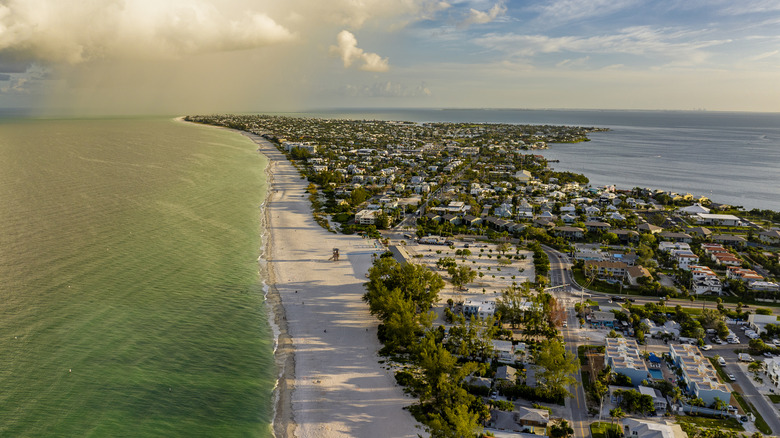
Anna Maria Island, located over an hour southwest of Tampa, is an excellent destination for anyone interested in sea turtles. This barrier island that spans 7 miles lacks the large high-rise hotels that line many popular Florida beaches, which means less light pollution than you'd find in more crowded metro areas. Overall, it's an appealing environment for mother sea turtles looking to lay their eggs. If you plan to stay on Anna Maria Island for your sea turtle viewing trip, keep in mind that visitors are encouraged to close their blinds or curtains each night, smooth the sand after beach days, and avoid touching any turtle nests they may encounter. Turtle nesting is serious business here. In 2025 alone, Anna Maria Island officials recorded upwards of 31,000 hatchlings born on their shores.
The Anna Maria Island Turtle Watch and Shorebird Monitoring organization oversees a great deal of the town's conservation and preservation efforts, monitoring nests annually during nesting season and offering educational opportunities all year. On Monday mornings from May through August, for instance, the group offers free, one-hour shorebird and turtle talks that are perfect for the whole family. Locals and travelers alike can also get involved with the organization's adopt-a-nest program, named for local conservation champion Suzi L. Fox. A standard one-season nest adoption costs $149, while a premium option costs $199.
Navarre Beach
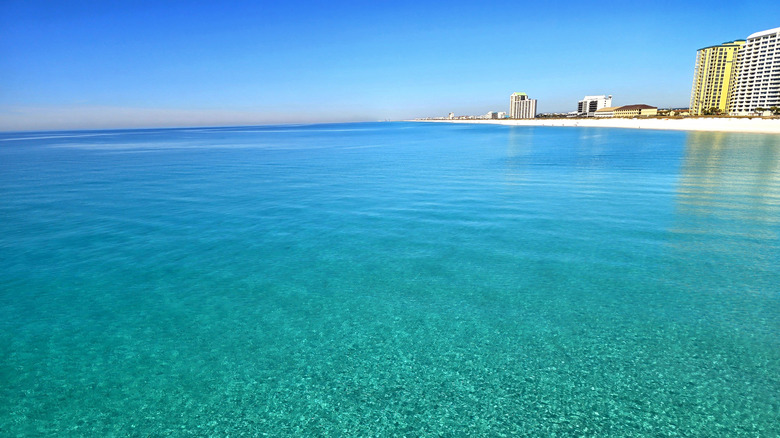
Last but certainly not least on our list is Navarre Beach, which can be found between Pensacola and Destin on the Florida Panhandle. The Navarre Beach Sea Turtle Conservation Center is extremely dedicated to its cause, and it's a fantastic place for sea turtle enthusiasts to learn about various species during nesting season and throughout the year. The center offers numerous exhibits, educational programs, and volunteer opportunities for those who care about sea turtle conservation. Perhaps the most unique thing about the Navarre Beach center is that it has its own resident sea turtle named Sweet Pea. Guests can meet and interact with Sweet Pea by booking a private tour or reserving select other activities.
During nesting season, in particular, the center encourages Panhandle visitors to take extreme care when visiting local beaches. Even the smallest piece of trash or a sliver of light pollution could disorient a baby turtle, preventing them from safely reaching the water's edge. The conservation center also provides extensive information about how to responsibly interact with nesting grounds, as well as how to protect sea turtles and other marine life on a daily basis. Navarre Beach visitors have the opportunity to see one (or more) of four types of sea turtles: green, leatherbacks, loggerheads, and Kemp's ridleys.