
10 Once-Thriving California Towns That Transformed Into Eerie, Abandoned Beauties
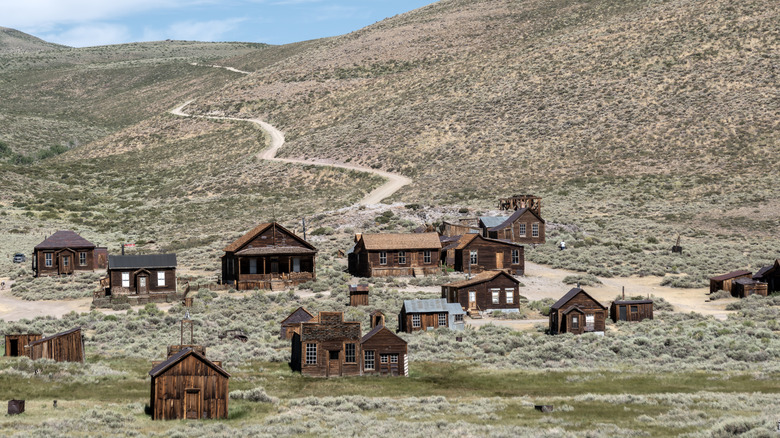
So, you're looking for a bona fide Californian ghost town? You've come to the right place. This guide hops across the Sierra Nevada mountains, cruises Route 66, and scours the forests of NorCal, all with one purpose: to highlight the most soul-stirring, skin-tingling, haunting abandoned settlements that await in this part of the West Coast.
While California might not be the state with the most abandoned ghost towns, there are still plenty to pick from there. The region's past looms large; the discovery of gold here in 1848 kick-started what some call the biggest human migration in U.S. history, with countless mining camps, settlements, and even whole cities mushrooming in its wake. Many such places would be deserted years or decades later when the prospectors finally left. Though, as you shall see, the boom and bust of the Gold Rush certainly isn't the only reason that Cali is peppered with uninhabited towns aplenty.
The selection below is inspired by my own travels across the great state of California, in-depth research across leading travel blogs and publications, and various traveler reviews for ghost towns in the Golden State. The upshot? A list that includes some of the best-preserved, most beautiful, and most striking examples of abandoned places in the region. Prepare to go back in time, folks!
Bodie
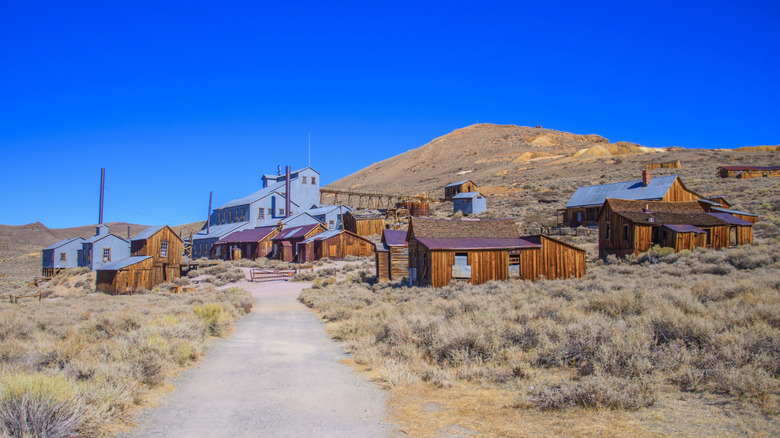
I dropped into Bodie while cruising up this iconic mountain-and-desert highway last year, and boy did it get the goosebumps a-going. It's the genuine article, offering an enthralling snapshot of what life was like during the Gold Rush. The key here is that Bodie has been preserved in a state of what's known as "arrested decay." That means no restoration, just preservation. What you see here is how the town was when the California State Parks authority took over management of the site in the '60s. Today, over 100 buildings remain, including a morgue, cabin-style homes, and a big mill cut into the hillside.
Calico
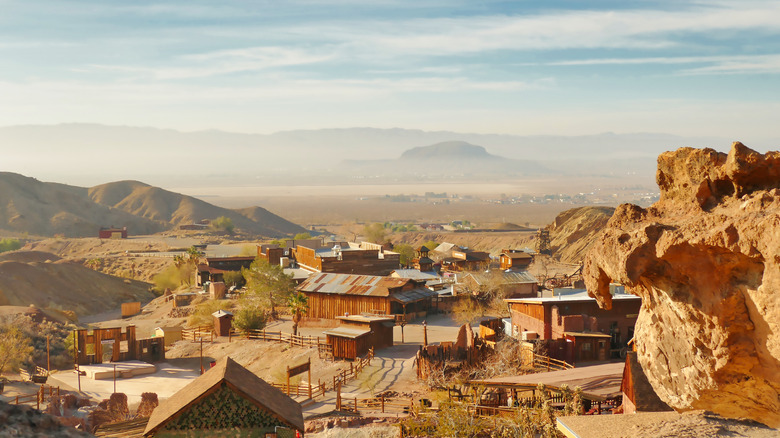
Sat along appropriately named Ghost Town Road, just a 10-minute detour off Interstate 15, Calico once pulsed with life on account of its position right atop one of the biggest silver discoveries ever made in California. At its height, there were 500 individual mining operations here, 3,500 people, and everything from hotels to saloon bars. Dive in to get lost amid the dust-swirling streets, which scramble between the red-hued bluffs of the Mojave Desert. Quirky gift shops keep you grounded in the 21st century, but there's also a real mining shaft from the 1880s and a white-painted schoolhouse in the shadow of the mountains.
Amboy
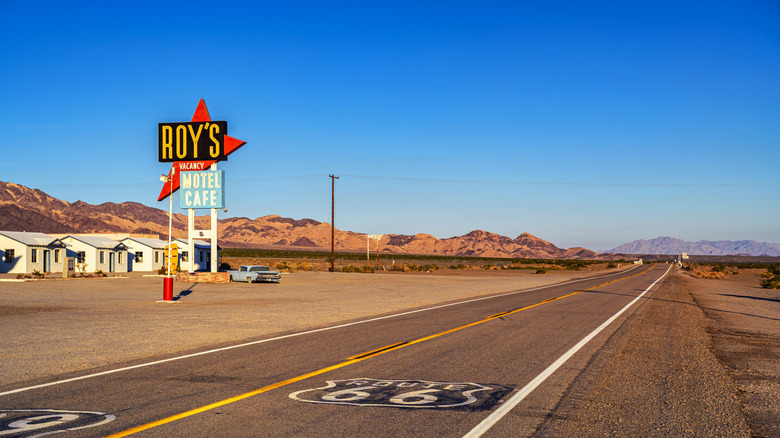
The ghost town of Amboy tells a slightly different story of boom and bust than California's Gold Rush settlements do. Although it began life as a mining outpost in the 1850s, it was really the roadway of Route 66 that brought prosperity to this corner of the Mojave. By the 1940s, little Amboy had over 200 inhabitants. Its kingpin was Roy's Motel & Café, an Americana pitstop with a fabled neon sign that's something of a pilgrimage location for fans of vintage Gооgіе architecture. You can now peer inside to see abandoned rooms and a lobby that oozes retro charm.
Darwin
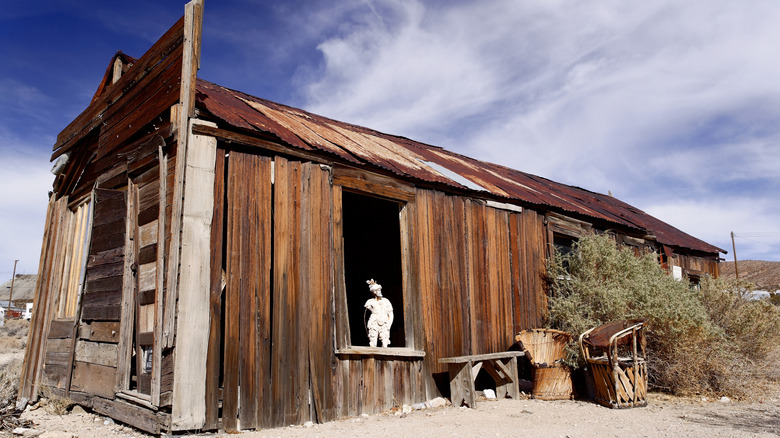
Darwin clings to the rugged mountains that fringe Death Valley, a short detour down a dead-end road off Highway 190 that leads in the national park. Once upon a time, this isolated spot buzzed with life — over 3,000 people lived and toiled in the productive silver mines that were Darwin's raison d'être. There was gunslinging, there was smallpox, but mainly there was a slow decline in mining operations, and people gradually left. Not everyone, though. Amid the rusting shacks and dilapidated mining equipment, you'll also spy pretty sculptures, which belie the small artistic community that now calls Darwin home.
Pioneertown
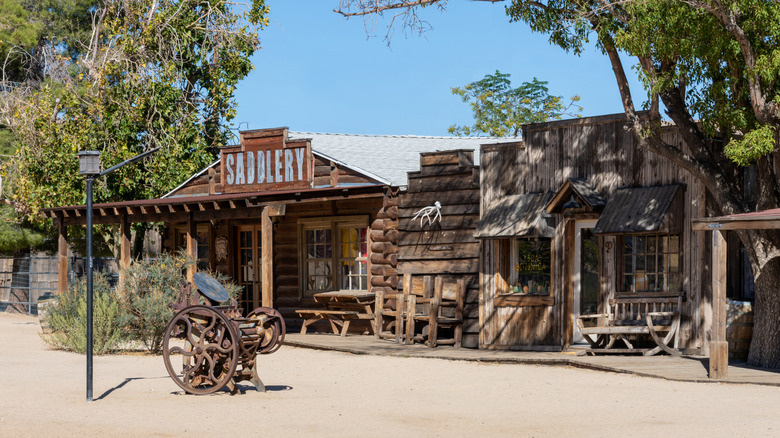
You could be forgiven for thinking the quirky desert destination of Pioneertown was among California's oldest ghost towns. It looks like it's been plucked from the reels of a vintage cowboy movie, what with shotgun houses, boardwalks, and saloons lining its dust-swirling streets. But don't be fooled, for this one was purposely built in the 1940s by Hollywood big wigs who wanted somewhere to film. It is now a major draw for Western buffs and offers a unique blend of make-believe and real Hollywood history amid its recreated buildings, which all sit conveniently close to Joshua Tree National Park.
Old Shasta
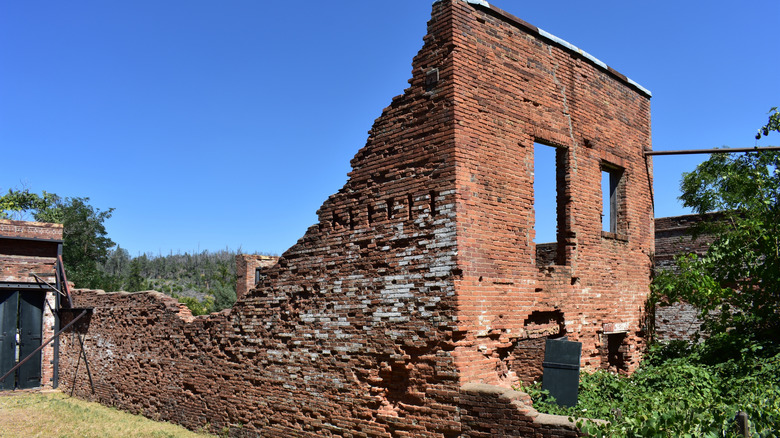
You wouldn't think it now, but the collection of redbrick ruins and timber-lined shacks that is Old Shasta (the centerpiece of Shasta State Historic Park) was once hailed as the "Queen City of the Northern Mines." That was back in the 1840s, the height of the Cali Gold Rush, when people were making millions on precious metal carved from the surrounding hills. Old Shasta would soon decline like so many of California's charming and scenic Gold Rush towns, but plenty of buildings still testify to its former glory. The continued existence of these structures is largely thanks to local builders using hardy brick as their material of choice to avoid wildfire damage.
Panamint City
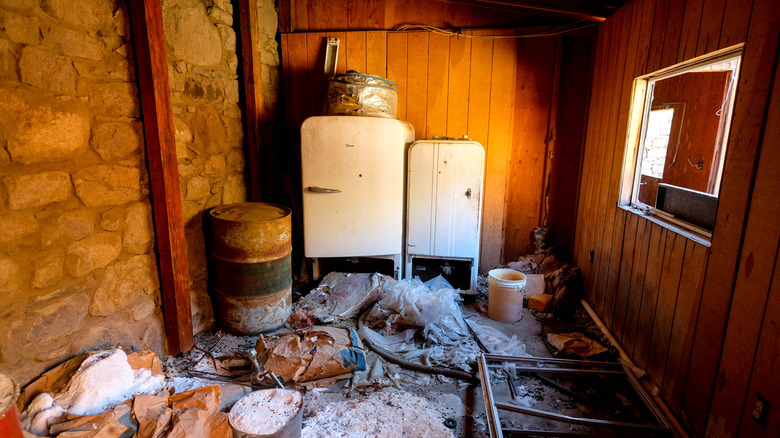
Panamint City is just one of a handful of ghost towns that sit in the sun-scorched depths of Death Valley. It had a swashbuckling start to life, founded by on-the-run outlaws and prospectors looking for long-lost mines in the desert mountains. After catching the eye of rich investors, the place exploded throughout the 1870s, forming a nearly mile-long ramshackle settlement. The only way to see what remains of the site (cabins left frozen in time, spookily abandoned mining complexes) is by following a 15-mile hiking trail through a rugged, cactus-spotted canyon.
Silver City
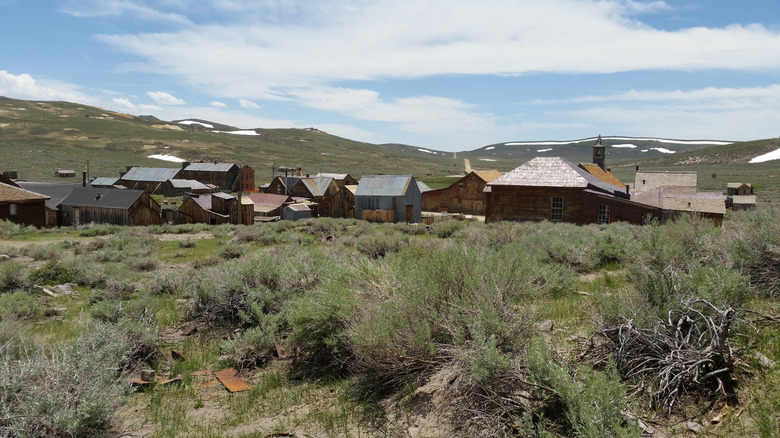
In 1855, the Kern River Valley became the focal point for a potential sequel to California's legendary Gold Rush. The area suddenly saw mining camps like Keyesville and Whiskey Flat pop up from nothing, only to be abandoned when gold veins went dry. Silver City is a homage to that era. It's not, strictly speaking, a ghost town in its own right, but rather an amalgamation of several once-thriving ghost towns from the surrounding area. There's an old jail from here, a church from there, and the ubiquitous saloon, all gathered around a dusty central plaza. Be warned: They say Silver City is haunted.
Garlock
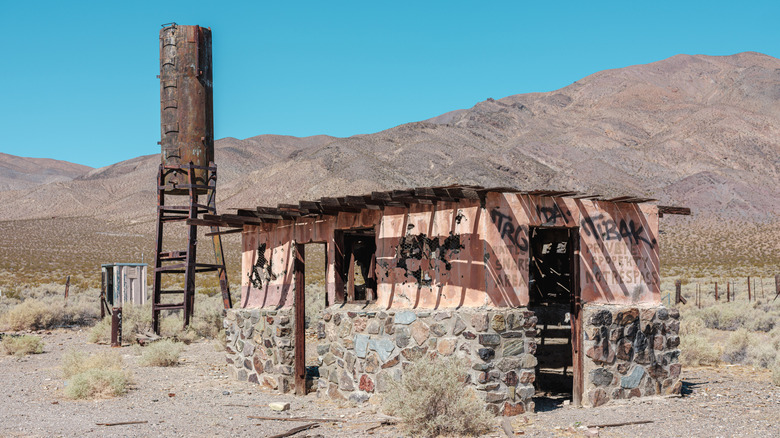
Garlock huddles under the same mountains that host the vivid sandstone cliffs of California's Red Rock Canyon State Park, just a touch to the west of Highway 395. It once served as the ore-processing hub for a network of mines throughout the frenzied time of the Gold Rush. However, the last inhabitants bid farewell to old Garlock in 1903, and it's been aging ever since. Breeze by to see crooked cabins and rusting water tanks surrounded by great sweeps of sagebrush and mountains.
Randsburg
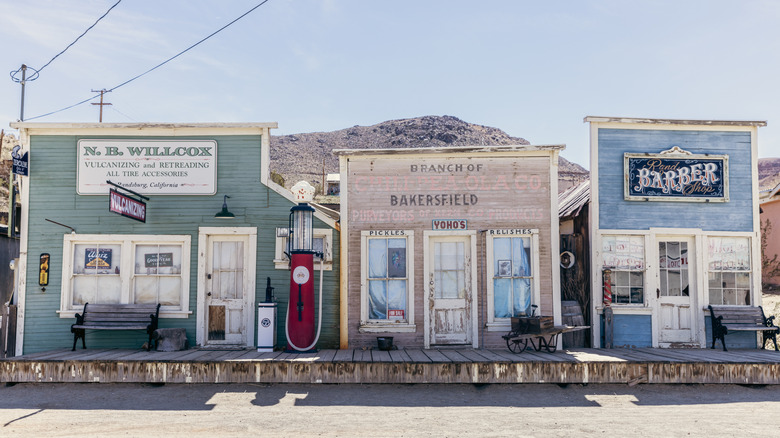
They call Randsburg a "living ghost town" because there's still a trace of energy here thanks to the trickle of visitors that come while driving up the dramatic 395. Go back 130 years, and the spot was buzzing with miner activity in the wake of a gold strike in the nearby mountains. That ended in earnest by the mid-20th century, leaving Randburg to while away its days as a pitstop for off-roaders and as a pilgrimage destination for those hunting vintage Americana. The nostalgia is strongest on the main street, where paint-peeling shops still serve soda pops and cowboy paraphernalia.