
8 Once-Thriving Ohio Towns That Are Now Abandoned Beauties
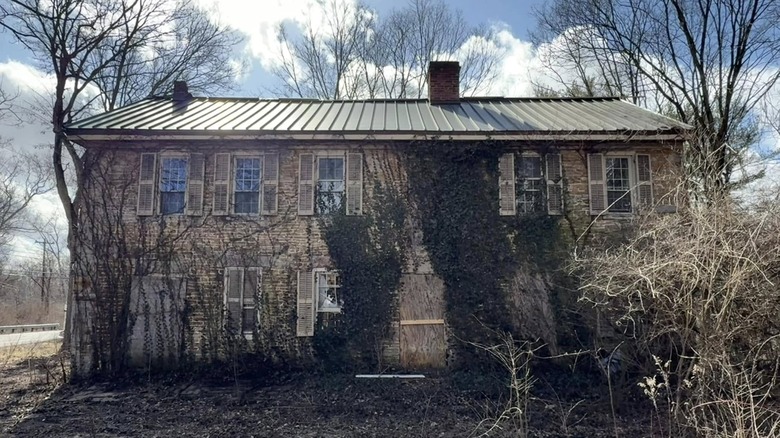
Ohio was the 17th state added to the United States of America, making it one of the earliest states admitted after the original 13 colonies. Officially formed in 1803, it got its first permanent settlement in 1788 and quickly grew as a center for both agriculture and industry. Many more towns followed in the more than 200 years since, and while some continue to thrive today, others have been abandoned, giving the state a rich legacy of ghost towns for visitors to explore.
Granted, not all of those towns have left traces of their existence. Some have been absorbed by neighboring communities or are now only memorialized in the names of roads that once led to them. But there are also plenty of once-thriving communities that today sit empty across Ohio's parks and rural areas. Whether you find these spots beautiful will depend on your outlook — after all, beauty is, as they say, in the eye of the beholder. But if you're enchanted by human structures that have been reclaimed by nature and appreciate the haunting appeal of empty spaces, the abandoned towns below are worth a visit.
Carpenter's Mill
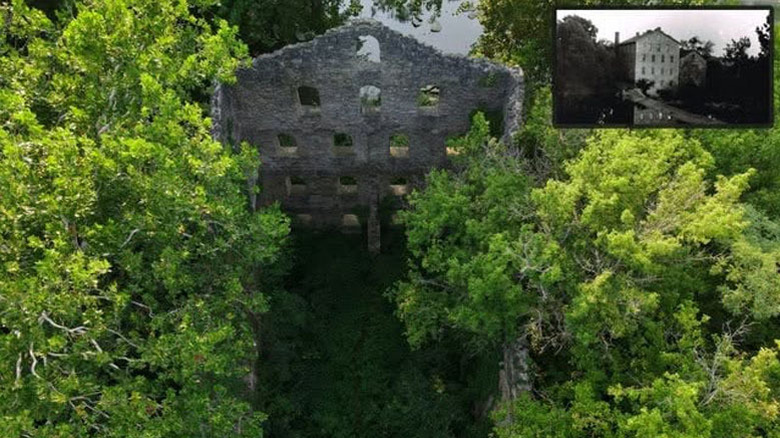
In 1801, Revolutionary War veteran Nathan Carpenter established Liberty Settlement along the Olentangy River. The village was home to Delaware County's first mill, giving it an important role in pioneer life. A church was built in 1810, and by the 1830s, Liberty was large enough that it had its own post office. Another mill was added in the 1840s, next to which a massive stone mill was later built. It's not clear when Liberty Settlement died out, but in 1923, the land was purchased by the Ohio Department of Natural Resources. The stone mill's ruins still overlook the river, and other remnants, like an old boarding house, sit abandoned nearby.
Cheshire and Kyger
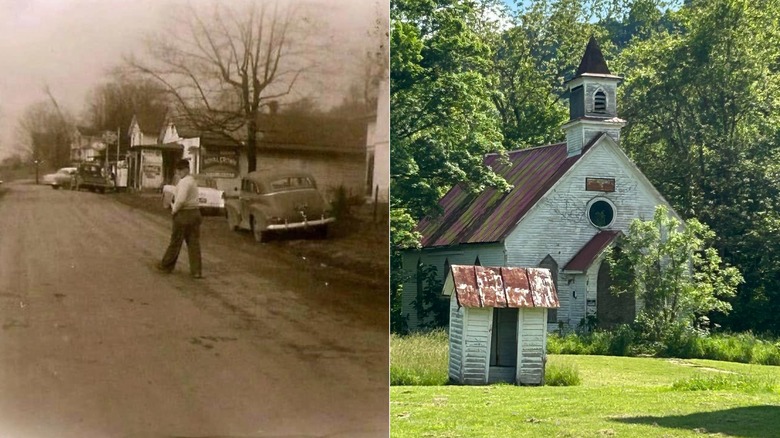
As recently as 2002, Cheshire and Kyger were small but thriving villages along the Ohio River, near the mysterious town of Point Pleasant. They are also near the Gavin Power Plant — Ohio's largest coal plant, whose accumulated emissions produced toxic gas clouds and acid rain. Most residents accepted buyouts after the Environmental Protection Agency declared the Gavin plant had violated the Clean Air Act. While a few residents remain, most of Cheshire was demolished after the buy-out, and the majority of Kyger's buildings have been abandoned since the early 2000s, including the 19th-century Kyger Methodist Church.
Iron Soup (Campbell)
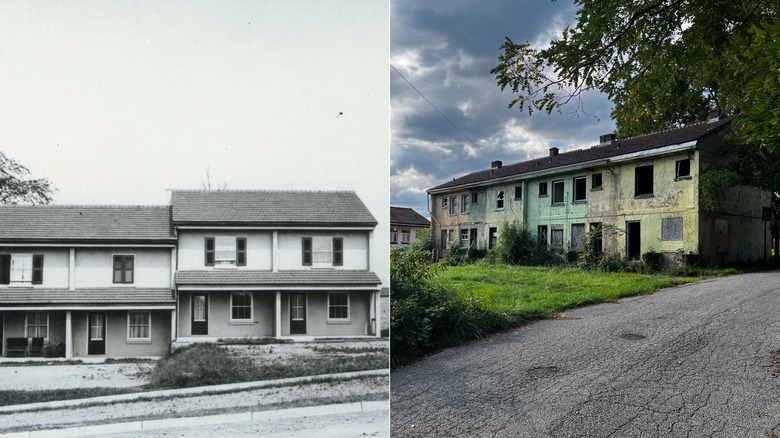
The Campbell Works was the first plant built by the Youngstown Sheet and Tube Company after it opened in 1900. Located about five miles southeast of the affordable Midwest city of Youngstown, the massive factory had 381 coke ovens and 16 furnaces. It employed thousands of workers, many of whom lived in the company town of Campbell. When the steelworks closed in 1977, the company housing was abandoned and fell into disrepair. It has since been designated a National Historic Site and is maintained by the Iron Soup Historical Preservation Company.
Little Egypt
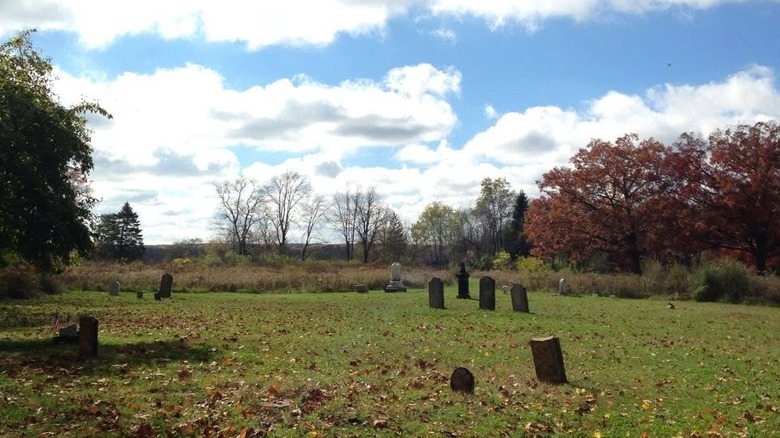
Little Egypt used to stand about 20 miles southeast of downtown Cleveland, near the modern-day town of Walton Hills. It was named for a pyramid-shaped mound the first settlers allegedly found when they arrived in 1813. World's End Tavern was built nearby in the 1820s, while a cemetery occupied its peak. The town's population boomed after a rail line was built in 1904, but other nearby towns grew faster, and by the early 1950s, Little Egypt was abandoned. Foundations of the tavern, graves, and other remnants can today be discovered in the Bedford Reservation recreation area.
Moonville
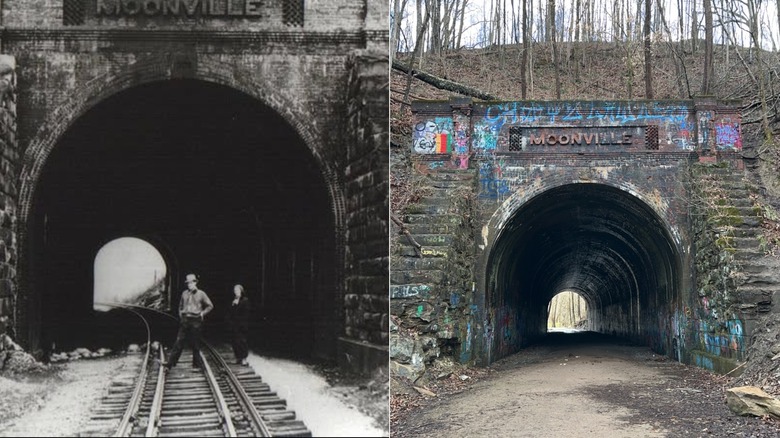
The town of Moonville formed around the Marietta and Cincinnati Railroad line built in 1856, about 75 miles south of Columbus, and just east of Zaleski State Forest. It reached a peak of about 100 residents in the late 19th century, when it served as the transportation center for the surrounding rural area. Once nearby mines started to close in the 20th century, the town declined until it was fully abandoned in 1947 (via Ohio Department of Natural Resources). Today, this ghost town is known for its supposedly haunted tunnel, and the rail lines that prompted its formation are being converted into the 16-mile Moonville Rail Trail.
Sprucevale
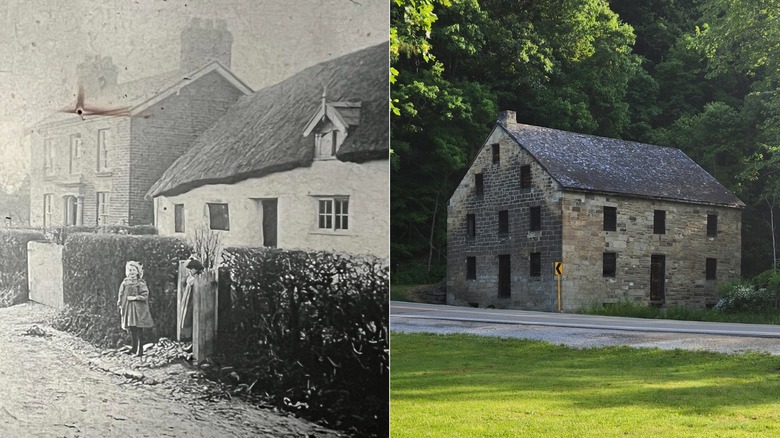
The last remnants of this 19th-century mill town are within scenic Beaver Creek State Park, which is roughly halfway between Akron and Pittsburgh. Sprucevale was founded in 1813 by the Hambleton brothers, one of whom built a grist mill along Beaver Creek. The town that grew around the mill had a wool factory and a few stores, but that wasn't enough to keep it going after the Sandy and Beaver Canal closed. The mill closed first, and the whole village was abandoned in 1870. Today, the ruins of Hambleton's Mill are the last sign that Sprucevale ever existed.
Tadmor
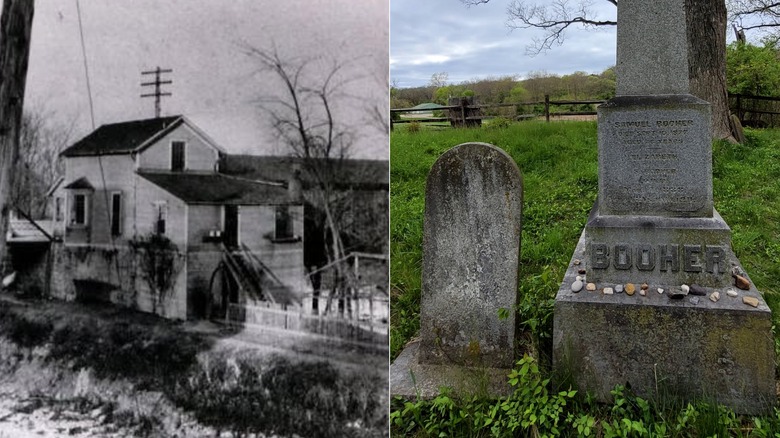
Tadmor was one of Ohio's most important 19th-century transportation hubs. By the 1850s, it sat along the Miami and Erie canal, the National Road, and the Dayton & Michigan Railroad, making it accessible via every transportation method then in use. Unfortunately, it was also prone to flooding. A massive flood floated several buildings down the canal and ruined it in 1913, so the railroad was moved to higher ground, the National Road was rerouted, and a new dam was built in 1922, making the area uninhabitable. Tadmor was abandoned and its remains absorbed into Taylorsville MetroPark in the charming city of Vandalia, where visitors can still explore them today.
White Water Village
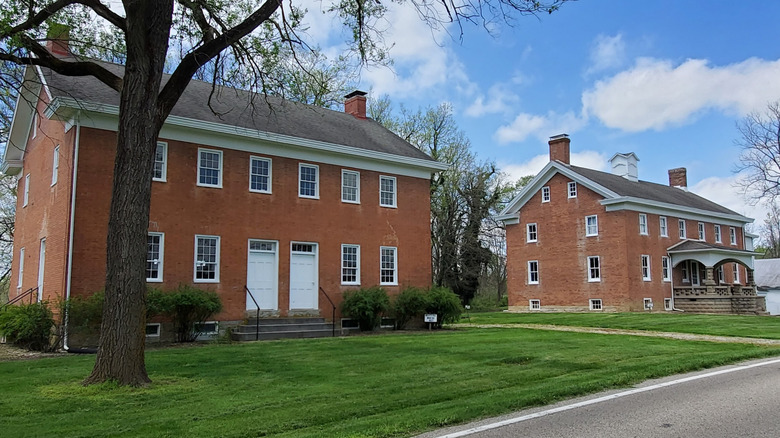
About four miles north of the verdant lakeside Miami Whitewater Forest is Ohio's last remaining Shaker village. Established in 1823, White Water Village was once one of five such communities in Ohio. It thrived until the early 20th century, when a fire and the deaths of several Elders prompted the last residents to move elsewhere. The village was abandoned in 1916, and the land used by local families until the 1980s. It's now maintained by Greater Parks of Hamilton County, who restored the remaining structures, including the last brick Shaker meeting house still standing in the U.S.