
Unwritten Rules You Should Know Before Visiting A Hot Spring
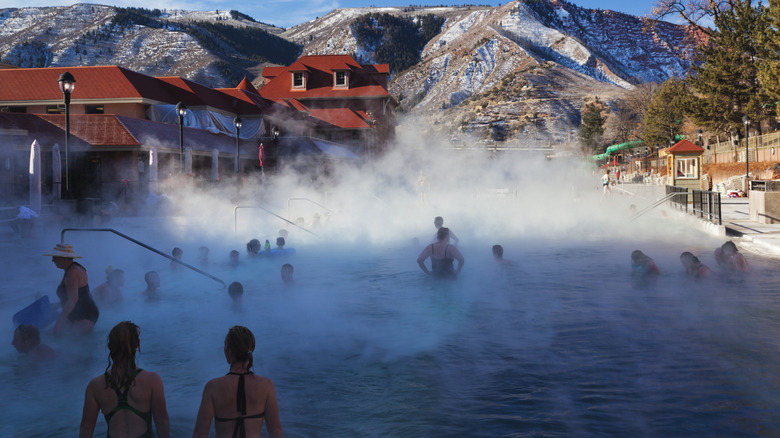
If you're planning a hot spring escape, your choices will be endless. From a Japanese hot spring destination with monkey encounters to a set of unique geothermal pools in California's Sierra Nevada, some of the most unexpected options await around the globe. In fact, according to the Global Wellness Institute, more than 31,000 establishments operate around Earth's thermal waters, offering restoration and relaxation. Europe and Asia-Pacific account for over 93%, and in the U.S., the National Oceanic and Atmospheric Administration has identified 1,661 possibilities! With all these options, choosing won't be easy. But before you settle on a destination, it's worth understanding the etiquette, expectations, and safety considerations that come with visiting a hot spring.
As you do your investigations, researching potential pitfalls that may disrupt your zen should also be on your to-do list. Because while hot springs can be relaxing, dangers may lurk in the waters.
These hazards can be triggered by simple everyday actions you would never expect could cause discomfort. But sometimes, they are far more serious, with the potential to threaten your health. On the bright side, keeping yourself safe is easier with the right information. These unwritten rules should help with that. From advice on the type of destination that may be ideal for your needs to tips on how to avoid discomfort, they should help you have a stress-free trip. We've also included tips on hot spring etiquette that should be helpful, especially if your plans include one of the world's luxurious hot spring destinations. If your plans happen to include one of Oregon's thermal beauties, our clothing rules for visiting a hot spring in the state could also be helpful.
Know the different hot spring types and choose the best one for you
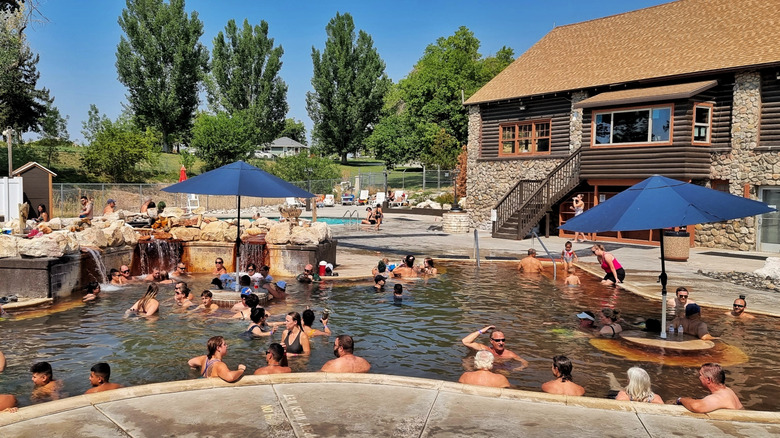
Hot springs fall into two broad categories: commercial and natural. The type you choose will depend on your desired experience and what you can tolerate. In the commercial category are resorts and spas built around the springs, with mechanisms that pipe the water into pools and tubs for guests' use. The second category, natural hot springs, occur in the wild and are minimally supervised in most cases.
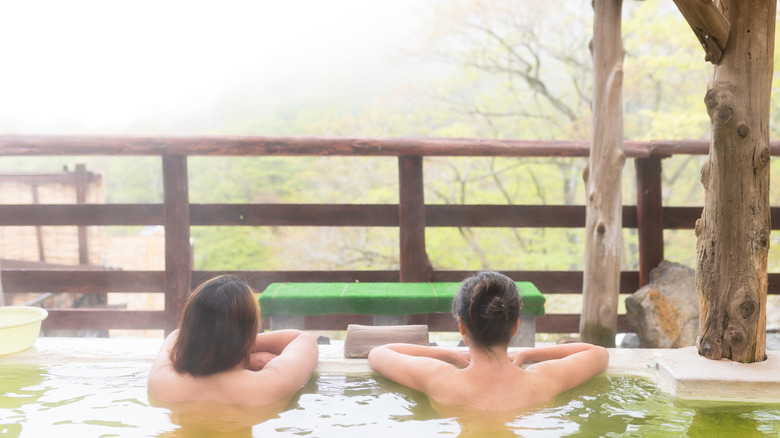
Japanese-style hot spring spas, called onsen, fall in the commercial category and have much to recommend them. They regulate water temperatures to stay between 99 and 108 degrees Fahrenheit approximately, warm enough to induce relaxation, but not so hot that it causes burns. Their natural aesthetic is curated to promote tranquility, while Japanese touches like sit-down shower stools lend authenticity. However, some aspects can make them unsuitable for some visitors. Many onsens require communal nude bathing, which may be uncomfortable for some visitors. Additionally, if you plan on visiting an onsen in Japan and have tattoos, there will be strict rules to follow, so check if they're suitable for you.
Naturally occurring hot springs seep out of the ground where they've been naturally heated and infused with minerals. Being outdoors, they also come with stunning views of nature. But their less-controlled nature can make for wildly varying temperatures that can sometimes be scalding hot and contain dangerous bacteria, making it necessary to do additional checks before visiting. If neither onsens nor natural hot springs seem appealing, a resort may be your best option. Like an onsen, the water temperature is controlled. And many — like Castle Hot Springs, one of America's best hot spring resorts — are designed to showcase stunning nature views.
Check for contamination advisories before visiting a natural hot spring
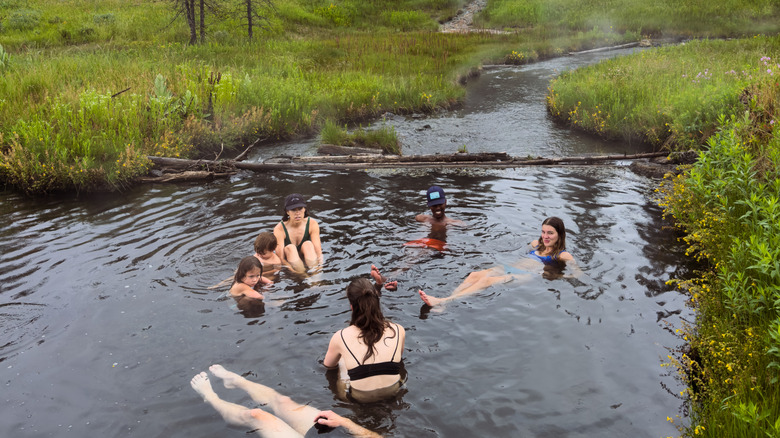
If you fall into the camp that prefers natural hot springs, those breathtaking views can come with nasty contaminants. A 2021 study in the Journal of Health Science and Prevention identified several pathogenic microorganisms that have caused health issues for users of natural hot springs. This is problematic because — while you can trust a resort to treat its tubs and pools — the same isn't always true of natural springs. For example, Avalanche Ranch Cabins & Hot Springs closes for cleaning every Wednesday, and award-winning Ten Thousand Waves sanitizes tubs between each use. On the contrary, if you're considering a natural hot spring in a national park, the most you can hope for is monitoring of bacteria levels.
For instance, Arizona Hot Springs in Lake Mead National Recreation Area monitors the water for bacteria. But there's no sign of sanitation — which is expected, as national parks exist to conserve their attractions in as natural a condition as possible. Put simply, there may be little to prevent bacteria from growing to harmful levels. This is probably why an E. coli contamination forced the park to close the springs in 2023.
And they aren't the only ones. At the time of this writing, Hot Springs National Park is warning of elevated levels of Legionella bacteria (which causes Legionnaires' Disease) in the springs. The good news is that, since water quality is monitored, if you check the parks' websites before you go, you'll discover any advisories before making a long trip. These signs to look out for when determining if a hot spring is safe may also come in handy as you plan.
Don't stare at naked bathers
If you choose a clothing-optional hot springs resort or an onsen, you'll likely see nudity, and it won't be confined to the water where it's less conspicuous. To illustrate, Wilbur Hot Springs in California markets itself as a cross between an onsen and a European-style resort and allows nude bathing. In addition to the pools, nudity is allowed on the decks. This means guests are on full display once they leave the water for surrounding areas. It also means that if it's your first time at a nude resort, you should expect similar conditions. If you think you may find it difficult to keep your gaze away, that wouldn't be strange, as other visitors in similar situations report the same issues.
But you must have a plan to help you keep your eyes to yourself, as following this rule is absolutely necessary if you don't want to make other guests uncomfortable. One Redditor made this hilarious comment to a traveler seeking help for their uncontrolled staring at one of Germany's free-body-culture public spaces (FKK): "Most [FKK] places have a convenient eye container at the entrance where you can safely leave them until you're done." While being able to leave your eyes at the door would certainly be helpful, luckily there are other options.
Bring a magazine, book, or other form of distraction so you have something to look at while you get used to the new setting. Frequent visitors to these spaces also recommend wearing sunglasses so that, if your eyes stray, it isn't obvious. Whatever you do, ensure your chosen method of distraction isn't a phone or electronic device. Many of these types of resorts ban phones, electronics, and cameras that may take unwanted photographs of naked guests.
Don't speak loudly
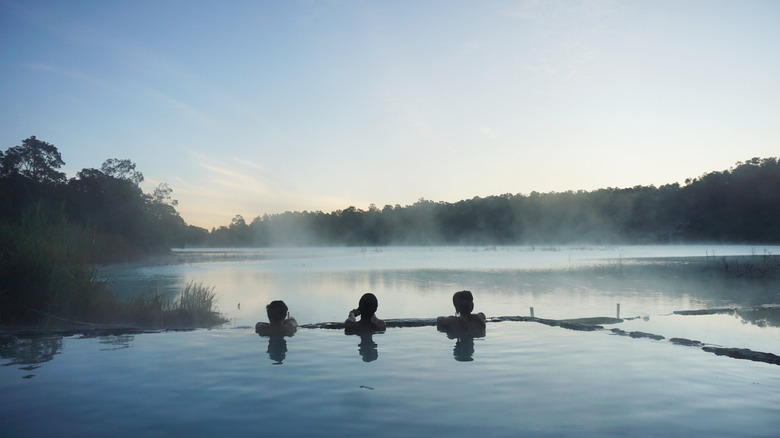
You know to maintain a quiet atmosphere when you go to a spa. Well, hot spring resorts are much like spas. Wellness seekers flock to these destinations craving relaxation and a mental reset. Being unduly disturbed can get in the way of what should be a peaceful escape for these visitors. While you're soaking your problems away, adopt the same etiquette you would at a spa and refrain from any action that could result in loud, disruptive sounds.
You'll want to consider the volume of your voice when talking, or whether you should speak at all. Some hot spring users don't like being disturbed by any kind of talking, no matter your pitch. Others don't mind a very low whisper. To keep the experience as relaxing as possible, it's best to keep quiet while you soak. This ensures both groups of guests are comfortable. You can also check if your resort has a noise policy, as some resorts have a whisper policy that may give you some leeway if you're going with friends and feel like you must speak.
Similar rules apply to your electronic devices. If you're in a facility (without nude bathers) where electronic devices are permitted for entertainment, use your earbuds or put closed captions on while enjoying your music, podcast, or other programming. While you may argue that, since they're devices, they don't contradict whispering rules, the point is to maintain a tranquil environment, so ensure they're quiet as you use them. Some resorts actually require silence in bathing areas, so you may face consequences if you don't.
Forget the cocktails
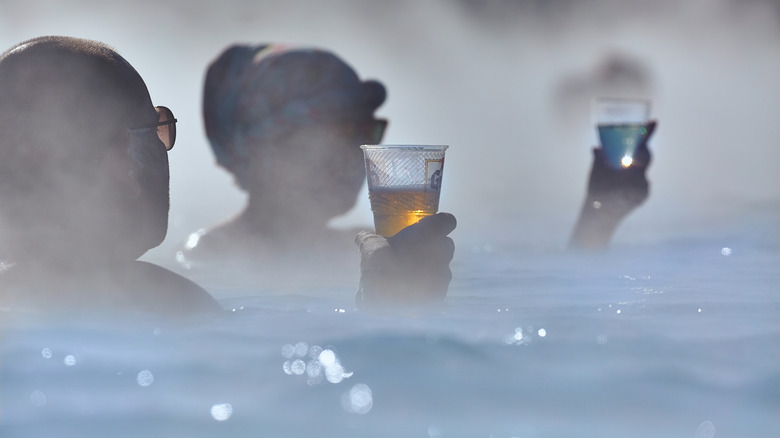
Nobody is judging you if you like your escapes to come with a side of alcohol. With moderation, alcohol is perfectly okay for most trips. This is not the case with a hot spring escape. Even if you're intentionally moderate while you imbibe, the elevated temperatures in geothermal baths and springs may undo your restraint. For this reason, many resorts go as far as discouraging drinking alcohol both before and during soaking. The issue at play is the danger that can arise when you mix hot water with alcohol.
It's long been known that hot water relaxes the body and causes drowsiness. Alcohol is also known to be a sedative that can bring on sleepiness fast. When both are combined, you may relax so well that you fall asleep or slip into a state of unconsciousness that can lead to drowning and other serious accidents. According to a news report from Wales Online, this is what happened to Welsh citizen Ian William Foden in 2023. He had been drinking pints of beer just before soaking in a hot tub. He was later found dead from "drowning due to alcohol intoxication."
Drinking while soaking in a hot spring can also lead to dehydration. In some cases, you may even experience heat exhaustion, as both alcohol and heat raise body temperature. When you combine the two, you get a double whammy. Heat exhaustion can cause fainting, dizziness, fatigue, low blood pressure when you try to stand, headaches, nausea, and more. It may even lead to heatstroke if not treated quickly. You can prevent these issues by staying away from alcohol and drinking lots of water. If the symptoms do arise, get to a cooler place and consider seeking medical attention.
Always monitor younger kids
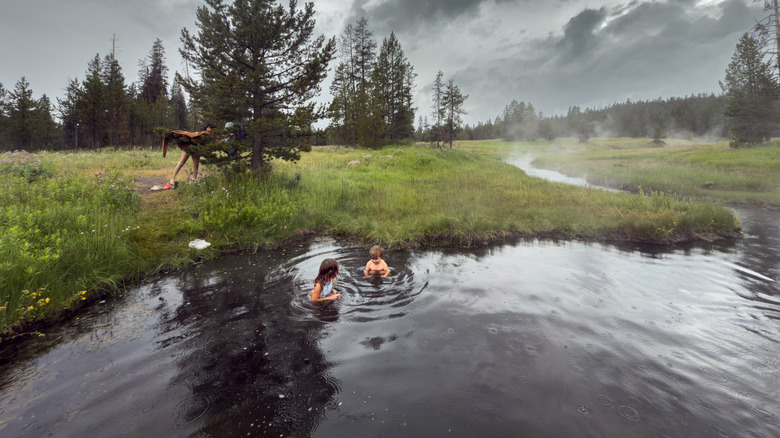
Every parent knows that kids can be perfect angels — until you try to get them to stay still for too long. Thanks to underdeveloped impulse control and overabundant energy, the younger your kids, the harder it may be for them to control certain behaviors and movements. This can translate to danger in a hot spring. Kids who find it difficult to stay in one position for long periods may try to dip their heads below the water or even go swimming. These actions are safe in most water bodies but, in hot springs, can be deadly.
The actions you'll want to monitor most closely are splashing, diving, swimming, and similar actions that could cause them to submerge their heads. This is because of the possible presence of Naegleria fowleri, an organism that lives in warm water bodies like hot springs and enters the body through the nose. The organism is a brain-eating amoeba that causes a serious infection and can cause death. According to an 8 News Now report, it was responsible for the death of a 2-year-old child after it entered the child's body while swimming in Ash Springs, Nevada. If you're a parent, pay close attention to any risky actions, as younger children account for the majority of infections — over 60% in the U.S.!
The CDC advises that the disease caused by Naegleria fowleri is extremely rare. It also enters only through the nose, so you can enjoy your hot spring trip with peace of mind if you take the right precautions. Explain safe behaviors to your younger kids before your trip. If you believe they may be unable to control themselves from dunking their heads underwater or swimming, arrange to carry toys or other entertainment they can use on the deck while the adults soak.
Don't go if you have certain health conditions
You may be surprised at how good you'll feel after your hot spring trip. And we don't mean only your stress levels. According to Healthline, in addition to relieving stress, hot springs are thought to help improve circulation, lower blood pressure, and treat skin conditions like dermatitis and psoriasis. What you may not expect is that the same soothing water can also worsen some conditions.
If you already have low blood pressure, bathing in a hot spring can cause it to dip dangerously lower. While you're soaking, the heat from the water widens your blood vessels. This, in turn, might cause blood pressure to drop. Studies back this up, as a 2023 study in Geriatrics found that bathing in a hot spring at night lowered hypertension among older Japanese participants. While this may be good news if you have high blood pressure (hypertension), if you suffer from low blood pressure, you may find yourself fainting, getting dizzy, lightheaded, or confused as it goes too low.
The situation for those with hypertension is more nuanced. Those who have high blood pressure that's well controlled should be able to safely enjoy a hot spring. However, if your high blood pressure isn't controlled, it may exacerbate your condition. Visitors with heart failure or abnormal heart rhythm should also be careful. Consult your doctor before planning your trip if you have any of these conditions.
Don't visit a hot spring immediately after shaving
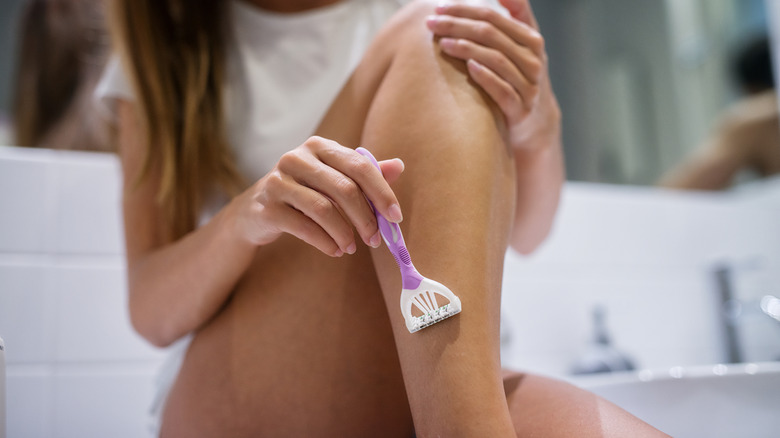
If you've ever cut your skin while shaving, you know how uncomfortable it can be for the few days it takes to heal. What you may not know is that every time you shave, you leave tiny nicks all over your skin. Dermatologist Dr. Hadley King, speaking to Bustle, said, "When we shave, we create tiny micro-nicks in the skin that disrupt the skin barrier and leave the skin more vulnerable to irritation and infection." These irritations can range from conditions that cause mere discomfort to more serious ailments.
When the minerals and heat in a hot spring interact with the tiny nicks in freshly shaved skin, they can cause irritations that can be quite uncomfortable. A more serious infection called hot tub folliculitis can occur when using a hot spring resort that pipes the hot water into tubs. The infection is caused by a bacterium that grows in hot, moist areas and is commonly found in hot tubs. Symptoms include itchiness and raised bumps around the hair follicles and can develop on the legs, arms, and other areas. Other symptoms like headache, fever, eye pain, and more may develop. In addition to the risks the micro-nicks cause, if you get an open cut from shaving, that may create the perfect conditions for bacteria to get in.
You can lessen your chance of skin irritations and infections by refraining from shaving, waxing, or using cream-based hair removal products immediately before soaking in a natural hot spring or a hot spring resort's tub. If visiting a resort, checking how often the tubs are sanitized can also help by lessening the chance of soaking in a contaminated tub if you find they aren't maintained daily.
Limit soaking periods
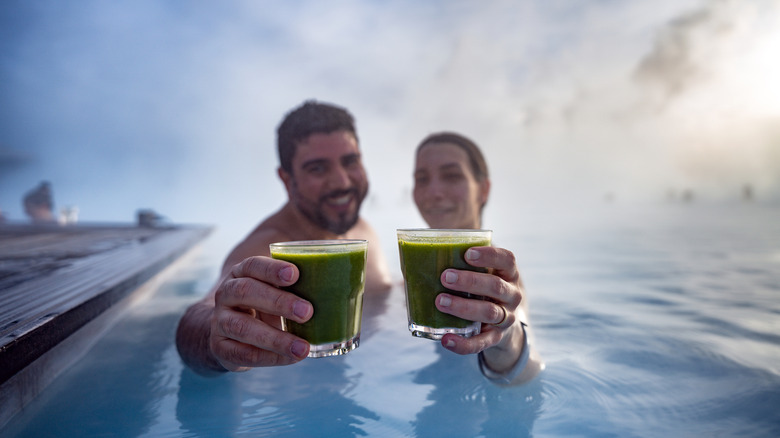
Lazing in a hot spring for hours may sound heavenly. If your hot spring happens to come with mountain or ocean views, the panorama may tempt you to stay even longer. But there's a reason resorts recommend limiting the time you spend in their hot spring pools and baths. Durango Hot Springs Resort & Spa recommends soaking in its hotter springs in 15-minute increments. And Pagosa Hot Springs Resort recommends time limits based on the heat level of the pool you choose. Both resorts caution against long soaks because of the risks they pose.
The most common danger is dehydration. According to Brinton Reed, a spokesperson for Breitenbush Hot Springs, "Dehydration is by far the biggest one for us ... as far as I'm concerned, that's the greatest risk" (via Oregon Live). If you do get dehydrated, you may get lightheaded, faint, or experience a faster heart rate. Severe dehydration can cause confusion, dizziness, exhaustion, dry, cracked skin, extreme thirst, and low urine output. It's a good idea to get medical attention if you develop these more serious symptoms.
To prevent dehydration, drink plenty of fluids before you go into a hot spring, and stay hydrated while soaking and after leaving. And of course, limit your time to 15-minute increments. You can always go back in after you've cooled down for a bit.