
North America's Largest Mountain Range Is An Iconic Landscape Full Of State Parks And Unmatched Beauty
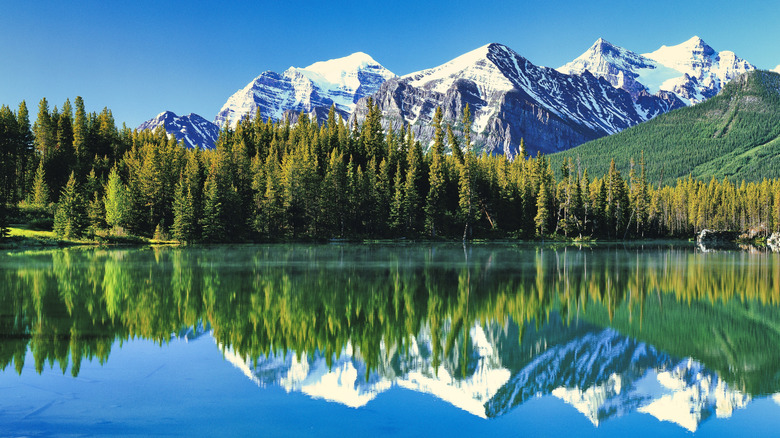
While the North American Rocky Mountains have long served as a beautiful backdrop for hiking and skiing, like many iconic and scenic destinations, there's more to the Rocky Mountains than what many may realize. The Rockies — often called "the spine of the continent" — stretch well beyond their tallest and most famous peaks in Colorado. In fact, as North America's largest mountain range, the Rockies span about 3,000 miles, running all the way from Canada to northern New Mexico and bridging several U.S. states, including Montana, Wyoming, Idaho, Utah, and Colorado.
The Rocky Mountains are managed by federal, state, and provincial agencies. Several famous national parks can be found in the Rocky Mountains, such as Yellowstone National Park, Glacier National Park, and Rocky Mountain National Park. What often gets overlooked are the Rocky Mountains' equally beautiful and diverse state parks. More than 50 state parks are located within the mountain ranges that make up the Rocky Mountains, with Colorado leading the charge with more than 30. Some of the state parks with unique natural features include Eldorado Canyon State Park in Colorado, Painted Rocks State Park in Montana, and Sinks Canyon State Park in Wyoming.
While the Rockies are one of North America's most important regions for biodiversity and freshwater, it's their striking beauty that continues to inspire travelers to make the sometimes long, winding journey to see the peaks up close. Few other places in the world offer visitors the chance to explore ice-crusted tundras sprinkled with vibrant yellow arctic poppies, alpine lakes nestled in glacier-covered valleys, and jagged peaks surrounded by vast evergreen forests all in the same day.
Explore the Rocky Mountains along the most scenic drive in the U.S.
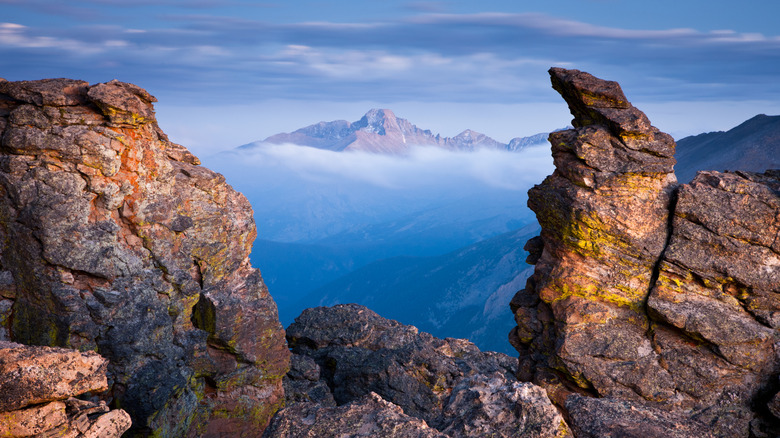
The Rockies are perhaps best known for their iconic mountain peaks. The highest peak, Mount Elbert, reaches a heady 14,433 feet into the air and is located in Colorado, which is the state with the most Rocky Mountain peaks higher than 14,000 feet. Less known, however, is that the Rockies are home to the highest concentration of large native mammals in North America, which include grizzly bears, gray wolves, elk, and mountain caribou. The Rockies also provide headwaters for many of the continent's major river systems, like the Colorado River.
Whether blanketed in brilliant snow or carpeted in colorful wildflowers, the Rocky Mountain scenery is not only stunning but also diverse: ranging from low river valleys, grasslands, and slopes of sagebrush, to coniferous forests, subalpine meadows, and alpine tundras. One of the best ways to see this unmatched beauty is along the 48-mile Trail Ridge Road, America's highest continuous paved road, which cuts through Rocky Mountain National Park between Estes Park and Grand Lake. Dubbed the 'Highway to the Sky,' the road climbs 4,000 feet to an elevation of 12,183 feet and showcases some of the most spectacular mountain scenery in the U.S.
As you climb upward, the landscape changes from forests of aspen and ponderosa pine to subalpine forests of fir and spruce all the way to an 11-mile stretch above the treeline, where you'll be treated to panoramic mountaintop views of expansive alpine tundra. Visit in the summer to see the area erupt in a wash of vibrant color when nearly 200 species of wildflowers bloom. Adventure road trip experts consider Trail Ridge Road one of the most breathtaking national park scenic drives. The road closes during the winter and is generally open from the end of May to mid-October, though unexpected snowfall and storms can alter this timeline. Generally, one of the best times of year to visit is in early June, as the peaks are likely to still be snowcapped, which can make for some gorgeous photos. However, if you're planning on hiking, you may want to wait until July when the trails are less likely to be snowy and muddy. Start the drive before dawn to catch the sunrise and have the road to yourself.
Immerse yourself in the Rockies in these unique state parks
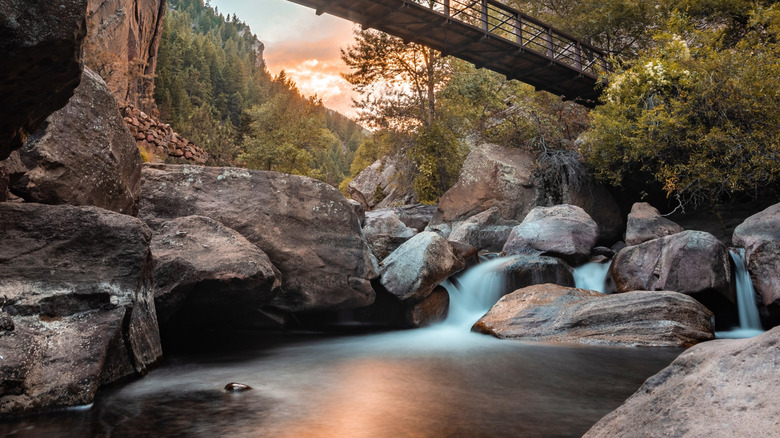
The Rockies are also home to numerous stunning state parks. One of Colorado's best state parks is Eldorado Canyon State Park (pictured), which is a 45-minute drive from Denver and boasts waterfalls, scenic canyon trails, and more than 500 technical climbing routes that draw climbers from around the world. Here you can hike beneath 700-foot-tall golden sandstone cliffs in the canyons of the Rocky Mountains and picnic along South Boulder Creek.
For those wanting to explore a lesser-known side of the Rocky Mountains, Painted Rocks State Park is Montana's unsung state park known for its remote camping and colorful cliffs. The park is located in the West Fork Valley of the Bitterroot Mountains, which are part of the Northern Rockies, and gets its name from the pretty green, yellow, and orange lichens that fan across the granite and rhyolite cliffs. Nestled inside the park and hugged by a pine forest is the picturesque Painted Rocks Reservoir, where you can boat, fish, and birdwatch for great blue herons, bald eagles, osprey, and peregrine falcons. Painted Rocks State Park is about a 40-minute drive from the mountain town of Darby, Montana.
For a beautiful day trip in the Rockies, you can visit Sinks Canyon State Park, which is an underrated geological wonder located in the Wind River Mountain Range of the Rockies in west-central Wyoming, roughly 15 minutes outside of Lander. Though Sinks Canyon has hiking, camping, and first-rate rock climbing, what the 600-acre park is most famous for is its limestone cavern known as "the Sinks." The Sinks is famous for the way it magically appears to swallow up the Popo Agie River before spitting it back out about a quarter mile downstream into a calm pool filled with massive rainbow trout.