
America's Longest Official National Scenic Trail Explores Colorful Cities From Vermont To North Dakota
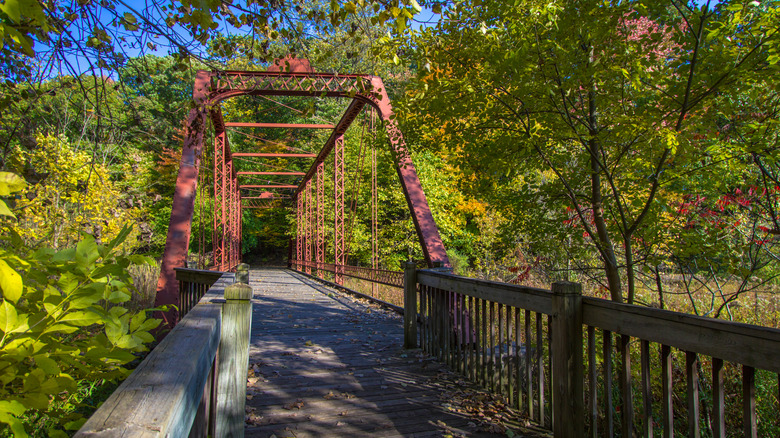
The U.S. has many hiking trails worth exploring, but 11 routes have been specifically designated as National Scenic Trails for their unique variety, linking together natural beauty, terrain, resources, landmarks, history, and communities. Of them, one trail packs the biggest punch for those seeking to go the distance. North Country National Scenic Trail (NCNST) is America's longest official national scenic trail, covering nearly 5,000 miles and traversing cities and unique wilderness areas along the way.
NCNST is a thru-hike beginning in North Dakota and ending in Vermont. The hiking trail winds through Minnesota, Wisconsin, Michigan, Ohio, Pennsylvania, and New York, linking together a total of eight states across 4,600 miles. The trail is fairly new in comparison to other National Scenic Trails, having only been around since 1980 and still undergoing development today, but it's arguably the most diverse. Unlike the more well-known National Scenic Trails, such as the Pacific Crest Trail, the Appalachian, and the Continental Divide, the NCNST doesn't stick to one particular mountain range. Instead, it explores a diverse array of environments and iconic regions, among them the Great Plains flatlands, the Adirondack Mountains, the shores of three Great Lakes, both the upper and lower peninsulas of Michigan, the Ohio River Valley, the Adirondacks, and the Green Mountains of Vermont, just to name a few.
Of the 11 National Scenic Trails, the NCNST is perhaps the most difficult (check out our full ranking and rationale of all 11 NSTs and their respective difficulty next), and to date, less than two dozen hikers have even completed the entire trek. If the idea of a thru-hike that's nearly two times longer than the width of the continental U.S. doesn't sound like your cup of tea, don't fret. Casual hikers will find access points meandering through multiple colorful cities and towns along the way.
Colorful cities and highlights along the North Country NST
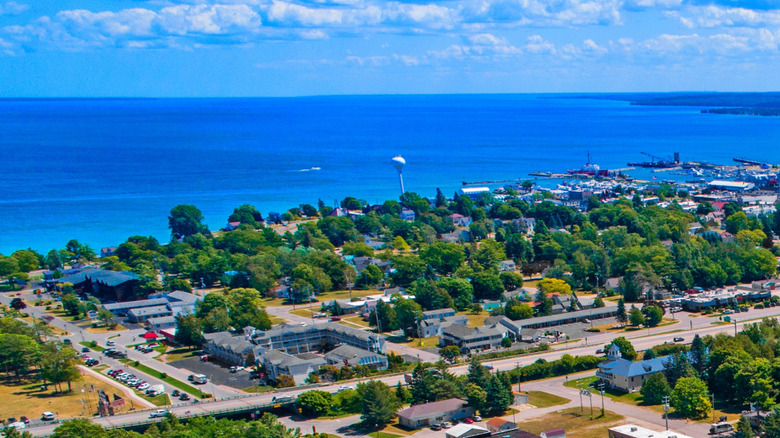
While the NCNST spans eight states and has multiple access points across 4,600 miles, there are a handful of major cities along the route that provide a good place to hop on – Minneapolis, Detroit, Cleveland, Pittsburgh, Buffalo, and Burlington, to name a few. In between, there are 34 officially designated Trail Towns that partner with the North Country Trail Association to help maintain and promote trail sections, and serve as great jumping-off points for both casual and long-distance trekkers. Many of these towns and cities, like Victorian-era Mackinaw City, MI, lush waterfront Cohasset, MN, and Midwest mecca Dayton, OH, are destinations worth seeking out in their own right.
Another way to experience the NCNST is simply by visiting popular national wilderness areas you might already have on your radar, such as Boundary Waters in Minnesota, the Pictured Rocks National Lakeshore in Michigan, or the Allegheny National Forest in Pennsylvania. Michigan offers a particularly rewarding stretch of trail, with more than 1,200 miles of the NCNST traversing both the Upper and Lower Peninsulas of the Great Lakes State.
Overnight hiking trails worth planning a trip around
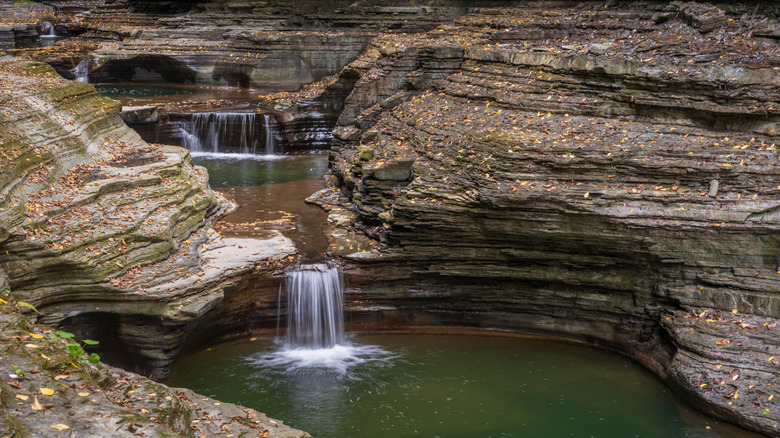
The official start and end trailheads are located in Lake Sakakawea State Park in North Dakota and the Green Mountain National Forest in Vermont, respectively. However, if you don't have the stamina and at least seven months to spare for the full 4,600 miles, an easier and less life-altering way to enjoy the trail is to section-hike it in smaller doses, or consider a day hike from a nearby city or park along the way. The NCNST connects several established trail segments that can be enjoyed as standalone section hikes, such as the Finger Lakes Trail in New York, the Baker Trail in Pennsylvania, the Buckeye Trail in Ohio, the Iron Belle Trail in Michigan, and the Border Route Trail in Minnesota.
Of these, the aforementioned Michigan trail is the longest, offering 2,000 miles of routes for both hikers and bikers connecting from Detroit to the Upper Peninsula. Minnesota's Border Route Trail is the shortest, at just 65 miles, which typically takes backpackers between 3 and 5 days to complete. While a permit isn't needed to hike the NCNST itself, camping permits are usually required for overnights along many of these stretches, and advance route planning is recommended.
If you enjoy incentives, the North Country Trail Association is encouraging more hikers to experience the NCNST with their Hike 100 Challenge. Traverse a cumulative 100 miles (or the same mile 100 times) anywhere along the trail in a single calendar year, and you'll earn a limited edition patch acknowledging your feat. No matter how little or how much of the NCNST you hike, you're bound to find solitude, beauty, and a taste of rugged adventure.