
10 Tips From Rick Steves To Help Retirees Travel To The Fullest
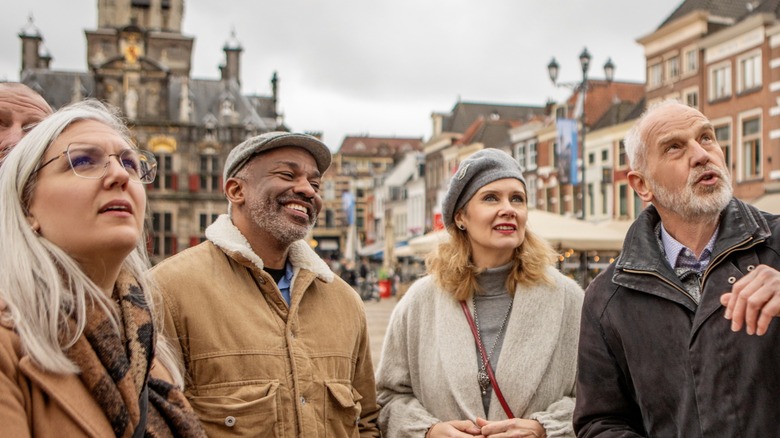
After decades of hard work, it's endlessly exciting to finally step away from the grind and reward yourself with travel. To travel guru Rick Steves, seeing the world offers more than just leisure — it's the "fountain of youth," he says. And as a (now older) guide who has spent his career traveling the world, Steves is full of great tips to help retirement age travelers make the most of the experience they've waited most of a lifetime to truly enjoy.
At any age, some travel days can be long, taxing, and generally rough on both our minds and bodies. While post-retirement travel can be a magical experience, it can also be much tougher on the more "chronologically seasoned" among us than it might have been in our earlier years. Priorities change as we mature. At the same time, long treks through European cities and hours-long museum queues in the summer heat tend to require just a little more recovery time for most of those north of 50.
Speaking with the San Francisco Chronicle, Steves mused, "For retired travelers who are young at heart, but they've got to deal with the reality of, 'We're not kids anymore.'" Thankfully, the guidebook author has plenty of sound, specific advice for post-retirement travelers. "[T]here's a lot of practical ideas that I can share," he told the San Francisco Chronicle in the same interview. Here's the best of his advice to help make the most of your post-retirement travel.
Consider traveling off-season to avoid heat (and crowds)
As we age, the heat can take much more of a toll on our bodies than it did in our younger years. From dehydration to heat exhaustion, older adults are more prone to heat-related illnesses across the board because they are more likely to suffer from chronic medical conditions or have trouble regulating their body temperatures. Factor in certain prescription medications, body weight, or even a little alcohol, and things can get even more serious.
"The most grueling thing about European travel these days is the heat and the crowds of summer," Rick Steves told the San Francisco Chronicle. In June 2026, Europe saw record-breaking high temperatures. At the same time, the U.S. National Weather Service has continuously issued heat index warnings across several areas of the United States. "You've really gotta take that seriously," Steves warned. "It's hot and it's crowded, and frankly, it can be miserable. So if you are an older traveler, you're much better off bundling up and going off season."
And there are plenty of benefits to traveling off-season. Not only does the weather tend to be cooler, but off-season travel is also the best way to dodge crowds and save money while you travel since most travelers tend to swarm during the summer months.
Prioritize your dreams over your budget

You may be tempted to choose less expensive travel destinations in order to make the most of your budget. But Rick Steves advises senior travelers not to prioritize savings over joy. Instead, he recommends finding ways to cut costs while following your travel dreams, telling the San Francisco Chronicle, "Your best 'budget place' is to travel smartly where your travel dreams are taking you."
Steves added, "If you love art, Italy is your best budget destination, even though Italy is a more expensive country. But there's plenty of ways to travel cheaply in these countries if you just use your guidebook and do a little planning." And if anyone has plenty of thrifty tips for making travel more affordable, it's Rick Steves.
Steves advises putting the work into finding dining options off the beaten path or even save a few bucks DIYing lunch with a picnic. Look for budget hotel chains and other deals when you're booking your rooms, and don't be afraid to pack those hotel rooms if you're traveling with a party. And don't forget to look for budget air travel or ground travel options when planning your trip.
Leave valuables in your hotel room's safe
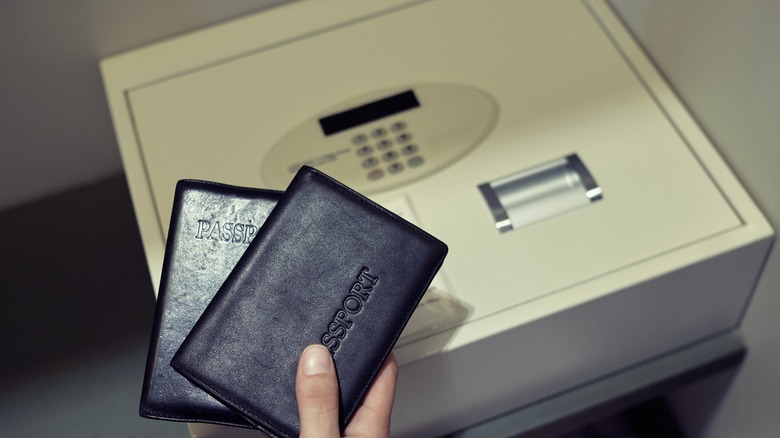
Nothing will mess up your travel itinerary faster than losing your wallet and passport. Theft should always be a concern among travelers. But older travelers tend to be an even bigger target for thieves looking for an easy payday. And while you can always take extra precautions like investing in a special RFID-blocking wallet designed to prevent thieves from stealing our data, the best anti-theft measures are the simplest. Leave any valuables you don't need in your hotel room safe, as Rick Steves advises, and you'll have one less thing to worry about.
Steves emphasizes that, while you need not be paranoid about theft, older travelers should take some basic precautions. "Just remember, thieves target Americans, and older ones are just ideal," Steves advised in the San Francisco Chronicle. "So you're not going to be mugged, but you're going to — if you're sloppy — you're going to lose your phone or your wallet or your purse."
According to Steves, your items are safer left in your hotel room rather than out on the streets where sticky fingers can get a hold of them. He also emphasized that in all of his travels, the guidebook author has never had property left in his hotel room stolen.
Invest in travel insurance so emergencies are covered
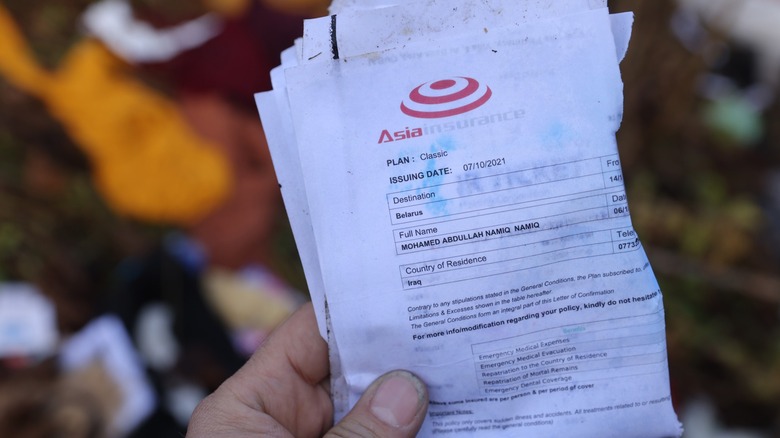
According to Rick Steves, travel insurance is a must-have for retirement-age travelers. Designed to protect travelers against many unforeseen circumstances that could turn the trip of a lifetime into a costly disaster, travel insurance policies can help mitigate the impact of worst-case vacation scenarios. Outlining his thoughts on travel insurance on his Rick Steves' Europe website, Steves emphasized, "Seniors pay more for travel insurance — but are also more likely to need it."
The internet is full of horror stories from travelers who thought they didn't need insurance and then needed a costly medical evacuation from a cruise or an unexpected hospital stay. "100% worth it," shared one Reddit user. "[H]ad phone stolen in Vietnam: covered -had my appendix need emergency surgery in Texas. would've cost me 15,000 dollars."
Exactly what is covered can vary from one policy to the next. But generally, most policies can pay out for trip delays, cancellations, and interruptions. For example, a policy might reimburse travelers for non-refundable deposits and payment caused by a delay or missed connection. A policy might also reimburse additional transportation expenses or certain other reasonable expenses incurred as a result of those delays. Travel insurance can also cover lost or stolen baggage and personal property, as well as baggage delays. Coverage for evacuations due to medical reasons, security reasons, or natural disasters is common (although these are not always a given, so it's recommended to double check). Medical emergencies due to accidents or illness, accidental death, and remains repatriation may also be included. You can even pick up an annual policy that covers multiple trips if you're planning to travel extensively during your retirement years.
Pack light to make travel much easier

Rick Steves emphasizes the benefits of light packing to practically everyone, but especially seniors. Light packing, the author notes on his website, simply makes it easier to get around. Writing for 3rd Act Magazine, Steves advised, "Packing light is even more important for seniors...when you pack light, you're younger." Whether you're zipping around the airport or traveling around Europe, Steves notes that a lighter load can make the journey effortless.
But minimal luggage doesn't have to mean full-on spartanism. Instead of bringing everything but the kitchen sink in your baggage, Steves advises that you plan for fewer clothes and a mid-journey laundry stop. Instead of bringing several pairs of shirts and pants, the writer's approved packing list advises narrowing pants and shirts to just a lighter option and a heavier one.
Try to pack all your belongings in a single luggage piece — ideally a carry-on or convertible backpack. "Figure out ways to smoothly carry your luggage so you're not wrestling with a big bag or several bulky items." If you're traveling during the winter when a heavy coat and layers are unavoidable, Steves suggests wearing them while you're on the go to save space rather than packing everything so you end up needing to lug around an extra suitcase.
Take notes for reminders and information (like your hotel room number)

It can feel like there's no end to the countless things you're required to keep track of while traveling. To help keep things straight, Rick Steves is a strong proponent of notetaking.
Whether you prefer digital or analog note taking is a matter of personal choice, the author emphasizes. Writing on his website, Steves recommends, "A small notebook or your phone's notes app is handy for jotting down facts and reminders, such as your hotel-room number or Metro stop." A pocket-sized notepad affords an ideal way to keep track of everything. Or pack an empty (but sturdy) journal that can double as a travel memento long after your trip. You can even use the camera right inside your mobile phone to take visual notes, snapping everything from way-finding markers to the hours of a store you plan to return to before the trip ends. "Recording these things will help keep your mind clear and uncluttered," Steves added.
Just make sure you're able to read those notes when you need them, the travel expert warned. Follow Steves' example and pack an extra pair of glasses in case you lose the first pair. And don't forget your phone has a built-in magnification tool right in your camera that's perfect for zooming in on fine print and map details when you need it.
Bring your full prescription bottles and medical information

For a lot of us in or about the retirement age years, every new year of life seems to bring a new prescription to load into the old travel pill organizer. And not much is going to ruin an otherwise amazing trip faster than suddenly finding yourself without those much-needed daily medications — many of which may be difficult to replace when you're traveling.
When it comes to your health, Steves advises leaving nothing to chance. "Be certain to take a full supply of any medications with you," Steves wrote in 3rd Act Magazine. Even better, ask your physician for extra medications in case of an emergency. That's because filling these prescriptions can prove challenging when you're traveling, particularly when you're abroad. Some medications might be listed under a different name, and there's also no guarantee they will be available or approved for your condition where you're heading. With these possibilities in mind, Steves recommends asking your doctor for a list of generics before heading out on your trip.
Building on Steves' advice, seasoned travelers on Rick Steves' official travel forum recommend bringing a copy of your medical records. One user advised, "[I]if you take vital or multiple meds or have a chronic condition ... have access to some type of medical summary either a paper copy or an electronic document you have access to. Something that describes your Doctors prognosis and his treatment plan." This document should describe your specific medical conditions along with specific information about the ingredient composition of each prescription.
Explore in comfort and ease by taking bus tours and slowing down the pace

As much as we might sometimes like to imagine we're still every bit as nimble as we were in our 30s, stacking up the birthday celebrations can hit the bones and joints just a little bit harder than you might expect. Planning a packed itinerary that involves seeing all the sights by foot can leave a lot of retirement-age folks feeling like they've been run over by a train. To minimize the misery and maximize your joy, Rick Steves advises that seniors should go with a less-intensive travel plan.
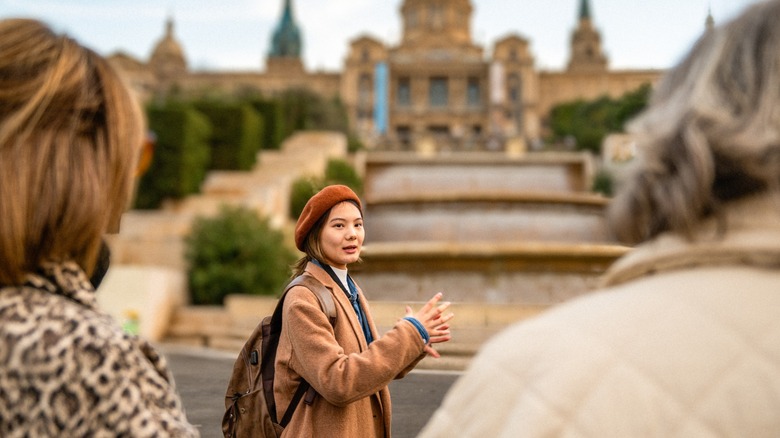
"Take bus tours (usually two hours long) for a painless overview of a city's highlights," Steves advised on his website. "Boat tours — of the harbor, river, lake, or fjord — are a pleasure." Writing in the San Francisco Chronicle, the renowned tour guide added that tours are a great way to develop a deeper appreciation for a locale. "[T]he more you understand what you're looking at, the more you enjoy it. Take advantage of local tours that give you experience." Steves also notes that for older travelers, investing in an Uber or taxi can pay off since it helps to maximize your time — especially if you're splitting the cost with other travelers.
Stepping away from the tourist areas to hang out with the local senior scene, whether it's a game night or a senior dance party, is also a great way to get a break and experience the local culture, Steves suggested on his website. And don't overlook how rewarding it can be to slow things down and just spend the afternoon people-watching.
Take advantage of senior discounts
One of the best things about being of retirement age is hearing those sweet little words: "Are you eligible for any discounts today?" And the good news is that businesses all over the world enjoy treating their seniors to a discount — which is exactly why you should be taking advantage of them whenever you can while you're traveling, Rick Steves advises.
As the author notes on his website, you may encounter some senior discounts that are only available to locals. But sometimes, just showing up with that well-earned silver streak in our hair is enough to warrant a senior discount. And that's why, Steves writes, it never hurts to ask. "Always ask about discounts, even if you don't see posted information about one — you may be surprised," he wrote. Always check if your airline or ground transportation routes offer special rates for seniors. Delta Airlines, for example, offers a hidden discount for seniors aged 65 and up upon request from the airline's reservation team.
Even if there's no posted discount, Steves emphasizes, it may be worth asking anyway. To max out your senior discount opportunities, Steves suggests making sure you know how to properly ask where you're going. Or consider writing a note you can easily pass to an employee without having to stumble over pronunciation. Hot tip: Senior discounts are frequently called "pensioner's rates" or "concessions" in the United Kingdom.
Use accessibility accommodations to help get around
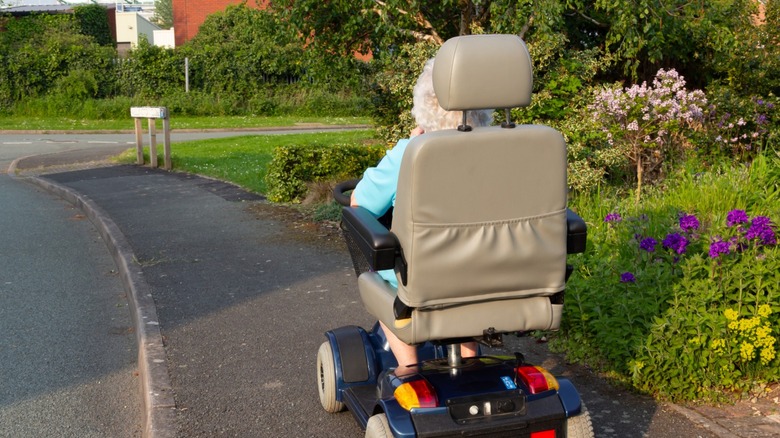
Rick Steves firmly believes seniors are every bit as capable of enjoying travel as their younger counterparts. The key, Steves observed, is understanding what you're capable of and planning around it. "You have to have a certain attitude when you travel," he told the San Francisco Chronicle. "People have their physical realities. If you're not nimble anymore, well, you've got to travel a little differently."
Steves advises accounting for your mobility needs when booking a room or planning your travel. On his website, Steves recommends slow walkers reduce their airport stress — not to mention the chance of a missed connection — by requesting an electric card or wheelchair upon booking. Some of the more senior-friendly airlines and airports will gladly provide airport assistance for older travelers. United Airlines, for example, provides special senior security passes where a companion can tag along, while Delta Airlines provides assistance to anyone who needs it. Many museums and other attractions will also offer wheelchairs for folks who need it as well, so be sure to ask ahead if you think this might be necessary for your visit.
Call ahead to your hotel to get the lay of the land, Steves suggests. "Ask about any accessibility quirks for the hotel you're considering — find out whether it's at the top of a steep hill, has an elevator or stairs to upper floors, and so on." If mobility will be an issue for you, Steves advises requesting a room on the ground level.