
Unwritten Rules You Should Know Before Visiting The Grand Canyon
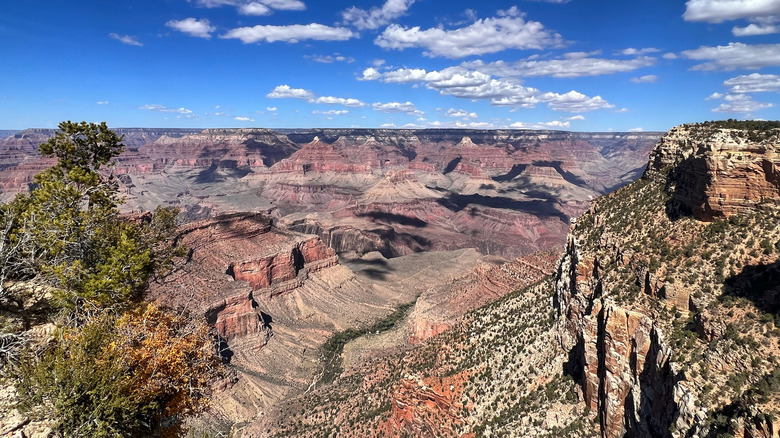
The first time I stepped up to the South Rim of Grand Canyon National Park, the view surpassed my expectations. Until you're standing on the edge of this mile-deep geologic phenomenon, carved over millions of years by the Colorado River, it's impossible to really prepare for the interplay of colorful stone, light, weather, and the 10-mile stretch (on average) to the other side. Not only that, there are miles of scenic drives, campgrounds, the historic Grand Canyon Village, inner canyon trails, and more. It's such a big national park, combining developed areas with a vast backcountry. With the 12 tips listed below, we're focused on helping ensure your safest and most enjoyable trip.
The National Park Service publishes specific regulations that visitors should always keep in mind, especially when it comes to safety and access. You need to apply to the monthly lottery for backcountry permits, for example, and you should always give wildlife plenty of space. But then there are the "unwritten" rules — unofficial guidelines that tourists should keep in mind for an adventurous visit that doesn't leave you feeling disappointed or overwhelmed.
Here, I've drawn on my experiences at the Grand Canyon and research from several articles published by resources like Grand Canyon Trust, Xanterra Travel Collection, the National Park Service, Arizona Highways, and Lonely Planet. I've also consulted blogs and Reddit discussions to compile ways to avoid crowds, learn a lot, and explore the Grand Canyon to its fullest — it's so much more than the South Rim. Read on for tips for your next visit.
Go beyond Grand Canyon Village — and the national park itself
Grand Canyon Village may be a breathtakingly scenic locale for a weekend getaway on the South Rim, with five lodges, numerous restaurants, shops, a supermarket, campgrounds, the train depot, and more. But just because it's the energetic core of park operations and hospitality doesn't mean it's not worthwhile to get well away from it, too. And you don't even have to take a strenuous hike to do it. Hop on a shuttle — more on that in a bit — and head west to Hermits Rest, a historic stone building dating to 1914 with a gift shop and a beautiful overlook. In the opposite direction, along East Rim Drive, take in the views from Desert View Watchtower.
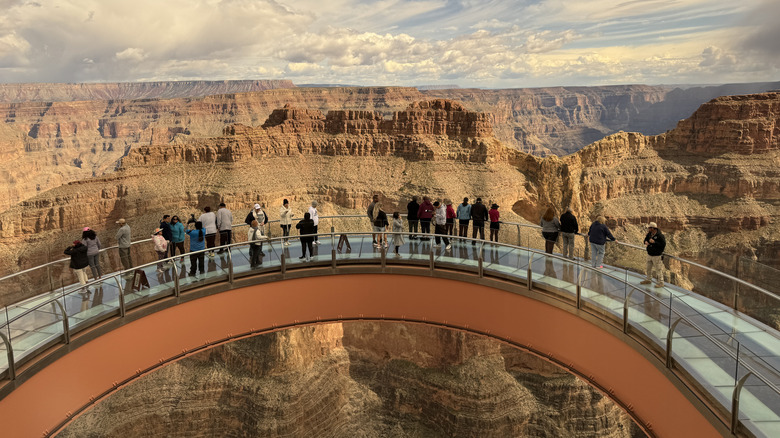
The entire park boundary encompasses just a tad more than 1,900 square miles, so the South Rim provides something of an overview with access to numerous trailheads. The North Rim is quieter, and if you come prepared, the inner canyon hikes are among the most sought-after in the world. But the Grand Canyon also extends beyond the area managed by the National Park Service, even though it protects a 278-mile length of the Colorado River. Its boundary intersects with the Hualapai Indian Reservation, which manages Grand Canyon West, a small park with a cantilevered Skywalk bridge west of Grand Canyon National Park.
Take the path less traveled on the North Rim
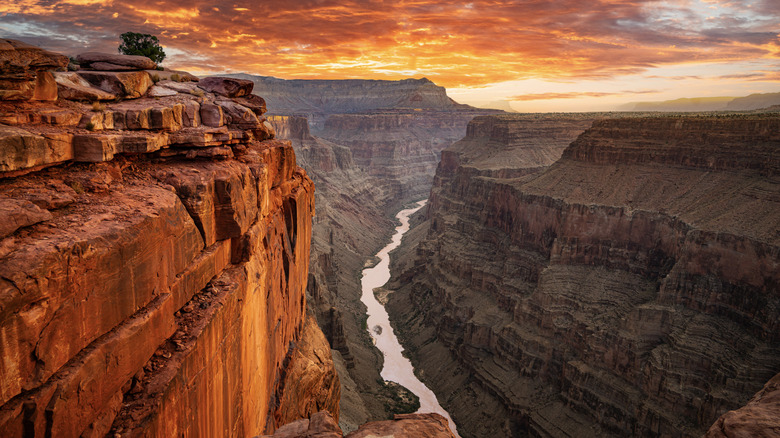
The South Rim of the Grand Canyon is the easiest to reach and sees the vast majority of tourists each year. The North Rim, on the other hand, is visited by only 10% of national park visitors, so it's ideal for a more tranquil, less crowded experience. It's worth noting, of course, that the Dragon Bravo wildfire of 2025, which destroyed the historic Grand Canyon Lodge and dozens of its cabins as it scorched nearly 150,000 acres, has changed the look and feel of the place. But parts of North Rim have reopened, and the vastness of the canyon seen from its higher elevation is striking.
The North Rim Campground is open from June 1 to October 15, and even though it's on the quieter side of the park, it's still a good idea to book well in advance. With around 5 million visitors annually, campgrounds and lodging fill up quickly, so it's a good idea to book up to six months in advance. And, when it comes to exploring even farther, there are numerous day hikes you can head out on from here, such as parts of the North Kaibab Trail inside the canyon, Cape Final Trail, or the pet-friendly Bridle Trail. Don't miss taking a seat on a bench at Roosevelt Point, which features wooded serenity and views of the Kwagunt Valley.
Don't skip the museums and ranger talks
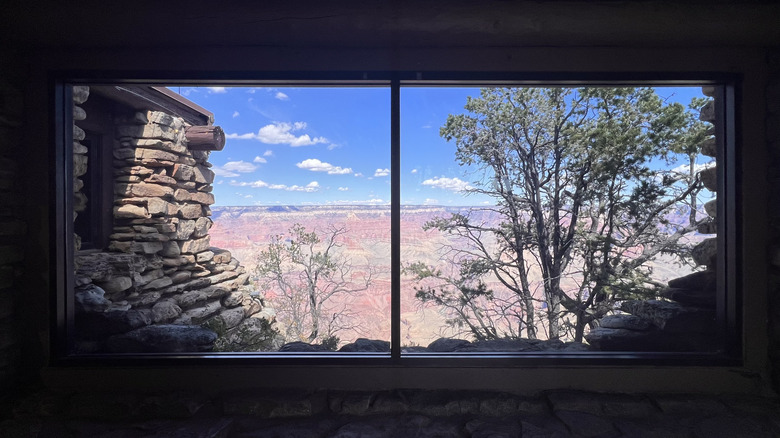
There's a reason that the Yavapai Geology Museum is perched where it is: The historic stone structure, built in 1928, offers one of the best places to observe the stratifications of stone in the Grand Canyon. And there's a whole lot of fascinating knowledge to soak up. Explore exhibits, peer out the picture windows, and join a daily ranger talk presented right outside the museum to learn more about the types of rock found here and how the canyon formed.
West of the geology museum, an outdoor exhibit provides an immersive way to understand the sheer scale of geologic time on view. The Trail of Time begins just to the west of the museum, stretching to Maricopa Point along the paved Rim Trail. Covering 2.8 miles, every meter is marked with a metal dot to represent the passage of one million years, totaling 2 billion years. Don't pass up petting some of the rocks along the way that have been brought up from different depths of the canyon. And if you can't get enough of exhibits, check out the Verkamp's Visitor Center for displays about Grand Canyon Village, cultural demonstrations by Indigenous artists at Desert View Watchtower and Hopi House, plus ranger-led events and talks at the Grand Canyon Visitor Center.
Fido is welcome, but know the limits
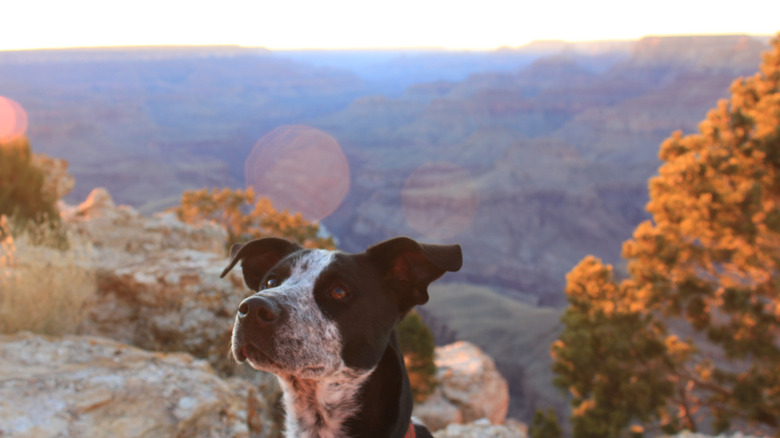
Grand Canyon National Park is actually among the most dog-friendly national parks in America, which is saying something. Many of these destinations can be tricky for dogs. That's not to say there aren't some important things to keep in mind, though. My little rescue mutt and I definitely appreciate that dogs are allowed on trails and roads on the South Rim, which includes the nearly 13-mile Rim Trail. They're also welcome in campgrounds and in pet-friendly rooms at Yavapai Lodge. They're not allowed in buildings, on the shuttles, or under the rim, and they must be leashed at all times.
So, that's the official guidance, and then there's the reality of having your dog with you. That can vary greatly from dog to dog and owner to owner. Is your dog alright being around lots of people? Will they be okay encountering other dogs? Does your dog have a significant prey drive? In other words, will the park's cheeky rock squirrels cause a problem? Will you be able to keep them cool? Be aware that even in developed areas, wildlife sometimes wanders in. I've had elk at my campsite a couple of times, and fortunately, my dog didn't freak out — nor the elk, thankfully. One bonus, though, is that there's a kennel right inside the park, which even offers overnight boarding if you're planning a trek into the canyon, for example, or want to spend some time indoors. Reservations are highly recommended.
Don't get too close to the cliff edges
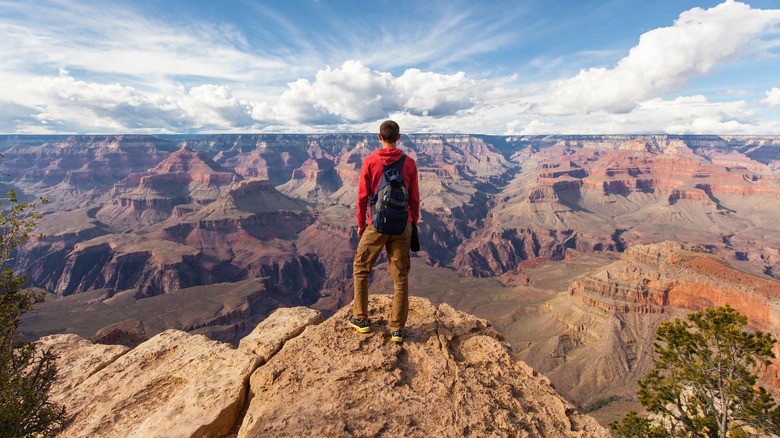
There are a lot of spots along both the North and South rims where there aren't guardrails. The trails are simply lined with rocks and trees and perhaps some signage, and you'll always notice people walking up to the cliffs — it's really tempting to do it, too. Indeed, the photo ops from here are simply unbeatable. Just be very aware of the immense drop that awaits if you get too close. Hundreds of people have fallen to their deaths in the Grand Canyon over the years, usually averaging around two to three annually. It's a much less common fate than medical issues such as cardiac arrest and heat-related problems, but the key is to pay attention to your footing.
One reason this is worth mentioning particularly within the context of the Grand Canyon is that it's simply enormous, and the cliffs feel virtually endless. Second, we're inherently drawn to the views with our cameras and phones, and it's easy to get excited by a good shot — or even distracted by a cute critter — and not watch where we're stepping. I've seen people standing right on the edge in the middle of a FaceTime call, precariously spinning around to show their caller the view. And you can't watch your feet at the same time you're trying to take a selfie. Just remember to be very careful.
Start early or late to avoid throngs of people
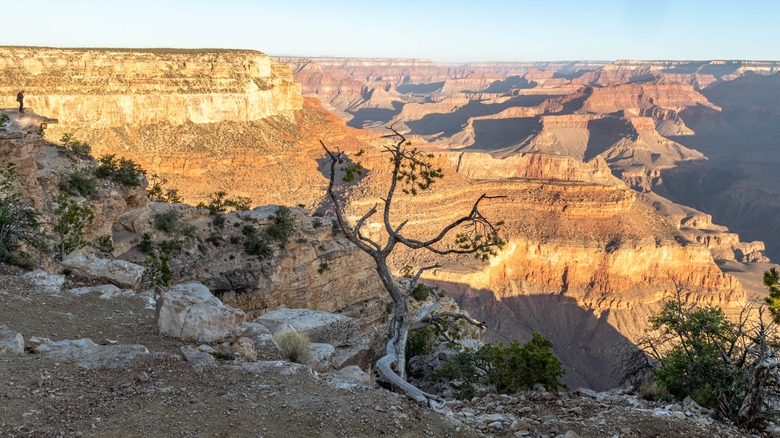
The Grand Canyon is a busy national park, seeing millions of visitors each year. The busiest period is between April and October, when it's not unusual for the park to welcome more than 500,000 tourists each month. Of course, it's also a big place, but areas like Grand Canyon Village and some of the most iconic lookouts, like Ooh Aah Point, which is reachable on a 1.8-mile round-trip jaunt on the South Kaibab Trail, can get crowded. Mather Point is also a prime place to see the sunrise and sunset, so even early crowds are possible. That said, if you plan and get a really early start, you can escape some of the most hectic experiences. And if you visit during the offseason or shoulder season, the ultimate time of year to plan your trip to the Grand Canyon, you'll have an even better shot.
One October morning while visiting the South Rim, I woke up before sunrise and walked along the normally busy Rim Trail. Almost unbelievably, I walked for nearly an hour and only saw a couple of other people the entire time. It felt like being in a completely different park, and I could almost imagine having the place to myself for a little while. There's nothing quite like it. And if it's during the summer, exploring early or later means the possibility of cooler temperatures, too. Just be aware of how much daylight you have left if you're hitting a trail in the afternoon.
Make sure you're applying for the right backcountry permit — and well in advance
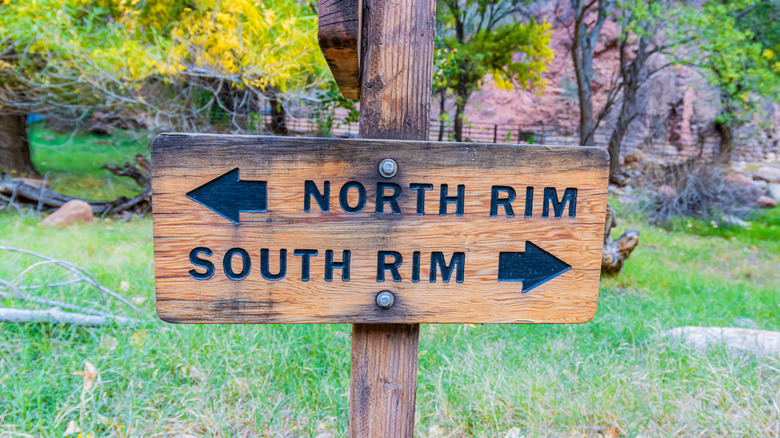
Backcountry permits for hikes into the inner canyon are required at Grand Canyon National Park, which you can apply for on Recreation.gov via an early monthly lottery system. That said, it's a complex system and the process is competitive, so it pays to know in advance not only when you'd like to visit but also to have a backup plan in case the lottery doesn't shake out the way you hope. Backcountry permits are required for just about any overnight activity beyond the rims, including camping outside of developed campgrounds and at the primitive Tuweep Campground. If you're taking day hikes, even into the canyon, you don't need a permit. One additional thing to note is that there are often closures and changes in water availability along the trails throughout the year, sometimes planned and sometimes not. The park posts updates regularly.
The park's backcountry permit lottery runs month by month for hiking times about 4.5 months in advance. For a December hike, for example, the application opens in mid-July. On the second of every month, a random selection of 750 lottery applicants is notified that they can make an itinerary booking. There's also some time allotted toward the end of the month when any unreserved spaces can be booked by anyone who didn't initially get into the top 750 spots. Then, once the lottery system has exhausted all of its applicants for a month, any remaining spaces can be reserved by anyone willing to be more spontaneous about the process.
Use the park shuttles for easy transportation
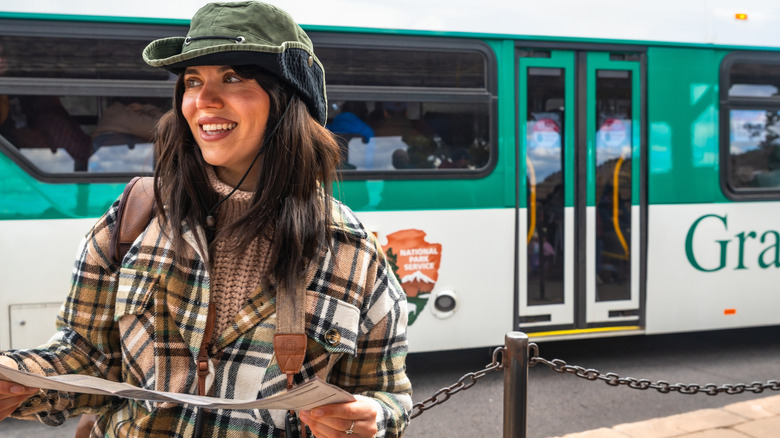
From late May to early September, South Rim shuttle buses connect numerous points throughout the park so that you can hop on and off or take a shuttle one way and hike back. Personally, as a solo road tripper, I love when someone else does the driving. There are five routes — Blue, Orange, Red, Purple, and Hikers' Express — that serve different areas and even connect to the park-and-ride in Tusayan, a gateway resort town located 6.5 miles south of the heart of Grand Canyon Village. Depending on the route, they run every eight to 15 minutes — except the Purple route to Tusayan, which runs every 45 minutes — so it's fairly quick even when there are long queues.
While many areas remain open to private vehicles during even the busiest months, there are some exceptions. Hermit Road, which leads to Hermits Rest, is closed to private vehicles between March 1 and November 30. Yaki Point Road and South Kaibab Trailhead aren't accessible by private vehicles at any time. (At the North Rim, where there are no shuttles, closures to vehicle traffic coincide with the Arizona Department of Transportation's winter closure of Highway 67 south of Jacob Lake.) Save yourself potential parking headaches and hectic traffic by hopping aboard a bus. They're free, and no reservations are required.
Allow time to acclimate to the altitude
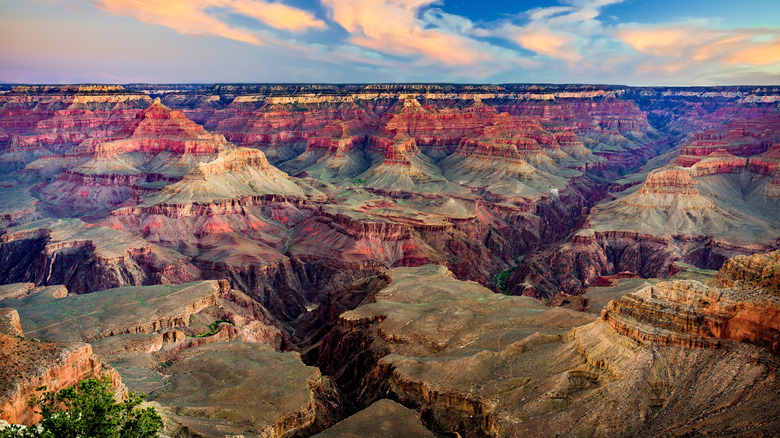
There's quite a lot going on at the Grand Canyon, and there are probably some bizarre facts you didn't know. One thing it's easy to forget, especially if you're driving over the Coconino Plateau — part of the expansive Colorado Plateau — is how high the elevation is. It can feel relatively flat, despite gorges and cliffs, because we're often able to see so far, unlike in the mountains. But did you know that the South Rim of the Grand Canyon sits at an average of 7,000 feet, and the North Rim sits another 1,000 feet higher? Las Vegas, for example, which is a popular entry point for visitors, sits at about 2,000 feet above sea level. That's a big jump if you're making the trip in a day, so don't be surprised if you feel it a little bit. The same goes if you're hiking between the inner canyon and the rim.
Symptoms of altitude sickness can present as tiredness, headache, dizziness, and stomach upset. The Grand Canyon's elevation isn't extreme, so it's unlikely you'll feel anything more than this, if anything at all, and symptoms should pass in a day or so. If you feel fatigued or achy, take it easy, drink plenty of water, and allow yourself to get used to the elevation.
Give uphill hikers and mules the right of way
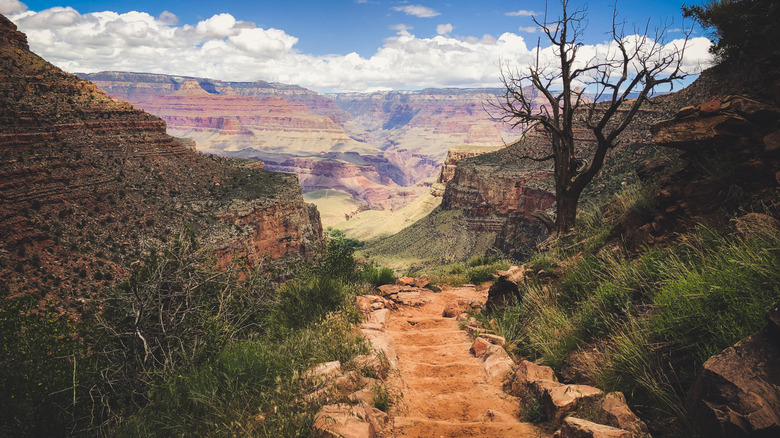
The Grand Canyon is immensely alluring to those who want to immerse themselves in the inner canyon, but that doesn't mean it's without crowds. The Bright Angel Trail is the most popular and very busy, with hundreds of thousands of people setting out to complete at least part of it each year. The nearly 2-mile stretch along the South Kaibab Trail to the aptly named Ooh Aah Point is also exceedingly well-tread. Always give uphill hikers the right of way. You'll appreciate it when it's your turn.
You'll also have to keep an eye out for mules, which should also always have the right of way. (As an aside, guided mule trips are a one-of-a-kind experience, but they should be booked in advance.) The park notes that there have been incidents involving injuries and even the deaths of mules due to bad etiquette on the trail. It's recommended to step off the path where possible, remain quiet and still, follow any instructions the wranglers or packers give, and wait until there's enough space between you and the last mule before carrying on. It should go without saying, but always follow Leave No Trace principles in the backcountry, which is especially important in a place that sees heavy traffic.
Do not feed the squirrels (or any wildlife, for that matter)
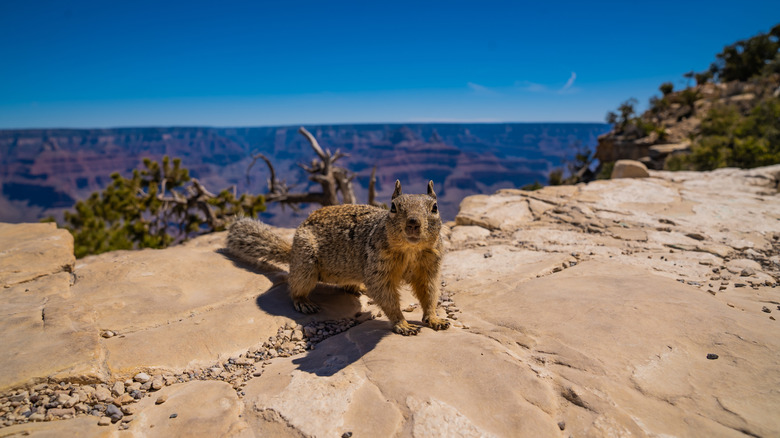
While it may be a written rule that feeding wildlife is prohibited, there's a particular critter that's around the Grand Canyon, including its busy South Rim: rock squirrels. They're seemingly everywhere, in some cases habituated to being given food by tourists, even though this is expressly against park regulations. You might be surprised to learn, though, that they're also the animal that causes the most injuries to visitors in the park.
When the squirrels or other animals lose their fear of humans, which often means expecting snacks, they can become persistent and aggressive. "Their sharp teeth crack nuts — and cut fingers," park officials say, according to Idaho Statesman. Do these little rodents a favor and don't feed them. The same goes for all manner of wildlife in the park, including birds — of which there are more than 450 species in the park — cliff chipmunks, deer, elk, and more.
Don't forget to pause and take it all in
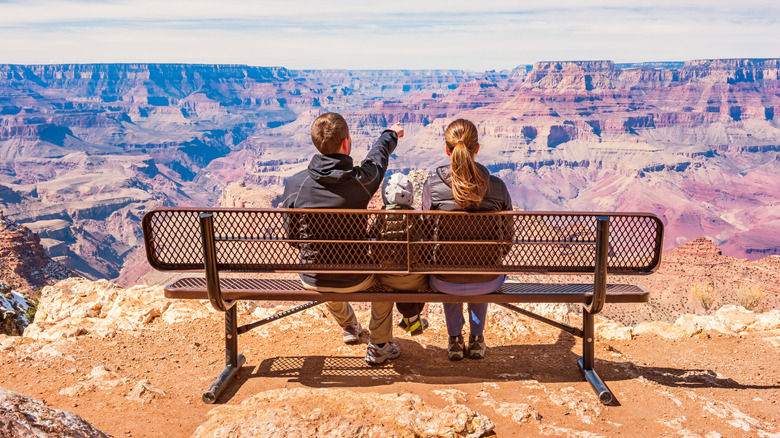
The Grand Canyon is one of the most awe-inspiring places on the continent. There's nothing else like it. And with so much to see and do, it can be tempting to want to see it all: shops, restaurants, an unforgettable train route, museums, visitor centers, and more. But with all of the crowds and attractions pulling your attention, it can be easy to forget to slow down and take in the majesty of this landscape that formed over millions of years.
Fortunately, there are a lot of places, even along the busy South Rim, where you can take a seat on a stone or a bench and marvel at the place. Bring some high-quality binoculars to scan the Colorado River and look for California condors and other wildlife, or relax with a snack in the shade of a piñon pine.