
9 Things Pilots Notice When They Fly As Passengers
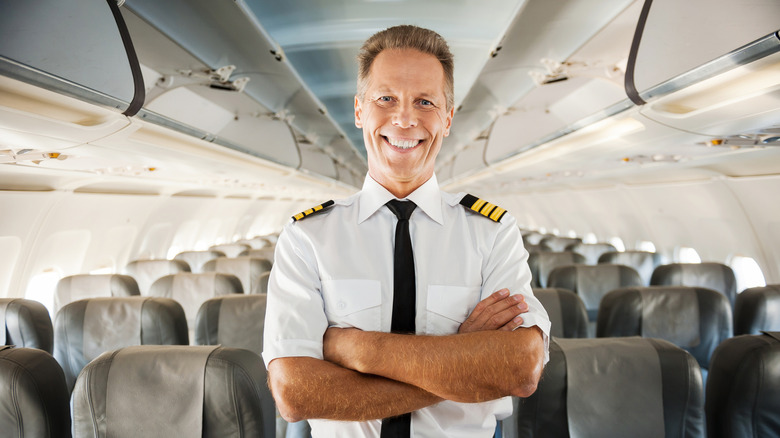
For most of us, traveling can be predictable and passive: We find our seat, we follow instructions, and we wait for announcements. We cannot anticipate delays, the movements of flight crew raise no suspicions, and the sounds of the aircraft as it prepares for takeoff tell no tales. Trained pilots, however, cannot simply switch their minds from aviator to passenger simply because they are at the controls. No, the plane speaks to them in a language few others understand, and as it does, pilots have no other choice than to listen.
Sudden changes in engine pitch shortly after take-off, the lack of reverse thrust on landing, or an odd "thump" that unsettles the masses is just information to a pilot. The pitch changes because the craft no longer needs as much power and the reverse thrust is an exercise in noise reduction. As for that thumping noise? That's just the landing gear locking into place.
Whether the act of being forced into the role of a passive observer is stressful probably comes down to the individual pilot. Some might cherish the ability to read the approach towards some of the world's scariest airport runways, while others might have preferred to wallow in blessed ignorance. Regardless, while those of us who lack aviation experience might not be able to parse flight information the way pilots can, some flight experts have been kind enough to pass on a little of what they know. We've taken a broad intersection of their comments across social media posts, aviation blogs, and news articles to produce our list. And it's one filled with no small number of surprises.
The true meaning of intercom chimes
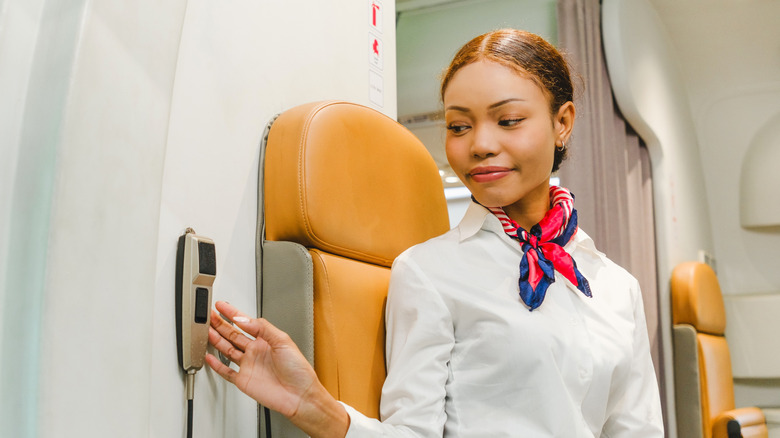
As you relax into your flight, you may have noticed several beeps and whistles ringing out at seemingly random times. Each sound has a specific purpose and, in most cases, it's an attempt to alert passengers of a required action: return to your seat, listen for an announcement, and so on. Others, however, are there to inform just the flight crew about what's happening in the aircraft. Few of them indicate an emergency is underway, but regardless of the nature of any given chime, pilots can read them all.
So what do all the pings mean? To start with, you have two chimes of different pitches repeated once, the sound of which might sound ominous to first-time flyers. They needn't worry, because these chimes merely indicate that one member of the flight crew is asking to speak to another. Meanwhile, two loud beeps shortly after takeoff and before landing simply mean that the plane has reached an altitude of 10,000 feet. This usually means you can get up, and the seatbelt light might switch off at this time. However, it's best to wait for the official announcement before you move. One loud ding means that a drink service is only five minutes away, but frequent fliers have mostly got that down to a Pavlovian level.
A pilot sitting next to you is unlikely to react to any of these aforementioned signals. The sounding out of three chimes, however, is a different matter. According to Kolin Jones, a former airline pilot who spoke to Travel+Leisure, this alone signals some sort of trouble: sudden turbulence, a medical emergency, or perhaps even mechanical failure. This does not mean it's time to panic, of course. The system is there to keep everyone safe — not induce anxiety.
Changes in cabin odors
Although pilot training focuses mostly on sight as the principal agent of aviation, the pilot's mantra of "aviate, navigate, and communicate" puts more than one sense to the test. What you hear is an obvious second sense to use while piloting, but what about smell? Surely, no one has smelled their way to a successful landing, right?
Well, keep in mind that the smell of smoke indicates a fire of some sort, and there are few things that are deadlier to an aircraft than that. For pilots traveling as passengers, their knowledge of the cabin works all the way down to the olfactory level. Yes, they are going to be as concerned as anyone at the first whiff of smoke, but they can extract information from far more subtle events also. According to retired USAF rescue pilot and aviation safety officer Tom Farrier, the number of odd smells to watch out for is surprisingly broad. In answer to a question posted on Quora, Farrier noted that "sounds are always useful, but a passenger cabin often is isolated from any sounds that might be indicative of a problem. Smells, on the other hand, travel around quite freely, and some (e.g., fuel, hydraulic fluid, superheated bleed air) are distinctive."
Distinctive and recognizable are not, to the untrained nose, quite the same thing. Heated air coming through the air conditioning indicates a leak that may contain toxic chemicals. Hydraulic systems control many of the plane's vital functions, and the smell of jet fuel might indicate a leak or deliberate dump to reduce the aircraft's weight in the event of an emergency.
How many seat rows there are to the emergency exit
Despite the rising tensions between air traffic controllers and pilots, the risk of finding yourself involved in a serious incident is vanishingly small. According to the Interactive Safety Report from the International Air Transport Association (IATA), 2025 saw only 54 accidents in total, with only seven of them including any fatalities whatsoever. Upsetting though those figures might be, they need to be put into perspective: On average, there are over 100,000 global flights per day, according to OAG Aviation Worldwide. So, yes, flying is still the safest way to travel.
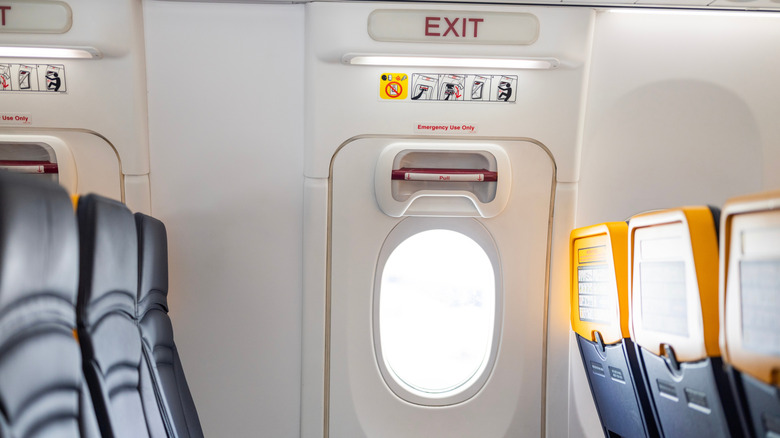
This is not to say that passengers should ignore the safety briefings that take place before each takeoff. While serious accidents are uncommon and fatalities are extremely rare, such metrics rely on a layered approach to safety. One such layer is simply and consistently reminding passengers what to do if something does go wrong. In short, you really need to know where your nearest exit is.
For pilots traveling as passengers, however, there is an extra precaution they like to take before settling down for a flight. Spoiler alert: You should be doing this too. In the unlikely event that the captain calls for an evacuation, pilots (seated as passengers) know what the worst possible scenarios could be, including fire and limited visibility within the cabin. In such cases, touch also becomes a very useful ally. Former pilot Hans Mast, speaking to The Sun, made it clear how important he thought this step was, indicating that the first thing he does upon boarding a plane is to "take note of the nearest emergency exit, counting the number of seat rows between my location and that exit."
Sudden shifts in the angle of the sun
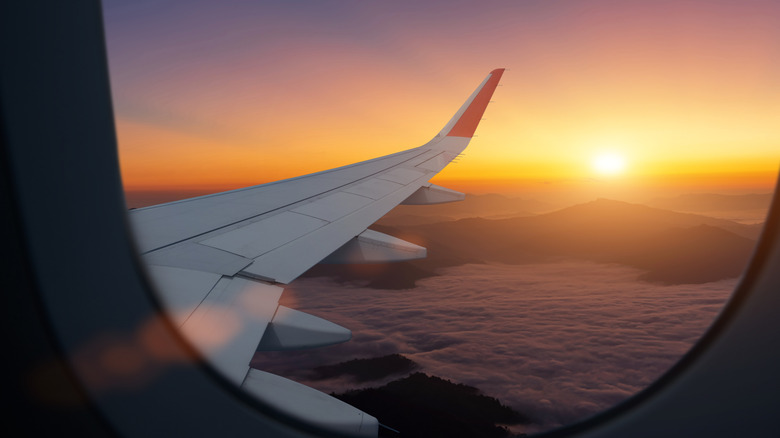
In the earliest days of seafaring, sticking close to familiar landmarks was the most assured way of getting to your destination safely. Dead reckoning was less predictable, but knowledge of the movement of celestial objects, including both the sun and the moon, was a navigator's best tool. At least it was until the invention of the compass sometime around 250 B.C. Modern aircraft, however, come equipped with a sophisticated array of navigation tools that ensure pilots have up-to-date information about their exact location. Still, the position of the sun provides navigators with the same information it always has. And for pilots traveling as passengers, even slight variations in its position speak volumes about what is happening up in the cockpit.
Once again, retired USAF rescue pilot Tom Farrier was good enough to voice his opinion on the matter, explaining on Quora how "an unexpected, significant shift in the angle of the Sun can be your first sign that a course change is being made." Such observations are not always possible, of course. You need a clear view of the window, for one. And, naturally, it needs to be daytime.
Still, given those caveats, a passenger with piloting experience can postulate some theories as to what might be going on. Pilots are generally keen to avoid rough weather. Flying around thunderstorms is basic aviation 101. The second reason is less routine. Air Traffic Control might issue instructions to pilots for a variety of reasons, including avoiding mid-air collisions or clearing airspace for another plane that is in genuine trouble. Lastly, the aircraft itself may be experiencing difficulties either because of a medical emergency or technical failure.
Accumulation of ice over the wings
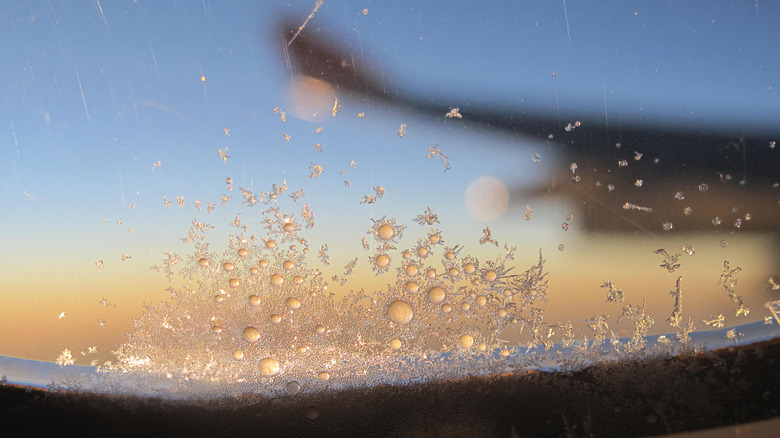
Here is a truth bomb for you: Flights in the past were not all that great. There were fewer things to do on board, cabins were stuffy, planes were slower, and, for the most part, less safe than they are now. Still, the basic principles of flight remain the same, and if there is one thing you want to avoid at all costs, it is a buildup of ice over the wings.
Airplanes are heavier than air (of course) and rely on something called lift to keep them in the sky. As the aircraft moves forward, air is forced across the curved surface of its wings, causing a pressure differential known as the Bernoulli Effect. This, when combined with Newton's Third Law of Motion, is what prevents planes from crashing into the ground shortly after take-off. In short, if you want to stay up in the air, don't change the aerodynamic purity of your wings. Sadly, a buildup of ice is liable to do just that.
For pilots acting as passengers, icing is a much more serious worry than ordinary passenger concern over a little turbulence. Commercial pilot and engineer Kevin Madore, writing on Quora, put it succinctly. "I've often described encountering ice in an aircraft without ice protection as like being in a closed room with the four walls slowly closing in on you. Every minute, you have fewer options." Ice is bad: Got it. Pilots avoid icing conditions like the plague, and even when forced to endure them, they spend as little time there as possible.
Preemptive seatbelt signs for invisible turbulence
So, ice on the wings is worse than turbulence, but that latter phenomenon is more difficult to avoid. Its presence provides passenger-pilots with information not widely available to the average Joe. So, what exactly is turbulence and why do we have to put up with it in the first place?
Turbulence occurs when the aircraft encounters atmospheric instability. It can be caused by the mechanical effect of topographical features such as mountains, via thermal currents, or by finding yourself in the wake of another aircraft. There's also something called clear air turbulence, which is much harder to detect than the other varieties. All forms present in four levels of severity, ranging from light jostling to a violent shaking that is serious enough to cause injuries or damage to the plane.
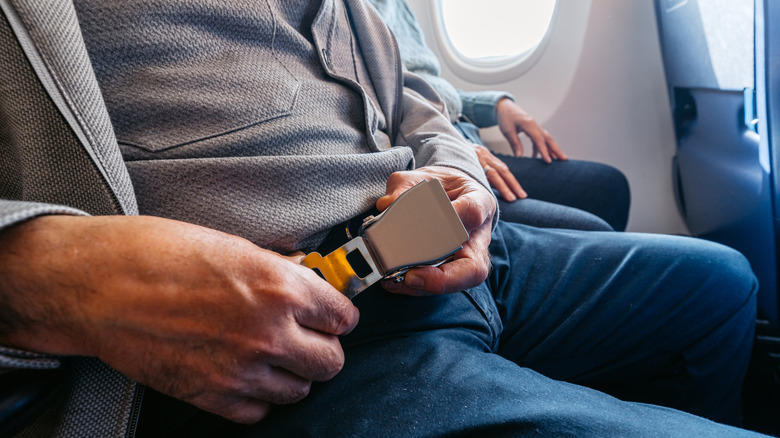
Still, while thermal turbulence can be avoided (for the most part) simply by flying around major weather fronts, the mechanical variety, although more predictable, is harder to get around. Mountains sometimes get in the way. Meanwhile, clear air turbulence is a product of high-altitude flying that tends to come with much fanfare and little warning. Doppler lidars, which measure wind, and scintillometers — a device that fires an infrared beam ahead of the craft that measures fluctuations in heat — give pilots at least some warning that bumpy skies are on the horizon. In theory, this should give the pilot time to put that seatbelt warning light on. For another pilot acting as a passenger on the plane, the light coming on as you fly through seemingly clear skies is more than just a ping in their ear. Pro tip: If a pilot in the seat next to you suddenly buckles up, follow suit.
Subconscious monitoring of flight systems
Anyone who has ever spent any time playing a racing game knows that there is a tendency to lean into turns that only exist on the screen before you. There are several words to explain the phenomenon, including kinesthesia, spatial immersion, and anticipatory posturing, to name but three. But it mostly boils down to this: your brain sees a thing, expects a thing, and then reacts accordingly.
Pilots having to relinquish control of an aircraft so they can travel as a passenger tend to take things one step further, with one anonymous pilot on AeroSavvy admitting that they "subconsciously keep track of every flap selection, brake application, control surface movement!" Such an inability to sit back and relax on the flight sounds vexing, but it does come with some added benefits. Tips for surviving motion sickness often include a suggestion to anticipate the speed and direction of travel, something easily achieved by those in control of a vehicle, but less so by those along for the ride. A pilot actively monitoring the onboard system, even at a subconscious level, is less likely to hit that mismatch of perception and sensation that has people reaching for the sick bag.
But it also serves as a heads-up of another kind. Pilots can sense when something is wrong when the airplane does something unexpected. Pilots can especially feel the landing approach and they can sense a change of direction. Indeed, while you await updates from the cockpit about a volatile ETA, they may have already texted home to inform them of an inevitable delay — using a SkyPhone app or the plane's WiFi, perhaps. It's best not to learn what happens if you don't put your phone on airplane mode.
Flight attendants suddenly checking specific windows
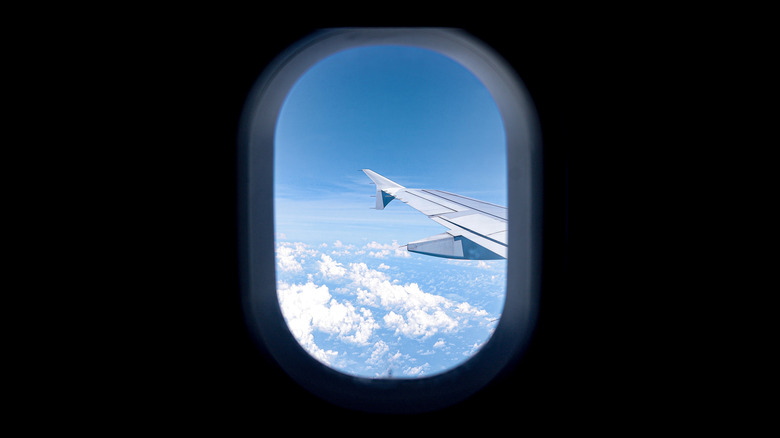
In 1963, actor William Shatner, starred in an episode of the sci-fi anthology series "The Twilight Zone" called "Nightmare at 20,000 Feet." The episode's central conceit was as simplistic as it was terrifying. A passenger on the plane notices a hideous creature on the wing slowly destroying the very plane he is traveling on mid-flight. Being of an already nervous disposition, he fails to convince the flight crew that anything is amiss, in part because the idea of a creature crawling about on the wing of a plane is quite absurd. To this day, the window with the best view of the wings is informally known as the "William Shatner window."
Of course, none of the flight crew would get to keep their licenses if they passed by said window to check for actual gremlins, but checking for possible engine problems is another matter entirely. Each window is flanked by a triangle, marking the best angle from which to view either the leading edge or the trailing edge of the wing. The former allows you to see the slats and engine intakes while the latter gives you a good view of the flaps.
That makes for four triangles in total, and according to Captain Chris, an airline pilot who posts on Instagram, wing checks of this sort are routine. "We always check both wings. One might be sitting in the sun, the other in the shade, and conditions can be very different on each side." Nor is the reason for doing so deliberately opaque. "By looking from both positions, we get a very clear picture of whether there's any ice, frost, or contamination on the wing surfaces. If there's any doubt at all, the answer is simple: We de-ice."
Gate turnaround urgency and aircraft cleanliness
For some, boarding a plane represents an exquisite type of stress that never seems to go away no matter how many times you fly. The aisles are a little too narrow, there's confusion over seat numbers, and there are endless questions, disagreements, and eye-rolling from both crew and passengers over the drama. For others, it's a matter of routine: They've booked seats that reduce the worry of motion sickness, they know exactly what those triangle stickers above the windows are for, and their bags are stowed so quickly that they've already had time to put their headphones on.
Pilots certainly belong to that latter group of veteran travelers, but their specific training and experience allow them to see more than even the most experienced vacationer. The aircraft turnaround is a delicate ballet. According to industry trade publication Areotime, cleanup for short-haul flights should only take less than 10 minutes — just barely enough time from the last passenger's exit on the previous flight to the priority boarding call for the next.
Any significant setback to the proceedings here risks creating a bottleneck, which can lead to extended delays throughout the day. And while passengers watch as flight crew gather rubbish and sweep seats as they make their way through the cabin, trained pilots can calculate delays based on their progress. Indeed, one anonymous pilot speaking to The Independent noted that the turnarounds are so tight that he sometimes had to help with the cleanup — and has even found himself loading other passengers' bags on occasion.