
10 Reasons Flights In The Past Weren't All That Great
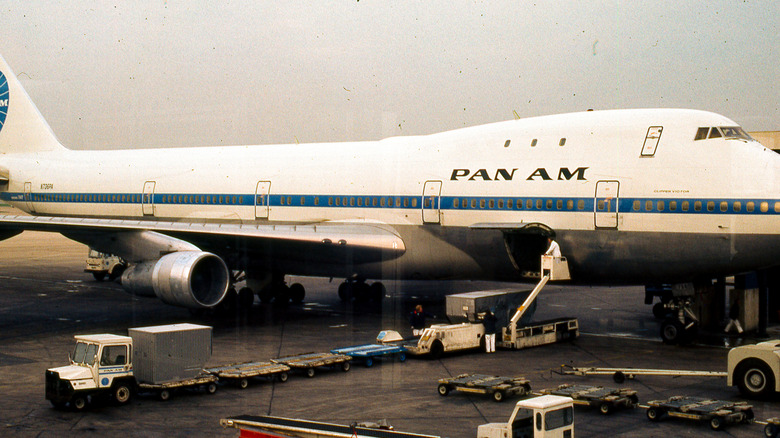
It may be that modern travel is not as hyper-focused on speed, comfort, and convenience as we might like, but in most cases, it represents an improvement over what went on before. The early days of heavier-than-air aviation were filled with experimental designs and rapid attempts to turn the recent technology into effective weapons of war. Still, commercial flights began earlier than you might think: a pilot named Tony Jannus flew a paying passenger 21 miles across Florida in 1914. Just five years later, the Dutch airline KLM was founded. By the late 1930s, passenger airlines were crossing the Atlantic, at least until the onset of World War II.
The end of the war brought an increased focus on profitability, and transatlantic passengers had to learn how to survive lengthy flights with refueling stops as a matter of routine. The world's first passenger jet airliner (the Comet) arrived in 1952 and, despite its contributions to the industry, was beset by problems. The piston-powered Douglas DC-7, however, hit the ground running in 1955 with its impressive cruise speed. It too was soon phased out of operation as passenger jets began to dominate the industry. What followed is achingly familiar. The jets got larger, yes, and at least somewhat faster, but the romance of the early pioneer flights vanished, never to be seen again.
Of course, the thing about romance is that it is often viewed through a clouded lens. The modern commercial aviation industry has much to bemoan, but to those who take the time to rifle through archives in search of old news stories, eyewitness testimonials, and official statistics, a different picture emerges. They discover an industry beset with now-forgotten problems. Which is exactly what happened to us, and here is what we found.
Airplanes were not as safe
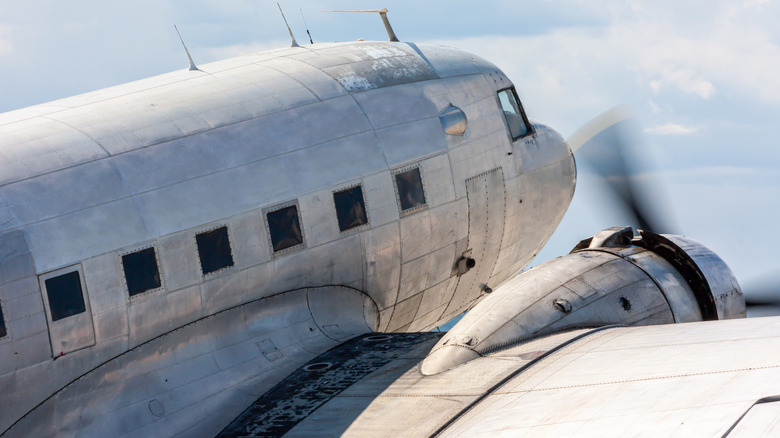
Flying is indeed the safest form of travel, thanks to a combination of training, inbuilt safety features, and a multi-team approach to aviation. It's also true that things were not always quite so set in stone as they are now. The early days of aviation featured far fewer flights than we see today, and airplanes typically carried fewer passengers, yes. But crashes were more common. In some cases, disturbingly so.
The first commercial flight with multiple fatalities occurred in 1920, when a scheduled flight between London and Paris crashed just after takeoff. The preceding decades saw a steady rise in the number of accidents. There were 50 crashes in 1937. In 1950, there were 264, according to the Aviation Safety Network. The jet age brought major changes; the British unveiled the world's first jetliner, the sleekly designed Comet, in 1952, to great fanfare, but the celebrations were short-lived, as a series of catastrophic accidents meant the whole fleet had to be grounded just two years later. The first passenger service to result in the death of more than 100 people happened in 1956 when a Douglas DC-7 collided with a Super Constellation flying in clear skies over the Grand Canyon. The incident served as a wake-up call for the entire industry, which began to look for ways to make things safer.
Such efforts took time. As flying became increasingly popular, the number of accidents began to drop. Through a combination of improved training, technological innovation, and lessons learned from past tragedies, the chances of being involved in a fatal crash became vanishingly small. The odds shifted from 1 in 350,000 from 1968 to 1977 to 1 in 13.7 million from 2018 to 2022, as reported by MIT News.
The cabins could get very stuffy
Even though there is little question that the airport experience has gotten worse in recent years, there has been at least one undeniable improvement: Cabins smell better. Back in the day, there was little to separate passengers from the more visceral realities of flight. Airplane interiors were often unheated; one airline hired "cabin boys" to pass around hot water bottles to help stave off the high-altitude chill. To make matters worse, pressurized cabins were not widely adopted in commercial aviation until after World War II, and smells from the outside leaked inward. The airplanes of the 1930s used what would be considered high-octane gas for the time, and the fumes were brutal. In planes such as the Ford Trimotor, passengers could even open windows for ventilation. Cool, perhaps, but hardly refreshing.
All of this paled into insignificance compared to the other common pollutants routinely found on flights. Smoking was permitted on almost all flights as a matter of course. While the miracle of latter-day ventilation no doubt helped somewhat with the cloying atmosphere, recycled air can only ever do so much, and smoking was far more prevalent than it is today.
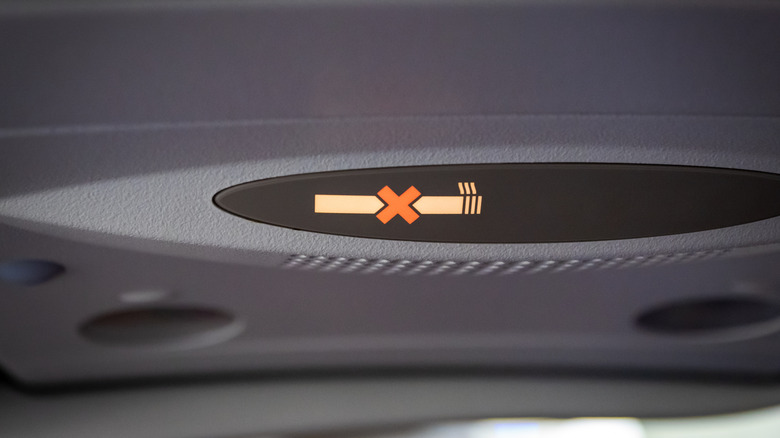
Thankfully, of all the '80s travel trends that are now outdated, a moratorium on in-flight smoking began earlier than expected. An EU-wide ban came into force in 1997, and other jurisdictions soon followed suit. Today, all that is left are some legacies of aviation's cloudy past: The ever-present disapproving gaze of smoke detectors in the bathrooms and the eternal reminder of "No Smoking" signs built into the overhead controls. Oh, yes, those no-smoking lights used to blink on and off at the whim of the captain. Who, let's face it, was probably also smoking.
Flights were more expensive
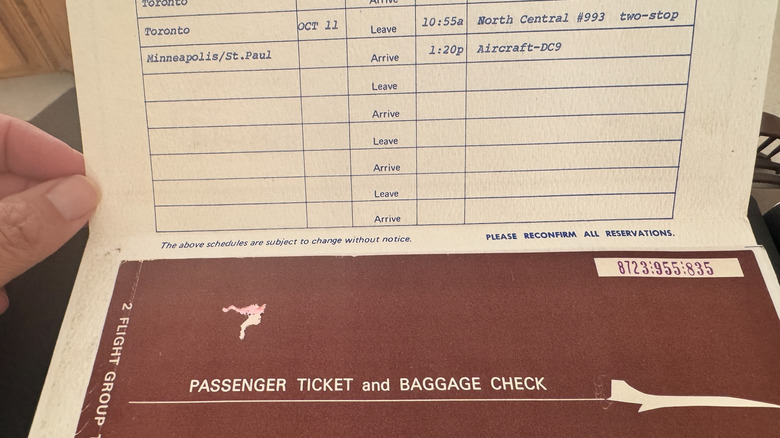
There are many reasons flights keep getting more expensive, but the truth is that such price jumps represent recent rather than historic changes. A glance back through the ages paints a very different picture. Flights used to be the exclusive province of the ultra wealthy, but became steadily more affordable, and, for a time, downright cheap. No, really.
The question, then, is just how much more expensive they were and how cheap they ultimately get. Well, first, we need to address the issue of true early adoption. For most of its early history, commercial flights were simply beyond the means of most people. According to a report commissioned by American Airlines and featured in Travel and Leisure, a flight between Los Angeles and Boston in 1941 took around 15 hours, required 12 stops, and cost over $4,000 in inflation-adjusted money. A quick search online reveals that today, the same route costs around one-tenth of that price, and flight time has been cut by approximately two-thirds.
Fortunately, flying has shifted away from the province of a select elite towards a mass-market industry. As the industry adjusted to scale, prices began to come down. By the late '70s, the cost of that L.A. to Boston flight had dropped by a rather impressive 79%, although still clocking in at a very expensive $915. By 20155, that number was cut in half again, and the point at which flight became genuinely affordable had finally been reached. True, ticket prices are currently on the rise, but the days when you needed a second mortgage to fly across the country are, thankfully, well and truly behind us.
Buying a ticket was more complicated
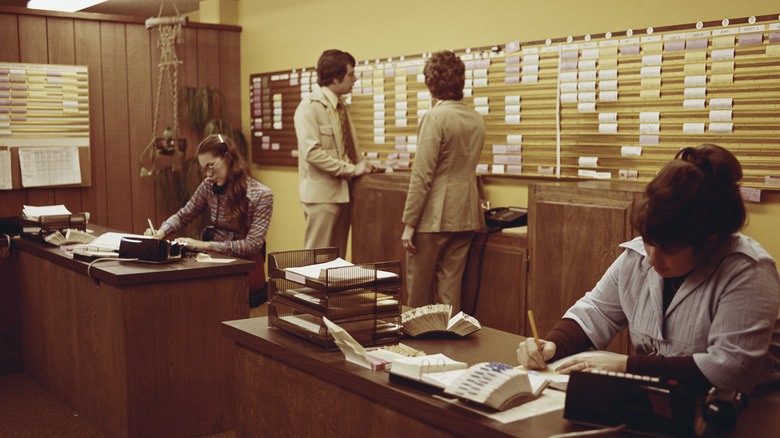
Not only were flights a more costly venture, but buying a ticket was often a pain in the proverbial rear. Ok, early on, maybe not so much; there are reports of people buying tickets on the actual airplane just prior to takeoff. As the industry advanced, however, airlines created a whole set of hurdles to navigate.
That there were no online searches goes without saying; the first online ticket sale didn't happen until 1995. Prior to that, there were only a few options available to the itinerantly minded. You could call the airline directly, which was fine, but once connected, the wait could be extensive; the agent had to locate a handwritten file in order to check for seat availability.
Those looking for a more personal touch could either visit a dedicated booking office where customer flight information was stored on table-sized lazy Susans, or visit a travel agent who would handle most of the back-and-forth phone calls on their behalf. Again, confirming a reservation was achieved at a pace that many would find intolerable today. Thankfully, there was no need to shop around for the best price: prior to the 1978 deregulation of the industry, the cost of a flight was set by the government.
There was a lot of waiting around, and flights were long
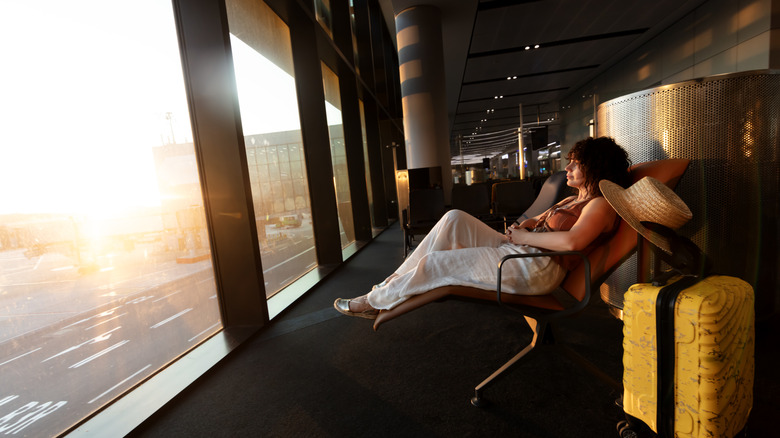
Flight times of the past relied on a few key metrics. First, there was the question of propulsion; jet engines are faster than their piston-powered brethren, have fewer moving parts, and require less regular maintenance. In addition, passenger planes without pressurized cabins had to fly at lower altitudes. The thicker the air, the slower the speed; thanks, physics. Then, there was the question of range: how far an airplane could fly without having to land to refuel. Once all those things had been considered, the idea of a 15-hour flight to Boston must have sounded like something of a stroll around the block to most passengers.
To put that into perspective, consider the still-famous Kangaroo Route, which has been shuttling passengers between Australia and the U.K. since 1934. It took its name from the number of stops — or "hops" — it had to make en route; in the early days, there were as many as seven stops — and not short ones either. The entire trip took 12 and a half days.
The first nonstop flights between Australia and the U.K. would not come into force until 2018 and brought total flight time down to just 17 hours, an impressive feat to be sure. Even so, anyone looking back over the entire history of commercial aviation can't help but notice that the concept of absurdly long flights marred by an excessive number of layovers isn't as uniform as you might think. Thanks to fuel-efficiency drives and congested airways, over the past 30 years, airlines have actually gotten slower. There are exceptions,s of course, but in terms of actual time spent in the air, the sweet spot has already passed us by.
There was little in the way of in-flight entertainment
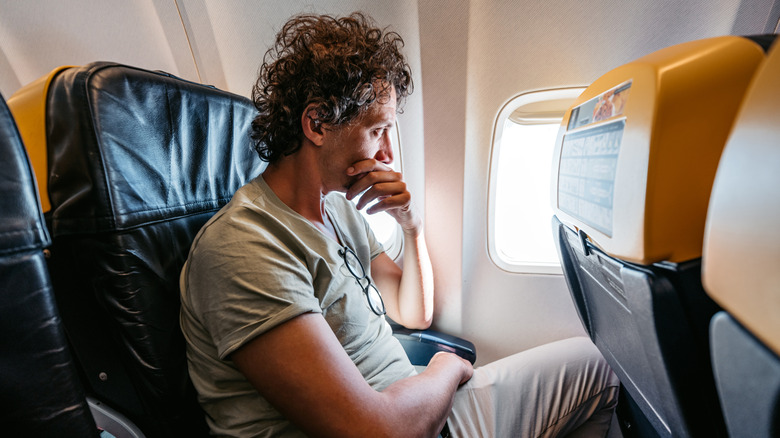
The list of what travelers need to know before their first long-haul flight is an ever-expanding caravan of ways to stave off boredom and discomfort. Options abound: There are special socks to keep blood flow regular. You can purchase noise-canceling headphones to help dampen the fray. And, in every seat, you'll find an entertainment system full of movies, games, digital magazines, and music to help you while away the hours. It wasn't always this way.
In 1925, a projector was hauled into the fuselage of a converted Handley-Page bomber, and a screen was set up so passengers could watch "The Lost World" as they flew from London to Paris. To make the cabin dark enough for the film to show on the screen, the pilot dove into a bank of thick clouds. Such novelties, however, did not become de rigueur for quite some time. For the most part, in-flight entertainment consisted of smoking cigarettes, idle chatter, leafing through magazines, and staring out of the window. Things were about to get better.
Trans World Airlines introduced regular in-flight movies in 1961, but there were no screens on the back of the chair; the movie was projected on a screen at the front of the cabin. If you didn't care for the selected movie, you were out of luck. If you slept through the beginning, same deal, nobody was going to hit the rewind button. What followed was a slow evolution of what we have on offer today. By 1975, you could play Pong on select flights, and 1988 saw the first seatback screens. We also had Walkmans by that point; for as long as the batteries held out, they offered welcome relief from the long-haul drudgery.
Flights could be very uncomfortable
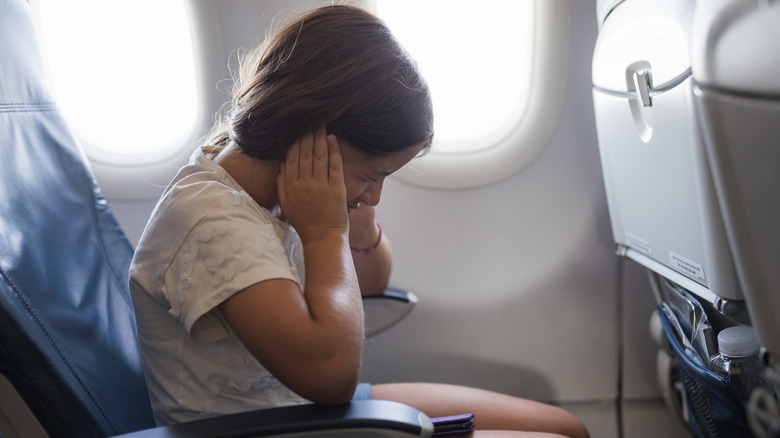
The smell of cigarette smoke and gasoline was not the only issue early flight passengers had to deal with. Modern jets don't just fly at high altitudes for fun. Yes, the air is thinner up there, and that makes things easier on the fuel efficiency. But, perhaps more importantly, from the perspective of passengers, it allows airplanes to mostly avoid patches of rough weather. Prior to the onset of the pressurized cabin, low-flying craft were bumpy affairs, and turbulence during flights was more of a feature than a bug. Travel sickness was a far more prevalent threat, and, although actual purpose-built sick bags did not show up until the 1950s, the queasy passenger was a well-established figure of early aviation history. To say that things have improved is an understatement; there are reasons you hardly ever find barf bags on flights anymore, and for the most part, it's best not to think too hard about them.
To add to the discomfort came the issue of travel attire. Passengers were expected to dress in their best finery: suits, formal dresses, jewelry, pocket watches, and so on. Oh, sweatpants existed, alright, but they probably would have refused to let you board while wearing them. Meanwhile, the barotrauma or earache caused by rapid changes in pressure was so severe — thanks to the primitive, or complete lack of pressurization technology — that flight attendants would give everyone on board chewing gum and encourage them to yawn during each descent. It's a trick that still works today, although thankfully, ear pain on airplanes is now just mild discomfort for most.
Security was less stringent
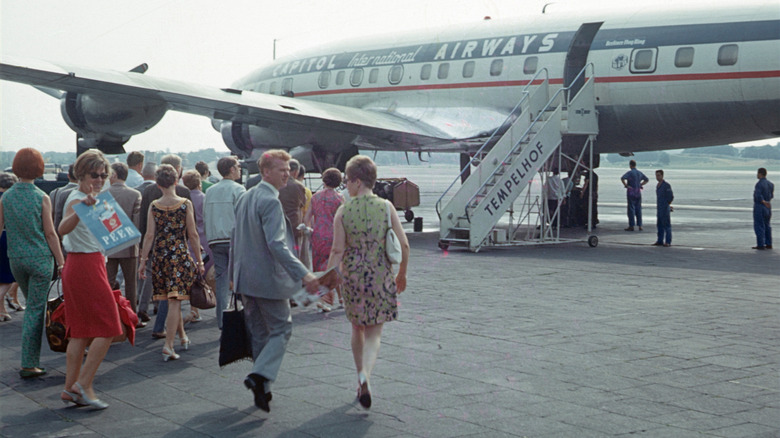
It did not take a genius to realize that the onset of heavier-than-air travel brought with it more than a few inherent dangers. Firstly, there was the obvious: falling from the sky was a potential consequence of attempting to fly through it. The first such casualty was a man called Lieutenant Thomas Etholen Selfridge, who, in 1908, died in a crash close to Fort Myer, Virginia. The pilot survived. His name was Orville Wright.
Of still greater concern, however, was the thought that the nascent technology might be used for nefarious purposes. Its proximity to the Prohibition era certainly meant that it was; smuggling alcohol by air was very much a thing. Regardless, authorities adopted a lackadaisical approach to security. Metal detectors did not arrive until 1970, and it was routine to allow non-ticket holders to wait by the departure gate to wave off loved ones. You could even purchase said tickets without a reservation, and until 1929, it wasn't required to issue baggage checks before it was loaded onto an airplane.
The upshot of it all was that people found ways to game the system. In 1951, a man called Jack Gilbert Graham blew up an aircraft with dynamite with the aim of cashing out his mother-in-law's life insurance. In 1971, an unnamed man known colloquially as D.B. Cooper leaped from an airplane with $200,000 in extorted money. But it was the hijackings of the geopolitically unstable 1960s and 1970s that really turned things around security-wise; In one four-year period between 1968 and 1972, there were 137 hijackings in the United States. Screenings became mandatory, thanks to an Act of Congress, and as of 1979, firearms are no longer allowed in the cabin.
They were subject to the injustices of the day
Few people would argue that we have built a perfect society, but when it comes to getting from A to B via the air, some things, at least, have improved. First up, the question of segregation was somewhat complex. Officially, airlines were bound by federal, not state, laws; so from 1938, thanks to the Civil Aeronautics Act and its anti-discriminatory posture, this, at least, was not allowed. Not that such laws wholly curbed the bigotry of the day; some airlines would mark tickets with secret codes so people of color had to wait longer and found themselves seated towards the rear of the plane.
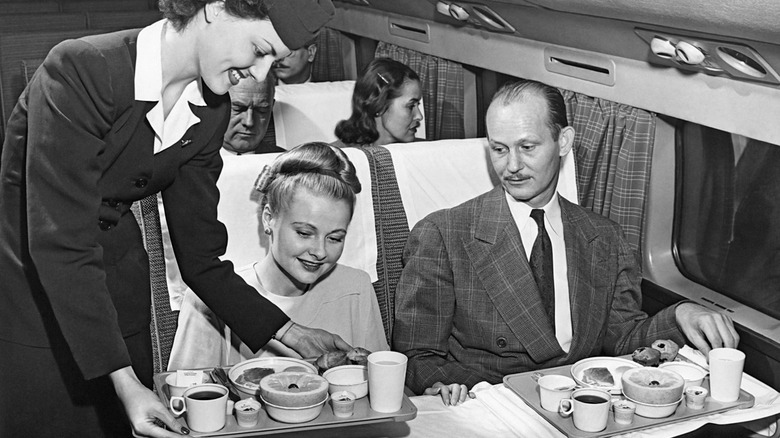
Meanwhile, although female passengers were treated with paternalistic courtesy, flight attendants, then known as stewardesses, were subject to shocking levels of sexism. There was a cut-off age (they typically had to be under 32 to 35), they had to be childless, and they were also forced to endure humiliating weigh-ins. Oh, and if any of them had the audacity to get married, they were immediately let go.
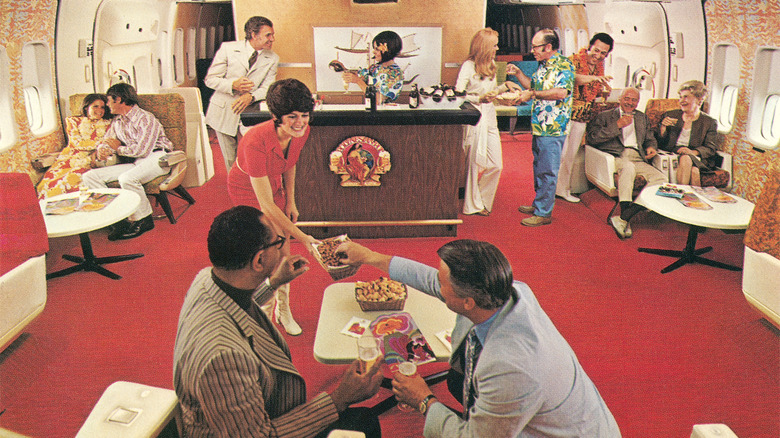
A waitress serving snacks in an airplane Party Lounge.
While flights still do get rowdy sometimes, and incidents of air rage are on the rise, the party atmosphere of the past has at least been dialed down somewhat. Indeed, flight attendants may be full of tips on how to survive long-haul flights, but if one rule trumps all others, it's that prevention is better than a cure. Take alcohol, for example. Most flights of significant duration serve beers, wines, and spirits to their passengers, some paid for, some complimentary, but they do so with several rules in mind. Although things differ from airline to airline, in most cases, there is no specific limit on how many drinks can be served. What they won't do is continue to serve anyone who appears to be visibly intoxicated. This right to refuse extends to those who bring their own alcohol on board; it's mostly allowed, but opening that can or bottle is forbidden.
Things were less clear-cut back in the day. Early passengers were subject to very strict weight allowances, and prohibition meant that in America at least, until 1933, nobody was being served anything stronger than root beer. In 1947, in what may be the first ever recorded act of air rage, a drunken passenger en route to Miami attacked a passenger and bit a flight attendant.
Undeterred, airlines started offering complimentary drinks during the 1950s and even put cocktail bars in some of their planes. With mixed results, pun intended: they ultimately concluded that they could make more money filling their planes with seats than with amenities. Eventually, the bars were removed, and drinks poured from bottles reverted to strictly measured amounts.